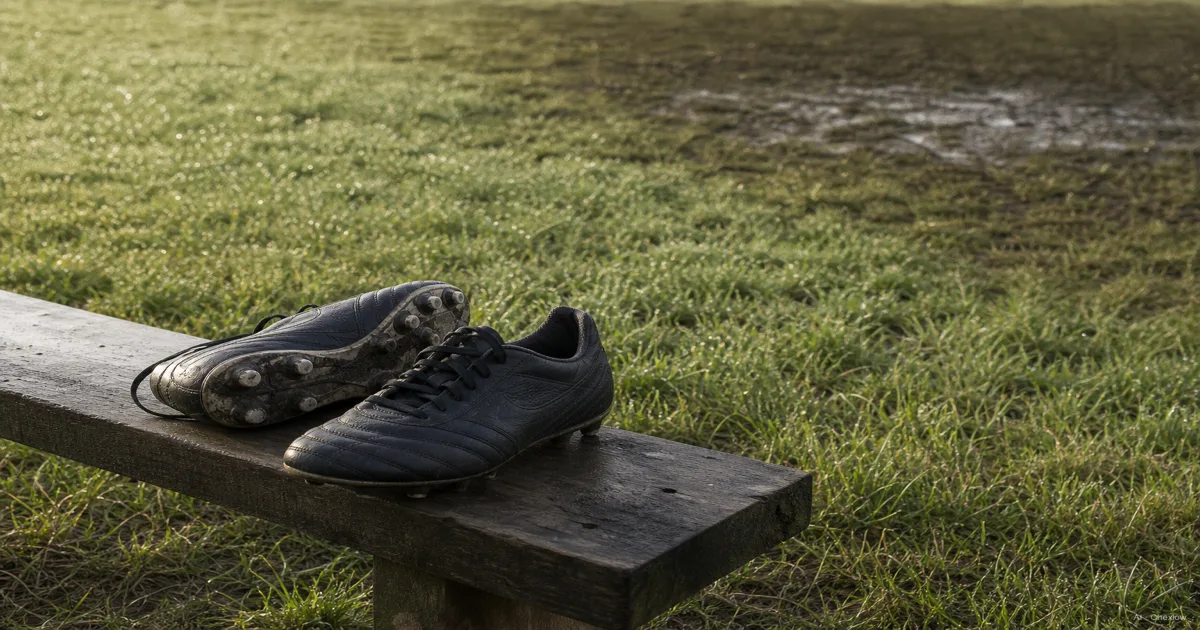
Start with the ground beneath the grass
Before browsing boots, write down where you train and where you play matches. Ask the venue whether each pitch is natural or artificial grass; then check its usual condition with your coach or grounds staff.
For natural grass, Nike’s surface guide draws a useful distinction: FG suits dry or slightly damp grass without mud; SG suits soft, muddy conditions. Wet grass alone does not settle the choice.
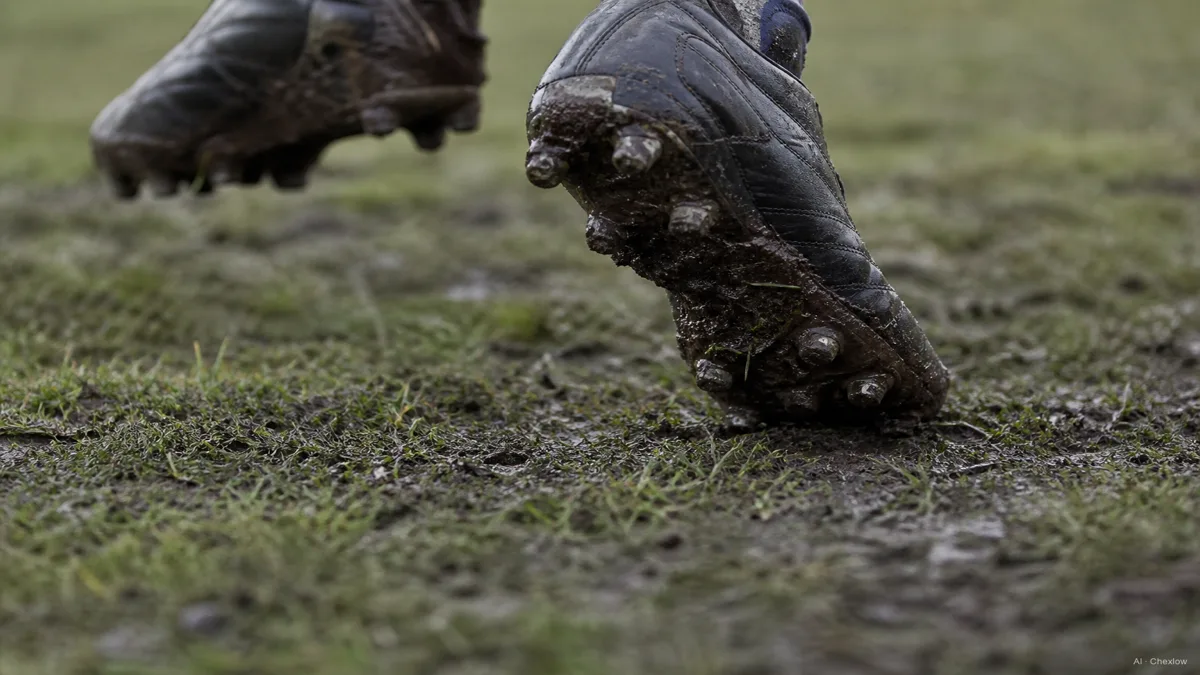
Use the ground condition as your buying filter, then check it again before playing. If you cannot yet identify your regular pitch, confirm it before ordering rather than buying SG for a rainy forecast.
Compare the sole, not just the boot name
Studs are the projections underneath the boot. adidas describes fixed moulded studs on FG boots and SG designs combining plastic studs with longer, interchangeable metal ones.
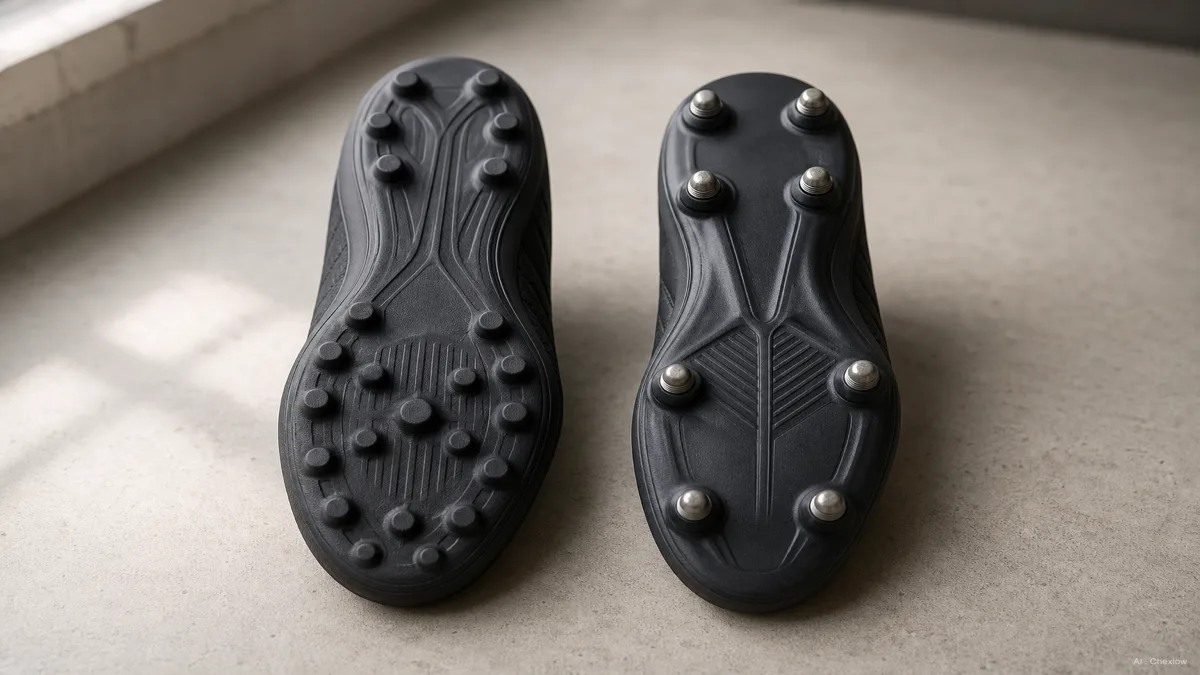
Use this illustration to recognise the difference, not to prescribe a universal stud count. Read the exact listing’s surface designation and sole description. Plastic studs alongside metal ones do not make an SG sole a multi-ground option.
Keep FG and SG as separate candidates until you have matched the surface and checked permission to use them.
Artificial grass changes the shortlist
If training takes place on artificial grass, pause the FG-versus-SG decision. adidas distinguishes AG for longer artificial grass from MG for natural and artificial outdoor surfaces. TF, or turf footwear, is another category; Nike describes it for shorter, firmer artificial pitches.
Do not treat those labels as interchangeable. Ask the venue which footwear it accepts, then check the manufacturer’s guidance for the exact sole.
General FG advice also differs: Nike’s guide allows broad artificial-turf use, while adidas advises against it. That disagreement is a reason to verify the particular boot, not permission to assume every FG works. Neither guide supports SG as an artificial-grass choice.
Check stud permission before paying
Ask the competition organiser and venue about metal or screw-in studs, including any age-group restrictions. Send the exact boot listing if the wording is unclear.
IFAB Law 4 prohibits dangerous equipment and requires players’ equipment to be inspected. It does not impose a blanket ban naming metal studs. That is not automatic approval for your competition, and an FG label does not replace an equipment check either.
Resolve an unanswered stud question before buying. Do not infer permission or prohibition from the player’s age alone.
Make the first purchase, then check the fit
Use the answers you have collected to narrow the purchase:
- Firm natural grass. Start with FG candidates whose stated use matches your pitch.
- Regularly soft, muddy natural grass. Consider SG first when the venue and competition permit it.
- Several different surfaces. Check coverage for each one. A one-pair budget does not establish compatibility; ask whether one approved model covers your actual schedule before considering a second pair.
Then try the shortlisted boots with your playing socks and check that your heel stays secure, as Nike’s fitting guide recommends. Aim for a snug fit with room to move your toes, following adidas’s fit guidance.
If length seems right but width or shape still feels wrong, the guide to why the same sneaker size can fit differently explains the underlying fit question using everyday sneakers. Use it as background, not as a football-boot size conversion.
Comment ce guide a été conçu
Written by AI for Housnap, using Nike and adidas guidance on surfaces and fit, plus IFAB Law 4. This guide turns those sources into a first-purchase checklist; it does not report product testing or confirm permission for an individual competition.