Start with a smaller batch
If leaves still drip after spinning, take some out before trying again. Zyliss’s usage guide explains that overfilling affects spinning and can leave salad retaining water. It also describes water moving from the basket into the outer bowl.
Try this simple check with the spinner you already own:
- Remove the basket and rinse the leaves in it.
- Divide a crowded load into smaller batches rather than pressing the leaves down to fit.
- Return the basket to the bowl and secure the lid according to your model’s instructions.
- Spin normally, stop and inspect the leaves before deciding whether another pass is needed.
Reducing the batch is a troubleshooting step, not a universal half-full rule. Do not turn the bowl’s advertised volume or a serving estimate into permission to pack the basket tightly.
Empty the bowl before another pass
Check both the leaves and the collected water. Spinning transfers water into the outer bowl; that water still needs to be emptied. Stop the basket before handling it, then drain using your model’s intended method.
The cited Zyliss Easy Spin page describes a pouring spout that drains water without removing the lid. If your spinner has no documented draining spout, lift out the stopped basket and empty the outer bowl separately instead of improvising a pour through the lid.
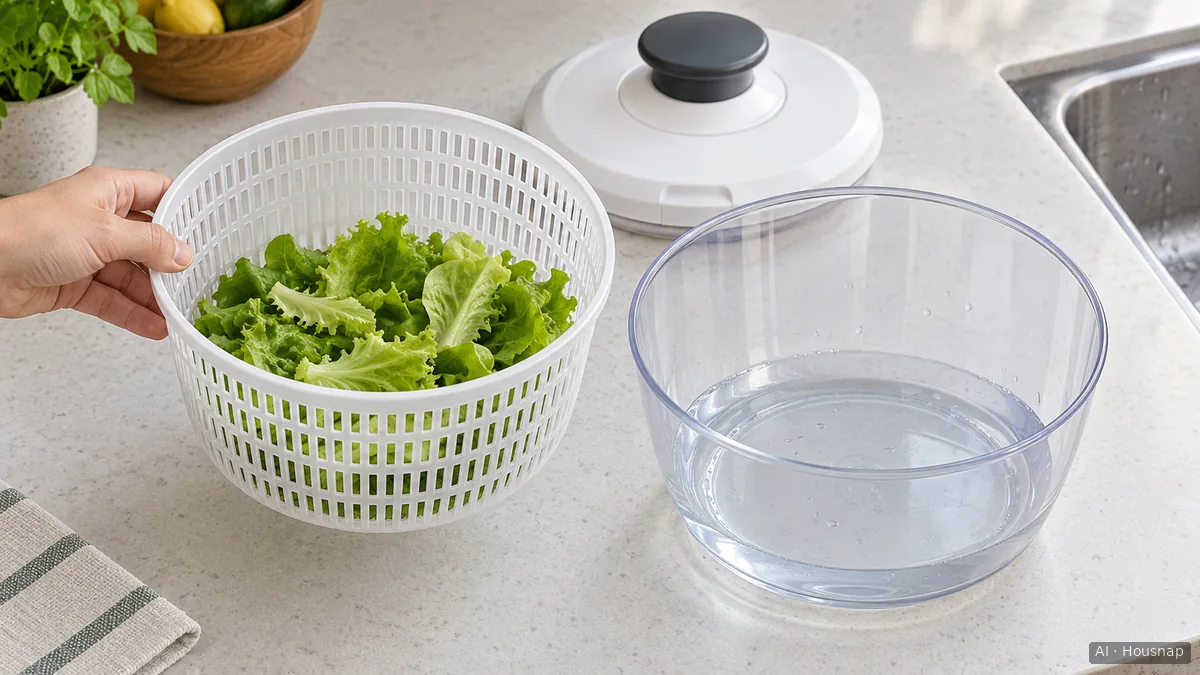
Return the basket to the emptied bowl, secure the lid and repeat only if the leaves still need it. Compare the result with the crowded batch. If a smaller load works better, keep using batches; harder pumping or pulling is not the next diagnostic step.
Identify the washable parts before opening the lid
A lid that comes apart for cleaning does not automatically have a user-serviceable pump, spring or cord assembly. Find the model identifier and its cleaning instructions before releasing any clips. A product-page statement that the lid separates is not a complete disassembly procedure.
The manufacturer examples show why the distinction matters:
- The Easy Spin page’s care block says only the bowl and basket are dishwasher-safe, while its description also includes the clutch plate. Its FAQ says to handwash the lid. This conflict does not establish dishwasher permission for an unidentified plate: check the instructions supplied with your version or ask Zyliss.
- The cited stainless steel Swift Dry page specifies top-rack dishwasher cleaning for the bowl and basket and handwashing for the lid. It says the lid comes apart, but does not provide the release sequence.
For your own spinner, separate only the parts explicitly shown as removable for cleaning. Follow the specified washing and reassembly method; do not pry apart a resistant cover or use a teardown video as permission to remove springs or gears. If the instructions do not identify the release, get the correct guide before proceeding.
These are model-specific examples, not dishwasher rules for every Zyliss product or another brand. Keep using suitable cleaning items you already own; this check does not require buying a special maintenance kit.
Decide what the remaining problem needs
After permitted cleaning and reassembly, try a modest batch with the bowl emptied and lid correctly seated. Use the outcome to choose the next step:
- The leaves are now dry enough for your meal. Keep the smaller-batch and draining routine. There is no reason here to replace the spinner.
- The lid will not seat, a part is cracked, or the mechanism binds. Stop using force and contact the maker with the model identifier and a description of the problem. This guide ends at user-cleanable parts, not mechanism repair.
- You cannot establish how the lid should open or be washed. Resolve that instruction gap before further disassembly or dishwasher cleaning.
If drying is sorted and your next task is packing salad and a separate dressing for lunch, the glass versus plastic food-container guide covers container size, carrying weight and lid checks. It is a separate packing decision, not a fix for wet leaves.
Comment ce guide a été conçu
Housnap’s AI editorial team wrote this guide from Zyliss’s usage guidance and two manufacturer product pages. It separates general loading advice from model-specific cleaning permissions and flags conflicting lid-care wording; no hands-on testing or mechanism repair assessment was performed.