Your First Cat Water Fountain, What the Research Says and Which Material to Buy
You searched "best cat water fountain" expecting a simple answer, and instead landed in a pile of conflicting claims. One page insists cats need moving water to drink enough. Another says the whole idea is oversold. A five-minute comparison turns into an hour of open tabs, and you still don't know if your own cat will use the thing or ignore it completely. Here's what actually settles the argument. The research is genuinely mixed, and no serious study promises a fountain will make your specific cat drink more. What a fountain reliably changes is water freshness and hygiene, and, for some cats, whether they even bother drinking from it at all. That reframes the real decision. It isn't "fountain versus bowl" as a health fix, it's a bet on your own cat's preference plus a maintenance routine you're willing to keep up. This guide walks through what the studies actually found, which material fits your cleaning tolerance and your cat's sensitivity, the capacity and filter math nobody puts on the box, and how to introduce a fountain without wasting the money if your cat turns out to prefer the bowl anyway.
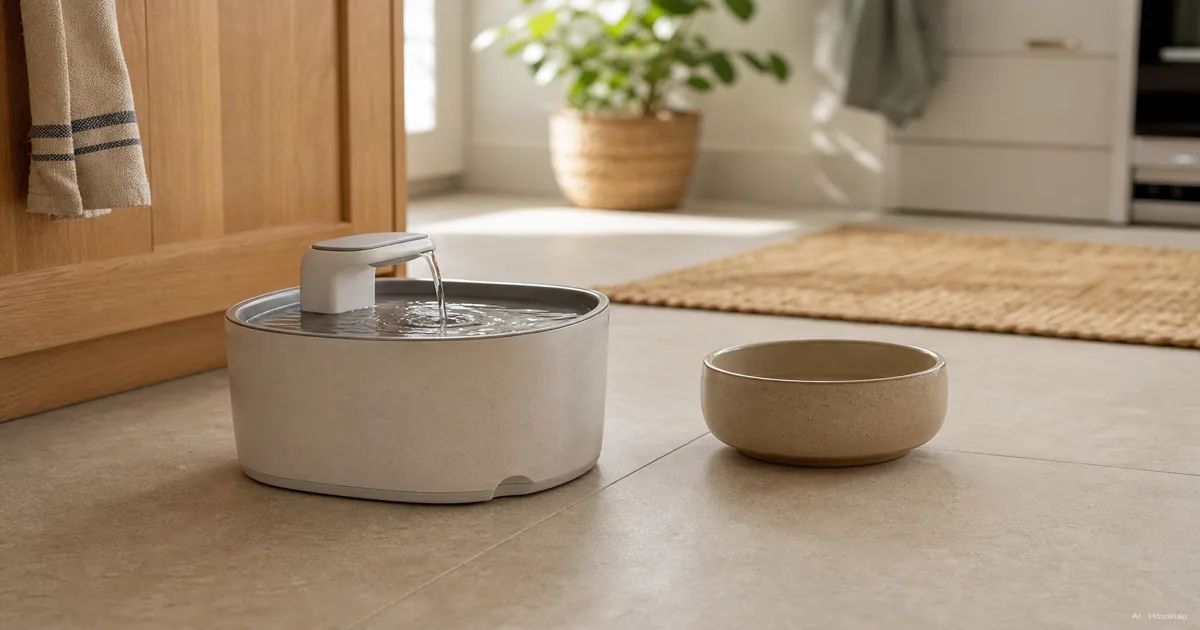
Disponibles actuellement chez une boutique
Ces produits ne sont proposés pour l’instant que par une seule boutique chacun. La comparaison de prix s’ouvrira avec plus de boutiques.
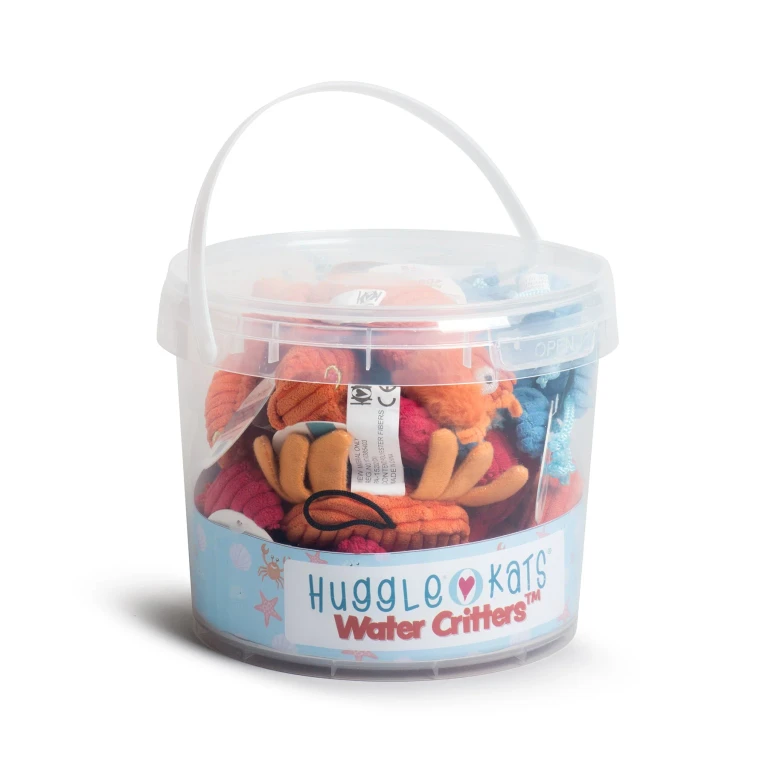
Do Cats Actually Need a Water Fountain? What the Research Really Shows
Cat water fountains are sold on one implicit promise: cats don't drink enough water, and moving water fixes that. The actual research is far less certain than the marketing.
A Royal Canin veterinary survey and a handful of independent studies found no statistically significant difference in overall water intake between cats drinking from a bowl and cats drinking from a fountain (Royal Canin Academy). A separate 2010 study did find cats drank slightly more from a fountain, but the effect sat within the range of ordinary individual preference rather than a proven, species-wide behavior change (Vet Care at Your Practice).
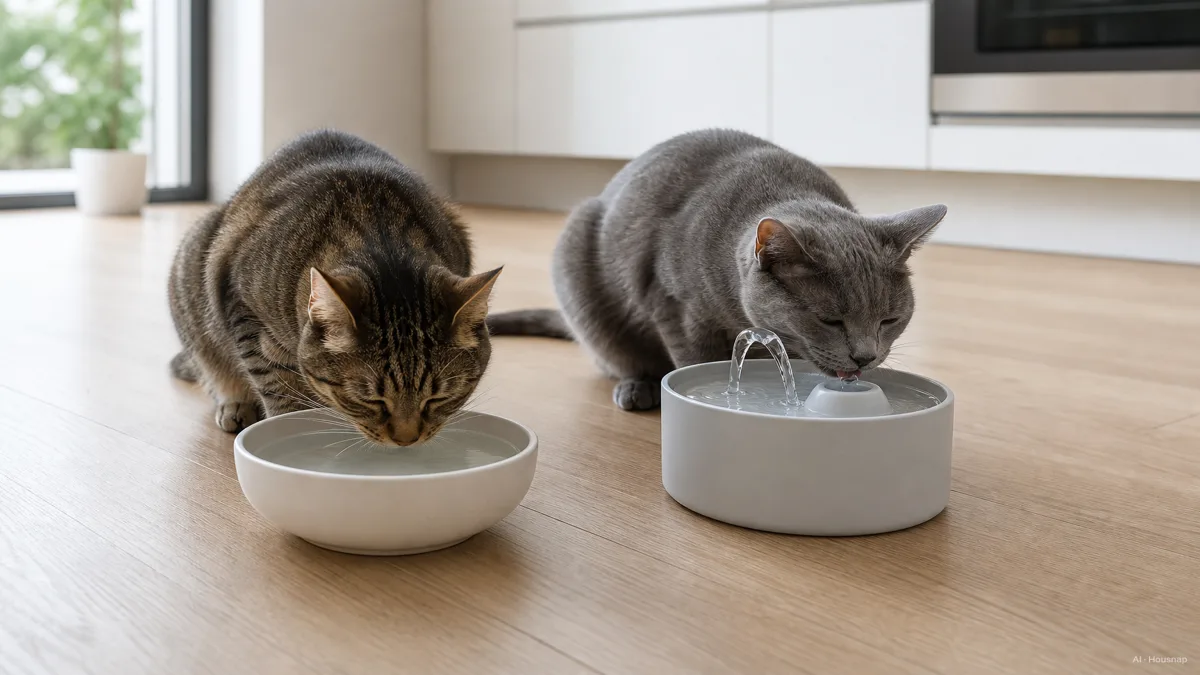
Even more telling, when researchers gave cats free access to a bowl and a fountain side by side, the majority in some studies still chose the bowl. Fountain preference turned out to be an individual trait, not a universal one, some cats genuinely prefer it and some barely notice it exists.
So why do some cats gravitate to moving water at all? A few theories keep surfacing. Running water avoids sustained whisker-on-surface contact, which some cats find uncomfortable, a phenomenon often called whisker fatigue. Moving water also tends to smell fresher and less stagnant than water that's been sitting in a bowl for hours. And there's a plausible instinctual thread too, wild cat ancestors likely favored flowing water sources as safer and less likely to harbor bacteria than standing pools (The Vet Desk).
The honest takeaway for a first-time buyer: don't buy a fountain expecting a guaranteed health fix. Buy one because fresher water and easier hygiene are worth it on their own, and because there's a real chance, not a certainty, that your specific cat will drink more happily from one.
Stainless Steel vs. Ceramic vs. Plastic: Choosing the Right Material
Once you've decided to try a fountain, material matters more than almost any other spec, because it determines how much upkeep you're signing up for.
Plastic fountains are the cheapest way in, but they're also the hardest to keep clean. Wet plastic develops a bacterial biofilm, that faint slimy layer you can feel on a fountain that hasn't been scrubbed in a week, faster than any other material, and its texture makes that film harder to fully remove even with regular washing (UAH Pet).
Stainless steel is naturally antimicrobial, dishwasher-safe, and the most durable option on the shelf, it won't crack, chip, or cloud over with scratches the way plastic does over time. The tradeoff is sound: water hitting metal tends to run louder than water hitting ceramic or plastic, which matters if the fountain lives somewhere quiet, like a bedroom. Stainless steel models also usually sit mid-to-high on price.
Ceramic splits the difference and then some. It's the most hygienic material of the three and highly scratch-resistant, so it doesn't develop the fine surface grooves where bacteria hide the way plastic does. It's dishwasher-safe, and for single-cat-sized fountains it's often the cheapest option, cheaper even than stainless steel. The catch is fragility, ceramic chips or cracks if you drop it, which stainless steel and most plastics simply shrug off (PETLIBRO).
Skip plastic if your cat has a history of chin acne. Cats prone to feline acne or skin sensitivity around the chin and jawline react to constant contact with porous, bacteria-holding plastic. If that's your cat, go straight to stainless steel or ceramic rather than treating plastic as a starter option to try first.
Capacity, Noise, and Filters: The Numbers First-Time Buyers Miss
Two numbers decide whether you'll actually enjoy owning a fountain, and neither shows up on the front of the box.
The first is capacity. An adult cat needs roughly 4 to 8 ounces of water a day from all sources combined, food included, which sounds small next to some of the reservoir sizes on sale. Buying guides generally recommend a minimum of around 50 ounces for a single-cat household, not because your cat will drink that much, but because a bigger reservoir means fewer refills and less water sitting long enough to evaporate or go stale between filter changes.
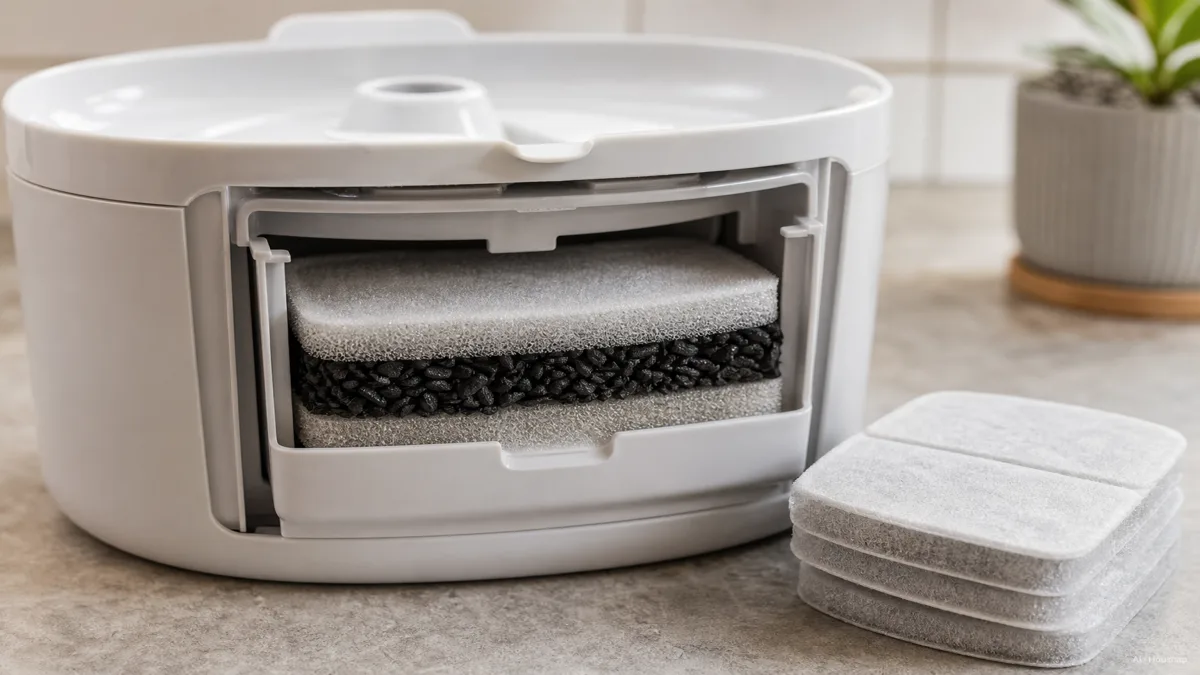
The second is filtration, specifically how many stages it actually has. The better-built fountains stack at least two layers, a charcoal layer that pulls out taste and odor, and a cotton or foam layer underneath that catches loose hair and debris before it reaches the pump. A single flat filter pad is the budget version of this. Multiple layers is the standard worth paying for, and most filters, regardless of stage count, need replacing about once a month.
That monthly filter habit is a real recurring cost, not a footnote. Reported annual filter costs range widely by brand and model, roughly $9 to $40 a year in one buying guide, and anywhere from about $13 a year to over $62 a year in another comparison. Before you buy, it's worth checking what a year of replacement filters for that exact model actually costs, since two fountains priced identically upfront can end up tens of dollars apart once you factor in a year of filters.
Noise is the spec most first-time buyers forget to ask about until the fountain is already running in their kitchen at 2am. As covered above, material plays a role, stainless steel tends to run louder than ceramic or plastic simply because water striking metal carries more sound. If the fountain is going anywhere near a bedroom, that's worth weighing against steel's hygiene and durability advantages.
How to Introduce Your Cat to a Fountain Without Wasting Your Money
The most common reason a new fountain ends up unused in a closet isn't the fountain itself, it's a rushed introduction.
Most cats accept a new fountain within one to two weeks, but only if you give them a real transition instead of a hard swap. Keep the old water bowl out and filled alongside the new fountain for the first stretch, rather than removing it the day the fountain arrives. A cat that's mildly suspicious of the new object, the motor hum, the moving water, will investigate on its own time if the familiar bowl is still there as a fallback.
Placement matters too. Set the fountain somewhere your cat already drinks or passes by often, not tucked into a new corner of the house it has to go looking for. Run it before your cat is nearby so the sound isn't a surprise the first time they approach, and top it off and rinse it daily during this trial window, since a fountain that isn't running or looks murky on day three teaches a skeptical cat that it isn't worth checking again.
If, after a fair trial, your cat still ignores the fountain and drinks from the bowl exclusively, that's a legitimate outcome, not a failure on your part, remember the research above shows fountain preference is genuinely individual. At that point, most of the fountain's remaining value is the filtration and freshness for whichever water source your cat does use, so it's worth deciding whether that's worth keeping running for you rather than for your cat.
Popular Models Compared: Budget Entry Point vs. Multi-Cat Household Picks
A handful of models come up again and again across independent reviews, and they tend to map onto different budgets and household sizes rather than one being universally "best."
The Catit Flower Fountain is the name most often recommended as a low-risk first purchase. It runs a quiet motor, breaks down easily for cleaning, and its plant-like tiered design gives a cat multiple places to drink from. Its main limitation is capacity, it's on the smaller side, so a single-cat home will refill it more often than the larger options below.
The PetSafe Drinkwell Platinum sits at the opposite end, built for multi-cat households with a roughly 168-ounce reservoir and adjustable flow settings. That capacity buys you fewer refills across several cats, but some reviewers report the unit runs bulky on a counter and can develop leaks over time, worth checking current reviews for before committing.
The PETKIT Eversweet line leans on multi-stage filtration and a pump that automatically stops when water runs low, protecting the motor from running dry. The tradeoff owners mention most is that filter changes are fiddlier than on simpler designs, worth factoring in if you already dread filter maintenance.
PETLIBRO models tend to land as the budget-friendly option, a quiet pump at a lower price point, with the brand marketing a four-stage filtration system. As with any filtration claim, it's worth reading current reviews for how that holds up in daily use rather than taking the spec sheet at face value.
None of these is the objectively correct pick. Match the reservoir size to how many cats you have and how often you're willing to refill, match the material section above to your cleaning tolerance, and treat the rest as details worth comparing across current listings rather than settling on the first name you recognize.
Sources
- Do Cats Prefer Running Water | Veterinary Care at Your Practice — petscare.com; the 2010 study effect sat within individual-preference range, not a species-wide change, and majority-bowl preference in side-by-side access
- The water requirements and drinking habits of cats — Royal Canin Academy; veterinary survey found no statistically significant difference in overall water intake between bowls and fountains
- Ceramic vs. Stainless Steel Cat Fountains: Which Material Reigns Supreme — PETLIBRO; hygiene, durability, noise, and price comparison between ceramic and stainless steel
- Stainless Steel, Ceramic, or Plastic Cat Water Fountain — UAH Pet; plastic's bacterial biofilm problem and material guidance for cats with a chin acne history
- Why Do Cats Like to Drink Running Water? 4 Vet Reviewed Reasons — The Vet Desk; whisker fatigue, freshness, and instinctual theories for moving-water preference
- 17 Best Cat Water Fountains in 2026, And We Tested Them All — Cats.com; capacity, filter-stage, and named-model comparisons
- The 6 Best Cat Water Fountains Of 2026 — Forbes; model comparisons and filter replacement cost figures
- Best Pet Water Fountains for Dogs and Cats — Consumer Reports; material durability and noise comparisons
Comment ce guide a été conçu
This piece opens the water-fountain decision inside the pet-accessories cluster, following the automatic-feeder guide's device-comparison approach. It starts from a genuine tension in the research, not a foregone conclusion, several studies including a Royal Canin veterinary survey found no significant difference in overall water intake between fountains and bowls, and even when both are offered side by side, some studies found most cats still choose the bowl. We anchored that finding on Royal Canin Academy and petscare.com's coverage of the 2010 study, the whisker-fatigue and freshness theories on The Vet Desk, material tradeoffs (plastic's biofilm risk, stainless steel's durability and noise, ceramic's hygiene and fragility) on UAH Pet and PETLIBRO's comparisons, and the capacity, filter-cost, and named-model detail on the Cats.com, Forbes, and Consumer Reports buying guides. Catalog depth for pet water fountains in this vertical was not directly queried in this research pass, so the body stays comparative and research-led rather than asserting a large in-stock assortment, and this topic remains a draft pending that catalog fit check.