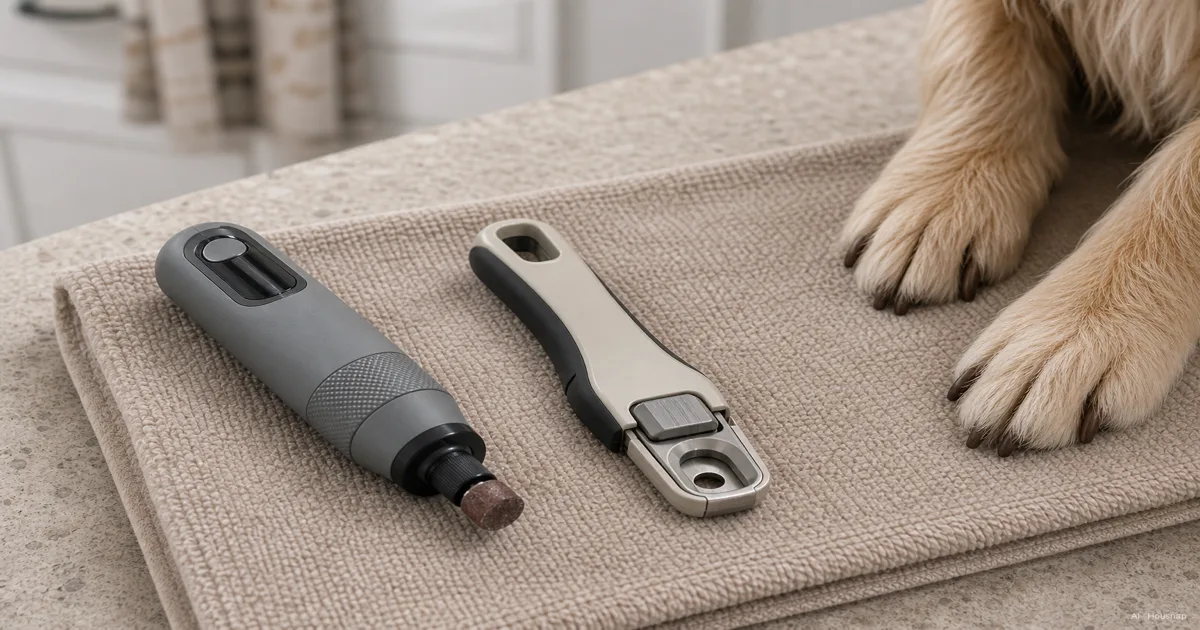
Choose the tool your dog can accept
- Clippers: a squeeze cuts off a piece of nail, without a running motor. That makes them worth considering for a sound-sensitive dog, although the clipping sensation still needs practice.
- Grinder: a rotating abrasive head files the tip. It suits gradual shaping, provided your dog can tolerate the buzz and vibration. These are practical trade-offs, not a safety ranking. Scenthound explains the mechanisms and noise difference.
Start with one. If clipping later leaves rough edges, a grinder can be an optional finishing tool; that does not make a two-tool kit a necessary first purchase. VCA describes grinding for smooth edges.
Check the nails before committing to a home trim
The quick is living tissue containing blood vessels and nerves. Long nails can have a long quick, so visible extra length is not all safe to remove. If a nail is painful or has grown into the pad, arrange veterinary help before trying either tool. PDSA's veterinary guidance.
With black nails, the quick may be hidden. A grinder does not reveal it: if you cannot judge where to stop, get a demonstration rather than choosing a tool to compensate. PDSA's dark-nail advice.

Compare handling and instructions before features
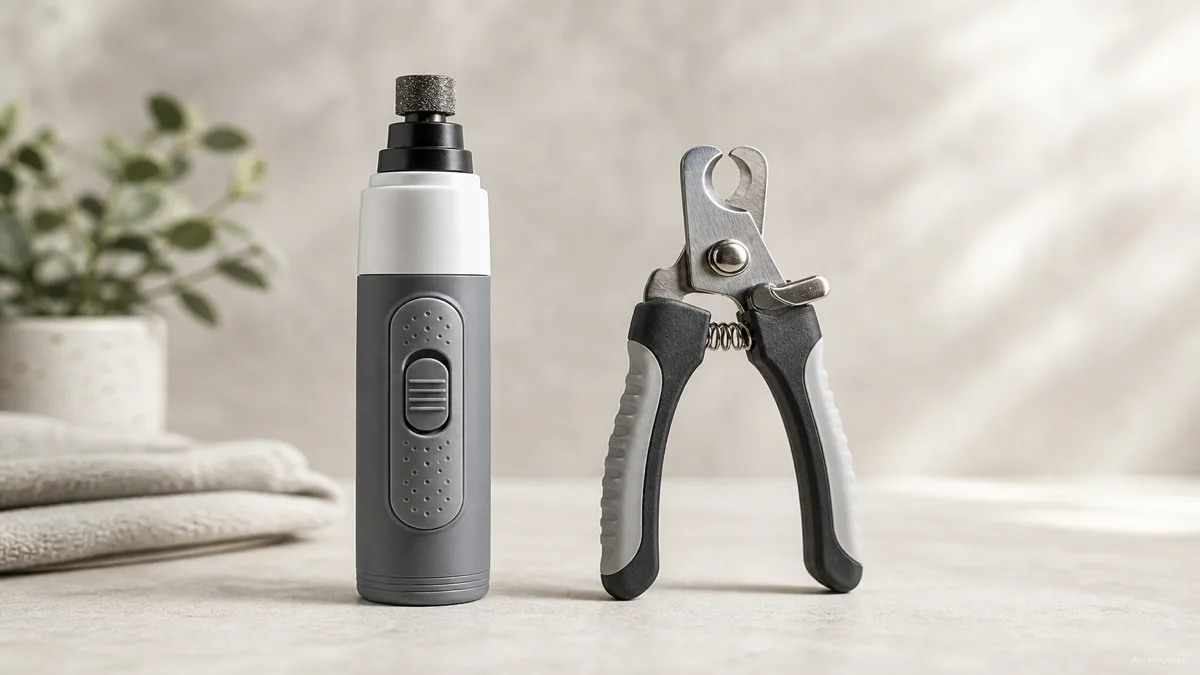
For clippers, try to picture positioning one nail: guillotine styles require threading it through a hole, while scissor styles close two blades around it. Choose the arrangement you can position confidently, with a suitable size and comfortable grip. Keep blades sharp; dull ones can split nails. VCA; Scenthound.
For a grinder, check the actual model's pet-nail instructions, supported attachments, speed controls and replacement abrasives. Treat these as a purchase checklist, not a universal RPM target. Dremel distinguishes guarded-disc use from freehand sanding and documents disc replacement for its kit. Technique guide; kit preparation.
Make the first session a small one
Practice calm paw handling and introduce tool sounds with familiar food rewards before trimming. Puppies need this preparation too; age alone does not choose the tool. AKC's grooming advice.
- Prepare: have dog-nail styptic powder ready for an accidental nick.
- Clip: once your dog is comfortable, remove only a tiny tip.
- Grind: use light, brief touches and move between nails to limit heat. Keep hair clear of the rotating surface.
- Stop: pause if your dog becomes upset. For bleeding that does not stop, contact your vet. AKC; Dremel; PDSA.
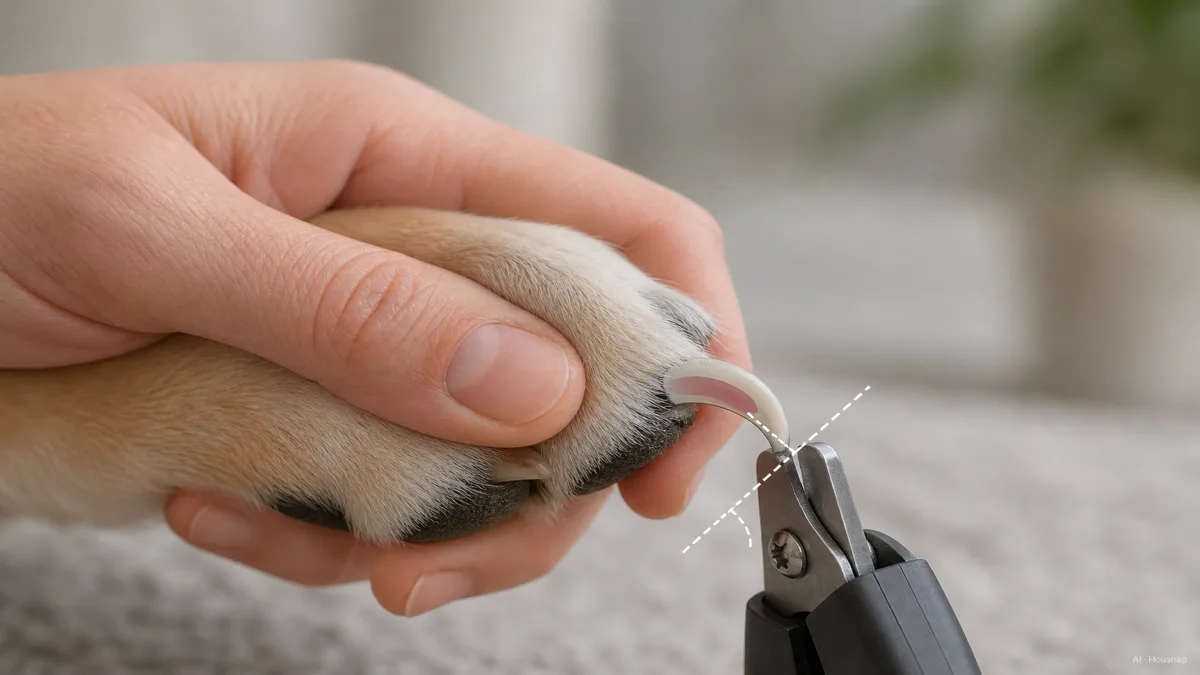
The illustration shows an angled trim and the tissue to avoid. Its 45-degree angle is not a safe-depth gauge: ask your vet to show the stopping point on your dog's own nails. AKC recommends a first-trim lesson.
Comment ce guide a été conçu
Written by Housnap's AI editor using veterinary guidance from VCA and PDSA, AKC grooming advice, Dremel instructions and Scenthound's tool comparison. This guide turns those sources into first-purchase criteria; it does not report hands-on product testing or an individual veterinary assessment.