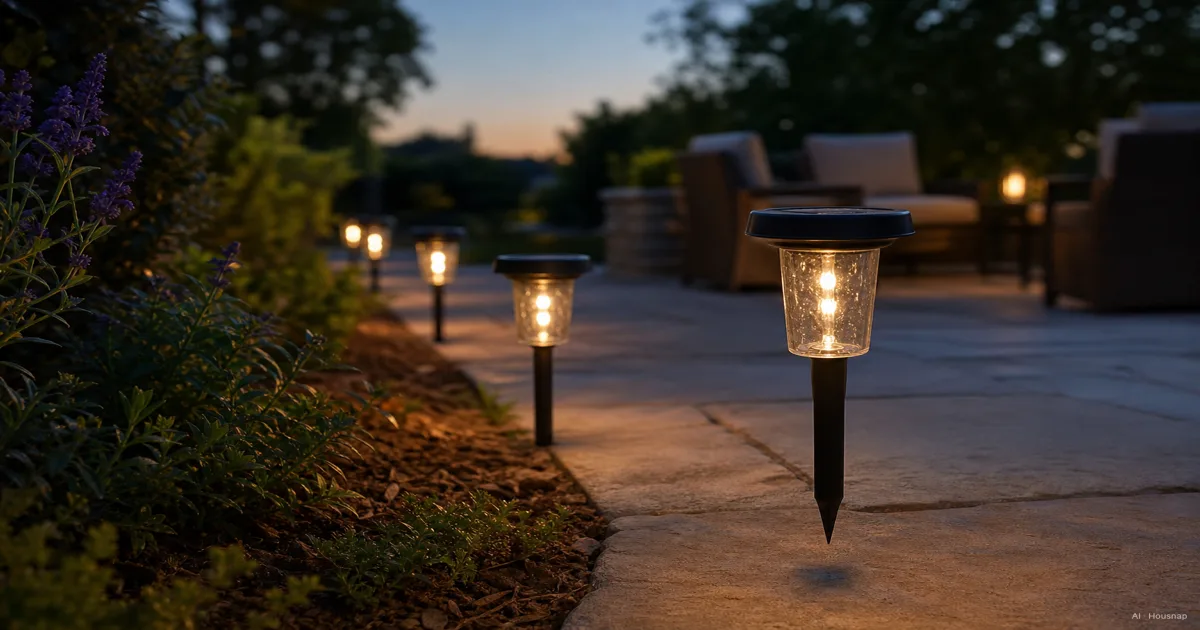
Check the panel location before choosing a light
Walk the proposed panel position at different times of day. Mark shade from trees, fences and eaves, then check the model's installation instructions. STEINEL explicitly warns that shade or placement behind glass restricts its XSolar L-S's operation (installation guidance).
If the light belongs under an eave but the sun reaches another spot, look for a separate panel and measure the cable route. LUTEC SUNSHINE, for example, has a separate panel on a 5 m cable. That is a feature to look for, not permission to extend every model's cable.
No workable panel position? Pause the solar purchase and compare a suitable powered outdoor fixture. For essential steps or an entrance, choose around the hours you need reliable light.
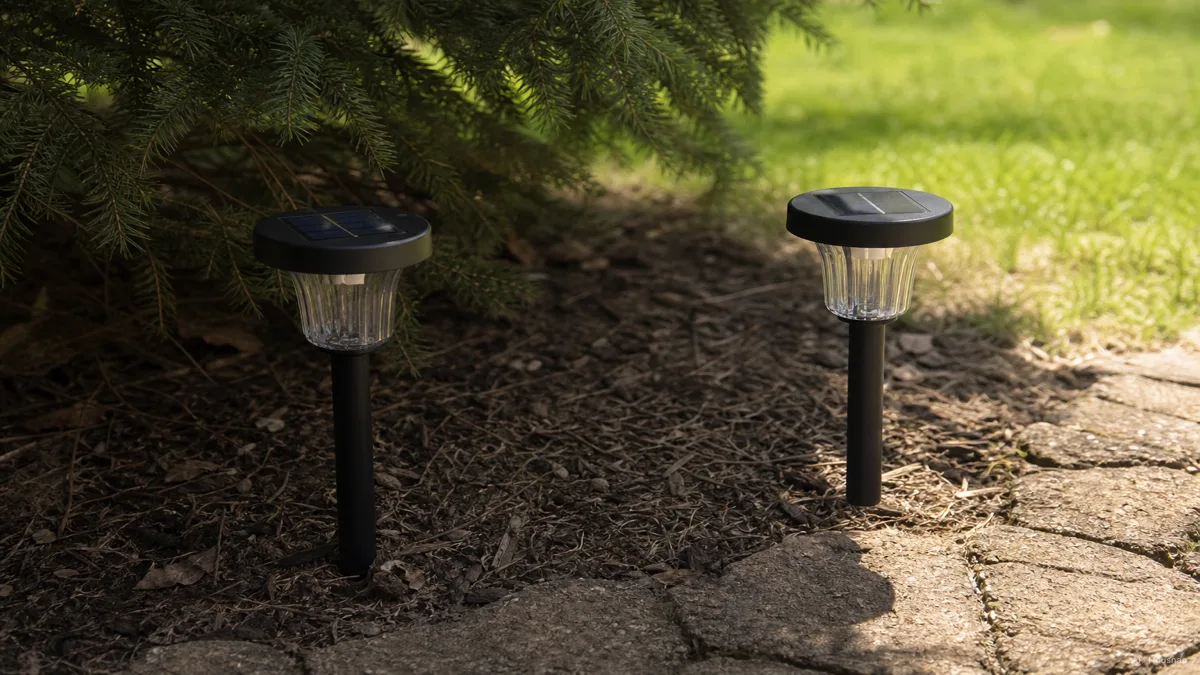
Choose the fixture by what you need to see
Use these as a shortlist, then check the actual light pattern and mounting instructions:
- A garden path. Start with path lights aimed at the walking surface. Check gaps between illuminated areas before ordering a full set.
- A step or deck edge. Look for a step light that reveals the edge without shining into approaching eyes.
- An entrance used briefly. Consider a motion-activated wall light or floodlight. Check whether its detection area covers your approach.
- A seating area for atmosphere. Consider string lights, checking illuminated length and the separate cable run to the panel. Plan task lighting separately if you also need to see steps or a table clearly.
Keep light on the useful area and use it when needed; that follows the principles discussed by the US Department of Energy. These fixture choices are an editorial way to apply that approach, not universal brightness requirements.
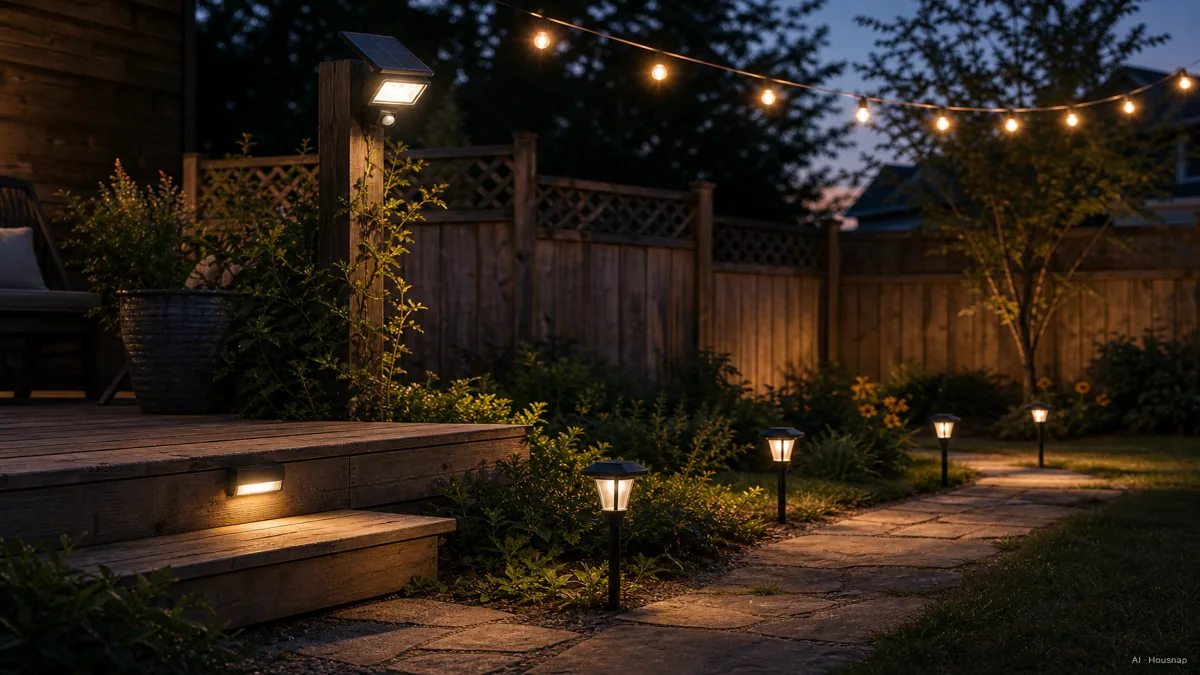
If the route continues into a dark indoor hallway, choose that light separately with the motion-sensor night-light guide. Indoor night lights are not substitutes for weather-exposed fixtures.
Compare the lit area, not just lumens
Lumens describe light output; lux describes how much light reaches a surface. One lux is one lumen per square metre (CCOHS). A lumen figure alone cannot tell you whether the far end of your path will be visible.
Ask for a beam diagram or coverage information at your intended mounting height. The DOE's outdoor-lighting guide emphasizes surface illumination, distribution and glare. A concentrated spot and a broad wash solve different problems, as the illustration shows; neither image establishes a safe spacing or a measured brightness.
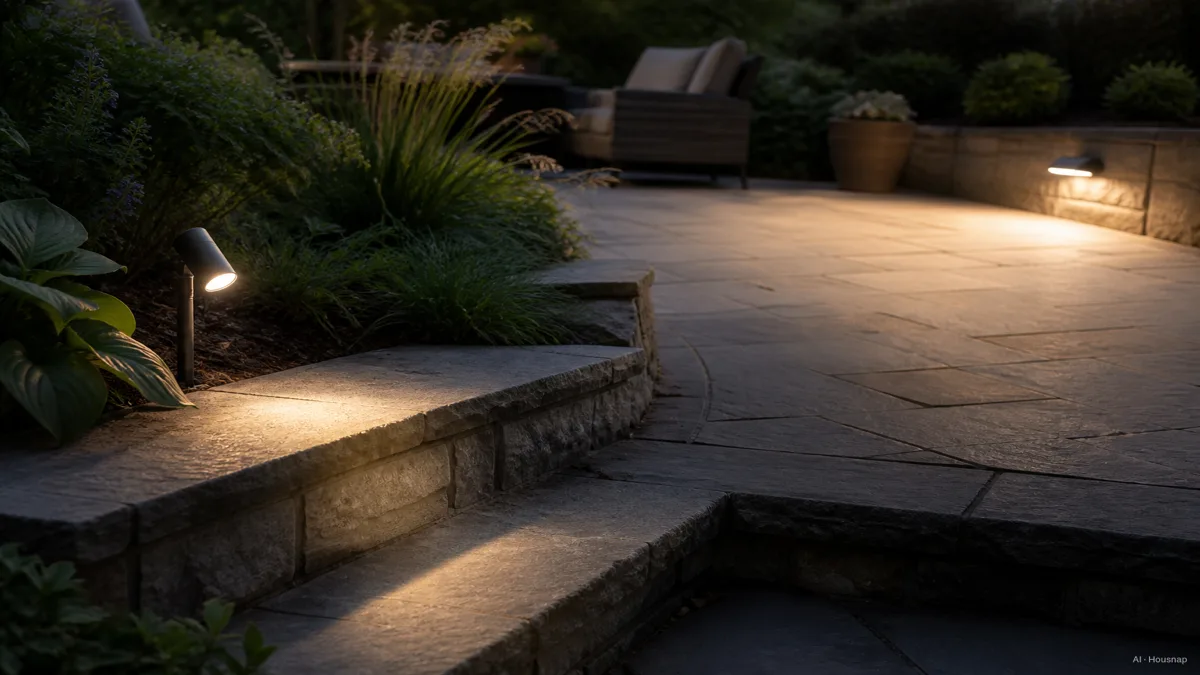
Before buying multiples, try one where you intend to use it. Look from the approach direction and from a seated position, then check the step edges and spaces between lights. A bright patch surrounded by darkness is a reason to adjust placement or choose a different beam.
Match protection to the water exposure
IP codes describe protection against solids first and water second. IP65 means dust-tight protection and resistance to water jets; IP66 addresses stronger jets (Rainford's explanation). Neither is an immersion rating.
There is no universal IP65 minimum for every outdoor position: LUTEC's outdoor FRAN light is rated IP44. Follow the fixture's permitted location and mounting conditions rather than choosing by a number alone. If those conditions are missing, ask before buying.
Standing water needs a separate decision. IP68 concerns prolonged immersion, not a generic “one metre briefly” promise. Ask for the permitted depth, duration and application; do not put an ordinary garden light in a pond. Rainford also explains that immersion protection does not automatically cover water jets and that IP ratings do not prove years of seasonal weather resistance (technical guide).
The badge in this illustration explains a rating; it does not certify any product you are considering.
Check the operating mode and battery support before checkout
Write down when you need light: during arrivals, through an evening outside, or until morning. Ask which mode the stated runtime uses, whether brightness reduces, and what charging conditions the claim assumes.
A background glow and full output are different settings. The XSolar L-S specifications list 3% background light separately from timed motion lighting. Do not read a long operating claim as continuous maximum brightness.
NiMH, lithium-ion and LiFePO4 labels should prompt questions, not a best-to-worst ranking. Request the exact battery specification, charging and operating temperature limits, replacement procedure and supported replacement part. Do not approve a battery swap from shape or capacity alone.
- Choose the candidate when panel position, coverage, exposure and operating mode all fit your use.
- Ask the seller when the runtime conditions or battery-service information are missing.
- Change the plan when the required lighting hours cannot be supported at that location. A larger headline lumen figure does not resolve that uncertainty.
Comment ce guide a été conçu
Written by the Housnap AI editor. This guide uses manufacturer specifications from STEINEL and LUTEC, Rainford's IP explanations, and public lighting guidance from the US Department of Energy and CCOHS to explain first-purchase decisions. It does not report hands-on product testing or guarantee performance in a particular yard.