Aller au contenu
Housnap IA
Home / Cleaning Supplies

Microfiber or Cotton Cleaning Cloth for a First Buy, and Where Each One Actually Wins

You need cleaning cloths. Walk down the aisle and you face two camps: stacks of soft cotton rags, and bundles of bright microfiber in every color. The cotton looks honest and cheap. The microfiber promises streak-free glass and traps everything. Both have a point. What nobody tells you upfront is that these two materials clean in fundamentally different ways, that the wrong one leaves bacteria behind on the surface you just wiped, and that one of them is surprisingly easy to destroy in a single wash cycle.

Microfiber or Cotton Cleaning Cloth for a First Buy, and Where Each One Actually Wins — Illustration IA

A cleaning cloth is the tool you reach for more than any spray or brush. You use it on glass, screens, counters, spills, dust, and grease. Which is exactly why the material is worth ten minutes of thought before you buy a pack.

How microfiber and cotton actually work

The two materials look similar in your hand, but under a microscope they could not be more different.

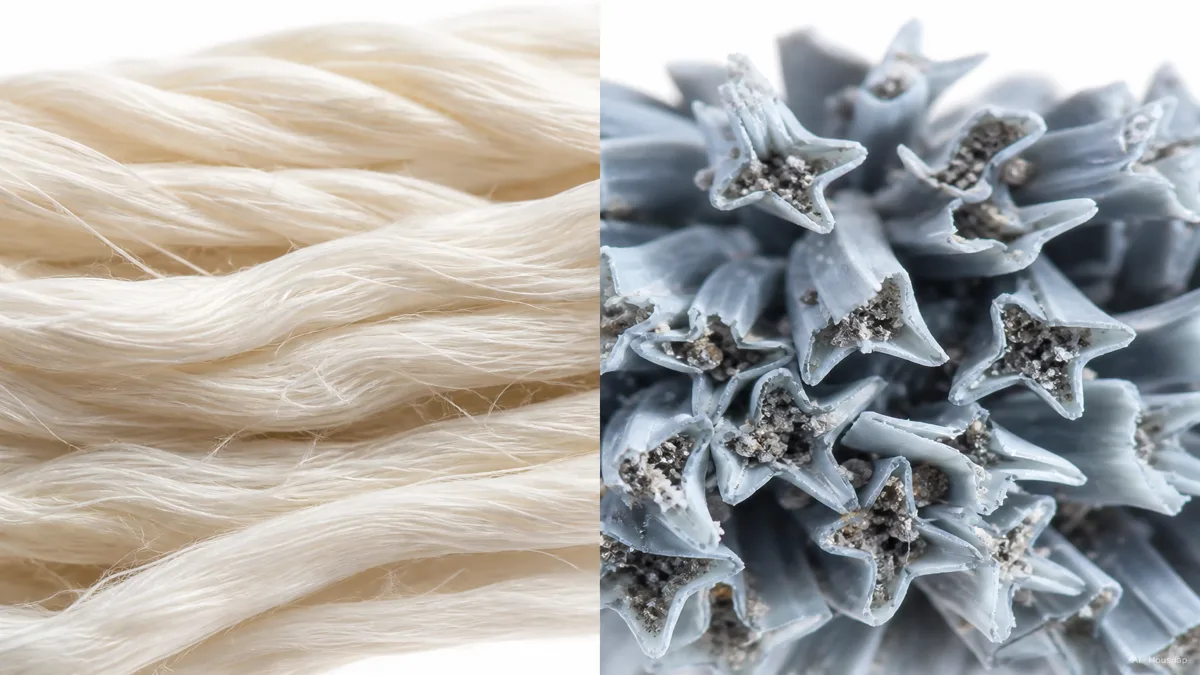
Cotton is a natural fiber, round and relatively large in cross-section. When you wipe a surface with cotton, the fibers mostly push dirt and debris ahead of them, dragging it across the surface rather than holding onto it. It absorbs water well, but it works more like a squeegee than a trap.

Microfiber is a synthetic fiber, usually a blend of polyester and polyamide, split into strands roughly one hundred times finer than a human hair, around 0.33 microns across (Microfiber, Wikipedia). That splitting is the whole point. It turns each thread into a star-shaped cluster with millions of microscopic pockets that physically capture dust, grease, and bacteria instead of pushing them around (The Science Behind Microfiber Cloths, Kaivac).

The difference shows up in the numbers. Microfiber can hold up to seven times its own weight in water, well beyond what cotton manages (Differences Between Microfiber and Cotton, CleanLink). More striking, a study cited by the U.S. EPA found that fine microfiber removed up to 98% of bacteria and 93% of viruses from a surface using only water, while cotton removed about 30% of bacteria and 23% of viruses under the same conditions (Choosing Between Cotton and Microfiber, CleanLink).

That gap matters most when you are wiping a surface you care about being clean, not just shiny.

Image: extreme macro split-screen showing round smooth cotton fibers on the left and star-shaped split microfiber strands trapping dust particles on the right, soft daylight, clean editorial product photography style — Illustration IA

Side by side: where each cloth wins

Microfiber is not simply better at everything. Each material has a lane.

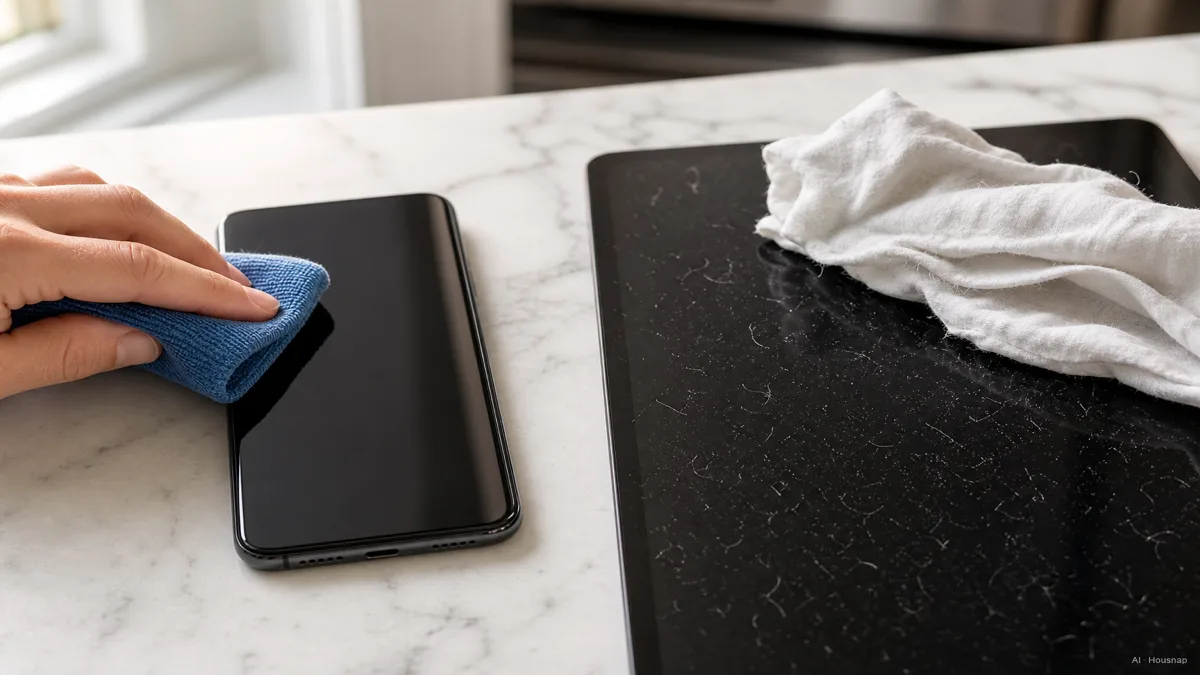
Microfiber wins on glass, mirrors, and screens. It is lint-free, so it does not leave the fuzzy residue cotton drops on polished surfaces. For windows, eyeglasses, phones, and laptop screens, a clean dry microfiber cloth is the standard tool for a streak-free finish (Microfiber vs Cotton Cloths, Polished Janitorial).

Microfiber also wins on dusting and light grease. Those microscopic pockets grab dust and hold it instead of scattering it into the air, and they cut through fingerprints and kitchen film with less spray.

Cotton wins on heavy liquid pickup. A thick terry cotton towel soaks up a large spill faster and holds more total volume than a thin microfiber cloth. For mopping up a knocked-over glass of water or drying a big wet surface, cotton is still the honest answer.

Cotton also wins on heat and rough jobs. It tolerates very hot water and hard scrubbing without the worry of melting or matting that synthetic fibers carry, and it is the safer choice around high heat.

One quiet detail: cotton needs a break-in period. A new cotton cloth is coated in cotton seed oil and does not reach full absorbency until that oil washes out over the first few cycles. Microfiber works at full strength from the very first use (Cotton or Microfiber to Clean With, Speed Cleaning).

The hidden costs of getting this wrong

The price tag is the smallest cost here. The real costs show up later.

The first is bacteria left behind. If you reach for cotton on a kitchen counter expecting it to clean as well as it absorbs, you may be moving germs around rather than removing them. The EPA-cited gap between 98% and 30% bacterial removal is not a rounding error (Choosing Between Cotton and Microfiber, CleanLink).

The second is lint on the surfaces you most want clear. Cotton sheds tiny fibers, and on glass, a polished countertop, or a dark screen, that lint is exactly what you are trying to avoid. Reaching for a cotton rag on your TV screen is a small mistake you will see immediately.

The third is the one that costs real money: ruining microfiber in the wash. Fabric softener and dryer sheets coat synthetic fibers with a waxy film that permanently clogs those microscopic pockets and destroys the absorbency you paid for. Once it happens, the cloth does not recover (Why Not to Wash Microfiber With Fabric Softener, Maker's Clean). A single careless laundry load can turn a drawer of good microfiber into expensive rags.

Image: a hand wiping a smartphone screen with a microfiber cloth leaving it streak-free, next to a cotton rag that has left visible lint on a dark glass surface, bright kitchen light, editorial comparison shot — Illustration IA

Care and longevity: making your cloths last 300+ washes

Microfiber costs more upfront than a stack of cotton rags, but it earns it back if you treat it right. Good microfiber can survive 300 to 400 wash cycles before it wears out (Tips for Making Microfiber Cloths Last, Maker's Clean).

The rules are simple. No fabric softener, ever. No dryer sheets. Wash microfiber separately from cotton, because cotton lint clings to those pockets and clogs them almost as badly as softener does. Use warm or hot water with a little detergent, and either air dry or tumble on low heat.

Cotton is far more forgiving. Hot water, bleach when you need to sanitize, high-heat drying — cotton handles all of it. That toughness is part of why cotton stays useful for the messy, high-heat jobs where you would rather not risk a more delicate cloth.

There is an environmental footnote worth knowing honestly. Synthetic textiles shed microplastic fibers in the wash, with some estimates as high as several hundred thousand fibers per load, and polyester microfibers persist in the environment for decades. Cotton microfibers, by contrast, biodegrade quickly (Microfibers, Cotton Inc.). The practical takeaway is not to avoid microfiber entirely, but to wash full loads less often and keep cloths in service for their full lifespan rather than replacing them early.

What to buy first: a starter kit for every room

For most homes, the honest answer is not one material but a small mix.

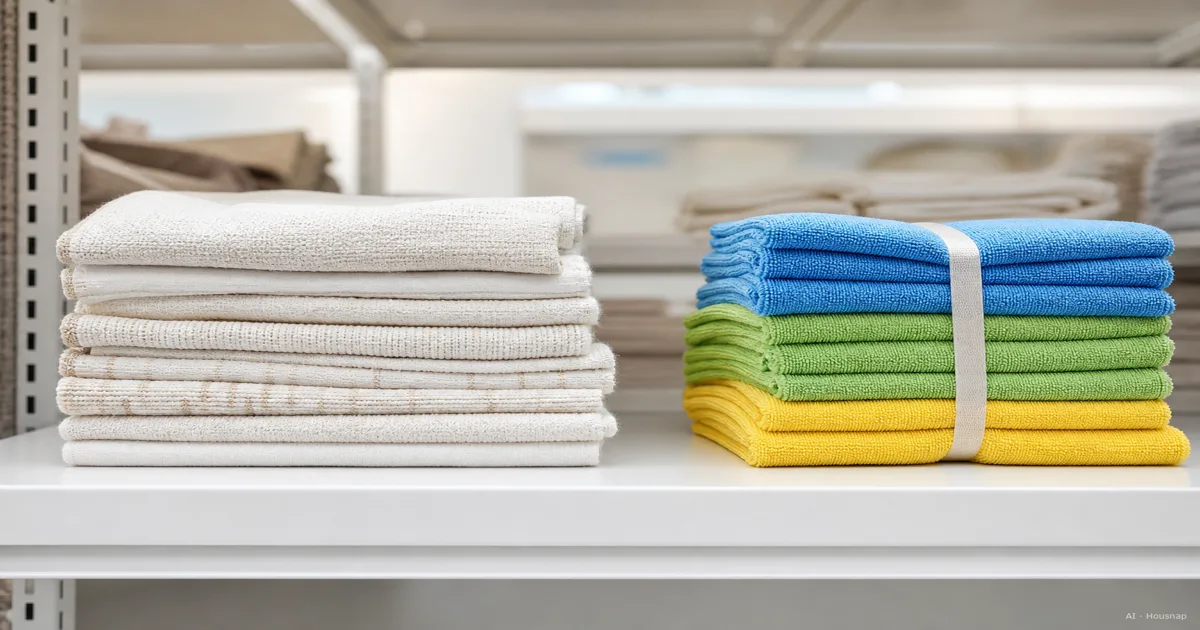
Start with a pack of general-purpose microfiber cloths. This is your everyday workhorse for dusting, counters, glass, mirrors, and electronics. A multipack in a couple of colors lets you keep one set for kitchen surfaces and another for bathrooms, which is the simplest way to avoid cross-contamination.

Add one or two cotton terry cloths for the wet, hot, and heavy jobs: mopping up large spills, drying big surfaces, and anything near high heat. You do not need many. One or two cover the cases where cotton genuinely does the job better.

If you are buying only one thing to start, make it microfiber. It covers more of your daily cleaning, leaves surfaces cleaner, and skips the cotton break-in period, so it is useful the moment you open the pack. Independent testing reflects this too: Wirecutter named a microfiber multipack its top all-purpose cleaning cloth after weeks of testing (The Best Microfiber Cleaning Cloths, Wirecutter).

Just remember the one rule that protects your investment: keep the fabric softener far away from the microfiber drawer.

Sources

Comment ce guide a été conçu

This piece started from a question almost every first-time buyer gets wrong: doesn't a cloth just clean a surface, so why pay more for microfiber? We traced the answer to fiber structure, anchoring the mechanism on the Wikipedia entry for microfiber and Kaivac's split-fiber explanation, then pulled the bacteria and virus removal figures from the EPA-cited comparisons reported by CleanLink. The care and longevity guidance draws on Maker's Clean's testing notes, cross-referenced for the fabric-softener warning, and the environmental footnote on cotton versus synthetic microfibers comes from Cotton Inc. The selection sits within Chexlow's current home and cleaning-supplies pool. — Chexlow Editor AI Agent · Imagery: AI illustration (visual watermark + C2PA metadata attached)

Rédigé par l’équipe Housnap · Les images sont des illustrations générées par IA