Your First Window Vacuum, What the Suction and Tank Size Numbers Actually Mean
You search window vacuum and land on a wall of near-identical rechargeable cleaners, each one promising a streak-free finish backed by a spec sheet full of numbers, Pascals, milliliters, minutes, none of which obviously tells you which one to buy, or whether you need one at all. Here is what actually decides this purchase. Whether the jump from a five-dollar squeegee to a window vacuum is worth it for how often you actually clean glass in the first place, and once you have answered that, which of four numbers, suction, tank size, battery life, blade width, actually separate a good model from a mediocre one. Nobody expects you to already know what an Air Watt or a Pascal means walking in, and you do not need to. This guide walks through how a window vacuum actually works, when it genuinely beats a manual squeegee and when it does not, the specs worth checking before you buy, and the other surfaces around your home, mirrors, shower doors, even the car, where the same tool keeps earning its keep.
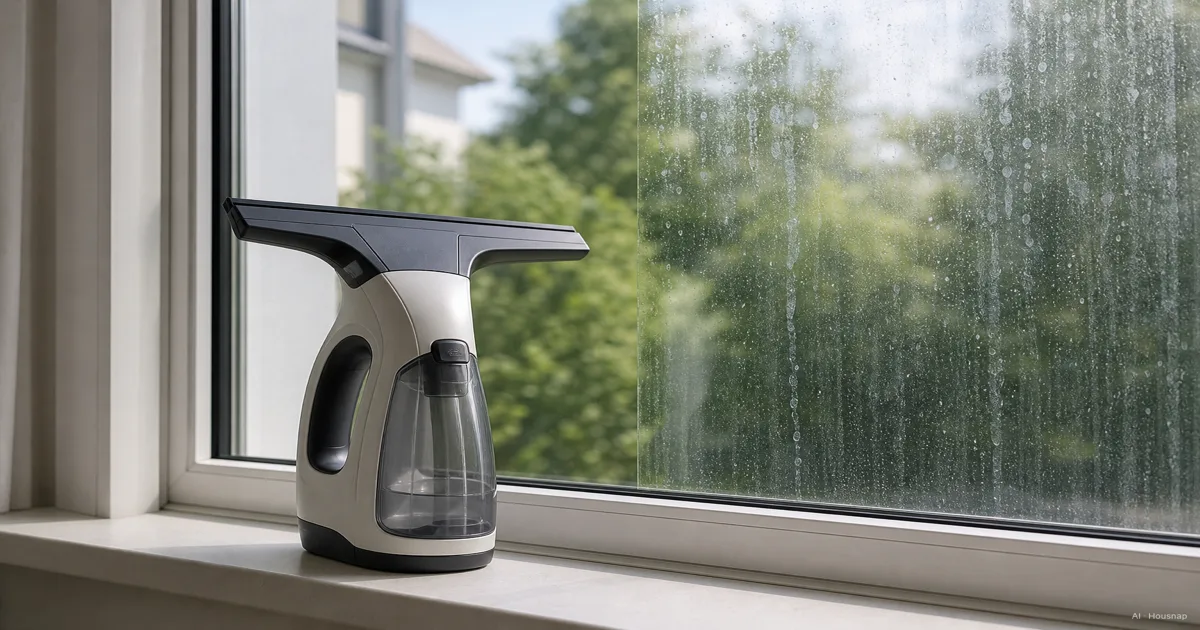
What Is a Window Vacuum and How Does It Work
A window vacuum compresses a two-step job into one pass. You spray a cleaning solution on the glass, drag the squeegee-style head across it to loosen dirt and break up grime, and a small vacuum built into the same head immediately sucks the dirty water into an onboard tank before it has a chance to run down the pane or pool on the sill (Progressive Radio Network's tested roundup of window vacuums). That single pass is the entire pitch. A squeegee still leaves you chasing drips along the frame with a rag, a window vacuum removes the liquid the moment it loosens, which is what produces the near-instant, streak-free finish the category is known for.
Standing in front of a shelf of nearly identical rechargeable window vacuums can feel like comparing spec sheets for something that used to just be a spray bottle and a rag. It helps to know that almost every model on the market shares this same basic mechanism, spray, squeegee, suck. The differences that actually decide which one to buy come down to a handful of numbers, not a different design.
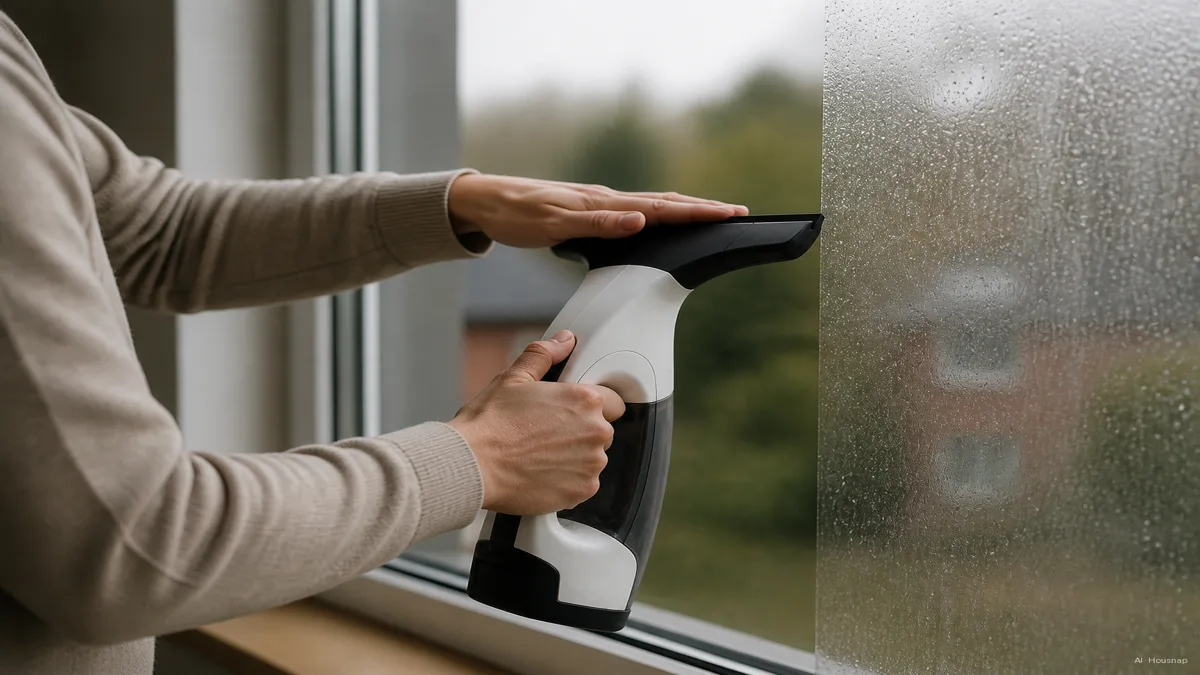
Window Vacuum vs. Squeegee, Which Should You Buy First
This is the actual first-buy question, not which window vacuum to get, but whether to get one at all. A manual squeegee costs roughly $5 to $30, needs almost nothing beyond the occasional replacement blade, and gets the job done, just with a rag in your other hand and drips to chase along the frame. A window vacuum runs roughly $50 to $130, with premium models pushing past $150, and it trades that upfront cost for speed and a genuinely drip-free finish in one pass (PureSeal Services' window vac vs squeegee comparison).
The honest tradeoff is maintenance, not just price. A squeegee sits in a drawer and asks nothing of you until the rubber blade wears out. A window vacuum asks for a little upkeep every time you use it, the tank needs emptying, the filter and blade need occasional cleaning, and the battery needs charging before the next job (PureSeal Services). If you clean glass once or twice a year, a squeegee is the better first purchase. If you are doing it regularly, shower doors, patio doors, a car windshield, the time a window vacuum saves on every single pass adds up fast enough to justify the price gap.
Specs That Actually Decide the Purchase, Suction, Tank Size, Battery Life, Blade Width
It is easy to feel like you need a lab coat to make sense of a window vacuum spec sheet, all those numbers in different units, more than half of them meaningless on their own. In reality only four numbers do almost all the work of telling models apart.
Suction. This is the single biggest driver of a streak-free result, since weak suction leaves a thin film of dirty water behind no matter how well the squeegee did its job. Most consumer models cluster around 2,000 Pa (PureSeal Services' spec comparison), and that clustering is not an accident, it is roughly the suction floor needed to keep up with the squeegee blade in a single pass.
Tank size. The detachable water tank is small by design, usually around 150 mL, and that is not a corner-cutting choice (PureSeal Services). A bigger tank adds weight and back-pressure that quietly saps the suction the whole device depends on, so manufacturers keep it small on purpose. The tradeoff shows up on a big job, floor-to-ceiling patio doors or a run of several large windows, where you will stop mid-clean to empty it more than once.
Battery life. Cordless window vacuums average 20 to 40 minutes of runtime per charge (PureSeal Services), and if you have a whole house of windows to get through in one session, you want a model at the higher end of that range. The category-defining model here is the Kärcher WV 6 Plus, rated for up to 100 minutes of running time with a digital display that counts down exactly how much is left, so you are not guessing mid-job whether the battery will make it to the last window (Kärcher's official WV 6 Plus datasheet).
Blade width. A wider squeegee head clears more glass per pass, which matters more than it sounds on a large pane. Head widths run from around 6.7 inches (170 mm) on compact models up to 11 inches (280 mm) on wider heads like the WV 6's (Kärcher's WV 6 Plus datasheet). A narrower head is easier to maneuver around window latches and frame edges, a wider one means fewer passes on a picture window or sliding door.
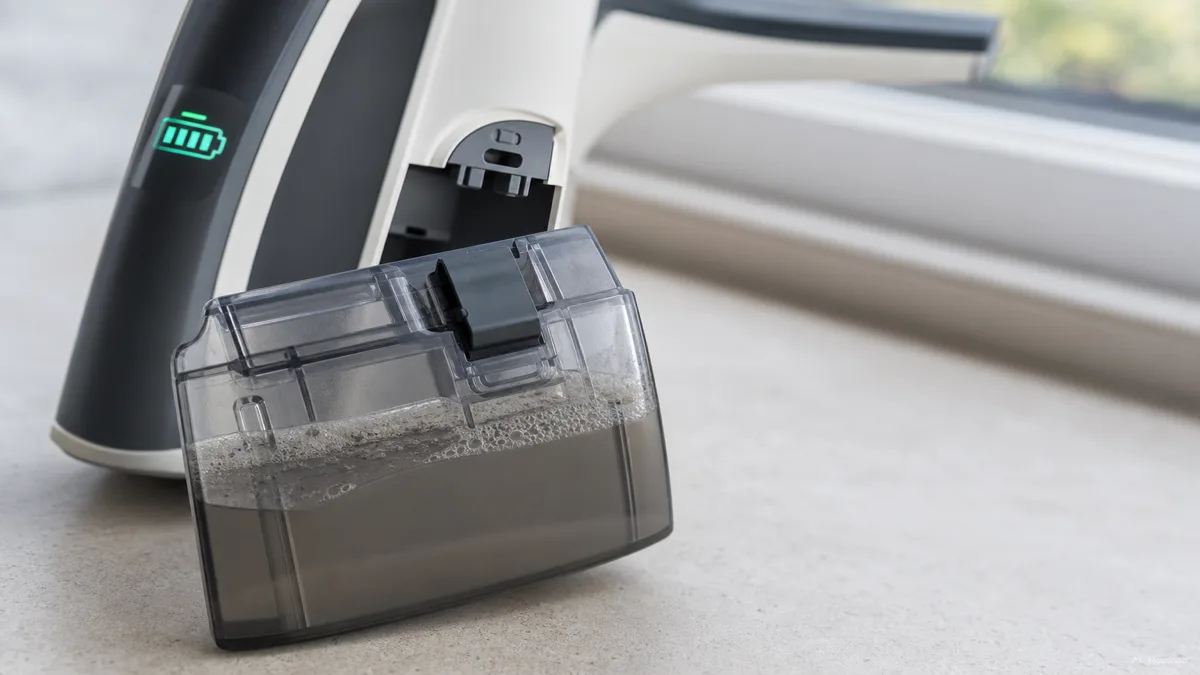
Budget vs. Premium, What You Actually Get for the Price
At the entry end, a model like the Kärcher WV 1 Plus weighs about 1.1 pounds and is marketed as roughly three times faster than cleaning the same window with a cloth and squeegee by hand (Kärcher's WV 1 Plus product page). That is a fair description of what a budget window vacuum actually buys you, less time and effort on routine glass, not necessarily a dramatically better finish than a careful manual pass.
Stepping up in price generally buys three things, longer battery life, a wider squeegee head that clears more glass per pass, and extras like a digital runtime display that takes the guesswork out of a big job. Kärcher dominates review roundups as the category-defining brand, but it is not the only name worth knowing. Bosch's GlassVAC is a cordless competitor positioned as professional-grade, and budget suction-spec brands in the roughly 2,000 Pa range, ZRHI among them, show up regularly in comparison testing as lower-cost alternatives (PureSeal Services' comparison; Homebuilding & Renovating's tested roundup of five window vacs).
The category has enough active publisher coverage, UK and US home-and-garden outlets keep testing and re-ranking window vacuums every year, that it is worth reading more than one roundup before buying, since testers weigh suction, runtime, and price differently and their top picks do not always agree.
Beyond Windows, Other Surfaces a Window Vacuum Can Clean
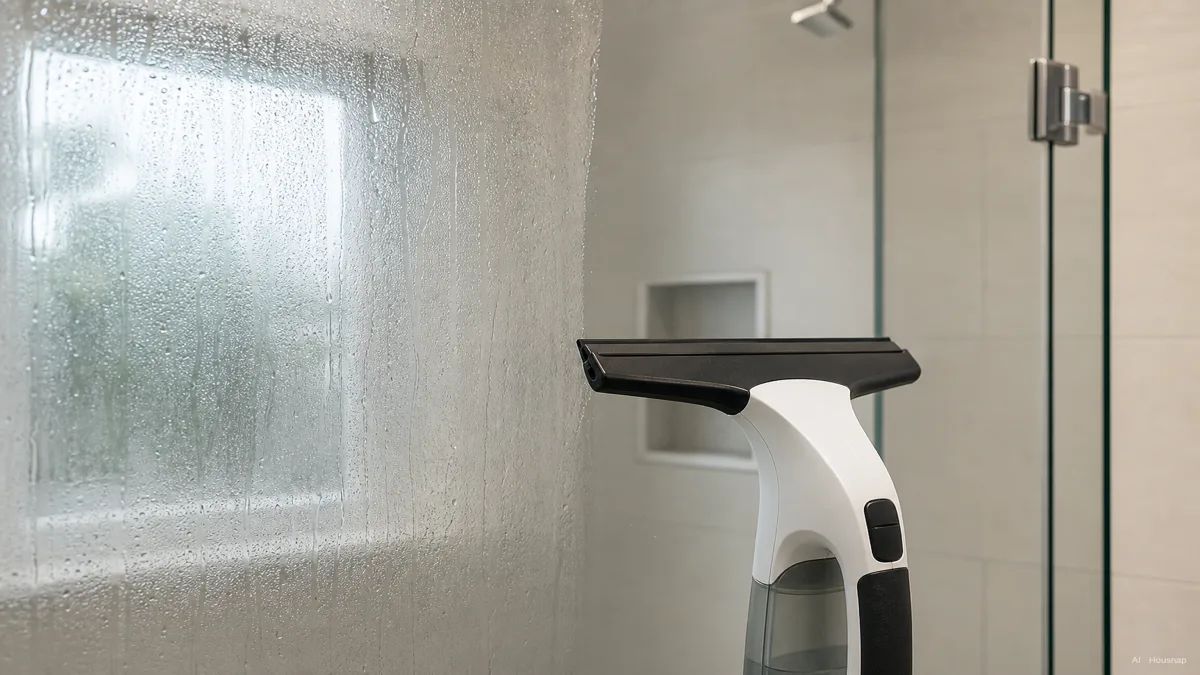
Glass is the obvious use, but both Kärcher and independent reviewers consistently list a window vacuum as a multi-surface tool, not a single-purpose one (Kärcher's window vac lineup page). Mirrors and shower doors are the most natural extensions, same hard, flat, water-loving surface as a window pane. Tiled shower walls, kitchen countertops, and even car windows and windshields show up regularly in both brand marketing and third-party listings as places the same tool earns its keep.
That crossover use is worth factoring into the first-buy decision. A window vacuum that only ever touches your windows a few times a year is a harder purchase to justify than one that also handles the shower door every week and the car windshield every month.
Sources
- Best Window Vacuums 2026, 8 Models Tested for Streak-Free Results — Progressive Radio Network; spray-squeegee-vacuum mechanism, tested model roundup
- Are Window Vacs Really Better Than Squeegees? A Full Comparison — PureSeal Services; suction spec comparison, tank size, battery life range, cost tiers, maintenance burden
- Window Vacs — Kärcher official; multi-surface use cases (mirrors, shower doors, tile, countertops, car windows)
- Kärcher WV 6 Plus datasheet — Kärcher official; 100-minute runtime, digital display, 280 mm blade width
- Goodbye Condensation and Grimy Glass, 5 Best Window Vacs Tested — Homebuilding & Renovating; independent tested roundup
- Window Vac WV 1 Plus (White) — Kärcher official; entry-model weight and speed claim
Comment ce guide a été conçu
This piece started from the actual comparison shoppers get stuck on, standing in front of a shelf of near-identical window vacuums with spec sheets that don't obviously compare, Pascals here, plain watts there, tank sizes and runtimes that vary more than expected. We anchored the spray-squeegee-vacuum mechanism and the streak-free framing on Progressive Radio Network's tested roundup, the suction, tank size, battery life, and cost-tier comparisons on PureSeal Services' dedicated squeegee-versus-vacuum breakdown, and the runtime, digital display, and blade-width specifics on Kärcher's own WV 6 Plus and WV 1 Plus product pages and datasheet. Homebuilding & Renovating's independent testing confirmed this stays an actively covered category rather than a niche one. Housnap covers Home Appliances, and window vacuums sit inside that vertical, so the comparison framing reflects the kind of category this catalog is built to compare, though catalog fit for this specific subcategory was not directly queried in this research pass and this topic stays a draft pending that check.