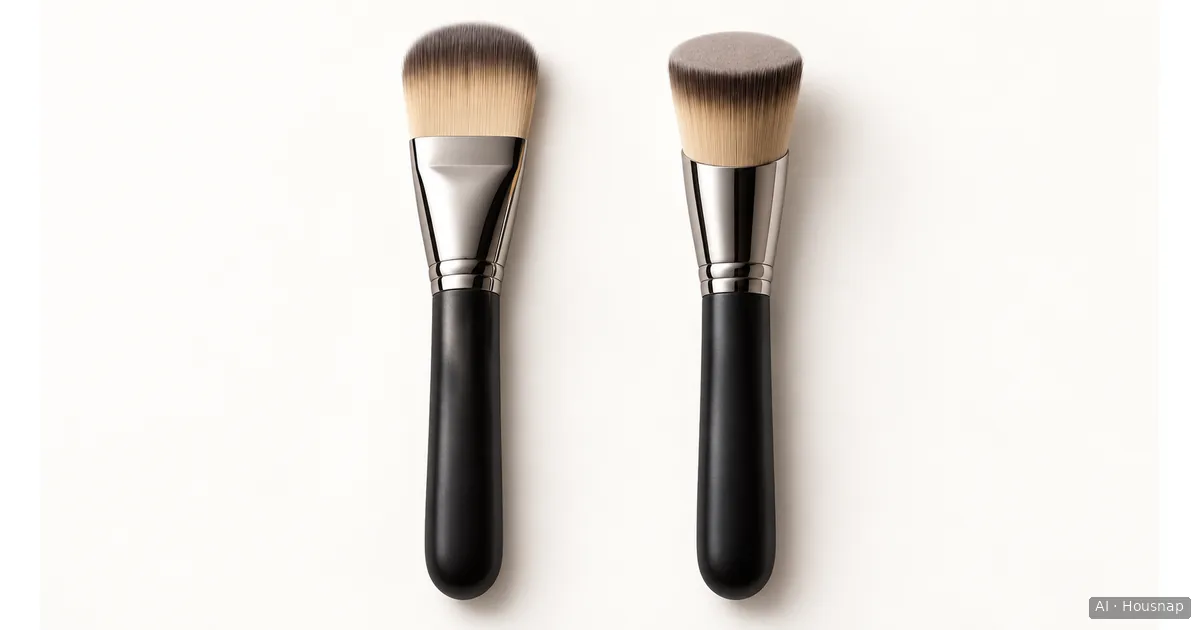
Disponibles actuellement chez une boutique
Ces produits ne sont proposés pour l’instant que par une seule boutique chacun. La comparaison de prix s’ouvrira avec plus de boutiques.


Match the brush to your existing foundation
Write down the exact foundation you use and whether it is liquid, cream or powder. Use that information to screen brushes before comparing sets, handle designs or extra accessories.
The product descriptions illustrate why this matters. Sigma’s F80 Flat Kabuki is described for liquid or cream products. Koh Gen Do’s Foundation Brush explicitly includes liquid and powder foundations among its uses. The F80 description alone does not establish powder compatibility, but that omission is not proof that powder use is prohibited.
If compatibility is unclear, ask about your exact foundation and the exact brush. If you have not chosen a base yet, first work out which foundation format and coverage you want.
Look at the head, not just the word flat
A flattened paddle and a brush with a flat bristle end are different shapes. Inspect front and side photographs rather than treating every listing containing “flat” as the same tool.
MAC describes its 190 Synthetic Foundation Brush as flat and paddle-shaped, with a shape that hugs small crevices. That makes it worth examining when access beside the nose is your main concern; it does not guarantee a comfortable fit on every face.
Sigma describes the F80’s finish as buildable, meaning coverage can be added in layers. Treat that as the maker’s description of this brush, not proof that every flat-top brush produces more coverage than a paddle brush. Koh Gen Do also calls its brush flat-head, which is another reason to check the actual shape rather than shop by that word alone.
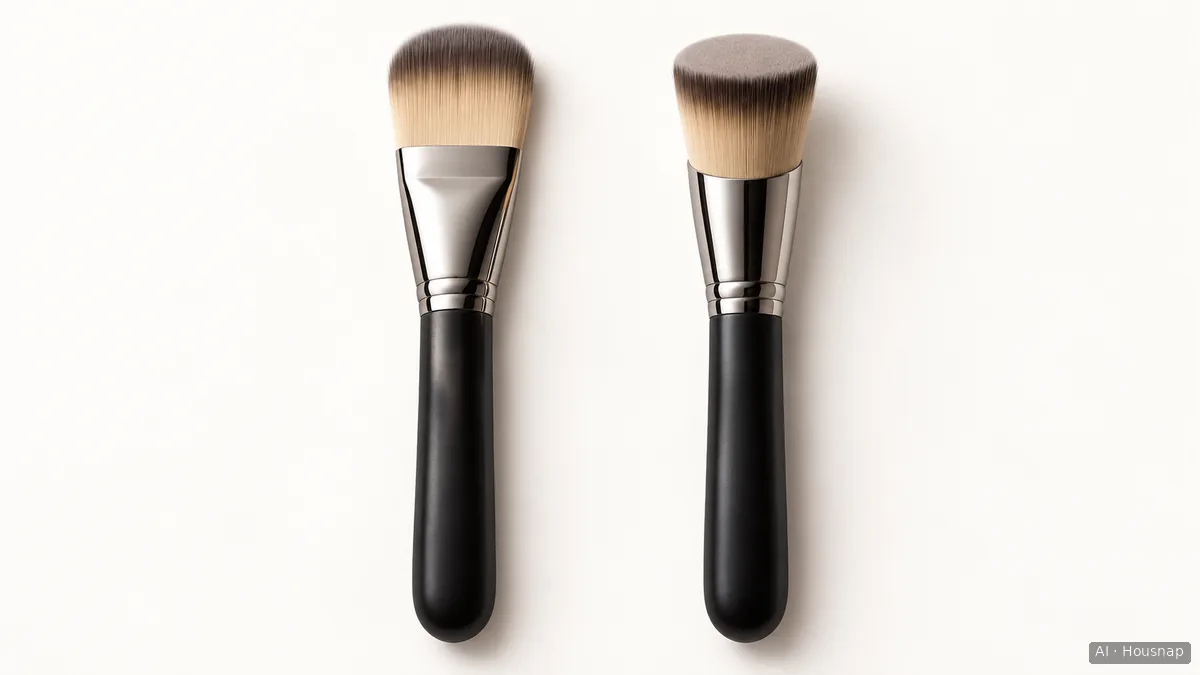
The illustration separates two shapes; it does not reproduce these models or demonstrate coverage. Neither shape earns a place in your basket until its stated uses fit your foundation.
Check cheeks and the sides of the nose separately
Before buying, look for a demonstration with the same formula type, or ask for one. If a trial is available, check the seller’s hygiene arrangements and trial or return conditions first.
Give the brush two jobs: spread the base over a cheek, then finish beside the nose. Look for a result you like without needing another applicator to complete either area. A demonstration on a broad cheek alone leaves the second question unanswered.
Koh Gen Do describes both swiping and stippling with its brush. Stippling means applying with repeated dabs; its instructions suggest adding foundation this way where extra coverage is needed. Follow the particular brush and foundation directions rather than assuming one motion suits every combination.
For your comparison, judge the first application before adding coverage only where wanted. Note whether the issue is visible brush marks, difficulty reaching a small area or simply wanting more coverage. Those observations give you a specific question to ask before purchasing.
Buy the brush that completes your routine
Keep a candidate when you can answer all three questions:
- Does its stated use cover my foundation type?
- Can I control it on both my cheeks and beside my nose?
- Do I like the result without buying another tool to finish the job?
Before paying, check the exact item included, its cleaning instructions and the seller’s return terms. A double-ended brush can still be one purchase, but inspect both ends and their intended uses rather than assuming an extra head adds value.
If one brush meets those needs, stop there. Add another only when you can name a task the first cannot handle. If application already looks right but shine or wear is the remaining concern, explore setting powder versus setting spray instead of treating it as another brush-shape question.
Comment ce guide a été conçu
AI wrote this guide for Housnap using official brush descriptions from Koh Gen Do, Sigma and MAC. It turns their stated uses into a single-brush selection checklist; the brushes were not independently tested, and the illustration explains generic shapes rather than reproducing a product.