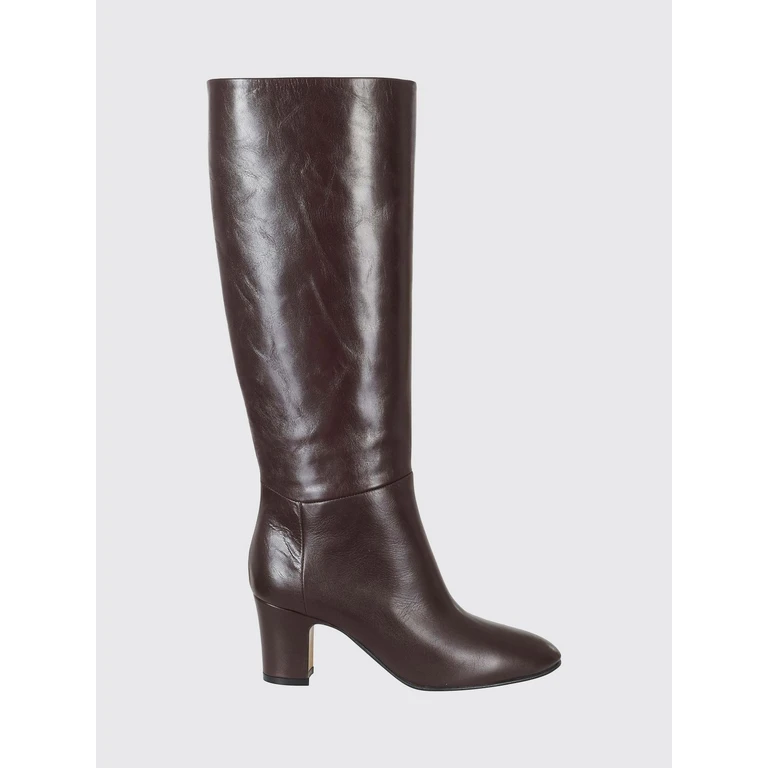
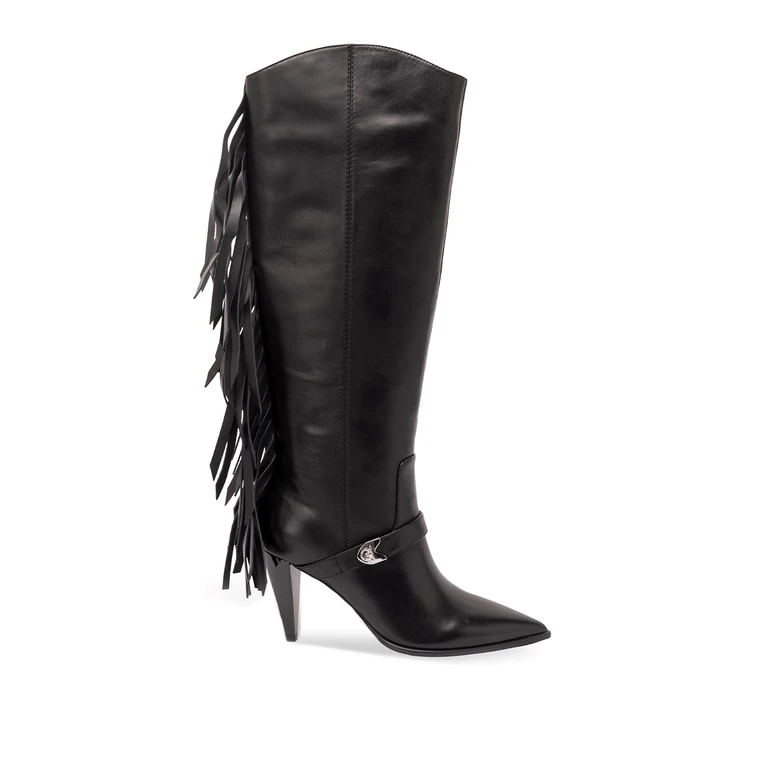
Produits actuels à comparer
Ces produits viennent des résultats Housnap pour ce sujet.


Measure both calves with your intended clothes
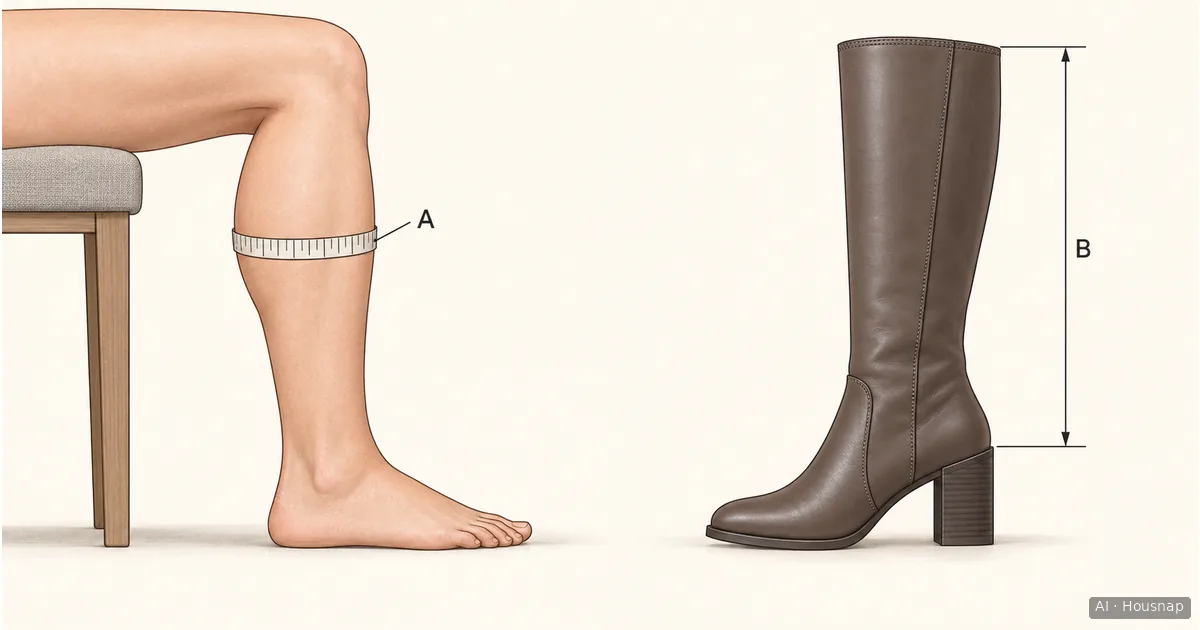
Start with a flexible fabric tape measure you already have. Following Jones Bootmaker’s calf-fitting method, sit with your feet flat and knees at a right angle, then measure around the widest part of each calf. Keep the tape in contact without pulling it tight; if the measurements differ, use the larger one when consulting the fit guide.
Planning to tuck trousers into the boots? Wear them while measuring. Jones gives the same advice for tights, so a bare-leg measurement should not stand in for the outfit you actually intend to wear.
Record both measurements, the unit and what you wore. Keep these as body measurements until you have checked what the seller’s numbers mean; do not add an arbitrary allowance and call it your calf size.
Check where shaft height starts
The shaft is the part of the boot that surrounds the lower leg. Its height needs a starting point: DuoBoots measures from the top of the heel to the top of the boot, excluding the heel itself.
By contrast, La Canadienne’s leg-measuring instructions ask you to stand with feet flat and measure from the floor to the desired point on your leg. These are different measurement descriptions. Before comparing numbers, ask how the particular boot’s listed height was taken and how the seller intends you to compare it with your leg.
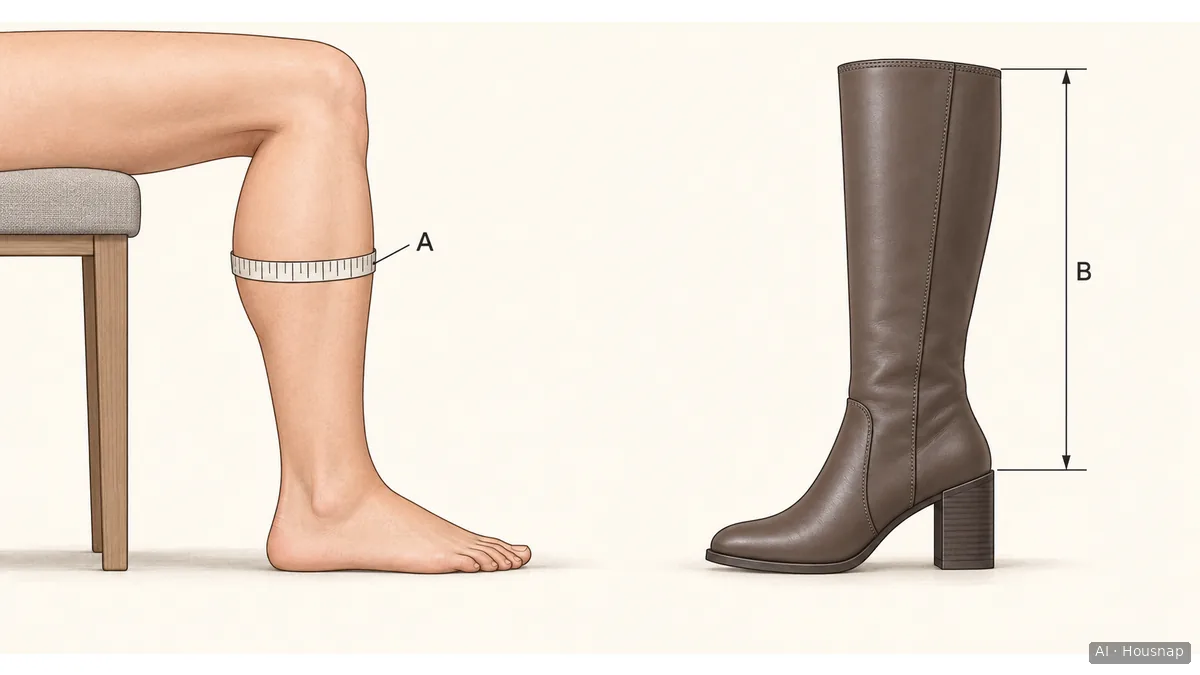
A shows circumference around the leg. B shows the boot-height convention described by DuoBoots, not a universal measuring rule or a full height from the floor. The illustration is not to scale and does not establish whether a particular boot will fit you.
Use the clarified height to shortlist where you want the boot to finish. Leave the final decision until you can check the upper edge while sitting and bending your knee.
Ask for measurements in the size you will buy
La Canadienne recommends comparing your calf measurement with the product page’s calf information. It also notes that fit can vary between its styles. Treat a familiar shoe size as a starting point, then request the missing details for this candidate.
- Which size was measured? Ask for the shaft height and circumference for the foot size you intend to order.
- Where was the circumference taken? Establish whether the figure describes the opening, another point on the shaft or a recommended body-measurement range. An opening measurement alone leaves the calf area unresolved.
- What condition does the measurement describe? For a stretch or adjustable shaft, ask whether the number is relaxed, extended or a recommended fit range.
- How should clothing be allowed for? Give the seller your measurement and what you wore. Ask how their chart accommodates that outfit rather than applying the same extra centimetres to every boot.
A useful enquiry is: “My larger calf measures ___ cm wearing ___. For shoe size ___, what are this boot’s calf circumference and shaft height, where are they measured, and which calf measurement does your chart recommend?” If those answers remain unclear, keep the fit unresolved rather than treating “wide calf” as a complete specification.
Try the foot and shaft separately
Try both boots with the intended socks and clothing. La Canadienne describes comfortable foot fit with room for toe movement; Jones Bootmaker describes a close calf fit without tightness. Use those as separate checks.
For the buying decision, walk a little, sit down and bend your knees within the seller’s permitted try-on conditions. Notice whether the foot feels comfortable, the calf is compressed or the upper edge presses into your leg.
- Foot comfortable, calf too tight or loose: compare a different calf fit or shaft shape before changing foot size.
- Calf comfortable, upper edge uncomfortable: compare a different shaft height and repeat the movement check.
- Foot uncomfortable too: reassess foot size, width and shape as well; a suitable calf measurement does not settle foot fit.
Do not force a zipper closed to make the trial work, or commit on the assumption that wear will supply the missing room. If a zipper catches even with the boot off, continue with the boot zipper inspection guide before pulling harder. That is a different question from choosing the right calf fit.
Buying without a fitting? Get the measurement answers and return conditions before ordering. Keep a candidate only when the foot fit, calf fit and height all remain plausible together.
Comment ce guide a été conçu
Written by Housnap’s AI editor using the published fitting guidance from Jones Bootmaker, DuoBoots and La Canadienne. The measurement questions and try-on decisions are editorial guidance for choosing knee-high boots, with each maker’s measurement convention kept in scope. No boots were physically measured or wear-tested for this article.