ABS vs PBT Keycaps, How to Pick Your First Set
You decide your first custom keycap set is next, and the moment you start browsing, two letters keep showing up everywhere, ABS and PBT. Most listings barely explain what they mean, so it's tempting to just pick whichever set looks best in the photo. Here's what the photo can't show you. The plastic under your fingers is not a coating or a paint job, it's the entire keycap, and the two materials age in completely different ways. One turns shiny and greasy within months. The other can go years without changing at all. None of this requires becoming a plastics chemist. You need to know why the shine happens, what you actually feel and hear differently, and why most 2026 buying guides steer a first-timer toward a mid-range PBT set instead of either the cheapest ABS pack or a premium group-buy. This guide walks through what ABS and PBT actually are, how shine and feel diverge with daily use, the sound and color differences enthusiasts care about, and what a first-time buyer should check before adding a set to the cart.
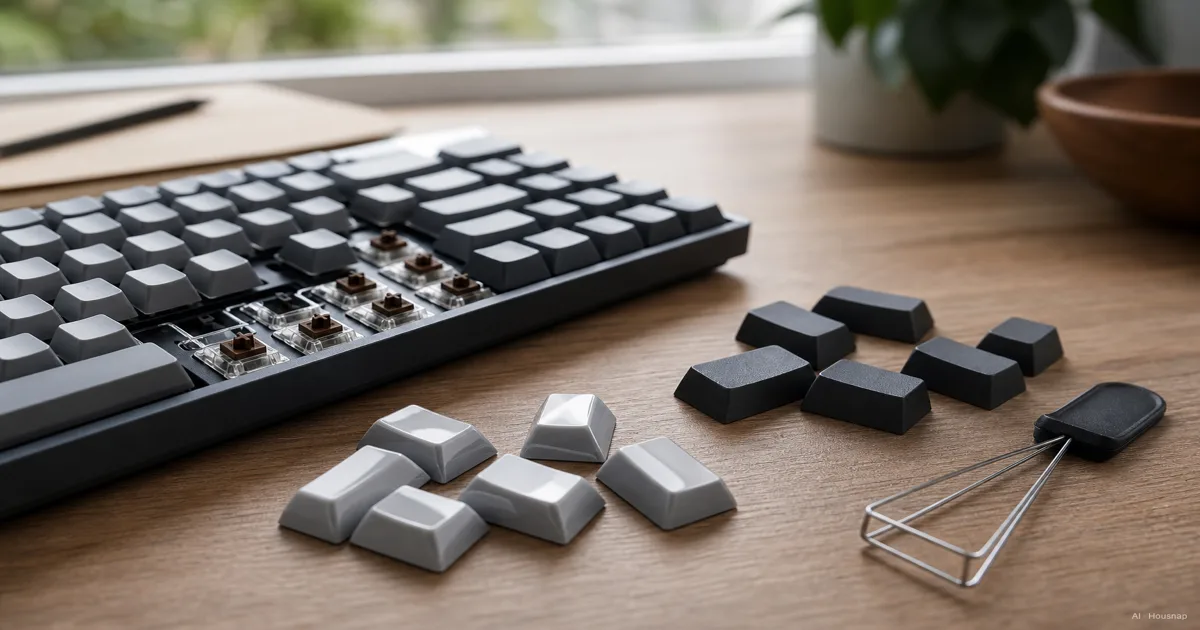
What ABS and PBT Actually Are: Material Basics
Every keycap starts as plastic pellets melted down and forced into a mold, and which plastic gets used is the whole story here. ABS, short for Acrylonitrile Butadiene Styrene, is the material almost every stock keyboard ships with. It is cheap, it flows easily into a mold, and it comes out smooth and slightly glossy, which is why it became the industry default long before "custom keycaps" was even a phrase, per RTINGS's ABS versus PBT breakdown.
PBT, Polybutylene Terephthalate, is a denser plastic with a much higher melting point, around 223°C compared to ABS's lower threshold, according to Keychron's material guide. That density is not a spec-sheet footnote. It is the reason PBT keycaps come out of the mold with a slightly textured, matte surface instead of a shiny one, and it is the reason the rest of this guide exists.
Neither material is "better" in some abstract sense. They are just built differently, and that difference shows up the moment you start typing on them every day.
Shine, Wear, and Feel: The Real-World Difference
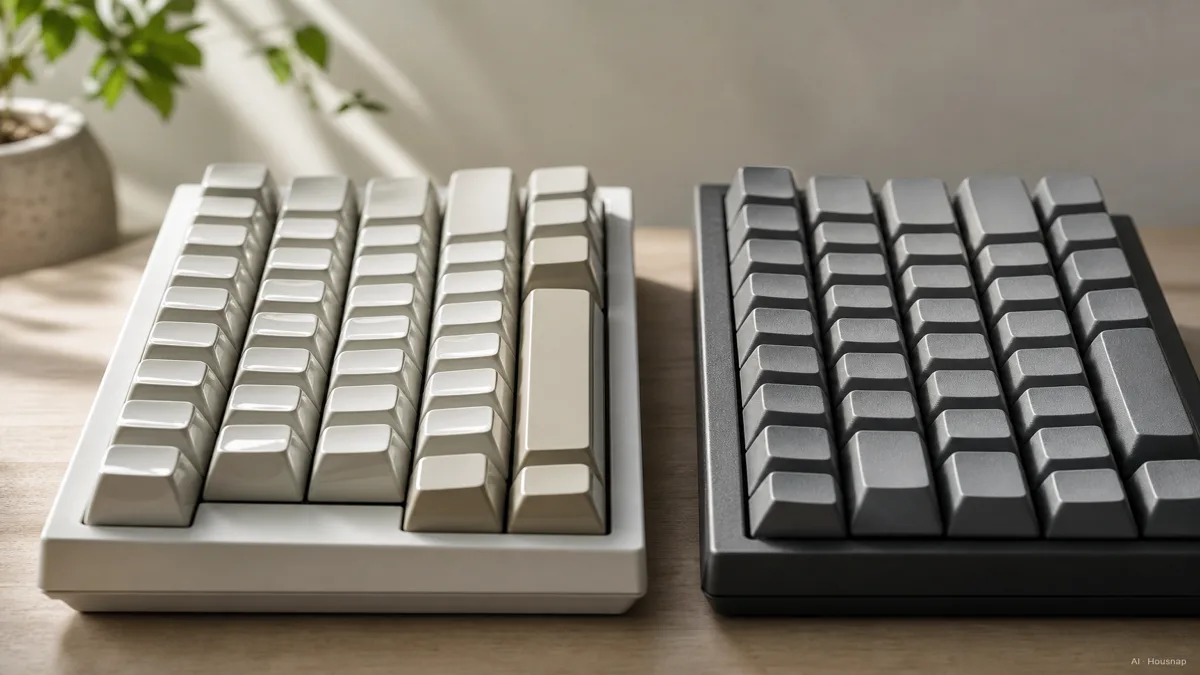
Here is the part nobody puts on the product listing. Your fingers are constantly leaving a thin layer of natural oil on every key you touch, and ABS absorbs that oil. Within a few months of regular daily use, ABS keycaps develop a greasy, shiny patch exactly where your fingers land most, on the home row and the most-used letters, according to both RTINGS and Corsair's explainer. It is not dirt. It is the plastic itself changing.
PBT's denser structure resists that oil absorption, so the matte, slightly textured surface it starts with tends to stay matte for years of regular typing, per Das Keyboard's comparison. That texture also changes how the keys feel under your fingers day to day. PBT has a grippier, almost paper-like feel, while ABS starts out smoother and slicker and then gets genuinely slippery once the shine sets in.
One honest caveat, because overselling PBT would be its own kind of dishonest. No plastic is fully shine-proof forever. Even PBT will show some light wear after years of heavy daily use. The real difference is how evenly and how slowly it happens, not whether it happens at all, and Hirosarts's guide to keycap shine is a good read if you want the full mechanism.
Sound, Color, and Longevity Trade-offs
Shine is not the only thing that changes. Denser PBT plastic also sounds different under your fingers, a deeper, more muted tone that keyboard enthusiasts describe as "thocky." ABS, being lighter and less dense, produces a higher-pitched, sharper "clacky" sound. That single difference is a major reason so many enthusiast custom builds default to PBT, since sound is half the point of building a custom board in the first place.
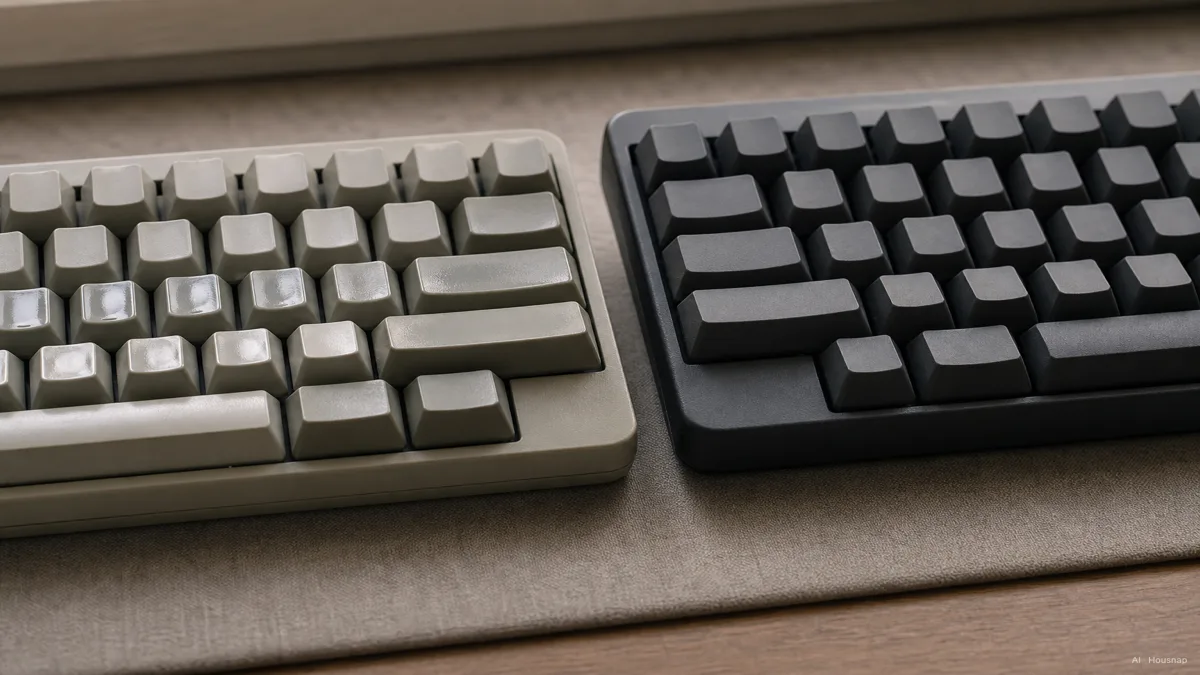
Color holds up differently too. ABS yellows and discolors faster under UV and regular light exposure, which is exactly why old off-white keyboards from the 1990s and 2000s often look aged and yellowed today. PBT resists UV better and keeps its original color for longer, per Keychron's material comparison.
None of this is free. PBT sets typically cost more than an equivalent ABS set, and the legend printing method adds another layer of cost on top of the base plastic. The best sets, ABS or PBT, use double-shot injection molding, where two colors of plastic are molded together so the legend is a solid piece of plastic all the way through, meaning it is backlit-friendly and physically cannot fade or wear off. Double-shot PBT sits at the premium end of pricing. Cheaper sets, in either material, usually use pad-printing, dye-sublimation, or laser marking instead, and those legends can wear thinner over years of use even if the base plastic barely changes. Despite the higher price, the community consensus across RTINGS and most buying guides is that the longevity trade-off is worth it for a keyboard you type on daily.
Which Should a First-Time Buyer Choose?
If you're staring at a wall of keycap sets for the first time, it is completely normal to feel stuck between "just buy the cheap one" and "buy the one everyone online seems to love." Neither is quite right for a first purchase.
2026 buying guides generally land in the same place. Skip both the cheapest ABS pack and the expensive premium group-buy set, and start with a mid-range PBT set, roughly 20 to 35 dollars, with tested sets averaging around 24 dollars. The reasoning is straightforward. You do not yet know whether you prefer a Cherry profile, an OEM profile, or a taller sculpted profile like MOA or KDA, and a mid-range set lets you find that out without the group-buy price tag or the multi-month wait some limited runs require.
There is also a safety net that makes a first PBT purchase lower-risk than it sounds. Most modern keyboards use hot-swappable MX-stem sockets, and keycap sets built for MX stems are not a permanent commitment either. If your taste changes, or you discover you actually prefer a different profile after living with a set for a few weeks, you can swap the whole set later without touching the keyboard itself. Housnap's keyboard accessory listings are the place to start browsing once you know roughly what you're looking for, PBT-labeled sets from established keyboard and accessory brands, rather than chasing one specific rare colorway.
How to Check What You're Buying: Legend Method, Profile, Compatibility
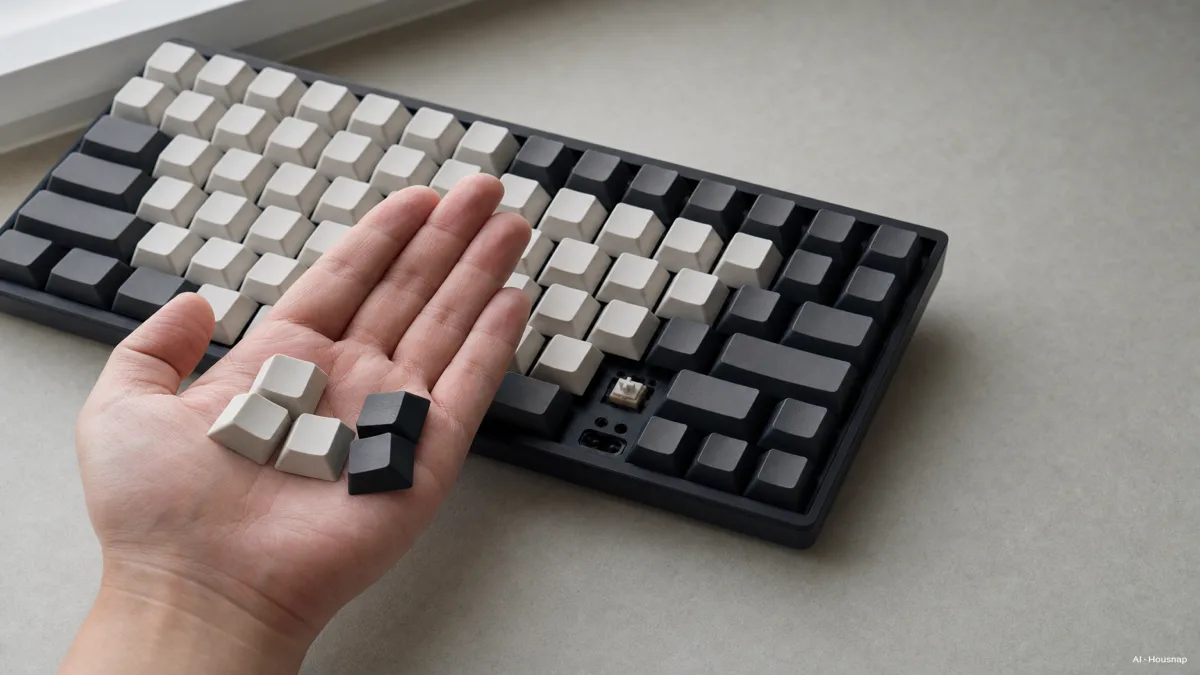
Before you add a set to your cart, there are three things worth confirming that matter more than the ABS versus PBT label alone.
Legend method. Check whether the listing specifies double-shot, dye-sublimation, pad-printing, or laser marking. Double-shot legends, in either ABS or PBT, will not fade or wear off no matter how long you own the keyboard. Pad-printed or laser-marked legends can thin out over years, independent of whether the base plastic is ABS or PBT.
Profile. Cherry, OEM, MOA, and KDA all have a different sculpted height and curve per row, and a set built for one profile will not sit right on a keyboard expecting another. If you are not sure which one you like yet, that uncertainty is exactly why a mid-range first set makes more sense than an expensive investment.
Stem compatibility. Confirm the set is built for MX-style stems if that is what your keyboard uses. It is the most common stem shape by far, which is also why hot-swap boards standardized on it.
ABS remains the default on most pre-built, off-the-shelf keyboards precisely because it is cheap and easy to mold at scale, and there is nothing wrong with that for a keyboard you are not planning to keep for a decade. PBT is where the enthusiast and custom keycap market lives, and once you have felt the difference on your own fingers for a few weeks, it is easy to understand why.
Sources
- ABS vs PBT Keycaps — RTINGS; shine formation from skin oils, feel and longevity comparison, and the double-shot legend argument
- ABS vs PBT Keycaps: Which is Better? — Corsair; how oil absorption creates the greasy shine specifically on ABS
- ABS vs. PBT Keycaps: Keycap Materials You Should Know — Keychron; melting point, density, UV and color stability differences
- PBT Keycaps vs. ABS Keycaps — Das Keyboard; matte texture retention and feel over years of use
- PBT vs ABS Keycaps: Complete Comparison Guide — KeebsForAll; first-buy price bands and profile options for a first custom set
- A Complete Guide to Keycap Shine and How to Prevent It — Hirosarts; why no plastic is fully shine-proof and how wear patterns differ