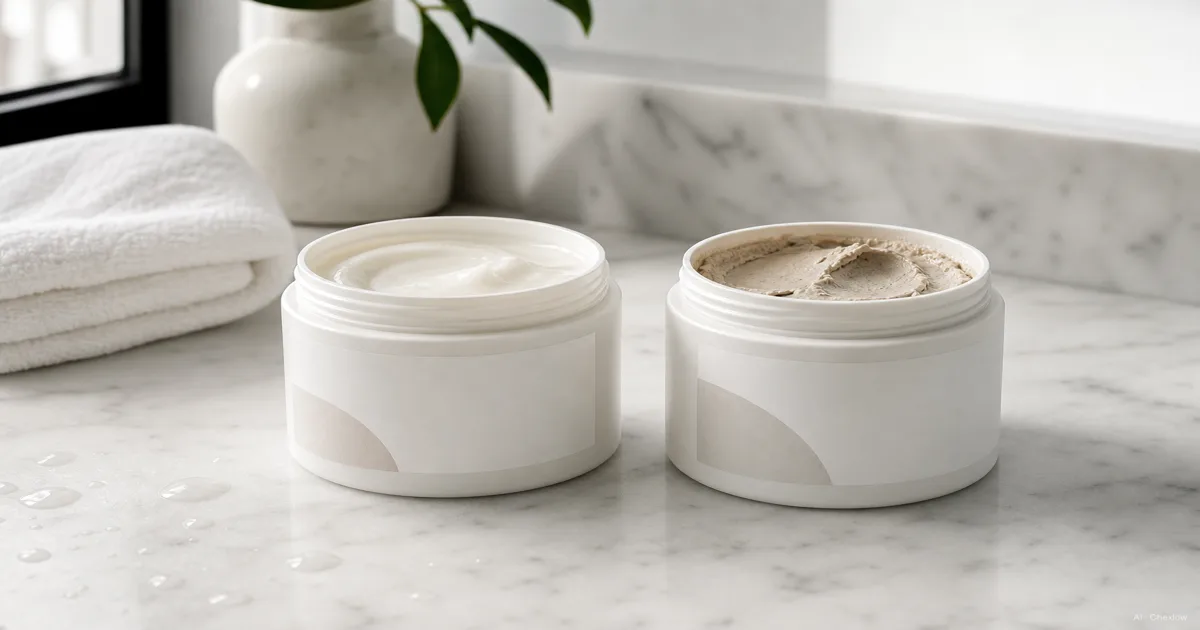
Disponibles actuellement chez une boutique
Ces produits ne sont proposés pour l’instant que par une seule boutique chacun. La comparaison de prix s’ouvrira avec plus de boutiques.


Choose the missing step first
For a first purchase, a rinse-out conditioner is a practical starting point: it covers the after-shampoo step that the American Academy of Dermatology recommends for moisture and detangling. That recommendation does not mean you must buy two products.
- No conditioner yet. Start here, choosing a formula intended for your hair type.
- Your conditioner already does enough. Keep it. A mask does not need a place in the basket just because it sounds more intensive.
- You want more conditioning. Compare a mask or deep conditioner with your existing product. Decide what you want to improve before choosing the jar.
These are buying priorities, not a compulsory progression from conditioner to mask to bond repair.
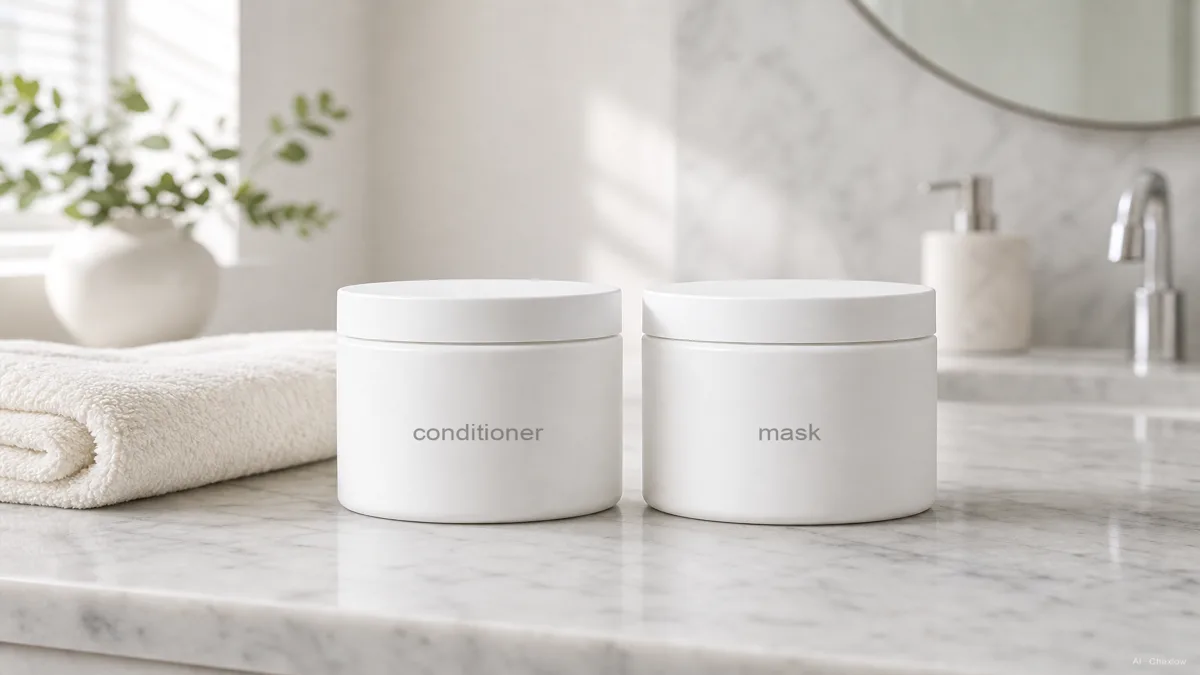
Check the instructions behind the name
“Treatment” needs a second look. Check whether the product rinses out, when it goes into the wash routine, and how long it stays on. Those details tell you whether it fits the step you want to fill.
Wella describes masks as often, but not always, richer. It also makes internal-repair claims for one of its conditioners. So “conditioner works outside, treatment works inside” is not a reliable way to sort every product.
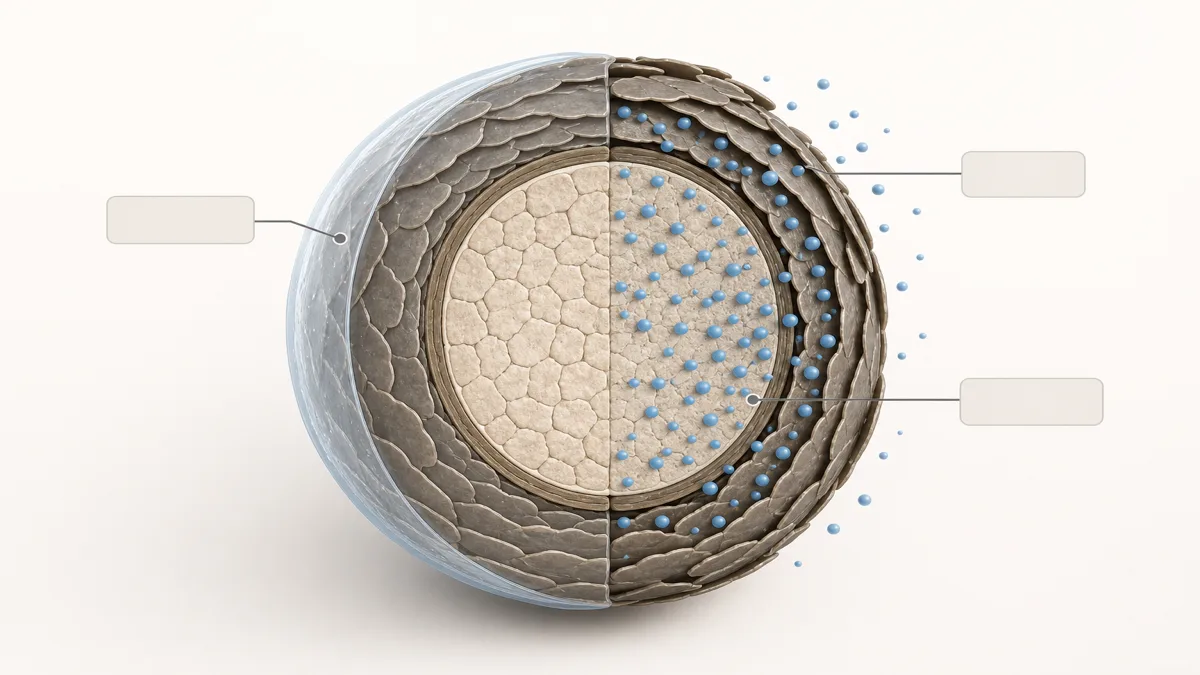
This illustration contrasts an outer film with deeper activity. It is a simplified concept, not proof of how far any conditioner or mask penetrates.
Do not use the thickness of a cream or the word “repair” as a ranking of effectiveness. Compare the specific purpose and directions instead.
Match the formula to your hair
- Fine hair that falls flat. Look for a formula intended for fine hair. Some masks can feel heavy, but lighter masks exist too; the category alone does not rule them out. OLAPLEX’s guide discusses this distinction.
- Dry or curly lengths. Check where you apply conditioner before buying another product. The AAD advises conditioning the lengths for dry or curly hair, versus the ends for fine or straight hair.
- Colored hair or persistent dryness. A mask is worth considering, as OLAPLEX notes; coloring alone does not tell you which formula or routine to choose.

Fine hair can also be colored or dry. Use these situations together, rather than treating the four pictures as mutually exclusive types.
Plan one routine before adding another bottle
Read the chosen product’s sequence before using it. There is no universal mask timer: OLAPLEX’s guide gives a three-minute rinse-out routine, while other products have different directions.
A specialist exception is K18 Leave-In Molecular Repair Hair Mask: shampoo, skip conditioner beforehand, towel-dry, apply, and wait four minutes without rinsing. Other products can follow that wait. This example explains why a repair treatment cannot automatically take the same slot as a rinse-out mask.
For an ordinary conditioning mask, do not automatically add conditioner afterward. Wella says that extra step may be unnecessary. Follow your chosen product’s directions rather than copying another brand’s sequence.
To judge your purchase, keep a simple note: are the lengths easier to manage, and does the finish suit you? If the result is already satisfactory, stop adding products. If your next question is whether to add a rinse-out mask or a product that stays in after washing, compare hair masks and leave-in conditioners.
Comment ce guide a été conçu
Written by Housnap’s AI editor using AAD hair-care guidance and Wella, OLAPLEX, and K18 documentation. The purchase order is an editorial judgment for first-time buyers; manufacturer instructions are used for specific examples. No hands-on product testing was performed.