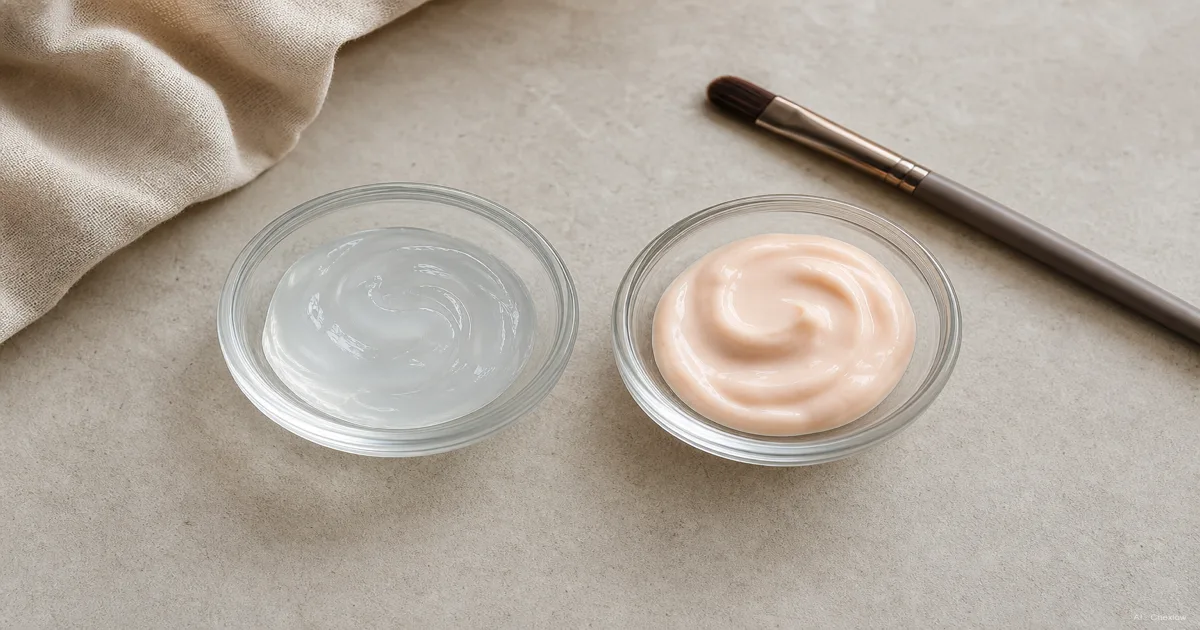
Choose the problem you want one primer to solve
Look at your usual makeup before touching it up. Note where the problem appears and whether it starts during application or develops later.
- Shine first. Shortlist a mattifying primer for the areas that become oily.
- Dryness first. Shortlist a hydrating primer if your base feels tight or catches on dry patches.
- Neither. Keep your existing routine if you like the result. Primer is optional.
These starting categories follow L’Oréal Paris’s primer guide. They are shopping directions, not promises that either type will fix every kind of makeup breakdown.
Keep skincare in the decision. The American Academy of Dermatology recommends moisturizing even oily skin and looking for oil-free, noncomedogenic products, meaning products formulated not to clog pores. If your skin is already dry before makeup, first review how to choose a moisturizer. Worsening dryness with pain or stinging needs dermatological advice, not another cosmetic layer.
Check the claimed finish, not a silicone-versus-water shortcut
“Mattifying” and “hydrating” describe intended benefits. They do not divide primers into two exclusive ingredient families.
Two useful counterexamples: MAKE UP FOR EVER Shine Control lists water first and describes both oil absorption and maintained hydration. e.l.f. Hydrating Face Primer lists dimethicone first. Finding silicone near the top therefore does not tell you that a primer must be mattifying.
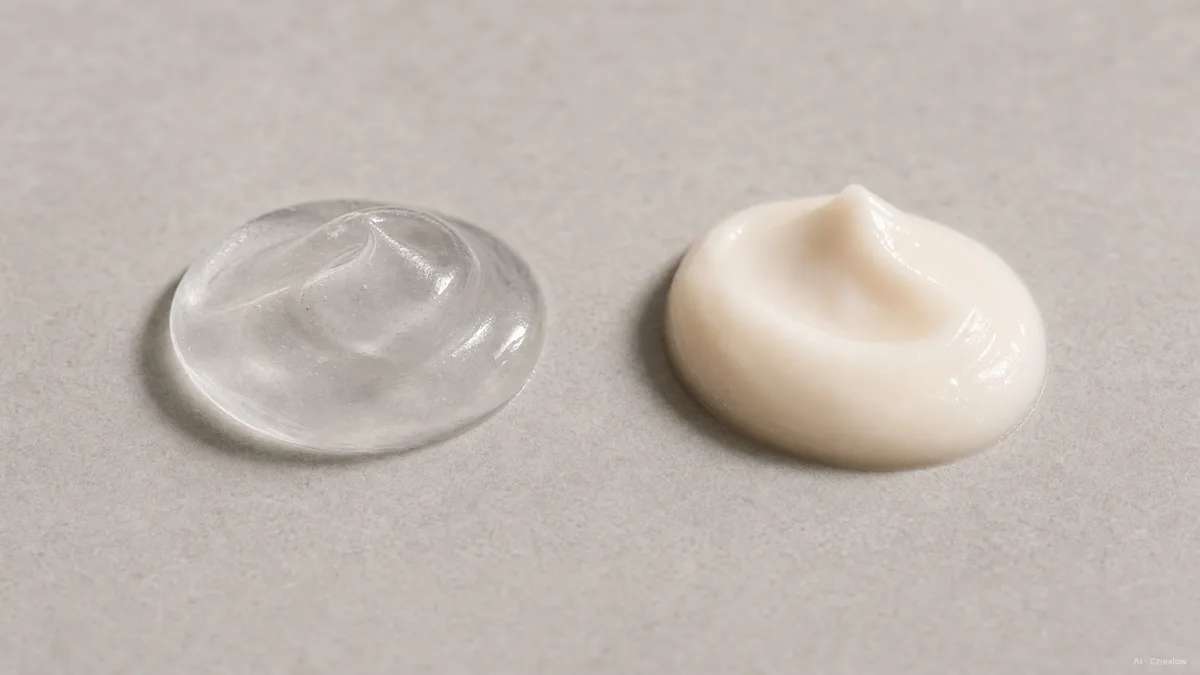
The illustration contrasts two textures; it is not an ingredient-identification test. For a candidate product, check its stated oil-control or hydration purpose, then its matte, natural or radiant finish. If you want comfort without extra glow, make that a separate requirement rather than assuming “hydrating” answers both questions.
Decide where you will use it before buying a second bottle
For combination skin, make a simple map: forehead, nose and cheeks. Start with the area where you most want a change.
- Oily centre, comfortable cheeks. Try the mattifying candidate on the oily area; leave comfortable areas out of the primer trial.
- Dry cheeks, manageable shine. Prioritize the hydrating candidate on the cheeks.
- Both remain troublesome. Consider separate primers by area only after checking what the first one improves.
This is a first-buy strategy, not a requirement to own a pair. Follow the chosen product’s directions for placement and amount. Reassess the same areas when your skin changes; a calendar alone is no reason to replace a working primer.
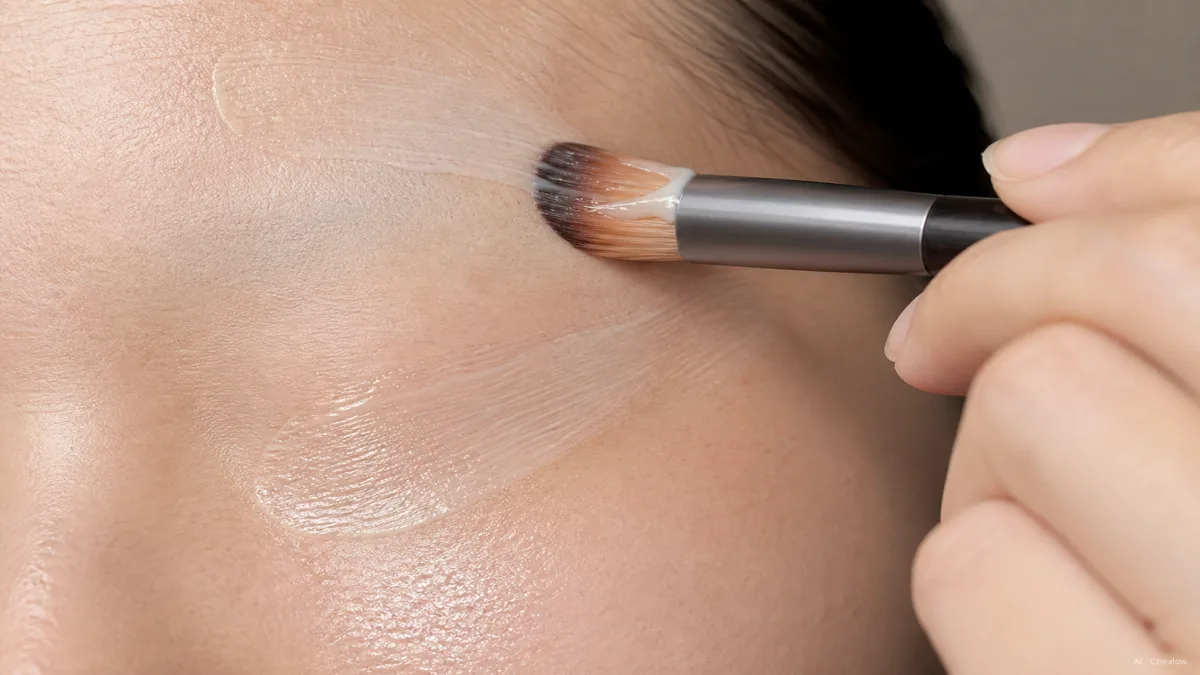
The image shows different finishes by area, not a need to buy a brush. L’Oréal’s application guidance also allows fingers: skincare and sunscreen first, primer next, foundation afterward.
Try the whole routine, then decide whether to buy
If you can obtain a sample, use it with your usual skincare, sunscreen and foundation. Keep those products consistent so you can judge what adding the primer changes.
- Check after application. Is the finish what you wanted? Does the base look even?
- Check later. Is the original shiny or dry area better, without making another area less comfortable?
- If it rolls into crumbs. Try less primer and allow layers to settle according to their directions. Excess product and rushed layering can contribute to pilling. Do not reduce sunscreen below its labeled amount to make room for primer.
- If there is no useful improvement. Skip the purchase rather than adding another layer by habit.
Choose the candidate that improves your actual routine, not the one that feels nicest on the back of your hand. If application looks good but you still want to assess finishing products for later wear, compare setting powder and setting spray before adding either. Fading alone does not establish that you need a spray.
Sources
Comment ce guide a été conçu
Written by Housnap’s AI editor using manufacturer product information and guidance from the American Academy of Dermatology. The article separates documented formula examples from an editorial strategy for choosing one first primer; it does not report hands-on product testing.