Choose the help you actually need
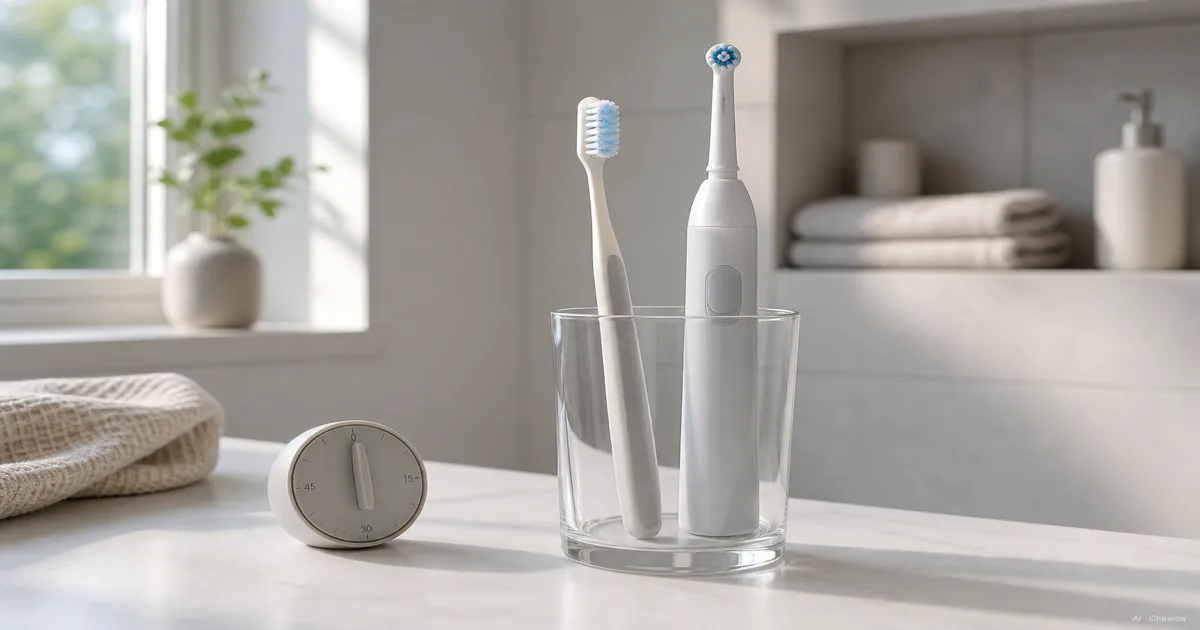
Start with what makes brushing difficult, rather than the most expensive handle. The American Dental Association says both manual and powered brushes work effectively; powered brushing may be easier if hand movement is limited.
- Choose manual for simplicity. If you want no charging routine and no separate replacement-head system, start here. You can use a timer you already own.
- Consider electric for assistance. If controlling the repeated brushing motion is difficult, or you want reminders built into the handle, compare models that provide that specific help.
- Unsure? Name the problem first. Finishing too quickly, pressing too hard and struggling to move the brush are different problems. Do not assume every electric brush addresses all three.
Use the research without turning it into a promise
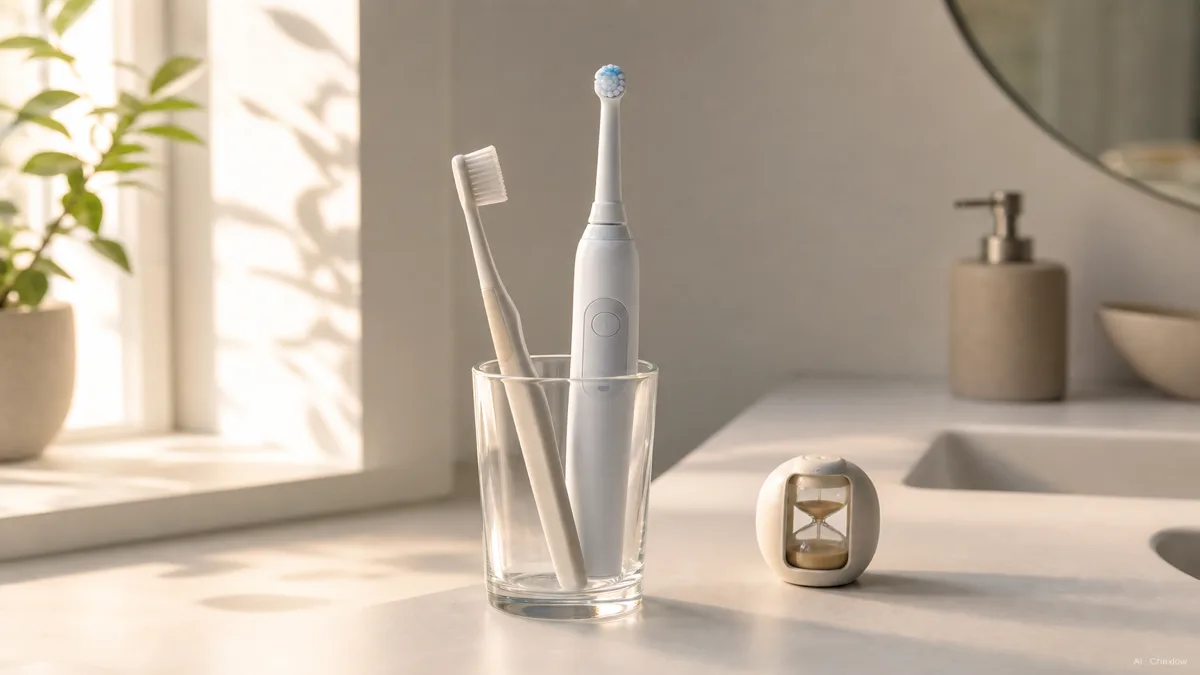
Cochrane's review found moderate-quality evidence that powered brushes reduce plaque and gum inflammation more than manual brushes. The importance for long-term dental health remained unclear.
That supports considering electric. It does not tell you how much extra to spend, or promise that a particular handle will prevent dental problems. Treat the research as one reason for choosing a type, then check whether the actual product meets your needs.

Conceptual illustration, not a chart of measured results.
If you choose electric, compare heads before modes
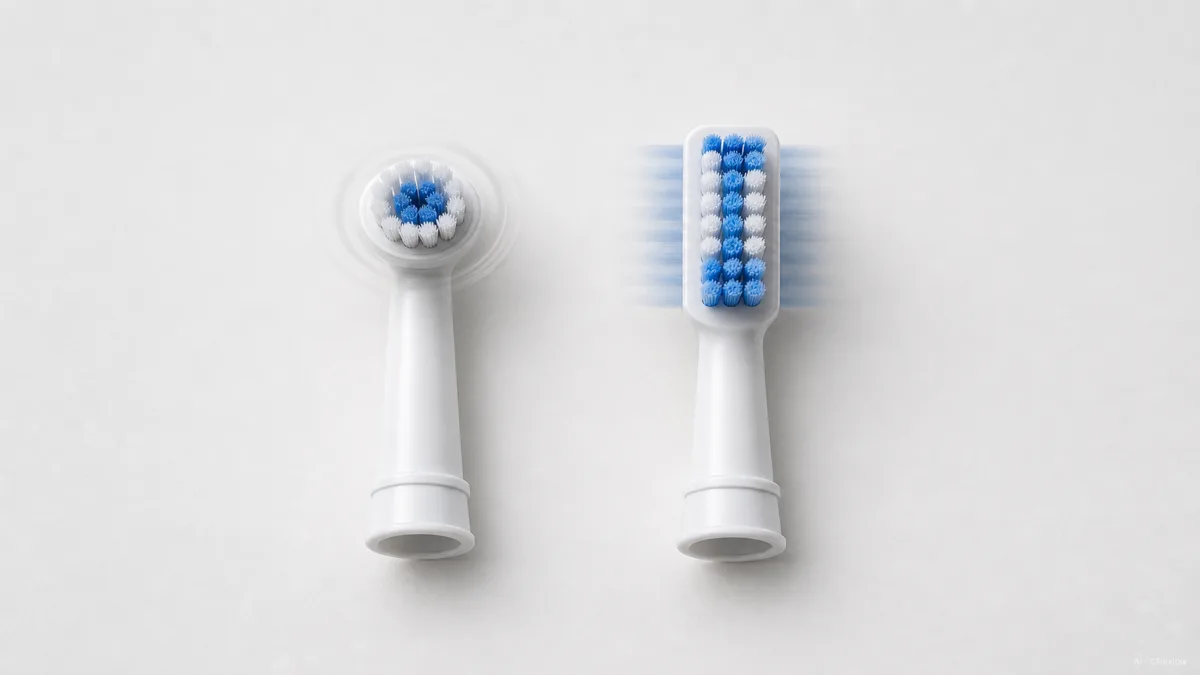
The Oral Health Foundation describes two common mechanisms: oscillating-rotating brushes move a small round head back and forth; sonic brushes use rapid vibration. It says both can clean effectively when used properly.
Use the illustration to understand the shapes, then examine the actual head offered with each candidate. Compare its size, the soft-bristle options and whether you can comfortably hold the handle. The ADA recommends soft bristles and gentle pressure.
Do not choose a mechanism solely because packaging says “sensitive.” If sore gums are driving the purchase, use the dental-advice step below before treating a new brush as the solution.
Check feedback and replacement costs before paying
For a first purchase, prioritize features you can explain a use for.
- Timing. Check whether the brush signals the end of a session, prompts you to change areas, or both. The FlexCare Platinum manual illustrates that distinction; its interval timing depends on the selected mode. Check your candidate's own manual.
- Pressure. Find out how the warning works and whether it is included. Philips support describes model-dependent light, sound or vibration feedback. An alert still requires you to respond by easing pressure.
- Ongoing purchases. Write down the exact compatible head, pack size, included heads and any charging equipment you must buy separately. Compare the total basket, not just the handle price. Do not treat a generic replacement-head listing as confirmed compatible.
Extra modes and apps can wait unless you have a specific use for them. The Oral Health Foundation considers a basic daily-clean mode sufficient for most people and apps optional.
For replacement planning, ADA MouthHealthy advises replacing toothbrushes every three or four months, sooner when bristles fray. For electric heads, check the manufacturer's instructions: the FlexCare Platinum manual specifies three months or earlier signs of wear. Do not calculate ownership costs on the assumption that the included head lasts indefinitely.
Start with a routine, and know when to ask for help
Whichever brush you buy, use fluoride toothpaste and brush twice daily for about two minutes, covering the inner, outer and chewing surfaces. These are the NHS brushing basics. With an electric brush, read its technique instructions before the first use.
Two useful questions remain after the purchase:
- How should I clean between my teeth? Brushing does not reach every space. MouthHealthy recommends daily cleaning between teeth; ask your dental team which method fits your mouth.
- What if my gums bleed or hurt? The NHS advises seeing a dentist for bleeding gums or painful, swollen gums. Do not keep buying different brush types instead of having the symptoms checked.
Comment ce guide a été conçu
Written by Housnap AI using ADA and NHS guidance, the Cochrane review, Oral Health Foundation advice and Philips documentation. This guide separates evidence about brush types from practical first-purchase choices; it does not report hands-on product testing or provide an individual dental assessment.