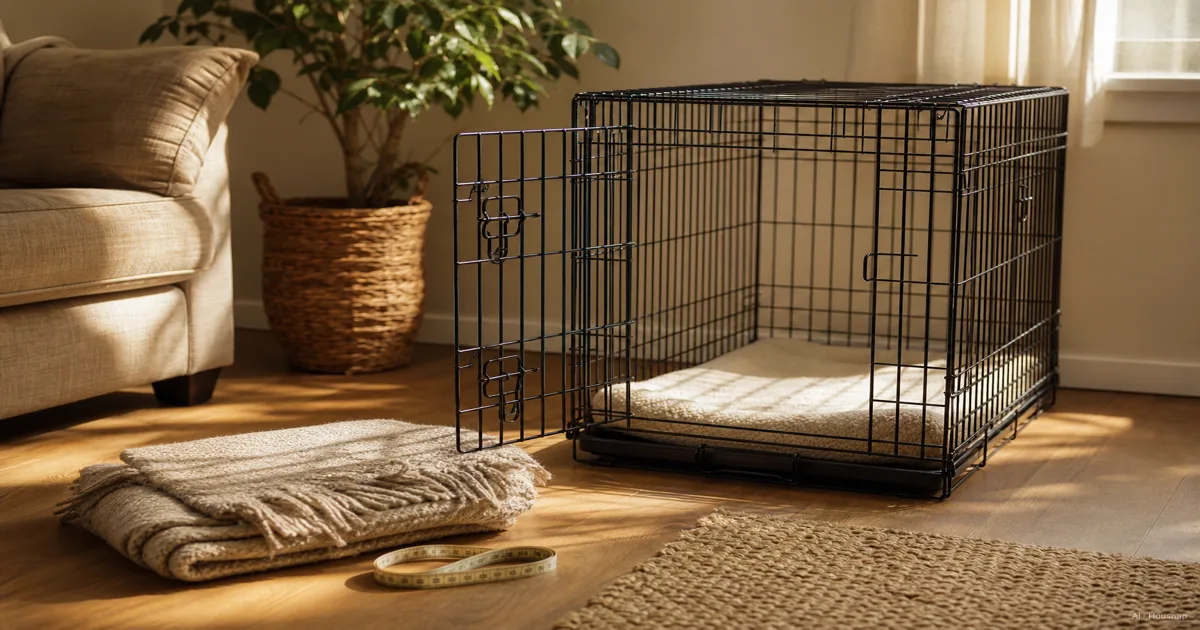
Measure your dog, then check the space inside
A breed label can help you browse, but it cannot confirm fit. Start with these measurements from Preventive Vet:
- Length. With your dog standing normally, measure nose to tail base. Add 2–4 inches, approximately 5–10 cm, as a starting allowance.
- Height. Measure floor to head while sitting, then add the same allowance.
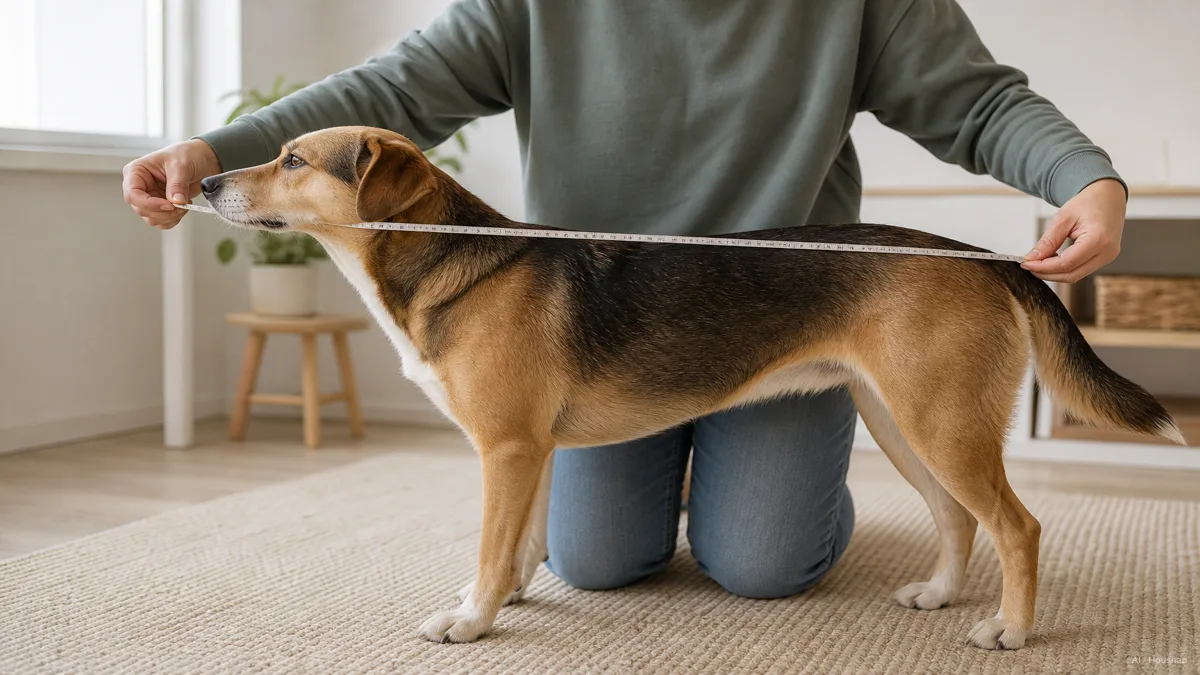
Ask for usable internal length, width and height when a listing gives only outside dimensions. The allowance is a starting point, not a substitute for checking movement: your dog should stand and sit without touching the roof, turn easily and stretch out fully. PDSA
Do not squeeze a dog into the smaller option because its weight appears on the label. Check the manufacturer's weight limit separately, especially for a crate intended to carry the dog. Preventive Vet
Choose the construction for its main job
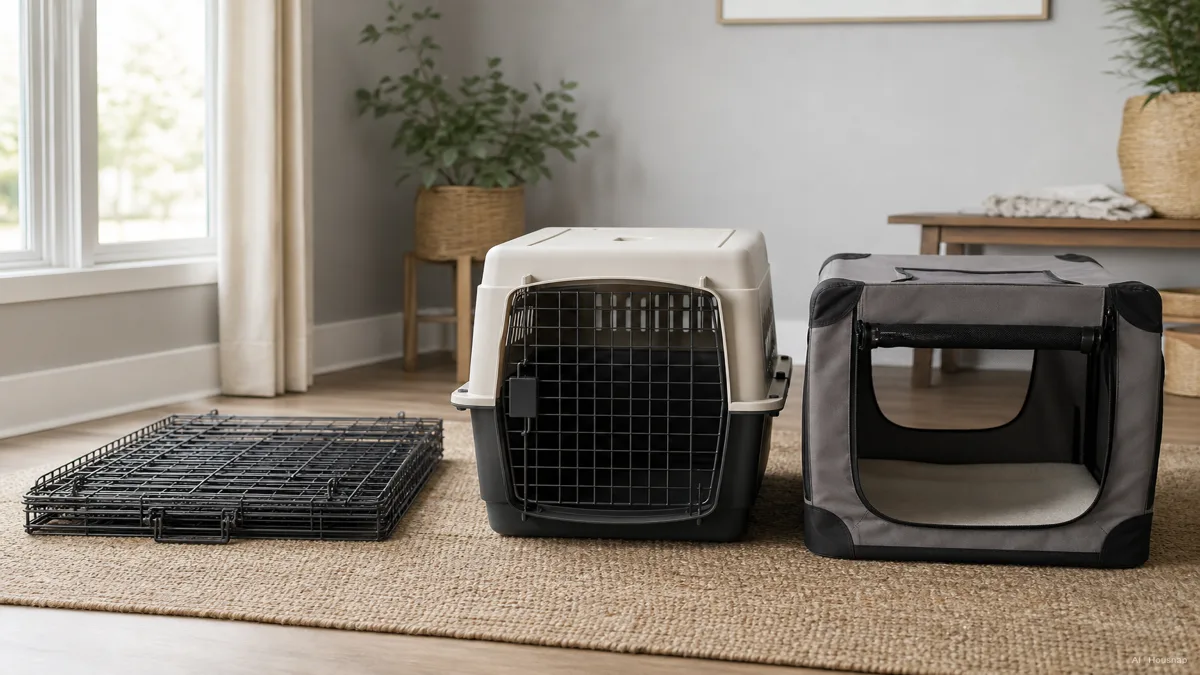
Use storage needs and chewing behaviour to narrow the choice:
- Wire for home. A useful starting option when folding storage matters; many models accommodate a puppy divider.
- Rigid plastic. Consider it when you prefer solid walls and have somewhere to store the shell.
- Fabric. Light and foldable, but a poor first choice for a puppy or a dog that chews.
These trade-offs follow Cornell's crate guide and PDSA's fabric-crate caution.
Flying changes the purchase. Confirm the airline's requirements before ordering; a home-sizing allowance is not an air-travel specification. IATA uses internal container measurements and includes bedding in height calculations. If transport is the main purpose, continue with choosing a soft or hard pet carrier.
Plan for growth without making today's space cramped
If adult size is reasonably predictable, consider an adult-size crate with a divider that adjusts the usable length. Check whether the panel is included or sold separately for that exact crate.
A divider can limit the spare area a puppy might use as a toilet, but must still leave comfortable movement space. Extra room is not automatically wrong for a house-trained adult. Cornell
If adult size is uncertain, buying a suitable crate now and replacing it as your dog grows is also a valid option. PetMD
Check bedding, entry and your dog's response
Before committing, check the doorway and the space remaining with the intended mat inside. Bedding occupies room; your dog still needs easy entry and space to extend their limbs when lying on their side. PetMD
A crate mat belongs in this fit check, not as an automatic extra. If your dog shreds fabric, postpone soft bedding rather than leaving it within reach. AKC For a separate resting place outside the crate, compare dog-bed sizes and shapes.
Start with the door secured open and let your dog explore voluntarily. If confinement causes panic, stop and seek veterinary or qualified behaviour support; buying a stronger crate is not the next step. PDSA
Sources
Comment ce guide a été conçu
Written by Housnap's AI editorial team using published guidance from Preventive Vet, PetMD, Cornell, PDSA, IATA and the AKC. This guide turns that guidance into first-purchase checks for size, construction and setup; it does not report hands-on product testing.