First Dog Bed Buying Guide, Size, Foam, and Shape Explained
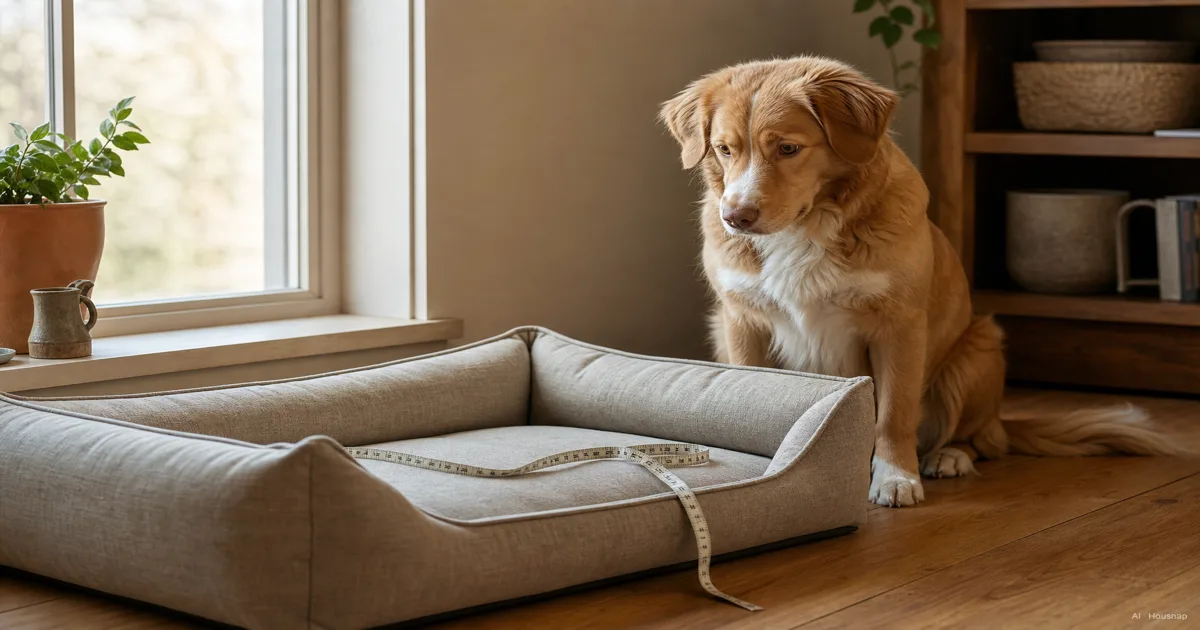
You open the listings for a first dog bed and every title says the same three things. Orthopedic. Memory foam. Premium comfort. None of them tell you which one your dog actually needs, and the size chart is a guess at best, since every brand draws its own S, M, L, XL lines differently. Here is what actually decides a good first bed. It is not the plushness in the product photo. It is two numbers you measure yourself, a shape that matches how your dog physically sleeps, and a foam type that matches their weight and joints, not just their age. A dog that sprawls out flat needs a different bed than a dog that curls into a tight circle. A ten-pound toy breed gets nothing out of memory foam built to compress under sixty pounds. And a size label that says medium on one site can mean something completely different on another. So skip the marketing words for a minute. Measure your dog, watch how they actually sleep, and then shop the shape and material that fits what you just saw.
Disponibles actuellement chez une boutique
Ces produits ne sont proposés pour l’instant que par une seule boutique chacun. La comparaison de prix s’ouvrira avec plus de boutiques.
How to Measure Your Dog for the Right Bed Size
Skip the S/M/L label on the box for a moment. The number that actually matters is one you take yourself.
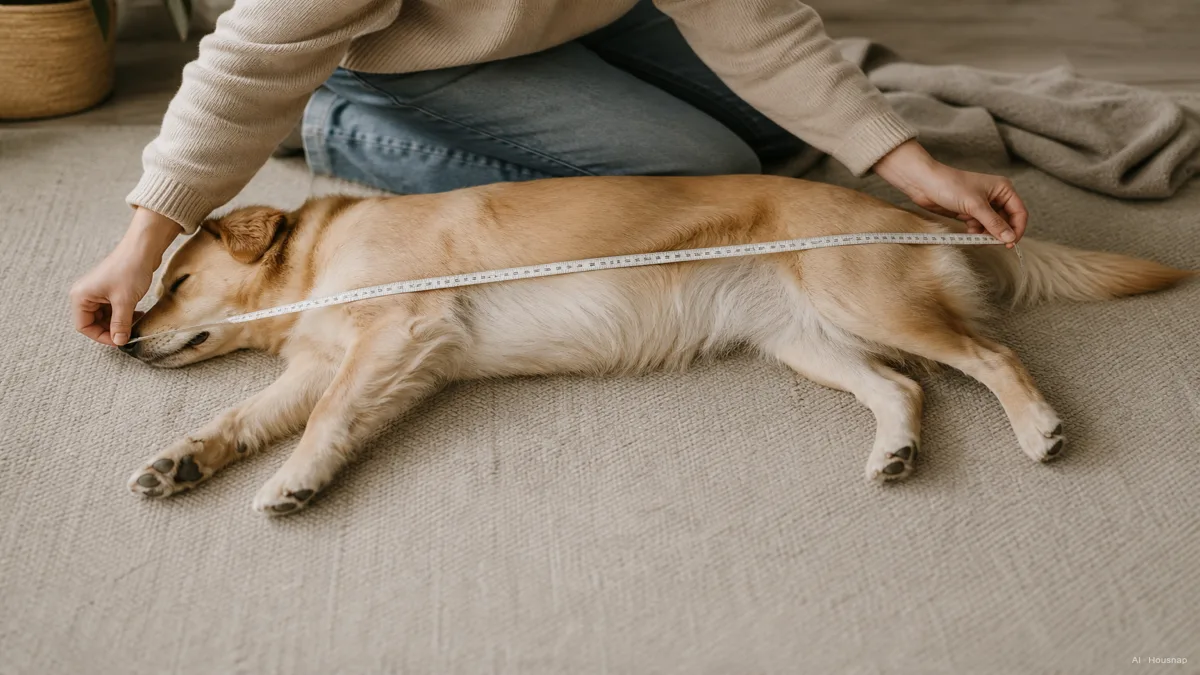
Have your dog lie down on their side, stretched out in a relaxed, natural position, and measure from the tip of the nose to the base of the tail. As Bedsure's dog bed size guide lays out, add 6 to 12 inches (about 15 to 30 centimeters) to that number to get the minimum bed length. That extra length is not padding for error. It is room for your dog to shift position without hanging off the edge.
Length alone can still leave you with a bed that looks right on paper and feels wrong in practice. Measure shoulder width too, since a bed that is long enough but too narrow will not give a broader-chested dog the torso room to actually stretch out.
Brand size labels do not line up with each other, either. One orthopedic-bed maker maps its own small to dogs under 20 inches of body length, medium to under 24 inches, large to under 34 inches, and XL to under 47 inches, according to Bluewater Dog's comparison guide. A medium on one listing can be a small on another. Check the listed dimensions in inches or centimeters before you check the label.
Memory Foam vs. Orthopedic: What's the Real Difference
These two words get used almost interchangeably on product pages, and that is where a lot of first-time buyers get steered wrong.
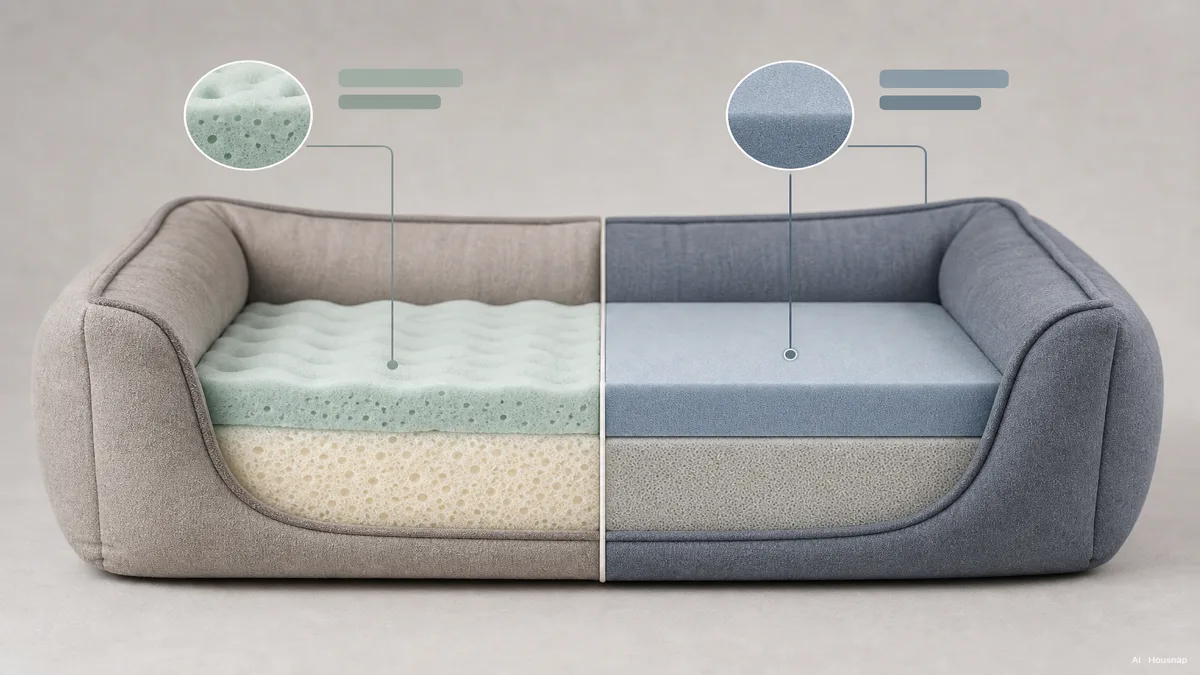
Memory foam is a specific material. It is a polyurethane foam originally developed for aircraft cushioning, and it works by softening under body heat and pressure, then slowly springing back. Orthopedic describes a goal, not a material: a design meant to support joints and relieve pressure points, typically built from firm, high-density support foam. As Casper's blog on the topic explains, many premium beds actually combine both, a dense support-foam base topped with a thinner memory-foam layer, rather than treating them as either-or options.
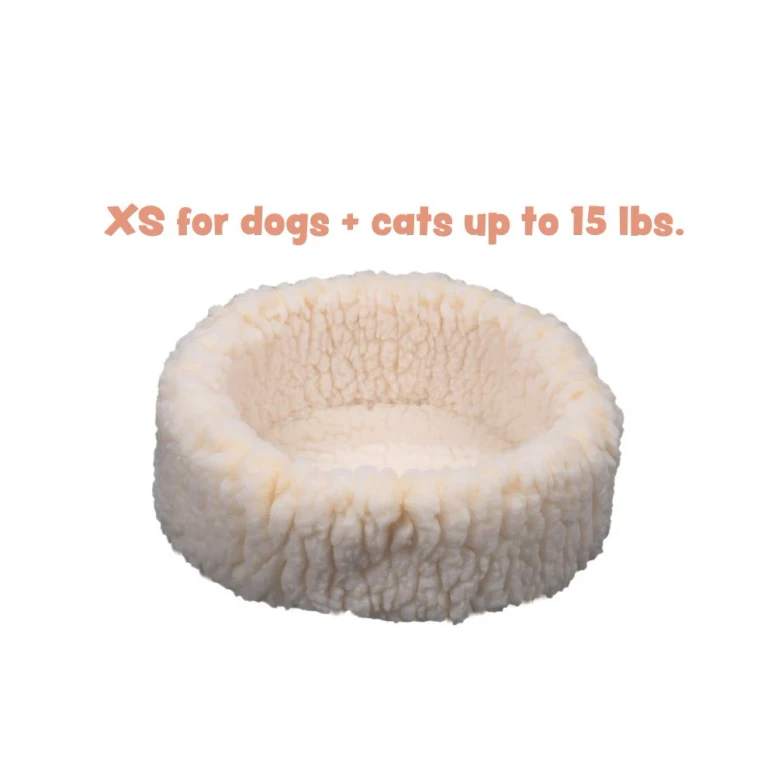
The practical difference shows up in who each one suits. Memory foam is a good fit for lighter dogs without mobility issues, since it needs enough body weight to compress properly. Bedsure's comparison and Bluewater Dog both point out that toy breeds are often too light to sink into memory foam the way it is designed to work, and that the material traps body heat, which makes it a weaker match for hot climates or heavy-coated breeds like Huskies.
High-density orthopedic foam is the better fit for senior dogs and large breeds prone to arthritis or hip dysplasia, such as Labradors and Great Danes, because it resists sagging under sustained weight and keeps supporting the joints instead of bottoming out, a point both Rover and Forbes Personal Shopper's orthopedic roundup raise.
As a rough guide to foam thickness by size, small dogs generally do well with 2 to 4 inches of foam, medium dogs with 3 to 5 inches, large dogs with 5 to 6 inches, and XL or giant breeds with 6 to 7-plus inches, per Bedsure's foam comparison. Thicker is not automatically better if your dog is light enough that the foam never fully compresses under their weight.
Matching Bed Shape to Your Dog's Sleep Style
Bed shape is not a styling choice any more than harness shape is. It follows how your dog's body settles when they actually sleep.
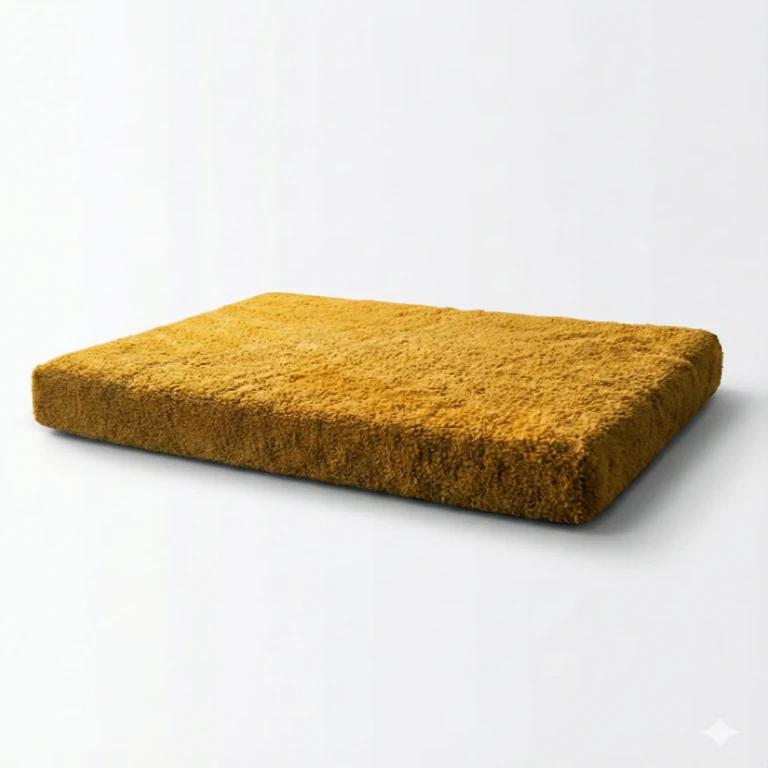
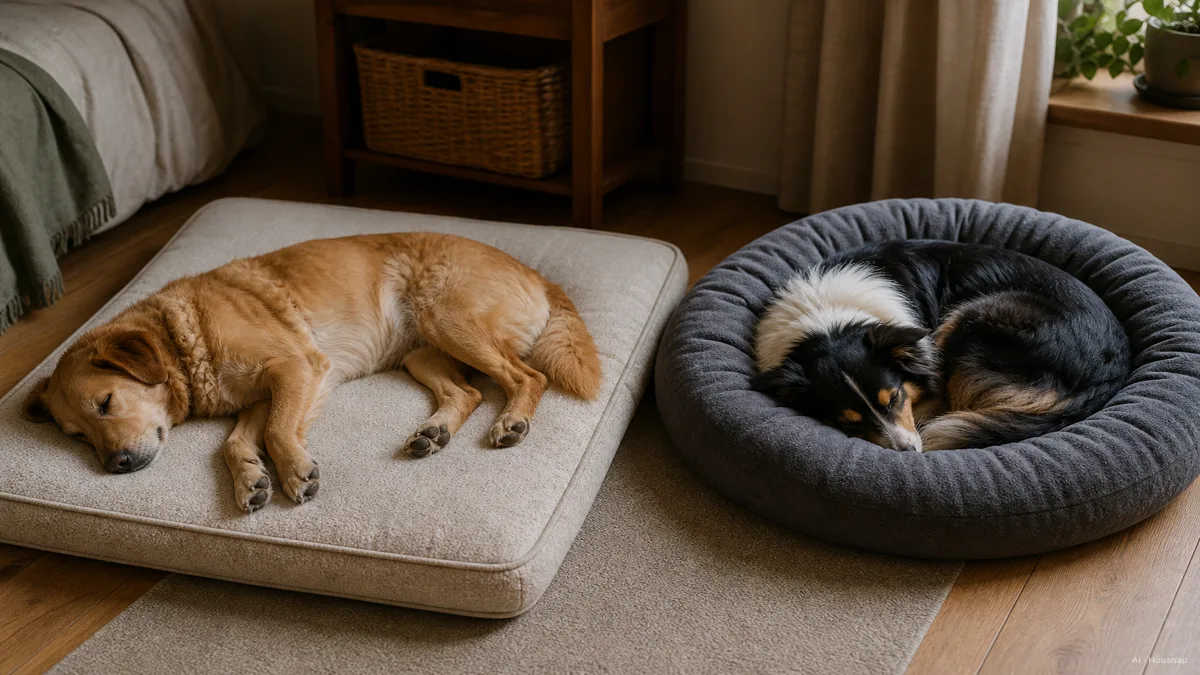
Dogs generally fall into a few sleep styles, and Bedsure's size guide breaks two of the most common ones down clearly. Sprawlers stretch out flat, often on their side or belly, with legs extended. A flat mattress-style bed suits this posture best, since a raised rim just gets in the way of a dog that wants to spread out.
Curlers, the nose-to-tail sleepers, tuck into a tight circle and often press their back or side against something while they sleep. This is where a bolster or donut-shaped bed earns its shape. The raised rim gives a curler the pressure contact against their body that this sleep style naturally seeks, rather than leaving them curled in open space.
Burrowers, dogs that dig, nest, and tunnel under blankets before settling, tend to do best with a bed that includes a blanket, flap, or cave element they can push into, rather than a fully open flat surface.
Watching your dog's actual resting posture for a day or two before you buy tells you more than any product description will. A dog that sprawls across the whole width of their current bed is telling you they need a flat, wide surface, not a bolster edge cutting into their space.
Material, Cover, and Durability: What Actually Holds Up
Plushness sells in a product photo. Durability is what you actually live with after a few months.
A tightly woven, heavier-duty fabric generally outlasts an overly plush finish, and a washable, removable cover is one of the most practical differentiators a first-time buyer can look for, a point both Bedsure and the PetSmart Learning Center's buying guide emphasize. A cover you can unzip and wash on its own, separate from the foam insert, saves you from replacing the whole bed the first time something gets tracked in or thrown up on.
There is no dog-bed-specific safety standard yet. According to ASTM's own reporting, its pet-products subcommittee has flagged pet beds for future standard development, but nothing bed-specific exists today. In the meantime, the closest durability signals come from adjacent fabric tests and material-safety certifications. High-denier ripstop or nylon fabric rated under ASTM D4157, the Wyzenbeek abrasion test, for tens of thousands of double rubs holds up well against claws and repeated washing. On the material-safety side, OEKO-TEX Standard 100 and CertiPUR-US certifications verify the fabric and foam are free of toxic azo dyes and harmful VOCs, which matters for a surface your dog spends hours pressed against every day.
Special Cases: Puppies, Seniors, Heavy Chewers, and Hot Climates
A few situations change the calculation enough that they are worth handling separately.
Puppies grow fast and chew everything, so a mid-price bed with a reinforced, washable cover makes more sense than a premium orthopedic bed you will need to replace within a year anyway. Heavy chewers of any age do best with ripstop covers, hidden zippers, or fully enclosed seams, since a standard plush cover with an exposed zipper pull is often the first thing to go.
Senior dogs are where orthopedic support earns its keep for real. Joint pain and reduced mobility make it harder for an older dog to get comfortable on a flat, low-density cushion, and a supportive base can noticeably change how easily they lie down and get back up, a point Forbes Personal Shopper's orthopedic bed roundup and Rover both cover in more depth.
Hot rooms and heavy-coated breeds are the other flag. Memory foam holds heat, so an elevated bed, a cooling-gel layer, or a breathable, non-memory-foam fill is usually a better fit than thick fuzzy fabric in a warm climate or a Husky-type coat, a distinction Bedsure and Bluewater Dog both raise.
None of this points to one universal best bed. It points to matching your dog's actual size, sleep style, life stage, and environment, then comparing options across sizes and materials from the brands that carry what you need, rather than picking whichever bed photographs the softest.
Sources
- Dog Bed Size Guide 2026: How to Choose a Fit with Size Chart — Bedsure; measuring method, sleep styles, and cover durability guidance
- Orthopedic vs. Memory Foam Dog Beds: Which Is Right for Dog? — Bedsure; foam thickness by dog size and CertiPUR-US material safety
- Orthopedic vs. Memory Foam Dog Beds: Which Is Better? — Casper Blog; memory foam vs. orthopedic as material versus functional goal
- What Kind of Dog Bed Should I Buy? — PetSmart Learning Center; washable cover and durability as buying priorities
- Best Orthopedic Dog Beds 2026 — Forbes Personal Shopper; orthopedic support for senior and large-breed dogs
- Orthopedic vs Memory Foam Dog Beds: Comparison Guide — Bluewater Dog; brand size-label inconsistency and climate fit
- Are Orthopedic Dog Beds Really the Best Beds for Dogs? — Rover; when orthopedic support matters most
- Standards Help Protect Our Pets — ASTM; current state of pet-product safety standards
- Best Fabric For Dog Beds: Evaluating Chew-Proof Nylon And Durable Canvas — Canvas ETC; ASTM D4157 abrasion testing and OEKO-TEX certification