Rubber or Carpet, Which Car Floor Mat Should You Buy First
You search car floor mats and every listing insists it's the perfect fit for your car, without ever mentioning the one thing that actually splits this decision, what the mat is made of. Rubber and carpet aren't two colors of the same product. They're built to solve opposite problems, and the wrong pick shows up the first time it rains, or the first time you try to hose mud out of a cabin that was never meant to get wet. Here's the shortcut. Rubber and TPE mats are built for mess, they're waterproof, they resist stains, and a hose or a damp cloth is basically all the maintenance they ever need. Carpet mats are built for comfort and looks, they feel closer to what your car came with, but water and mud soak straight into the fibers instead of rinsing off. Once you know which one your driving life actually needs, most of the rest of the shopping decision falls into place. This guide walks through what each material is actually made of, how they hold up over time, where carpet earns its reputation for comfort, what each one really costs once you count maintenance, and the one safety detail that matters more than either material, how the mat is anchored to your car.

Disponibles actuellement chez une boutique
Ces produits ne sont proposés pour l’instant que par une seule boutique chacun. La comparaison de prix s’ouvrira avec plus de boutiques.
What Rubber and Carpet Car Mats Are Actually Made Of
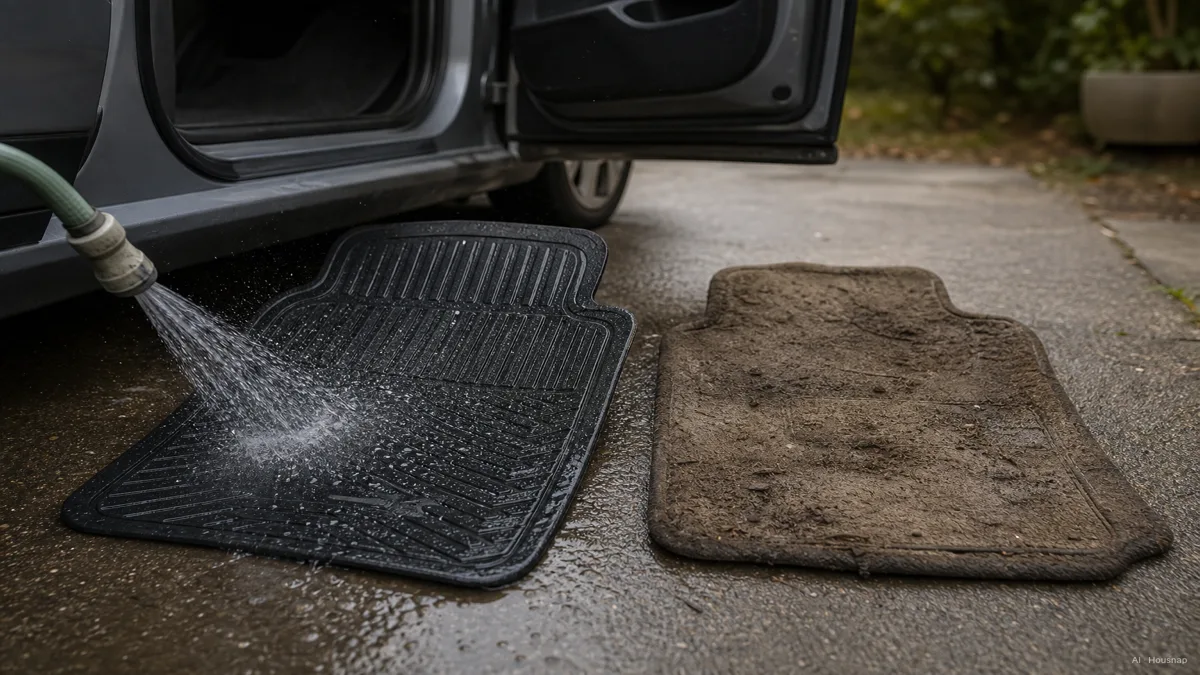
Rubber mats and their more modern cousin, TPE (thermoplastic elastomer), are built from a solid material that doesn't let liquid through. Spill coffee, track in snowmelt, or drag in a muddy boot print, and none of it soaks into the mat itself. It sits on the surface until you rinse it off or wipe it down (lasfit.com; primeeva.com).
Carpet mats are made the opposite way, on purpose. They're woven from absorbent fabric or velour fibers, the same family of material as your car's factory carpet, which is exactly why they blend in so well. That same fiber structure that makes them feel soft underfoot is also what pulls spills and moisture down into the mat instead of letting them sit on top, a feature in a dry cabin and a problem the moment something wet gets tracked in.
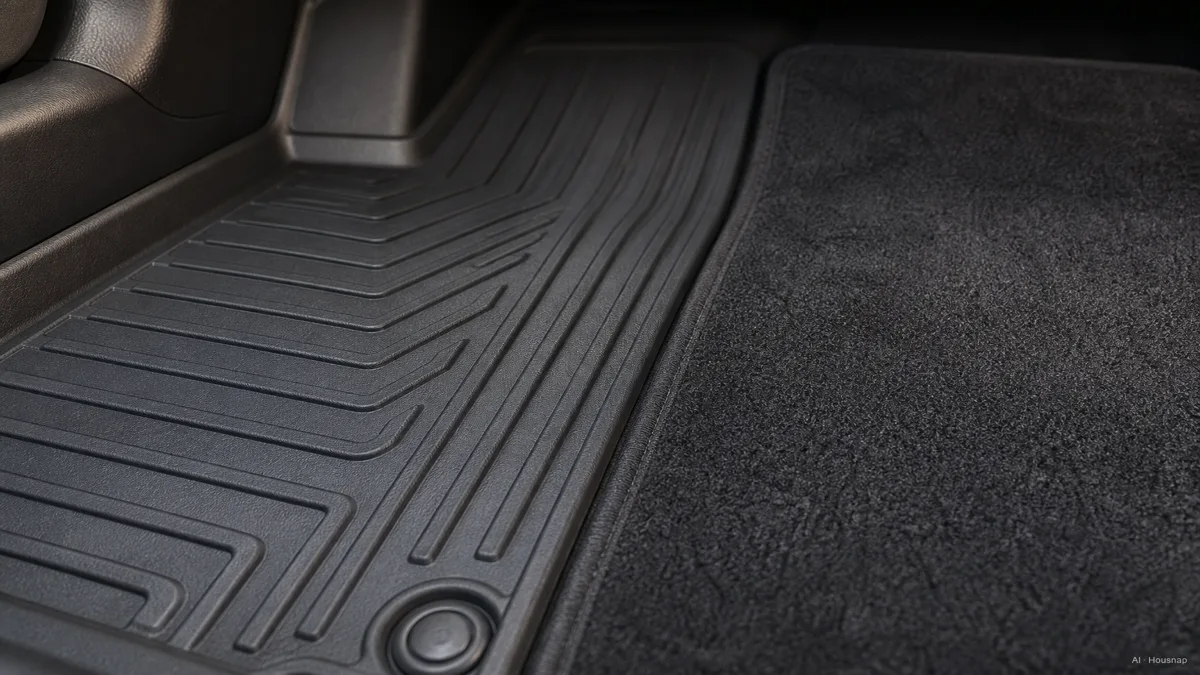
TPE gets marketed as the newer, more refined version of rubber, and that's mostly accurate. It keeps rubber's water resistance but comes in a lighter finish, sitting as a middle option between the utilitarian look of classic rubber and the softness of carpet, without giving up the waterproofing that's the whole point of choosing a non-carpet mat in the first place (lasfit.com).

Durability and Weather Resistance, Which Holds Up Better
Under daily wear, the two materials age in almost opposite directions. All-weather rubber and TPE mats are built to resist cracking, fading, and general wear even under heavy daily use, which is why they're the default recommendation for anyone who commutes daily, hauls kids or gear, or drives somewhere the weather does something (lasfit.com).
Carpet mats move the other way over time. The same fibers that feel soft when the mat is new absorb water and dirt every time they're used, and repeated soaking and grinding-in of grit wears the fibers down faster than a rubber surface ever wears. A carpet mat in a dry, mild climate with light use can look good for years. The same mat under a rainy commute or a muddy work truck shows flattening and staining far sooner (lasfit.com).
Durability also depends on which specific mat you buy, not just which material family. Among premium custom-fit rubber and TPE liners, WeatherTech uses a rigid, plastic-like HDTE material with deep grooves cut to channel water away from your shoes, while Husky Liners' WeatherBeater line uses a more flexible, rubberized thermoplastic that some testers find grippier but a touch less rigid underfoot (autoguide.com). Both brands commonly back their custom-fit liners with a lifetime limited warranty, which says something about how confident they are that the material holds up over years, not just one season (huskyliners.com).
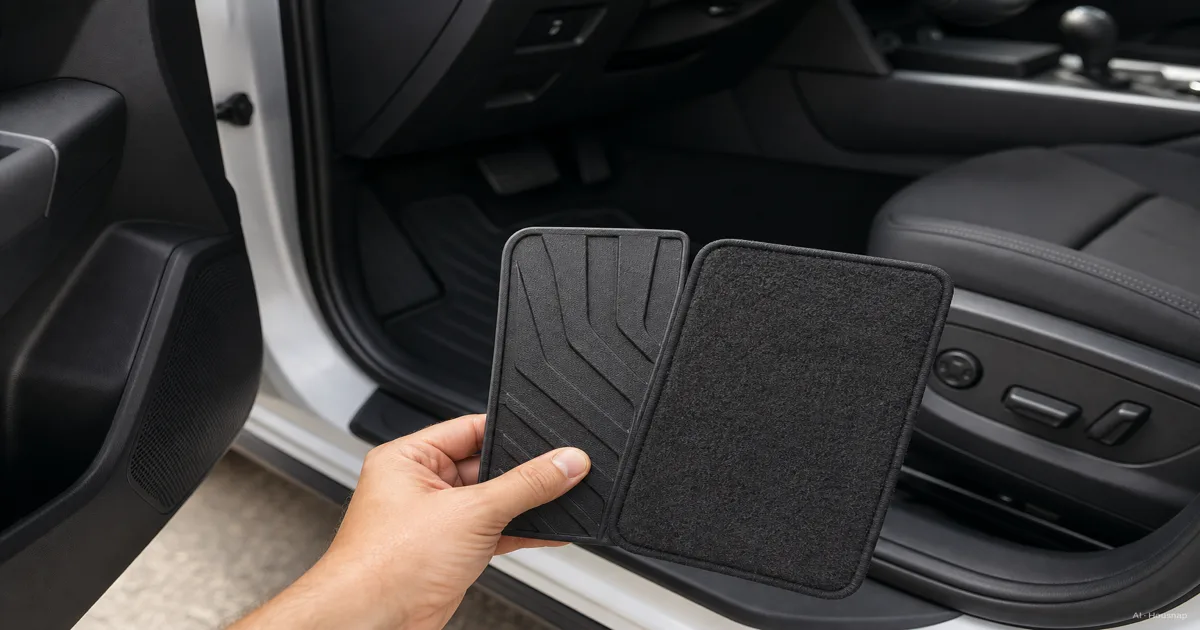
| What matters | Rubber or TPE | Carpet | |---|---|---| | Water and spills | Sits on the surface, rinses off | Soaks into the fibers | | Stains and mildew | Resists both | Can stain and hold odor | | Heavy daily wear | Resists cracking and fading | Fibers flatten and wear faster | | Cabin look and feel | Functional, fewer color options | Plush, matches factory carpet | | Typical upfront cost | Higher | Lower | | Ongoing care | Hose down or wipe clean | Vacuum, occasional shampoo |

Comfort, Look, and Feel, Where Carpet Wins
Rubber and TPE mats win on mess. Carpet wins on the parts you notice with your feet and your eyes. Carpet mats feel plusher and quieter underfoot, and because they're made from the same fiber family as your car's factory floor covering, they tend to match your cabin's original color and texture far more closely than a rubber mat can (gledringusa.com). Step into a car with well-kept carpet mats and it barely registers that there's an aftermarket mat there at all, which is exactly the point for anyone shopping mainly on how the cabin looks and feels rather than how it survives a car wash.
Rubber and TPE mats trade that blend-in quality for a more limited, generally darker set of color and texture options, since the material itself doesn't take dye or texture the way woven fiber does. Dealers and buying guides both frame this the same way, carpet for a premium, cared-for cabin feel, rubber or TPE when function has to come first (toyotaofclermont.com).
Cost and Maintenance Over Time
Sticker price and true cost aren't the same thing here, and they run in opposite directions. Carpet mats are usually the cheaper mat to buy, but they're the pricier one to keep looking good, since real cleaning means vacuuming regularly and periodically shampooing or machine washing to get ground-in dirt back out of the fibers. Rubber and TPE mats cost more upfront, but day-to-day care is close to nothing, a hose-down or a wipe with a damp cloth handles most of what a car floor sees (lasfit.com).
Fit tier changes the price too, separate from the material choice. Floor mats come in three fit levels, universal fit, a generic shape meant to work loosely across many models, trim-to-fit, which ships oversized so you can cut it down to your footwell, and custom fit, which is molded to your exact vehicle's floor dimensions. Custom fit costs more in either material, but it's also the fit level that actually covers your footwell edge to edge, instead of leaving gaps or excess material bunched up near the pedals (lasfit.com; luxuscarmats.com).
Safety First, Why Mat Fit and Retention Matter More Than Material
Here's the part that gets skipped in most buying guides, and it matters more than rubber versus carpet ever will. In 2009, Toyota and the NHTSA identified that unsecured or incompatible driver-side floor mats could ride up and physically trap the accelerator pedal in a wide-open position, a defect serious enough to trigger a major national safety recall covering millions of vehicles (nhtsa.gov; safetyresearch.net). That's not a rubber problem or a carpet problem specifically, it's a fit and retention problem, and it can happen with either material if the mat isn't held down properly.
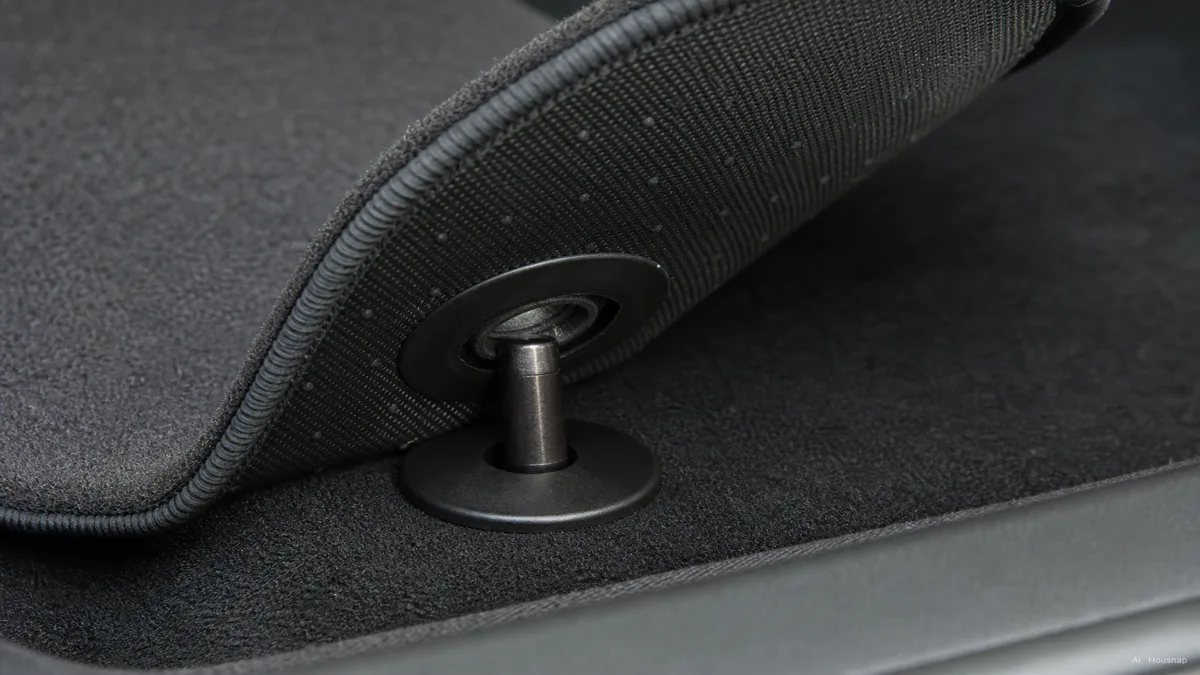
Every floor mat, regardless of what it's made from, needs a real retention system, OEM anchor posts that poke through grommets in the mat, clip retainers, twist-lock fasteners, or at minimum a grippy anti-slip backing that keeps the mat from creeping. Without one of these, a mat can gradually walk forward under the repeated push and release of your foot on the pedals, migrating closer to the pedal clearance zone every drive until it's close enough to interfere (primeeva.com).
This is where fit tier matters again, and matters more than material. A custom-fit mat is molded to match your car's actual anchor point layout, so the grommets line up and the mat locks down the way it was designed to. A universal-fit mat, in either rubber or carpet, is a generic shape that may not line up with your car's anchor posts at all, exactly the gap that lets a mat shift forward unnoticed. Before you buy on material alone, check that whatever you're ordering, rubber or carpet, actually has a retention system built for your specific car, and never stack a new mat on top of an old one you haven't removed.

Which Mat Type Fits Your Driving Life
There's no single material that wins for every driver, multiple buying guides land on the same climate-and-lifestyle framework instead of a flat verdict (toyotaofclermont.com; lasfit.com). Run through these before you check out.
Go rubber or TPE if your weather does something. Rain, snow, mud, a beach trip, or anything that regularly ends up on your shoes points straight at rubber or TPE.
Go rubber or TPE if kids or pets ride along often. Spilled juice, muddy paws, and dropped snacks are exactly the mess rubber and TPE are built to shrug off.
Go carpet if your climate is mild and dry and your driving is light. Carpet's comfort and factory-match look are worth more when there's rarely anything wet or gritty to clean up.
Check retention before you check material. Confirm the mat you're ordering, whichever material you land on, has anchor posts, clips, or anti-slip backing matched to your car, not just a shape that looks close enough.
Match fit tier to how long you want it to last. Universal fit is the cheapest way to try a material. Custom fit costs more but actually covers your footwell and holds its retention points the way the car was designed to use them.
Sources
- Rubber vs Carpet vs TPE Car Mats — Lasfit; material differences, TPE as a hybrid material, cost and maintenance comparison, fit tiers
- The Guide on Choosing Rubber Mats vs Carpet Mats — Primeeva; waterproof versus absorbent material properties
- Rubber vs Carpet Floor Mats, What You Need to Know — Gledring USA; cabin look and comfort comparison
- All-Weather Floor Mats vs Carpet Mats — Lasfit; durability and climate-based fit
- Carpet vs All-Weather Floor Mats — Toyota of Clermont; cabin feel and climate-based decision framing
- WeatherTech vs Husky Liners Mats Comparison — AutoGuide; premium liner material feel differences
- WeatherTech vs Husky Liners Floor Mats — Husky Liners; lifetime warranty positioning
- NHTSA Recall Notice RCMN-11V112 — NHTSA; floor mat accelerator pedal entrapment recall document
- Toyota and NHTSA Issue Urgent Safety Alert to Remove Floor Mats — Safety Research & Strategies; background on the floor mat sudden-acceleration safety alert
- How Car Floor Mat Retention Systems Work — Primeeva; anchor posts, clips, and anti-slip backing retention types
- Car Mats Buying Guide — Luxus Car Mats; universal, trim-to-fit, and custom fit tiers explained