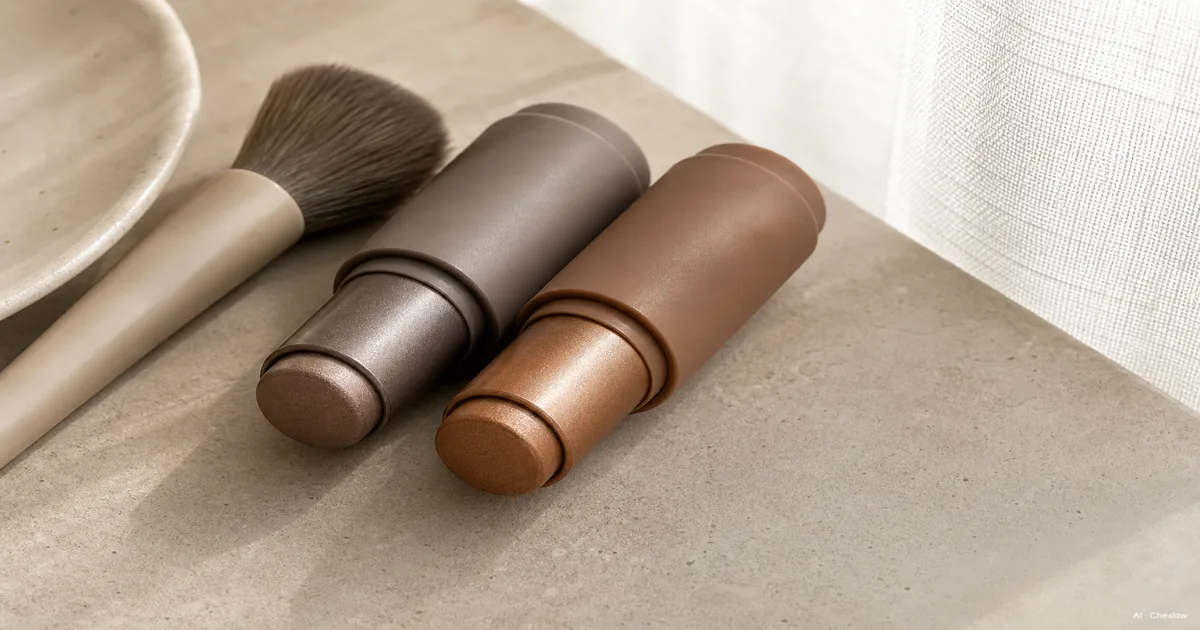
Disponibles actuellement chez une boutique
Ces produits ne sont proposés pour l’instant que par une seule boutique chacun. La comparaison de prix s’ouvrira avec plus de boutiques.
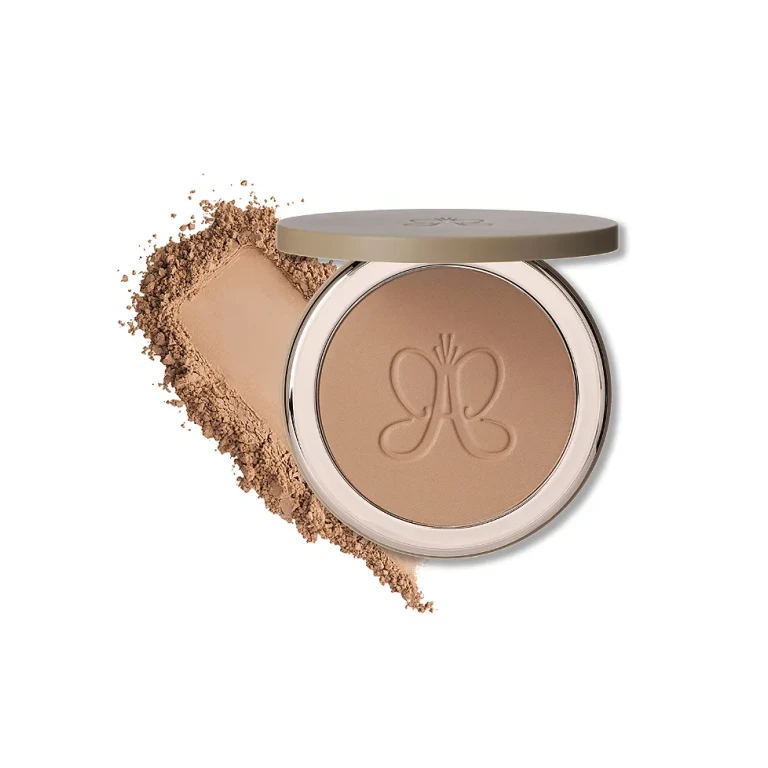


Choose the change you want to see
- More warmth: start with bronzer.
- More definition: start with contour.
- Neither effect appeals: skip both for now.
That choice follows their different jobs: bronzer adds tanned-looking color; contour suggests shadow. Charlotte Tilbury explains the distinction.
If “better skin” really means covering a spot or discoloration, take a different route: concealer or color corrector?
Compare products within your chosen category before considering a second one. A palette is only useful if you can name a use for its other shades.
Check the blended shade, not just the label
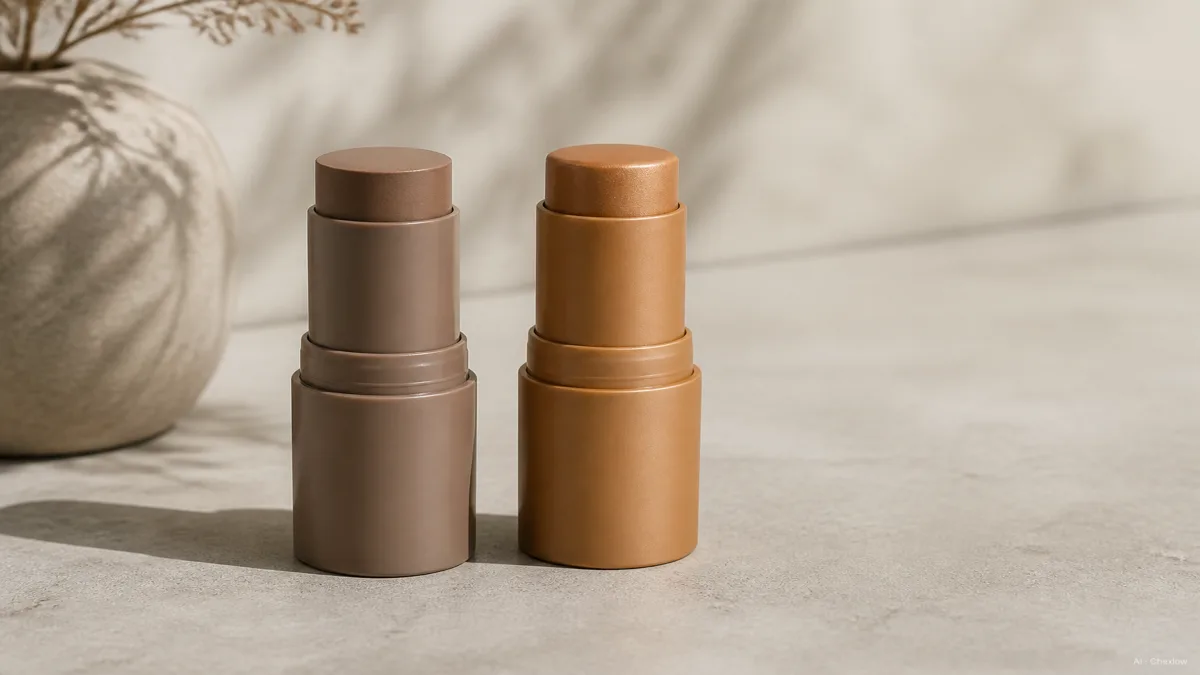
The illustration shows a color contrast, not two universal shade recommendations. Look for a swatch blended out on skin close to yours, rather than judging a thick stripe alone.
For bronzer, reject a shade that looks too orange or dark once blended; NYX flags both pitfalls. For contour, more gray is not automatically better: e.l.f. notes that excessive ashiness can clash with warm undertones. Match depth as well as undertone, the underlying warm, cool or neutral cast.
For a subtle shadow, begin with a matte or skin-like finish. Bronzer can also be luminous. L’Oréal distinguishes those finishes.
A dual-purpose label is not a promise that every shade does both jobs on you. e.l.f.’s hybrid range distinguishes shades by intended effect. Choose the effect first, then judge the shade.
Pick a format you can comfortably use
Prefer a cream if you enjoy blending creamy makeup; consider powder if you like building color with a brush. Dry skin may favor cream, while oily or combination skin may favor powder, but these are starting points, not rules. L’Oréal’s formula guide.
Check your existing tools before adding another purchase. Powder bronzer suits a fluffy brush; creams and liquids can be blended with fingers or a sponge. NYX’s tool guidance.
For a first trial, choose one shade and one formula. You can learn what needs changing without also sorting out a whole palette.
Try one area before adding another product

Use the map as a menu, not a checklist. Try bronzer on the upper cheeks or forehead; try contour beneath a cheekbone, keeping the blend near your natural structure. Placement guidance from Charlotte Tilbury.
Start lightly, blend, then stop and compare with your original goal. Do you want more warmth, more definition, or simply less product? Change the amount or placement before deciding you need the other category.
If you eventually use both, follow the formulas’ directions. L’Oréal’s general guide puts contour first, while its cream tutorial puts bronzer first. There is no single order to impose on every routine. Keep each product’s intended effect visible instead of layering both everywhere.
Sources
Comment ce guide a été conçu
Written by Housnap AI using official guidance from Charlotte Tilbury, L’Oréal Paris, NYX and e.l.f. The sources inform the product differences; the one-product starting point and comparison checklist are editorial choices, not product testing or personalized shade matching.