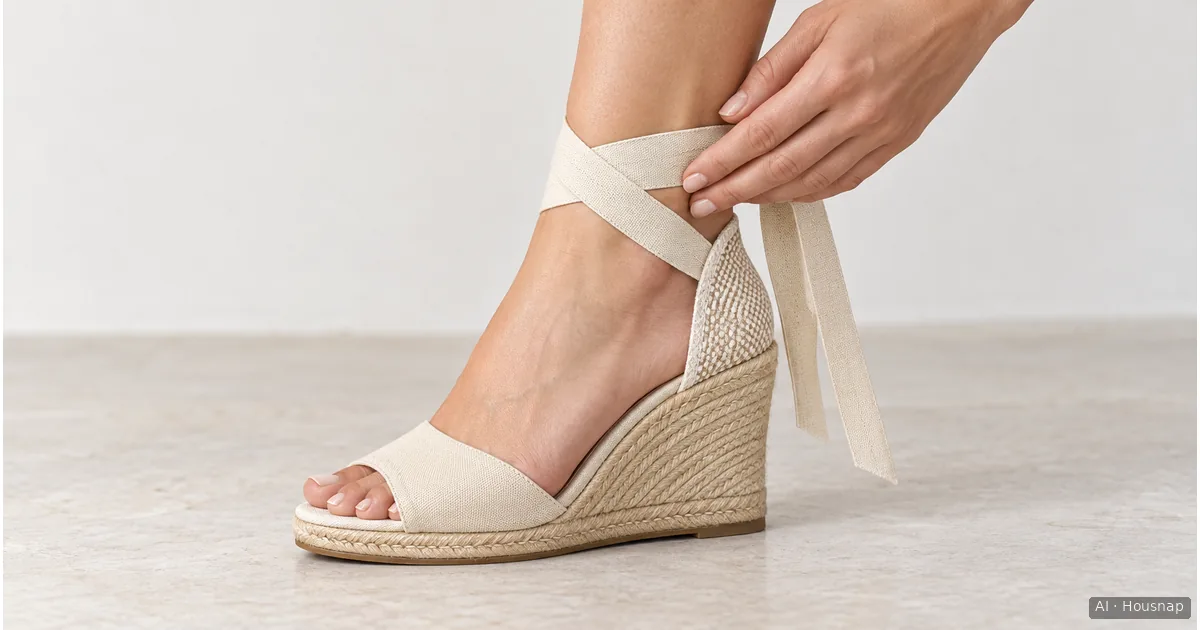
Compare the shoe beneath the ribbons
Shortlist two pairs by the height you want to try, then ask for the heel height, any forefoot platform height, the footbed material and the return conditions. The footbed is the surface your foot rests on; inspect it separately from the rope-covered outside of the wedge.
For a specification-reading example, Viscata’s Aiguafreda Premium Fabrics description lists a 3.5-inch heel and a tying ankle strap. Those details identify a height and closure, not how comfortable the shoe will feel on your foot. They also belong to that model, not every espadrille with similar ribbons.
If the listing gives only a side photograph, request the missing measurements and a view from above. Keep a lower wedge in the comparison if you are uncertain about walking in the taller one; there is no need to settle on a height before trying it.
Check the footbed fit before adjusting the ties
Measure both feet standing on paper, marking the heel and longest toe, then compare the measurements with the chosen model’s chart. Viscata’s sizing guide describes this measuring method and says that sizing up or down depends on the style and manufacturer. It even separates its women’s guidance into stiffer and flexible shoes.
Treat the chart as a starting point. The same guide explicitly says it cannot guarantee an exact fit.
During an indoor fitting permitted by the seller, put on both shoes and arrange your feet on the footbeds before fastening the ribbons comfortably. Check whether your toes or heels overhang, whether the front band pinches, and whether either foot shifts forward when you stand. Our buying criterion is simple: do not use tighter ankle ties to compensate for a crowded front or a footbed that does not accommodate your foot.
Adjust the ribbons, then walk
Use the tying route intended for the actual shoe. For a comparable ribbon design, Viscata’s traditional method starts with equal ribbon lengths, crosses them around the ankles, then brings them around to cross again. It finishes with a front bow, or another crossing followed by a bow at the back.
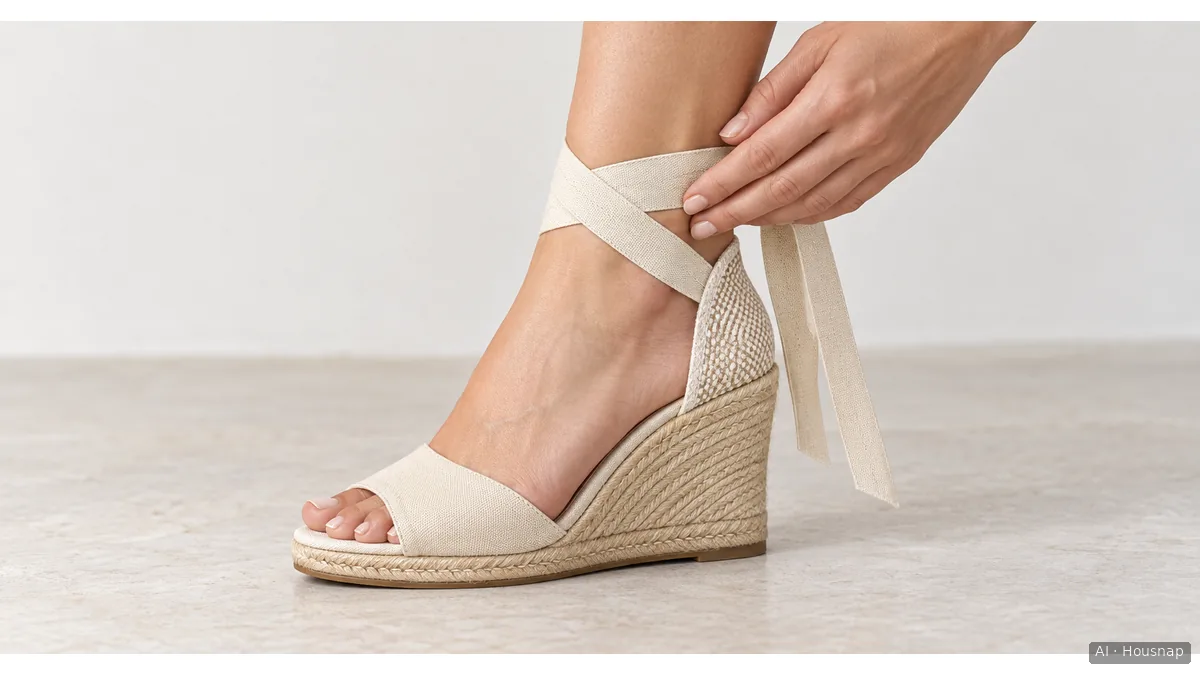
The illustration shows a ribbon being smoothed, not a prescribed tension or a complete tying sequence. Lay the ribbons flat rather than leaving twists, and keep the bow ends off the floor.
Once fastened, walk a short distance, turn and stop. Notice the ribbons and the shoe separately: is a ribbon pressing or rubbing, is the bow loosening, or is your foot moving inside the shoe? Readjust and repeat. If a comfortable ribbon adjustment still leaves unwanted movement, compare another fit rather than continuing to tighten.
Decide what needs to change
- Keep the candidate. Both feet fit on the footbeds, the front feels comfortable, and walking does not require painful tightening or repeated adjustments. A short fitting is still not proof of all-day comfort.
- Change the size or shape. The foot overhangs, the front pinches, or the heel keeps moving despite a comfortable tie. Recheck the model’s guidance before automatically ordering a longer shoe.
- Compare a lower wedge. The foot and ribbons fit, but you dislike standing or walking at that height.
- Change the fastening format. You simply do not want to manage wrapped ribbons. Compare leather sandals and slides, including heel-strap options, and assess their fit separately.
Before paying, confirm that the seller’s return conditions let you make the indoor checks you need. If a pair hurts during the fitting, take it off rather than treating discomfort as something the ribbons will eventually solve.
Cómo se elaboró esta guía
AI wrote this guide for Housnap using Viscata’s published sizing and tying guidance and one model’s product description. The shortlist and indoor fitting checks are editorial buying guidance, not results from original wear testing or a guarantee of comfort.