2.1 vs 5.1 Soundbar, How to Pick Your First One
You go looking for a soundbar and the product names read like math homework. 2.1. 3.1. 5.1.2. The bigger the numbers, the pricier the box, so it is tempting to assume bigger is just better and pick whatever your budget tops out at. Here is what those numbers actually are. They are a count of how many directions sound reaches you from, not a star rating. The first number is ear-level speakers, the second is the subwoofer, and a third number, when it shows up, is for height effects bouncing off your ceiling. So 2.1 versus 5.1 is really one question: do you want sound coming from the front of the room, or from around you? And the honest answer is that your room decides this more than your wallet does. A 5.1 system in a small bedroom can sound worse than a good 2.1, because the rear speakers have nowhere useful to sit. This guide breaks down what each tier gives you, who actually benefits from rear speakers, why "virtual surround" on the box can mislead a first-time buyer, and how to land on the right pick from your room, your budget, and how much setup you want to deal with.
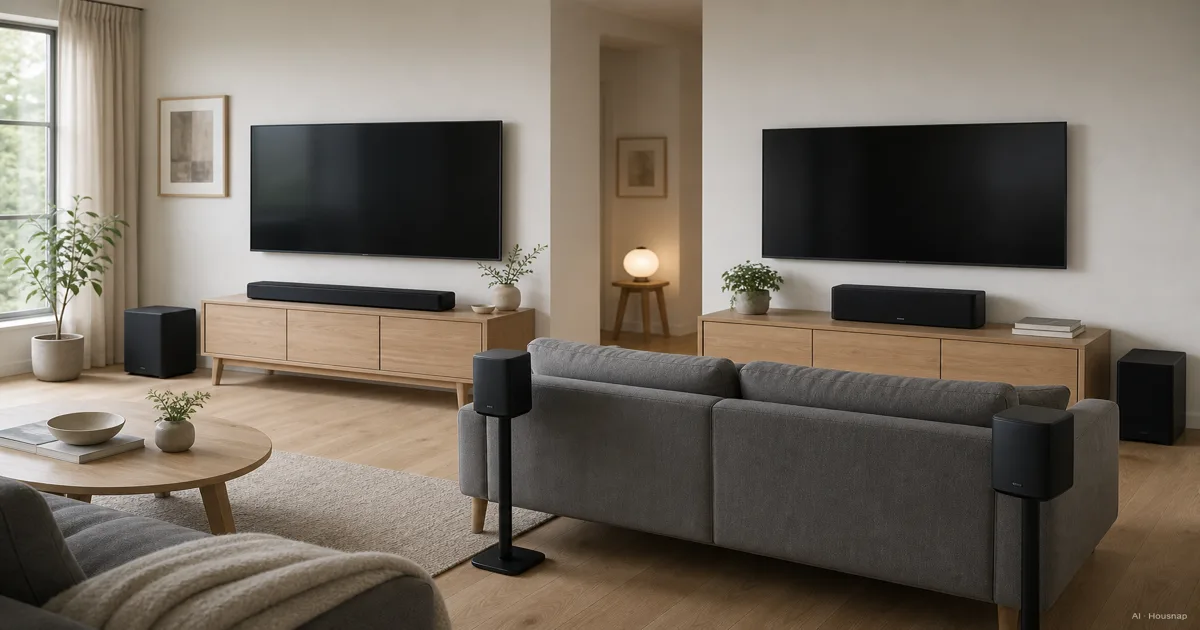
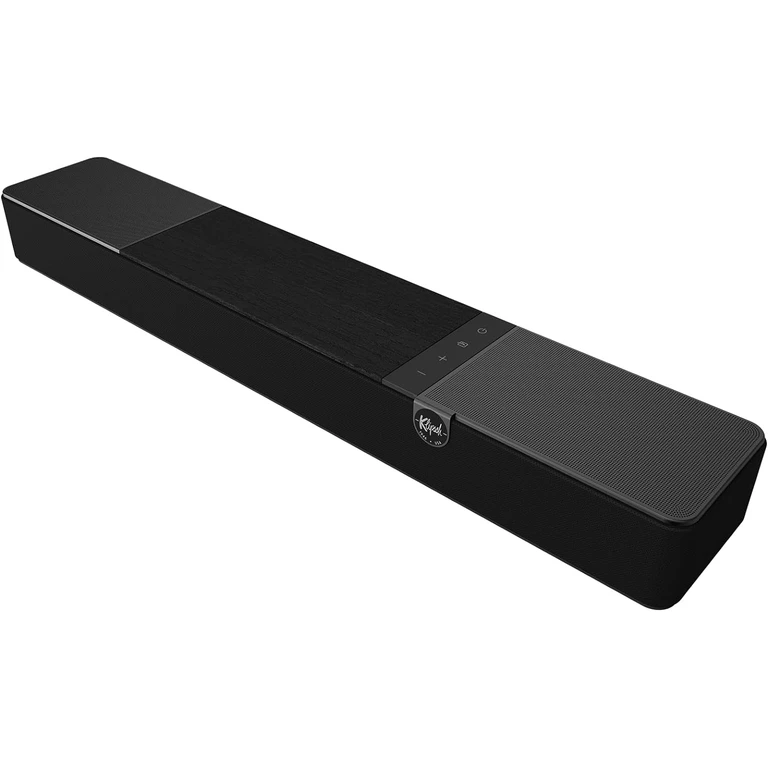
Disponibles ahora en una sola tienda
Por ahora, cada uno de estos productos está disponible en una sola tienda. La comparación de precios se abrirá con más tiendas.
What the Numbers Actually Mean: Decoding 2.1 and 5.1
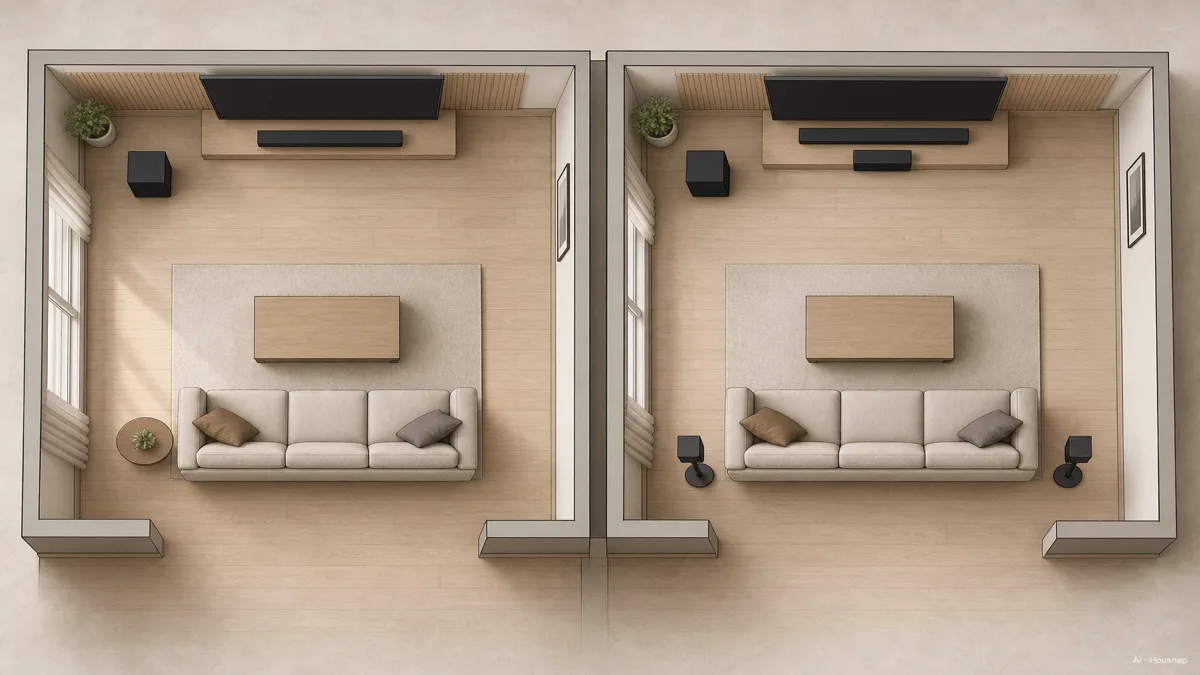
Soundbar channel numbers follow one pattern, X.Y.Z, and once you can read it the whole product wall makes sense. X is the number of ear-level speaker channels, Y is the number of subwoofers, and Z, when it appears, is height or up-firing channels for Dolby Atmos, as Samsung's own channel-number guide spells out.
So read the labels literally. A 2.1 bar has a left and a right driver plus one subwoofer. A 5.1 system has five ear-level channels, a left, a center, a right, and two rears, plus that one subwoofer. The jump from 2 to 5 is not "louder" or "clearer", it is two specific additions: a center channel and a pair of rear speakers.
Those two additions do very different jobs, and that is the part most buyers skip. The center channel sits between left and right and carries dialogue. The two rears go behind where you sit and carry sound from the back of the room. A 2.1 has neither, which is why it cannot do true surround no matter how good it sounds up front.
One quick note on that third number. If you see 5.1.2 or 9.1.4, the last digit is up-firing drivers for Atmos height, and MakeUseOf's breakdown of the tiers is a clean reference if you want to see how 2.1, 3.1, and 5.1 line up side by side. Plain 2.1 and plain 5.1 bars do not do Atmos height. That ceiling exists one tier up, and it is worth knowing it is there before you assume 5.1 is the top of the mountain.
2.1 Soundbars: Who They Are Really For
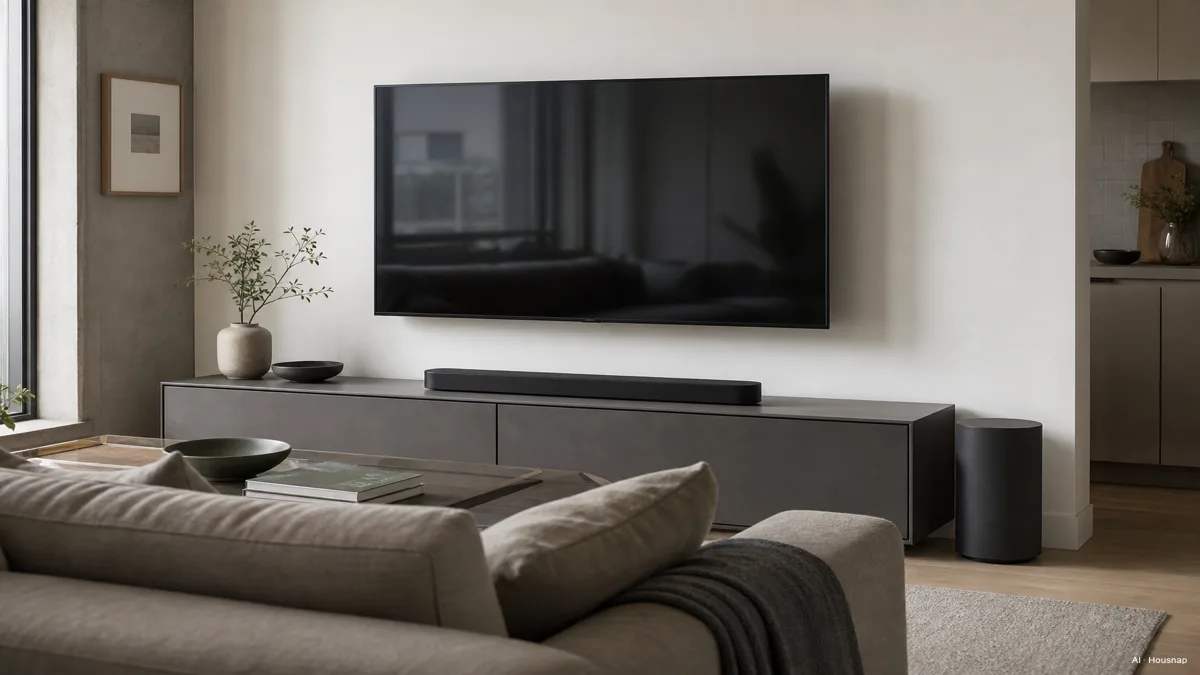
A 2.1 soundbar does one thing extremely well: it replaces the thin, downward-firing speakers built into your TV with real stereo separation and a dedicated subwoofer for bass. For most people, that alone is a night-and-day upgrade, and it is the most common first soundbar for a reason.
What you get is a wide, clean front soundstage. Voices come forward, music has body, and an explosion finally has some weight to it. The wireless subwoofer that ships with most mid-range and better 2.1 bars handles the low end your TV simply cannot, and pairing it is usually as easy as plugging it into power across the room, since wireless sub pairing is now standard at this tier.
Here is the honest limit. A 2.1 bar plays everything from the front. So directional cues, footsteps creeping up behind you, a car sweeping from left to right, come from two front positions only. You get a convincing left-to-right spread, but nothing genuinely arrives from behind you. For a lot of viewers that is completely fine, and worth being clear-eyed about rather than disappointed by later.
On price, 2.1 is the friendly end of the shelf. Entry bars start around 70 to 100 dollars, and stepping up to a quality 2.1 with a good wireless subwoofer typically lands somewhere between 150 and 300. Setup is about as simple as audio gets: connect the bar to the TV, give the subwoofer power, and you are done. If your room is a bedroom, an apartment living room, or anywhere a tidy front-of-room setup matters more than rear speakers, a 2.1 is often the smarter buy, not the compromise.
5.1 Soundbars: When Physical Rear Speakers Make a Real Difference
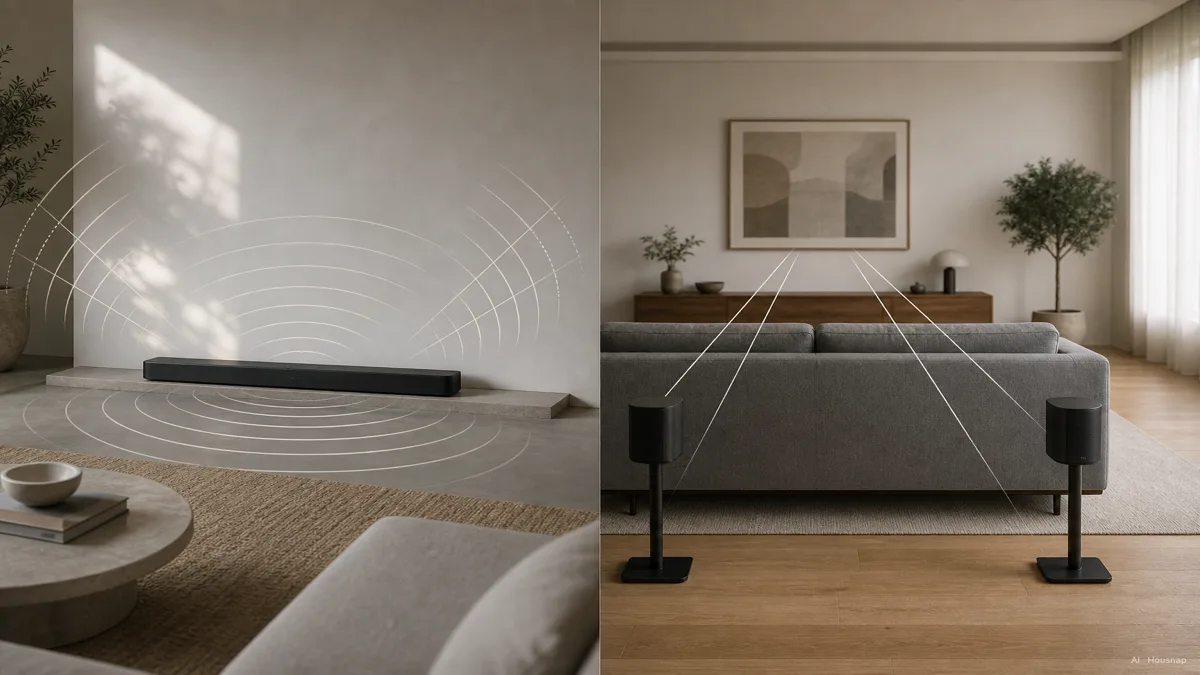
A real 5.1 system earns its number by putting two satellite speakers behind your listening position. That is the whole point, and it is something a single bar physically cannot fake. With discrete rear channels, an action scene wraps around you, a movie's ambient track fills the room, and a sound effect can genuinely come from over your shoulder.
The other piece a 5.1 adds over a 2.1 is the center channel, and it is quietly the most important speaker for everyday watching. The center is the driver most responsible for dialogue clarity. Without one, as on a 2.1, speech can sound diffuse or blend into the music and effects. If you mostly watch dialogue-heavy content, dramas, news, talk shows, you may actually gain more from that center channel than from the rear surround, which is why a 3.1 bar exists as a middle step worth knowing about.
The benefit scales with the room. A 5.1 pays off most in a larger dedicated TV room or an open-plan living area, where the left-and-right soundstage of a bar alone leaves the back of the space empty. In a big room, the rears finally have somewhere to fill.
Now the costs, because a 5.1 asks more of you. Price climbs: true 5.1 packages with discrete rear satellites typically start around 200 dollars and commonly run 350 to 600 and up, with premium Atmos-capable systems like the Samsung HW-Q990F well past a thousand. Setup is a real step harder too. You are positioning and powering two extra rear speakers, running or wirelessly pairing them, and often calibrating speaker delay so the sound from front and back reaches you in sync. One detail to check before you buy: rear satellites can be wired or wireless depending on price tier, and wired rears, common below 300 dollars, can limit where you are allowed to put them.
Virtual Surround vs. True Surround: The Label That Misleads First-Time Buyers
This is the single trap most likely to catch a first soundbar buyer, so it is worth slowing down on. Plenty of single bars advertise "virtual 5.1" or "virtual surround", and the word doing the heavy lifting there is virtual.
Virtual surround uses psychoacoustic processing to simulate side and rear sound from front-facing drivers. There are no physical speakers behind you. The bar is using clever audio tricks to fool your ear into placing sound wider than plain stereo, and Ultimea's explainer on virtual versus true surround lays out exactly how that differs from discrete channels.
It can genuinely sound wider than stereo, and on a good bar the effect is pleasant. But it falls well short of true discrete rear channels, especially in irregular or open-plan rooms where there is no clean surface for the sound to bounce off. The immersion you get from two real speakers behind the sofa is not something processing can fully reproduce.
So the rule of thumb is simple. If the box says "virtual" and it is a single bar with no separate rear speakers in the kit, treat it as an enhanced 2.1, not as a 5.1. A genuine 5.1 has physical rear satellites in the box. Reading that one word saves a lot of first-buy disappointment, and a Digital Trends soundbar buying guide is a solid second opinion if you want to sanity-check a specific model's claims.
How to Choose: Room Size, Budget, and the Setup Trade-off
Forget which number is bigger and start with your room, because that is the factor that actually settles this.
Room size is the primary call. Rooms under roughly 250 square feet, or narrower than about 15 feet, see limited benefit from rear speakers, the front left-and-right spread already fills the space, and rears can end up overlapping or sitting too close to do much. In a small or narrow room, a strong 2.1 is usually the better spend. Save the 5.1 for a larger dedicated TV room or an open living area, where the back of the room genuinely needs filling.
Then layer in how you watch. Mostly dialogue-driven shows? A center channel matters more than rears, so a 3.1 or 5.1 earns its keep, while a 2.1 leaves speech a little less anchored. Cinematic movies and games in a big room? That is exactly where true rear surround pays off. Casual everyday TV in a normal-sized room? A good 2.1 covers it cleanly.
Budget and setup tend to point the same way. If you want plug-it-in-and-done simplicity, a 2.1 is one bar and one subwoofer. A 5.1 means placing and powering two rear speakers and possibly calibrating delay, so factor in both the higher price and the extra effort. And if Atmos height ever tempts you, remember neither a plain 2.1 nor a plain 5.1 delivers it, you would be looking at a 5.1.2 or above, and that depends on having flat, standard-height ceilings around 8 to 10 feet for the up-firing drivers to bounce off. Vaulted or very high ceilings degrade the effect, which is often when a well-tuned 5.1 with real rears beats an Atmos bar anyway.
From here the useful next move is concrete. Filter real 2.1 and 5.1 soundbars side by side, check whether a 5.1 listing includes physical rear satellites or just markets "virtual" surround, compare what each model costs across stores, and match the channel count to the room you just pictured. You'll find options from the names that show up most in soundbars, so the comparison is grounded rather than guesswork.
Sources
- What do soundbar channel numbers mean? — Samsung; the X.Y.Z channel notation, what each number counts, and where Atmos height fits
- 5.1 vs. 3.1 vs. 2.1 Soundbar: What's the Difference? — MakeUseOf; side-by-side of the tiers, the center channel's role in dialogue, and what rear speakers add
- Understanding Virtual Surround Sound vs. True Dolby Atmos Surround Sound — Ultimea; how virtual surround simulates rear sound from front drivers versus true discrete channels
- How to choose a soundbar: size, subwoofers, surround sound, and more — Digital Trends; room fit, subwoofer and rear-speaker considerations, and reading a model's surround claims
- Best soundbars 2026 — What Hi-Fi; reference points across tiers from 2.1 bars to flagship 5.1 and Atmos systems
- Soundbar Reviews and Recommendations — RTINGS; measurement-based reviews of soundbars across price tiers and configurations