Find your model’s removal instructions first
Record the robot’s full model designation and open its main-brush maintenance instructions. Confirm how to switch it off, release the cover and remove the roller. Check separately whether its end caps, the small pieces at the roller ends, are removable by the owner.
For example, ECOVACS FAQ 1535 starts with opening the top cover, switching power to “O” and turning the robot over, then removing the brush cover and main brush. The page does not identify a model in its text, so confirm that this procedure applies to yours before following it.
Keep this job to the parts described in your manual’s user-maintenance section. If a cap will not release as shown, stop rather than pry it apart. This guide covers dry hair removal; washing requires separate permission in your model’s instructions.
Clear the roller, then check the permitted end caps
With the robot switched off and the brush removed as instructed, clear the hair you can reach. Keep the removed parts together and note which end each piece belongs to.
Roborock’s S5 instructions say to remove hair from the bristles and use the tool to cut hair trapped at the edges. That is an S5 procedure, not permission to run scissors along every rubber roller. Use your existing manufacturer-specified brush-cleaning tool; buy a replacement tool only if yours is missing and the maker confirms its suitability.
A clean-looking roller surface is not the end of the check. The Roomba s Series instructions, rendered in German, also remove the end caps, clear hair and debris beneath them, and clean the square and star-shaped pins at the opposite ends. Apply those steps only to the specified design or to a model whose own instructions permit them.
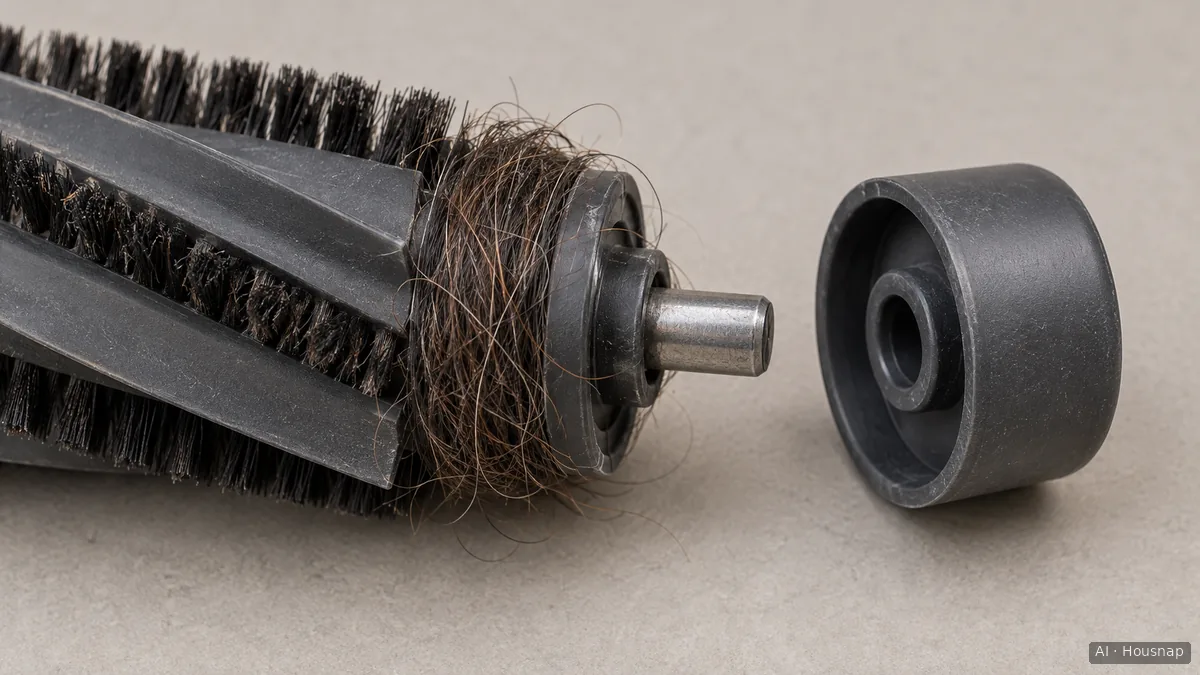
The illustration highlights where to inspect on a removable-cap design. It does not show the release method for your robot. If you see torn rubber, a cracked cap or a damaged fitting, set the part aside for a replacement or support check instead of trimming or reshaping it.
Refit the parts before judging the result
Return every permitted removable cap to its original place. For the Roomba s Series, the instructions match the brush-pin shapes to the symbols in the cleaning head; do not force a brush into the wrong position.
The ECOVACS procedure above checks that the reinstalled brush rotates smoothly, then aligns the cover with its slots and presses it into place until it clicks. Follow your own model’s corresponding rotation and cover checks. If something will not seat correctly, stop and check the instructions again.
Only after complete reassembly should you resume operation as the manual directs. Note whether the original warning or unusual noise returns. Visible hair removal alone is not enough to call the problem resolved.
Choose between keeping the brush, replacing it and asking for help
- Keep it if cleaning and correct reassembly restore normal operation and you find no visible damage requiring attention.
- Check a replacement brush if it is damaged or still fails the manufacturer’s rotation check after cleaning. iRobot’s main-brush guidance says extractors that do not rotate may need replacement. It does not say that every recurring warning proves a failed brush.
- Ask support if the brush is clear and correctly fitted but the problem remains, or if a fitting or cover is damaged. Stop at user-service maintenance rather than opening the drive mechanism.
Before buying a replacement main brush, match the robot’s full model designation to the part’s explicit compatibility list and manufacturer part reference, where available. Check whether the listed assembly includes the end pieces you need. Similar colour or appearance is not enough to make the purchase decision. iRobot directs replacement-part requests to its store, Customer Care or an authorized retailer or partner.
Send support the model designation, the exact warning, photographs of the affected part and a short account of what you removed and refitted. Ask whether the next step is a user-replaceable brush or service.
If repair has been assessed and you have decided to replace the whole machine, revisit whether cordless or robot cleaning fits the work you need done. A hair tangle by itself does not require that purchase.
Cómo se elaboró esta guía
Written by Housnap’s AI editor using ECOVACS, Roborock and iRobot support documents. Named-model procedures remain limited to those designs; the keep, replace or seek-support framework is editorial guidance for user-service maintenance. This article does not report hands-on testing.