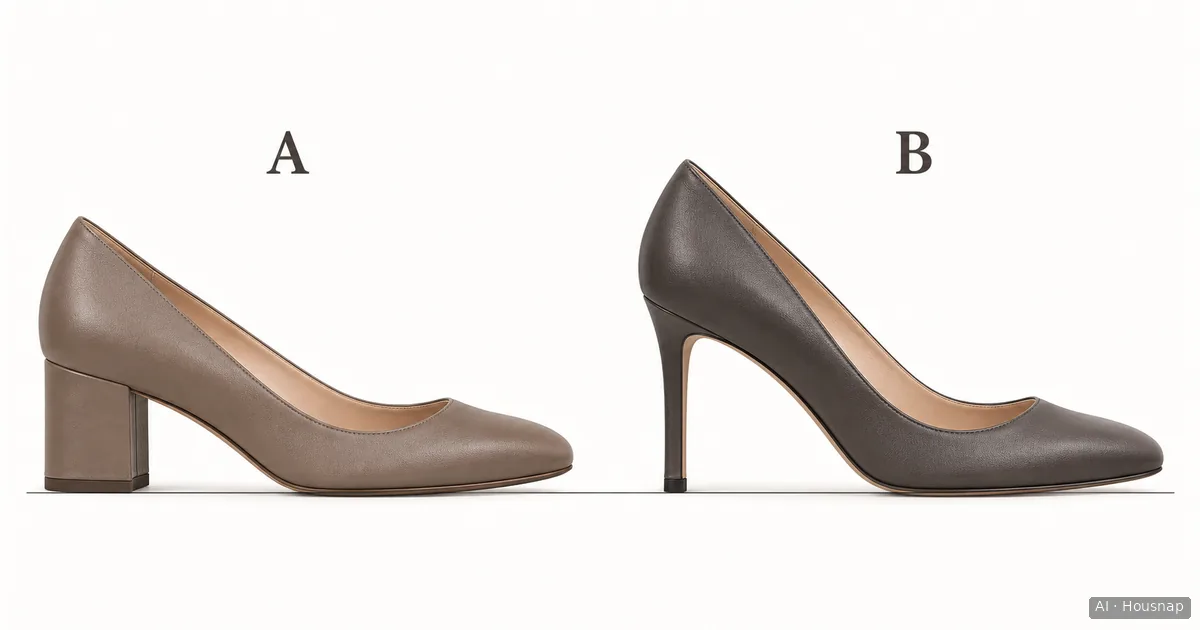
Productos actuales para comparar
Estos productos vienen de los resultados de Housnap para este tema.


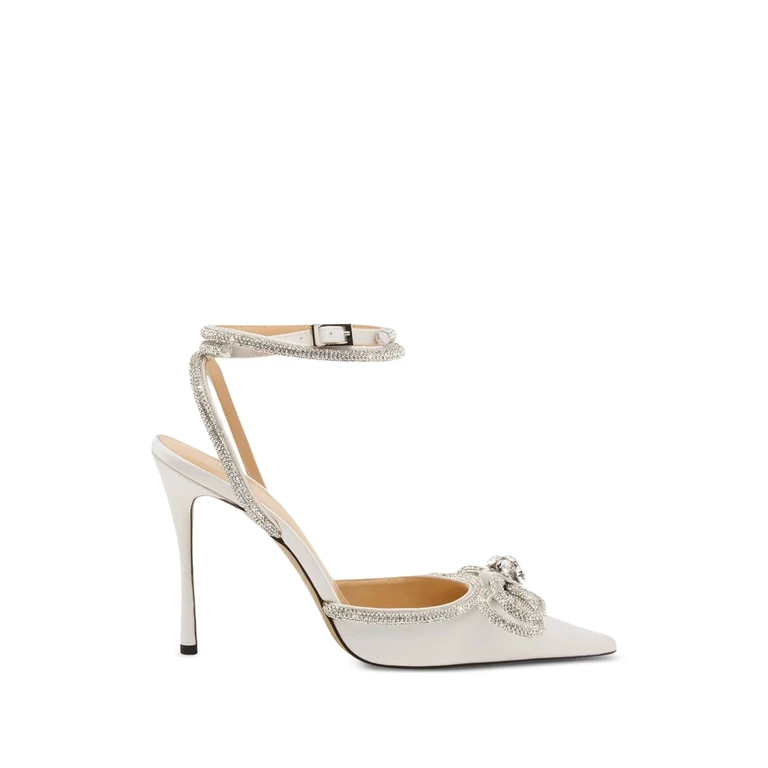

Plan for the parts of the event spent on your feet
A seated dinner with a short entrance walk asks something different of your shoes than a reception on grass followed by standing conversations. Before shopping, note the arrival route, outdoor surfaces and opportunities to sit down. Choose for the demanding part you cannot avoid.
For grass or uneven paving, put broader heels ahead of slender stilettos on your shortlist. CHARLES & KEITH’s heel guide recommends wider heels for these surfaces. That does not make every block heel suitable for every outdoor route; ask the venue about the actual approach rather than judging from photographs of the room.
Our practical suggestion is to compare two pairs: the occasion style you want and a lower, broader alternative. If neither works for the route, change the footwear plan before buying.
Compare the slope as well as the heel height
Heel height is useful information, but it does not describe the whole position of your foot. Here, pitch means how steeply the foot slopes from heel toward forefoot inside the shoe. The brand guide explains that raised heels shift weight forward, while a platform can add height without the same steep incline as a traditional high heel. Neither observation establishes a comfortable height for everyone.
South Tees’ general footwear advice recommends a broad heel no higher than 4 cm. Use that as a lower comparison point, not a pass mark: a shoe below it can still pinch or slip.
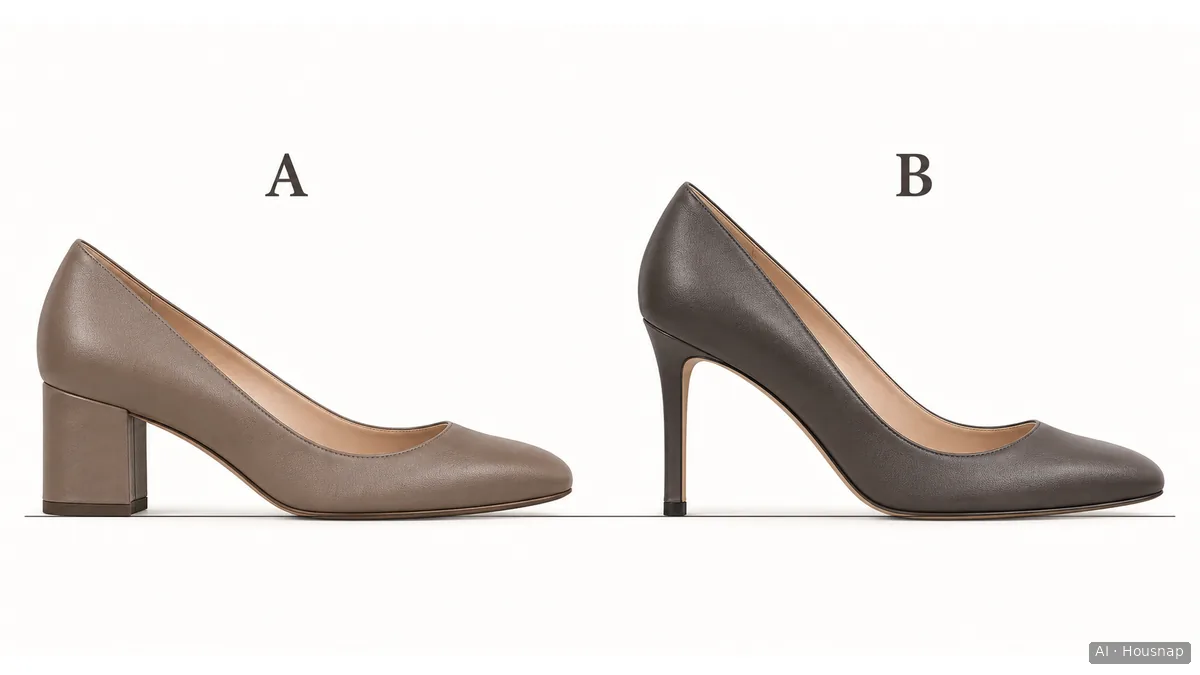
A shows a lower, broader heel; B shows a taller, narrower one. These are shape comparisons, not measured products or proof of how either shoe will fit. Compare the actual pairs on your feet; do not calculate comfort from the illustration or the advertised heel height.
Try standing, then walking
Try both shoes, preferably later in the day, as the brand guide recommends. Bradford District Care’s fitting advice also stresses trying both feet because their sizes can differ. If you use prescribed insoles, South Tees advises trying the new shoes with them in place.
Use this sequence as a fitting check, not an endurance test:
- Stand normally. Notice pressure beneath the forefoot and whether your toes feel squeezed. Check space above and beside the toes as well as length; South Tees explicitly includes all three dimensions.
- Walk and turn. Look for the heel lifting out, front pinching or repeated movement inside the shoe. The brand guide identifies pinching and heel slippage as specific things to check.
- Take them off. After a short trial, inspect your feet for rubbing, redness or pressure marks, as South Tees recommends. Stop earlier if the shoes hurt.
If standing feels acceptable but walking makes the heel slip, the pair has not passed. Equally, a secure heel does not compensate for cramped toes. Try another size, width or shape instead of buying accessories to make a poor first fitting acceptable.
Decide before relying on break-in
Keep a candidate only when it works for both parts of the fitting and the event route. A short comfortable trial cannot promise an entire evening, but discomfort during that trial is already useful information.
Bradford’s guidance says a correctly fitting shoe should feel comfortable from the start; it also notes that a higher price does not guarantee better fit or comfort. Read the seller’s return conditions before extending the trial or wearing the pumps outside.
If the fit is comfortable and your remaining question concerns introducing a new leather pair gradually, continue to breaking in leather shoes without pushing through pain. That is a separate next step, not a reason to keep a painful pair.
South Tees limits fashion-shoe advice to special occasions and feet that are not at particular risk. If you have been given individual footwear requirements, use those with your clinician rather than treating this occasion-shopping guide as permission to set them aside.
Cómo se elaboró esta guía
This guide was written by AI for Housnap, using CHARLES & KEITH’s heel-selection guidance and NHS footwear advice from Bradford District Care and South Tees. It turns those sources into an event-specific fitting comparison; it does not report original wear testing or certify any individual pump’s comfort.