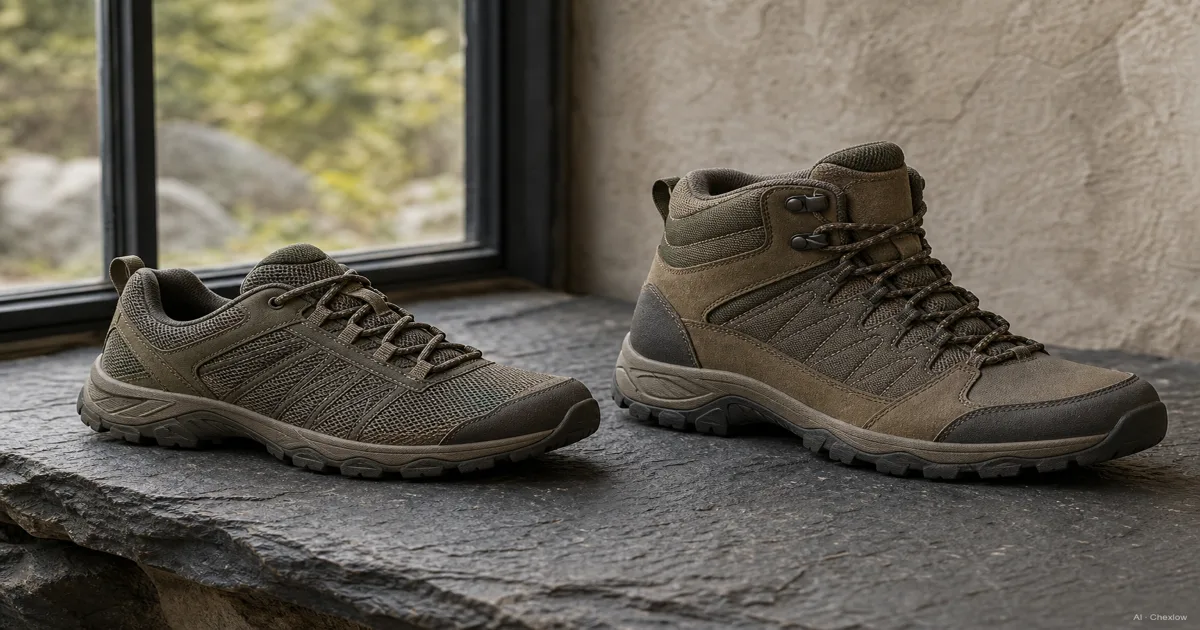
Start with the hike you actually plan
Write down the route, what you will carry and whether you are staying overnight. Use these starting points, adapted from HANWAG’s comparison:
- Easy paths, light pack. Try low-cut hiking shoes first.
- Rough ground or heavier gear. Include sturdy mid-cut boots in your shortlist.
- Route still undecided. Choose a realistic first route before buying for an imagined expedition.
If your load is still unclear, work through daypacks versus multiday packs before finalizing the footwear shortlist. Pack capacity is not a measurement of its loaded weight.
Compare the whole shoe, not just the collar
A higher collar can help keep loose debris out; support also depends on the foundation and fit, as Oboz explains.
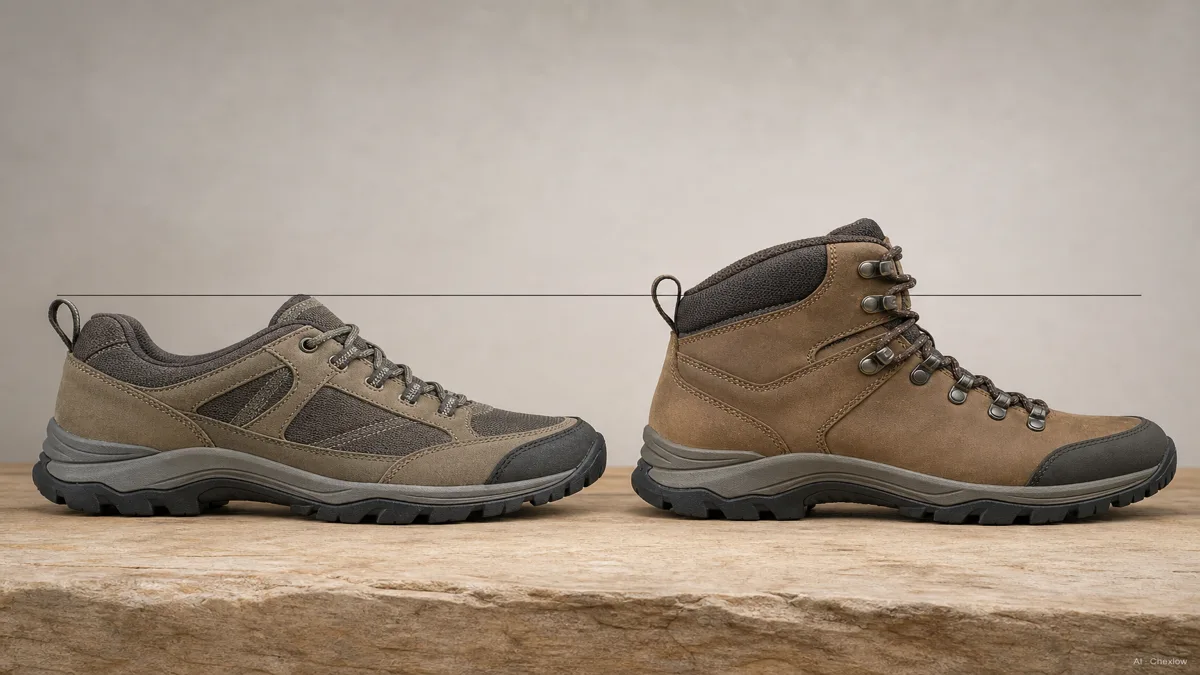
The midsole, the layer between your foot and the outer tread, largely determines stiffness. A flexible day-hiking mid is not equivalent to a stiffer backpacking boot. REI distinguishes those constructions.
For each candidate, check its stated use and underfoot construction. Compare weight in the same size and check whether the figure means one shoe or a pair. Do not treat “mid” as a safety rating.
Want footwear for faster, light-load outings? REI includes trail runners as an alternative. Explore how to choose trail-running shoes if that is your actual intended use.
Decide on waterproofing separately
Check the particular version’s waterproof specification. For frequent wet conditions, consider a membrane; for mostly hot, dry walks, prioritize ventilation. Salomon explains the breathability trade-off.
A waterproof label is not permission to wade deeper. Water can enter through the ankle opening, a limit GORE-TEX explicitly describes.
Make the purchase depend on a walking trial
Try both feet later in the day with your intended hiking socks and any prescribed insoles. Walk up and down a slope or stairs: your toes should not strike the front. HANWAG’s fitting advice explains these checks.
Use socks you already own if they are the ones you will hike in. If buying socks too, choose them before judging shoe fit.
- Keep comparing. Persistent pressure, rubbing or heel movement is a reason to revisit the fit, not commit to the preferred cut.
- Before the trip. Progress from indoor wear to short local walks, then easy trails. Increase distance and load gradually; break-in cannot repair a poor fit. Follow REI’s break-in guidance.
Cómo se elaboró esta guía
Written by AI for Housnap, using footwear guidance from REI, HANWAG, Oboz, Salomon and GORE-TEX. The shortlist and fitting sequence are editorial guidance for a first hiking purchase, not results from product testing.