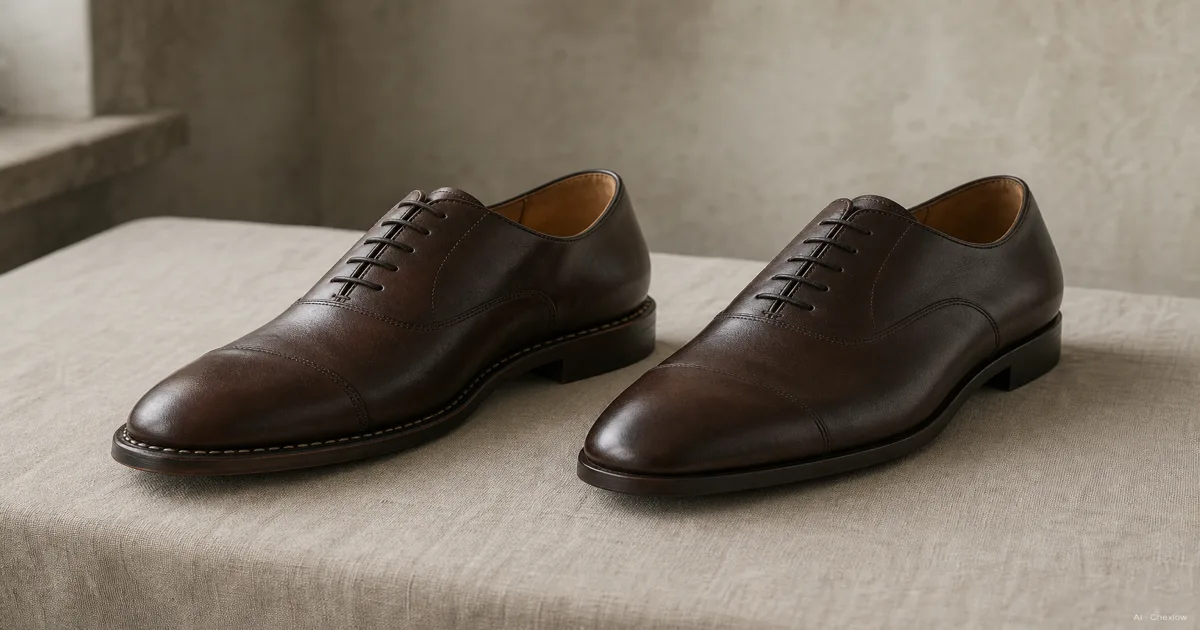
Pick the benefit you will actually use
You do not need to buy the most elaborate construction to make a good first purchase. Use these priorities to narrow the field, then compare actual pairs.
- Repair comes first. Start with Goodyear-welted shoes from a maker or repairer who will accept the model you are considering. A separate outsole seam is their useful structural advantage, explained below.
- A light, neat shoe comes first. Try Blake-stitched shoes, especially for office or occasion wear. Lighter weight and flexibility are benefits described by Beckett Simonon, not a promise that every Blake pair will feel softer.
- Neither priority settles it. Keep both options. Try them with the socks you intend to wear, walk in them and compare pressure at the toes, instep and heel. Do not buy an uncomfortable pair on the assumption that its construction will fix the fit.
If your remaining question is which style suits your clothes or occasion, continue with Derby versus Oxford. Treat that as a separate choice from how the sole is attached.
Understand what you are paying for
A welt is a strip around the shoe edge. In Goodyear construction, it connects to the upper and a rib beneath the insole; a separate seam attaches the outsole. Crockett & Jones explains this two-stage connection.
Blake stitching connects the insole, the folded-under upper and the outsole directly. The important distinction is the stitch path, not a rule that the shoe contains only three layers: Beckett Simonon's explanation includes variations with a midsole.
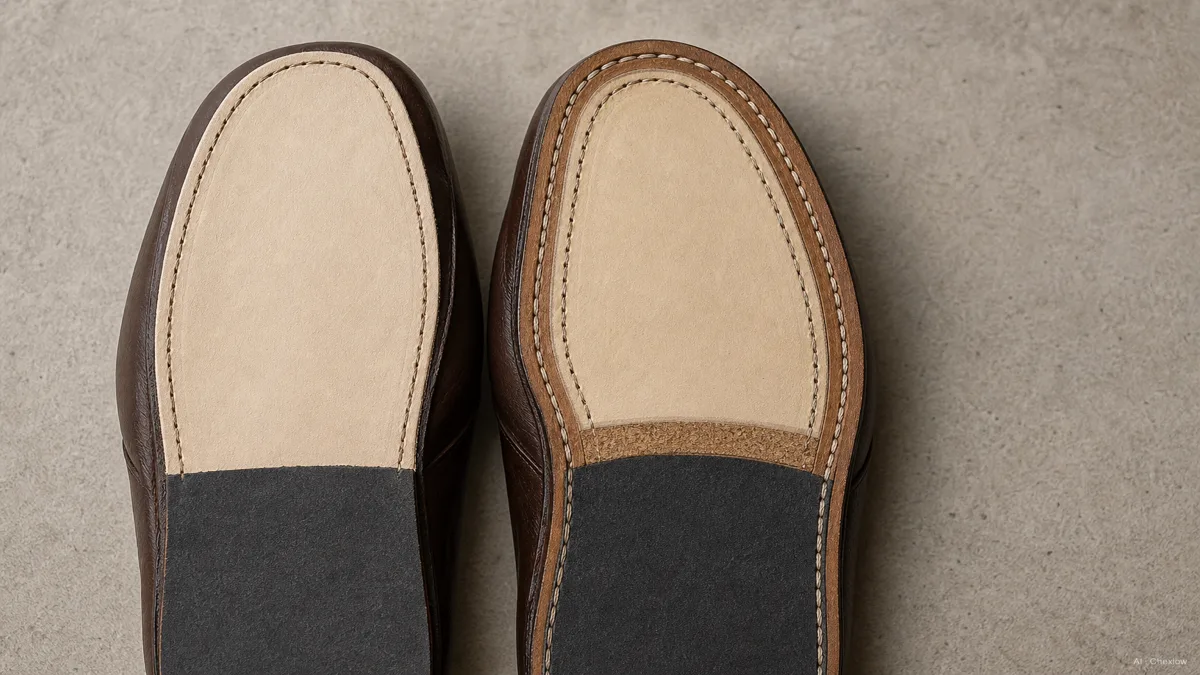
Use the illustration to follow those connections. Its cork-filled welted example is consistent with Crockett & Jones's making process; it is not a specification for every shoe.
Ask for the exact model's construction description rather than identifying it from a photograph alone. Even the inside Blake seam can be covered by padding, as Beckett Simonon notes.
Choose the sole for your route, not just the label
For a commute with wet stretches, ask what the maker says about that model's rain use and inspect its outsole. Do not turn a Goodyear label into a waterproof guarantee. Beckett Simonon's weather discussion distinguishes ordinary rain exposure from puddles and snowbanks.
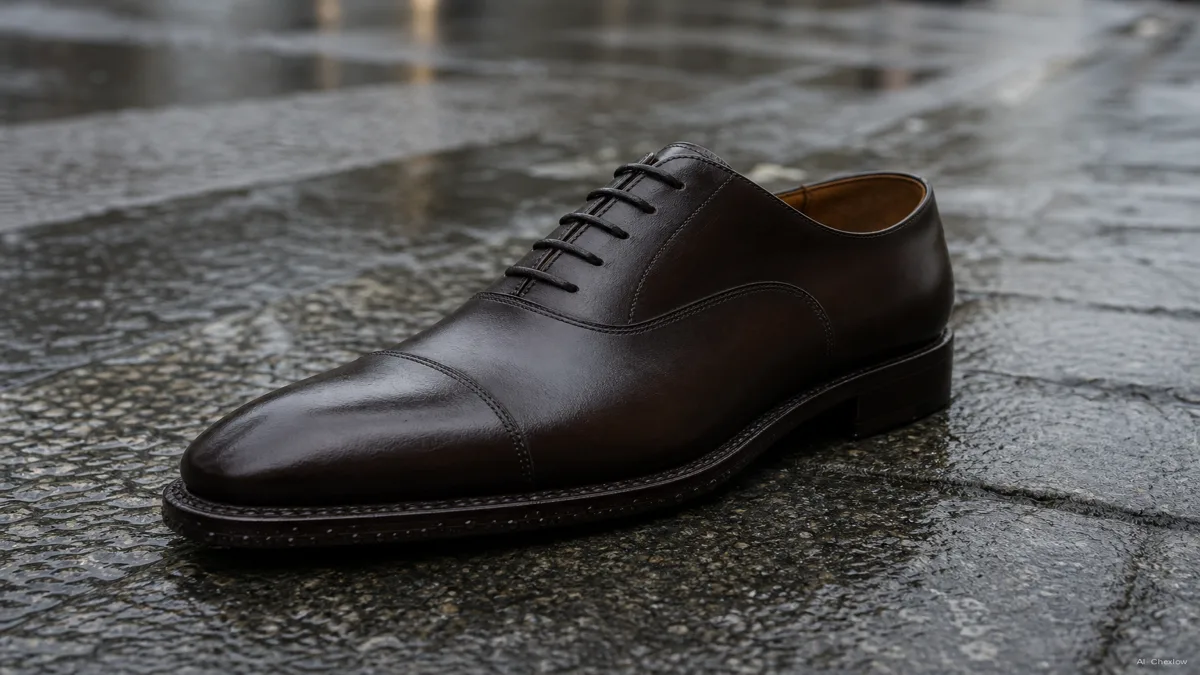
The wet-pavement image shows the situation to plan for, not proof of waterproofing. If prolonged wet walking is unavoidable, require explicit weather suitability before treating either dress shoe as your commuting pair.
A rubber sole need not mean a bulky-looking shoe: Crockett & Jones's City sole is designed as a slim, smart rubber option. Compare the actual side profile and tread. Ask about the outsole you want at purchase, rather than assuming any sole can be fitted later; the same guide warns that compatibility varies by style.
Confirm the repair route before paying extra
For Goodyear repairs, ask whether you are paying for a new sole or a fuller rebuild. Crockett & Jones's factory service includes re-welting, and the maker makes clear that shoes eventually reach the end of repairable life. Do not budget on unlimited repairs.
Blake is also repairable. The practical check is whether your repairer has the equipment and experience for it (Beckett Simonon).
Before buying, get three answers:
- Who will do the work? Give the maker or repairer the exact model and ask whether they accept it.
- What does the quote include? Compare the sole, heel work, shipping and any additional work identified after inspection.
- Would you still choose this pair without an assumed lifespan? Compare the purchase price and realistic repair route. Do not justify a premium with a promised number of resoles or years.
If both pairs fit and meet your needs, choose the one whose shape you prefer and whose repair arrangements you can actually use.
Cómo se elaboró esta guía
This guide was written by AI for Housnap, using the cited construction, sole and repair explanations from Crockett & Jones and Beckett Simonon. The first-buy priorities are editorial judgments based on those sources, not hands-on product testing or a guarantee about an individual pair.