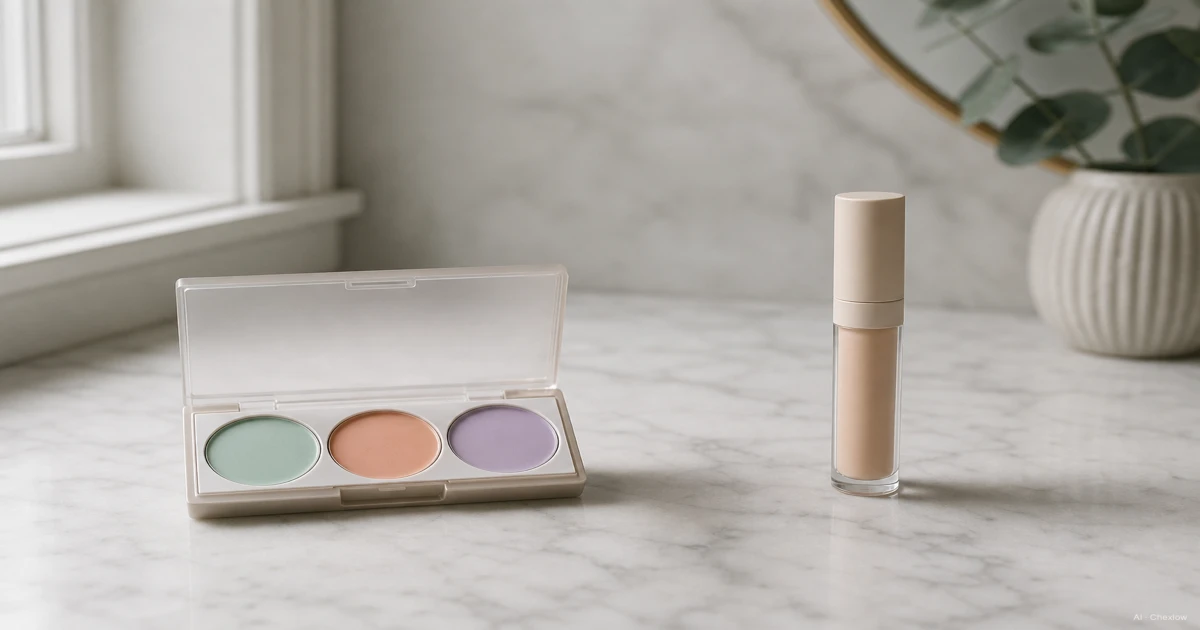
Disponibles ahora en una sola tienda
Por ahora, cada uno de estos productos está disponible en una sola tienda. La comparación de precios se abrirá con más tiendas.


Decide what your first purchase needs to do
Concealer adds skin-colored coverage; a corrector changes the appearance of an unwanted hue. Mild discoloration may need only concealer. IPSY explains the distinction.
Use that difference to narrow your basket:
- Nothing suitable yet? Try a matching concealer first. Judge whether its coverage is enough before adding another product.
- Coverage looks good, but one color remains? Test a corrector for that area with your existing base.
- Already happy with the result? Neither purchase is compulsory.
“Buy concealer first” and “apply corrector first” answer different questions. You can start with one product and later place a corrector underneath it.
Choose concealer by shade and finish
For spots, look for a close skin or foundation match. Compare neighboring shades in natural light rather than choosing a brighter shade automatically. L’Oréal Paris’s shade guide distinguishes concealing from highlighting.
Then read the coverage and finish descriptions. Liquid does not mean sheer: Infallible Full Wear is a liquid with full coverage and a matte finish.
Shortlist a shade and formula together. A liquid, pot or stick is a format to handle, not a reliable ranking from lightest to strongest coverage. Ask to try the candidate on the area you actually want to cover.
Pick a corrector for the color that remains
Start with one relevant shade, not a whole palette.
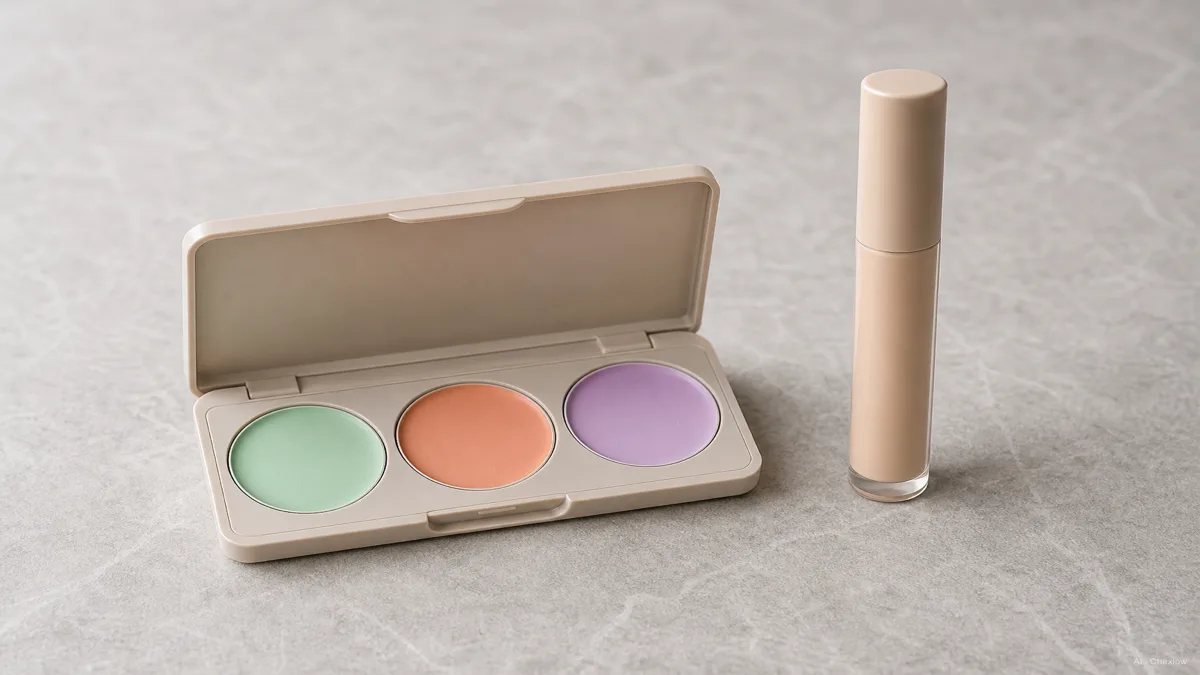
- Redness: consider green. Maybelline’s correcting range uses green for this purpose.
- Blue-gray darkness: try peach on fair/light skin or orange on medium/deep skin.
- Purple discoloration: consider yellow.
- Yellowish dullness: consider lavender.
The last three are starting points from L’Oréal Paris’s correction guide, not a promise that every shade suits every face. Compare the result under your intended base. The palette above illustrates different jobs; it is not a shopping checklist.
Some correcting formulas can also be worn without foundation, as that guide notes. If this is your goal, judge the blended finish on its own before adding concealer automatically.
Compare thin layers before adding more
For a simple trial, apply a little corrector only where needed, blend its edges, then tap concealer over it. Fingers, a sponge or a brush can work; a new brush is not a prerequisite. Maybelline’s product instructions describe this sequence.
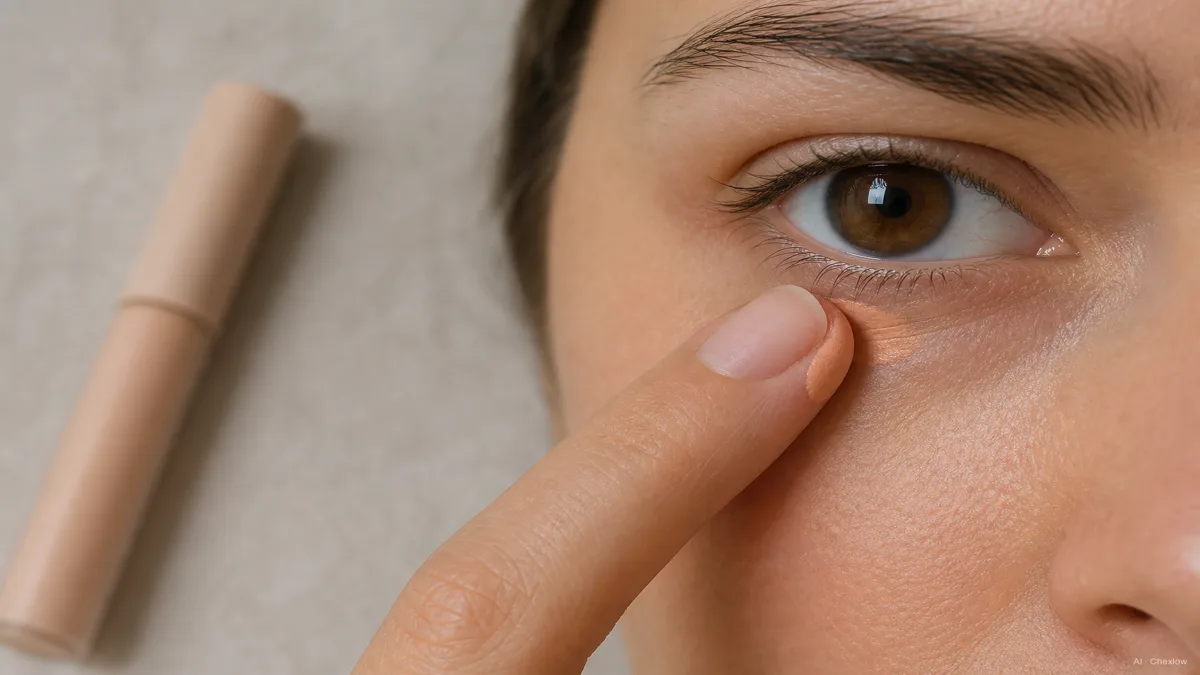
If you wear foundation, corrector → foundation → concealer is a useful starting sequence. Follow the individual product directions; foundation placement is not universal. Keep layers light and tap rather than rub, as Maybelline’s application guide recommends.
Compare concealer alone with the combination. Keep the extra step only if it improves the result you want. If coverage is right but wear is the remaining problem, explore whether setting powder or setting spray fits your routine.
Sources
Cómo se elaboró esta guía
Written by AI for Housnap, using L’Oréal Paris and Maybelline guidance and IPSY’s published comparison. The first-purchase recommendations are editorial judgments based on those sources, not product wear tests.