Saltar al contenido
Housnap IA
Pet Supplies / Pet Accessories

Clumping vs Crystal Cat Litter, Which One Should Your First Box Be

You are standing in the pet aisle with two bags that both claim to control odor and both claim to be easy. One is a heavy sack of gray clay pellets. The other is a lighter bag of what looks like aquarium gravel. Nobody at the store tells you which one your first cat actually needs. The honest answer is that both work, and they work by doing almost opposite things. Clay clumps around moisture and lets you remove the wet part entirely. Silica crystals absorb moisture into the bead itself and never form a clump at all. That single mechanical difference is what drives everything else you will notice: how much dust floats up when you pour it, how far it travels on your cat's paws, how often you are elbow-deep in a full box change, and how much you spend across a month rather than a single bag. None of this is about which litter is objectively superior. It is about matching the trade-offs to your household, your cat, and how much maintenance you actually want to do.

Clumping vs Crystal Cat Litter, Which One Should Your First Box Be — Ilustración IA

Disponibles ahora en una sola tienda

Por ahora, cada uno de estos productos está disponible en una sola tienda. La comparación de precios se abrirá con más tiendas.

What's the Real Difference Between Clumping and Crystal Litter?

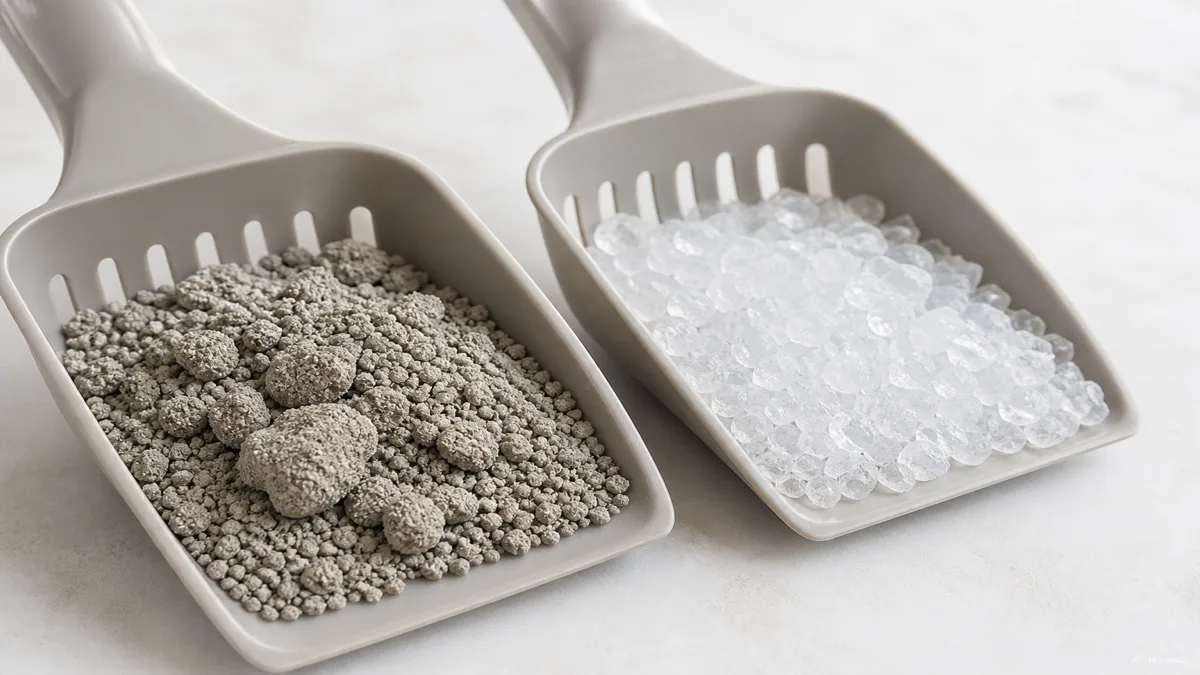
Clumping litter is almost always made from sodium bentonite clay. When urine hits the clay, the clay seizes around the liquid and forms a solid, cohesive clump. Scoop out that clump whole, and the surrounding litter stays dry and reusable, which is the entire mechanism behind a clay box lasting weeks between full changes.

Crystal litter is a different material altogether, amorphous silica gel beads, the same class of material as the little packets that keep new shoes dry. Instead of clumping, the beads absorb moisture and trap odor by drawing liquid inward, so a wet spot just dries into the bead rather than forming a scoopable mass. Daily maintenance becomes scoop-solids-only, since there is no liquid clump to remove, and a full box swap for one cat typically only happens every two to four weeks.

Both approaches solve the same problem, keeping urine and odor contained, but they solve it through opposite mechanics: one traps moisture on the surface of a clump, the other pulls it inside a bead. That's the fork everything else in this guide branches from.

Image: side-by-side close-up comparison of gray clumping clay litter and clear silica crystal litter in two separate scoops, clean bright background, simple labeled product photography — Ilustración IA

Odor Control and Dust: Which One Wins?

Over the length of a fill, silica crystals generally hold up better against ammonia smell than clay. Because the moisture sits locked inside each bead rather than exposed on a clumped clay surface, there is less surface area releasing odor back into the room as the days pass. Clay still controls odor well early in a fill, but many owners notice smell creeping back before the scheduled full change.

Dust is a clearer split. Clay litter produces noticeably more airborne dust, especially when you pour a fresh bag or when your cat digs before covering. Crystal litter is often described as virtually dust-free by comparison. That distinction matters beyond a clean kitchen counter. If anyone in the household has asthma, allergies, or your cat has any respiratory sensitivity, the dust difference is not a minor comfort detail, it's a real air-quality factor.

Neither material is a guaranteed fix on its own. A litter box in a poorly ventilated room will smell regardless of what's inside it, and even low-dust crystal litter benefits from a box that gets scooped daily rather than left to build up.

Maintenance, Tracking, and Time Commitment Compared

Day to day, crystal litter asks less of you. You scoop out solid waste, leave the crystals to keep absorbing liquid, and that's the entire daily routine. Clay asks for the same solid-waste scoop, plus you're also removing urine clumps every time, which is more scooping motions per visit to the box.

Tracking runs the opposite direction from odor control. Crystal litter tracks far less around the house, since the beads are heavier and less likely to cling to paws. Clay is the material behind those trails of gray paw prints and stray granules that turn up in hallways and on furniture, a familiar frustration for anyone who has owned a cat on clay litter.

The full-box change is where the two approaches trade places again. Clay is considerably heavier per volume, so hauling a full bag and dumping a used box is more physically demanding, and it happens more often, typically every one to two weeks for one cat. Crystal litter's fill lasts roughly 20 to 30 days for a single cat, shorter in multi-cat homes, which offsets the lighter daily scooping with a less frequent but still real full changeover.

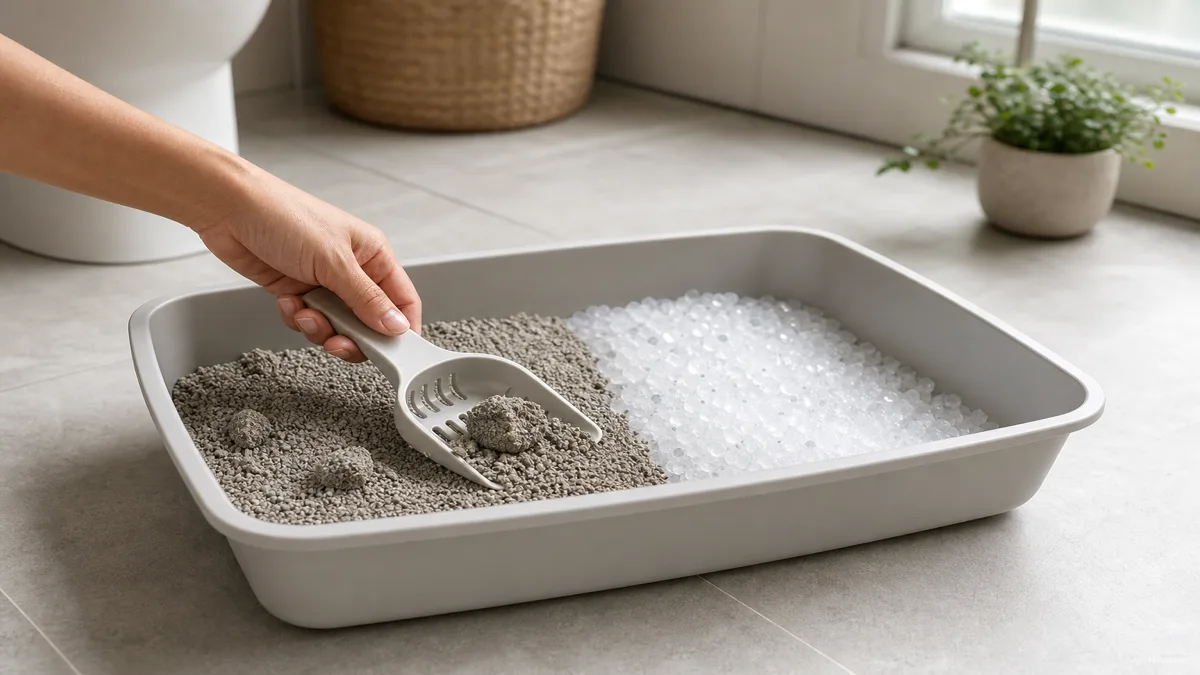
Image: a person's hand scooping a litter box with a small scoop, one side of the box showing gray clumped clay and the other clear crystal granules, tidy home bathroom setting, natural light — Ilustración IA

Cost Over Time: Sticker Price vs Monthly Reality

Clay wins on the shelf. It has a lower price per bag and remains the default budget choice for most first-time cat owners, which is a big part of why it's still the most common litter on the market.

Crystal litter costs more upfront, often somewhere in the range of $20 to $30 a month for a single cat depending on the brand, and that sticker shock is real the first time you compare bags side by side. But because one fill can last 20 to 30 days for a single cat, versus clay's shorter cycle between full changes, the monthly cost gap narrows once you account for how often each material actually gets replaced rather than just topped off. In multi-cat households, crystal fills run through faster, roughly 10 to 20 days per cat, which pulls the cost comparison back toward clay's favor.

The practical takeaway: don't compare bag price to bag price. Compare cost per month of actual use, and factor in how many cats are sharing the box.

Which One Should a First-Time Cat Owner Buy?

For a first box, clay is the safer default when budget is the main constraint, or when your cat has never used litter before and you want a texture that mimics natural digging substrate as closely as possible. It's also the material most cats are already used to if they came from a shelter or breeder.

Crystal is worth the higher upfront cost if dust and airborne allergens are a real household concern, if you want less frequent full-box maintenance, or if tracking litter through the house is a dealbreaker for you. It's generally considered safe when used as directed. Vet-reviewed sources classify standard silica gel litter as non-toxic in normal use, and the documented health concerns tied to litter dust involve bentonite clay exposure specifically, not silica crystals, and are described as rare.

Two caveats worth knowing before you commit. Some cats dislike the texture or sound of crystal litter underfoot, particularly cats with sensitive paws, so a short trial alongside their current litter is a smarter first move than a full cold-swap. And silica crystals carry a mild ingestion risk mostly flagged for kittens under four months old, who may nibble beads out of curiosity, so clay or a kitten-specific litter is the more common recommendation until a cat is a bit older.

There's also an environmental angle worth knowing, separate from the buying decision itself. Bentonite clay is extracted through strip mining, which alters landscapes and isn't biodegradable, so clay litter adds non-decomposing volume to landfills over the life of a cat. That's not a reason to rule clay out on its own, but it's a fair factor if sustainability weighs into your choice.

Whichever material you land on, look for options from brands with a track record in odor control and clumping or absorption consistency, and compare a few across sellers for the size and cadence that actually matches your cat's litter box use before committing to a full case.

Sources

Cómo se elaboró esta guía

Editado por el equipo de Housnap · Las imágenes son ilustraciones generadas por IA