How to Buy Your First Bottle Warmer Without Guessing on Temperature
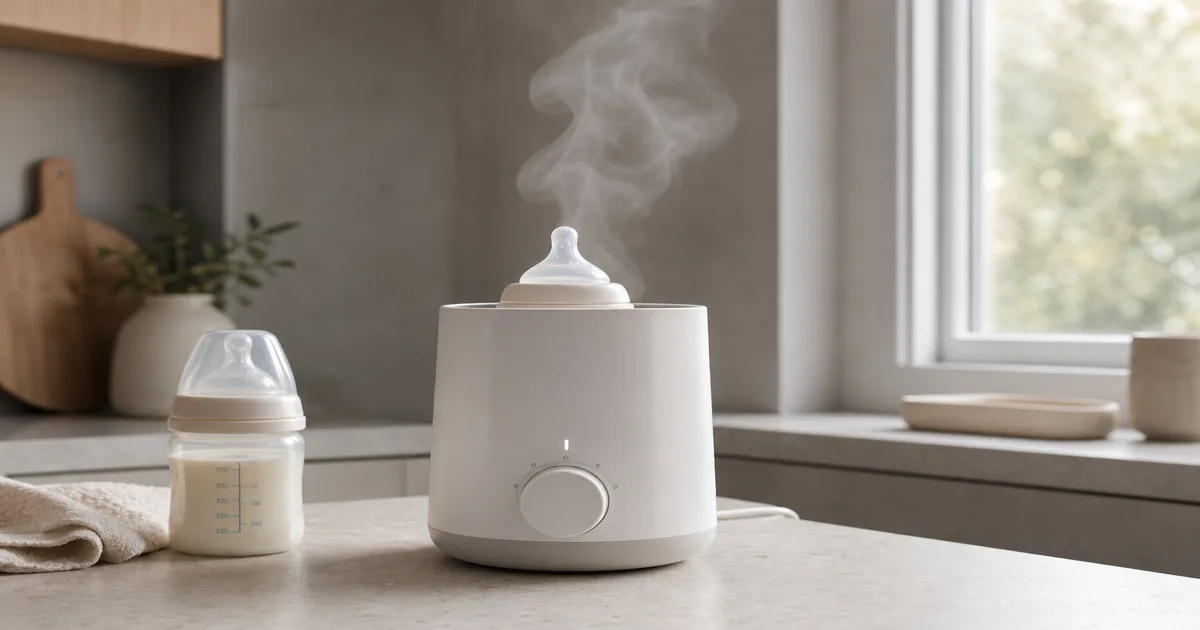
You are standing at the counter at two in the morning with a screaming baby in one arm and a bottle of cold milk in the other, and the search results are telling you there are eleven kinds of bottle warmer. Water bath. Steam. Something called cordless. Every listing swears its own is fastest, safest, best. Here is the short version before the long one. Any bottle warmer beats a microwave, because a microwave heats unevenly and there is no way to know how hot the milk actually got until your baby's mouth tells you. Past that baseline, the three warmer types trade speed for gentleness in different ways, and breast milk and formula do not need to be treated identically once you understand why. Fast is not the same as gentle, though, and that gap is where most of the real decision lives. A steam warmer can heat a bottle in minutes, which sounds like a win at 2 a.m., but breast milk holds proteins that do not love a hard, fast blast of heat the way formula simply does not care either way. So this guide walks through what each type actually does to the milk, what temperature you are aiming for and how to check it without a thermometer, and what actually breaks down in real kitchens, so a five-minute purchase does not turn into a 2 a.m. research session.
Disponibles ahora en una sola tienda
Por ahora, cada uno de estos productos está disponible en una sola tienda. La comparación de precios se abrirá con más tiendas.

What Actually Goes Wrong When You Skip a Bottle Warmer
The microwave is sitting right there, and it is fast, so almost everyone tries it at least once before they buy a warmer. Here is why doctors keep saying not to.
Milk in a microwave does not heat the way you would guess. Microwaves excite water molecules unevenly, so a bottle comes out with pockets that are still cold next to pockets that are scalding, and you cannot see the difference from the outside. The American Academy of Pediatrics advises against microwaving bottles for exactly this reason, uneven heating creates hot spots that can burn a baby's mouth and throat, and there is no dial that lets you control the outcome.
Breast milk has a second problem on top of that. The CDC notes that microwaving breast milk can destroy some of its nutrients while creating those same hot spots, and testing has found the temperature can vary by more than 20°C, about 36°F, between different zones of a single microwaved bottle. You could dip a spoon into the coolest part, decide it is fine, and hand your baby the hottest part a second later.
None of this means you need to buy a bottle warmer today. Room-temperature or lukewarm-tap-water warming works fine, it is just slower, and plenty of parents get by without a dedicated appliance. What buying one actually gets you is consistency at the exact moment you have the least patience to test and retest, which is most 2 a.m. feeds.
Water-Bath vs. Steam vs. Portable: Which Type Fits Your Routine
Once you decide a warmer is worth it, the type question is really a routine question in disguise.
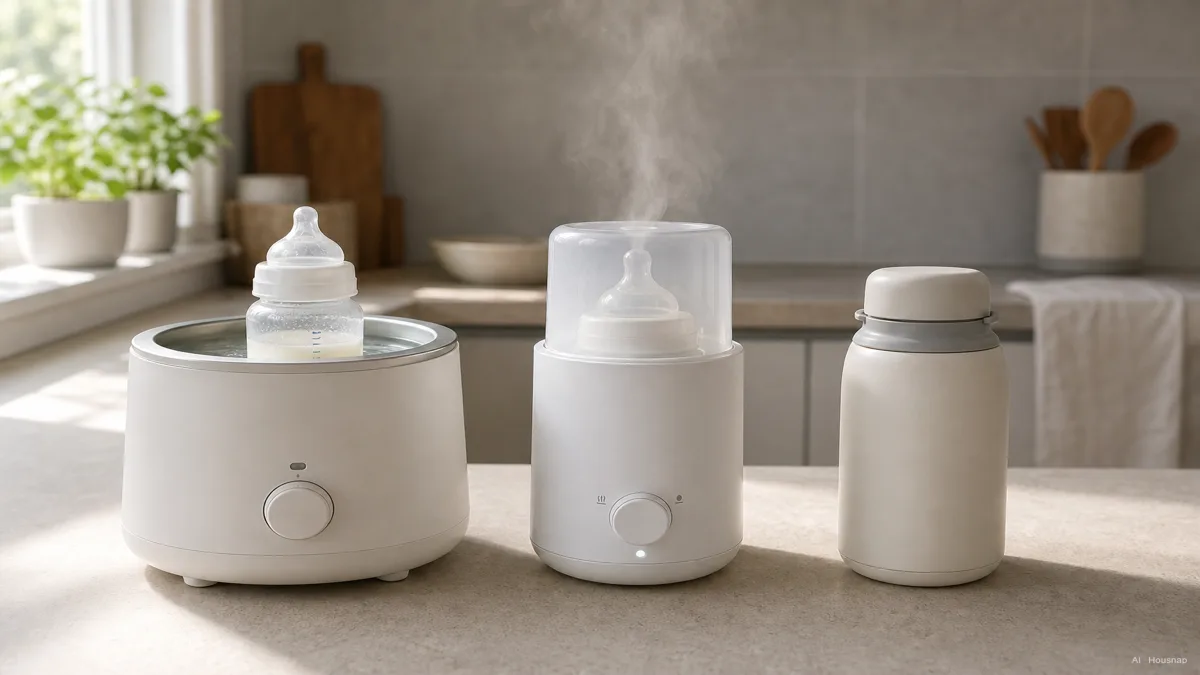
Water-bath warmers sit the bottle in a reservoir of heated water, the same idea as warming a bottle in a bowl of hot tap water, just automated and thermostat-controlled. They run gentler and slower, typically 4 to 8 minutes.
Steam warmers use a small heating element to boil a shallow water reservoir into steam, which wraps the bottle faster, typically 2 to 5 minutes. That speed is the whole appeal at 3 a.m., but steam runs hotter at the point of contact, so it rewards a warmer with real temperature control rather than a single on-off switch.
Portable or cordless flask warmers need no outlet at all. They hold their own heat in an insulated body and transfer it to the bottle over roughly 3 to 10 minutes, which makes them the only real option in a car, a stroller, or a hotel room, at the cost of being the slowest and least precise of the three. Consumer Reports lab-tests all three types for exactly this warming-speed tradeoff, alongside ease of use and whether a model stays under its temperature ceiling.
Here is where breast milk and formula genuinely diverge. Breast milk carries a protective antibody called secretory IgA, which coats a baby's gut lining and starts breaking down at temperatures above roughly 56°C, 133°F, well past anything you should be warming to anyway. But a warmer that runs hot and fast still sits closer to that line than one that heats gently over a few extra minutes. If you warm breast milk more often than formula, the slower water-bath style is the more forgiving default. If speed matters more than gentleness in an outlet-friendly kitchen, steam is a legitimate trade.
Getting the Temperature Right: Body Temp, the Wrist Test, and the Two-Hour Rule
Every warmer, no matter the type, is aiming at the same number. Body temperature, about 37°C or 98.6°F, is what milk feels like straight from the source, so it is the target that makes a bottle feel normal to a baby rather than a treat or a shock.
Breast milk has a ceiling worth remembering, too. Most feeding guidance holds that it should never go past about 40°C, and Consumer Reports uses that same number, 104°F, as the line in its own lab testing, flagging any warmer that regularly runs past it. A warmer with a dial and no shutoff can drift over that line if you get distracted, which is a real risk with steam models running on a timer rather than a thermometer.
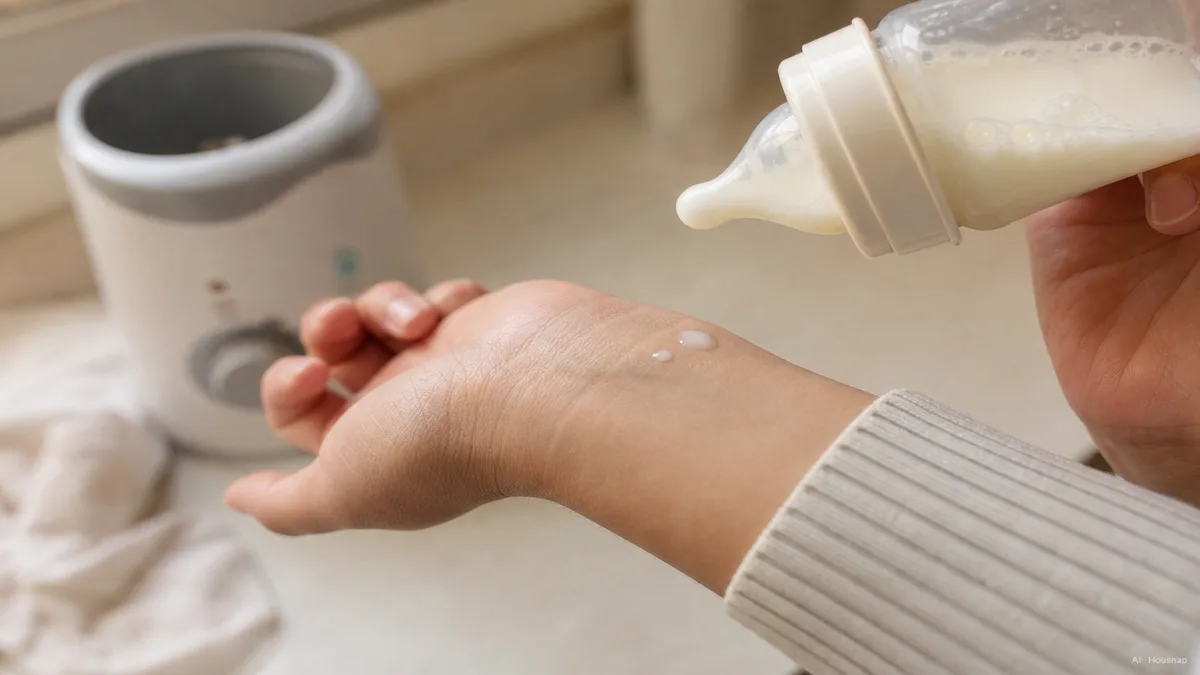
You do not need a thermometer to catch a warmer that overshoots, though. The wrist test is the check recommended in food-safety guidance for warmed milk, a few drops of warmed milk on the inside of your wrist, where skin is thin enough to feel temperature accurately. It should read lukewarm. If it reads hot, even slightly, let it cool before feeding, no exceptions, no matter how loud the crying gets.
Two more rules travel with every warmer purchase. Warmed milk is good for about two hours before bacteria start multiplying in what food-safety guidance calls the danger zone, roughly 4°C to 60°C, and it should never go back in the warmer a second time once it has been offered. Buy the bottle warmer, in other words, and you also inherit a small discipline around timing that has nothing to do with which model you picked.
What to Look For Before You Buy: Bottle Compatibility, Speed, Cleaning, and Travel Needs
Past temperature control, the differences between warmers come down to a short, practical checklist.
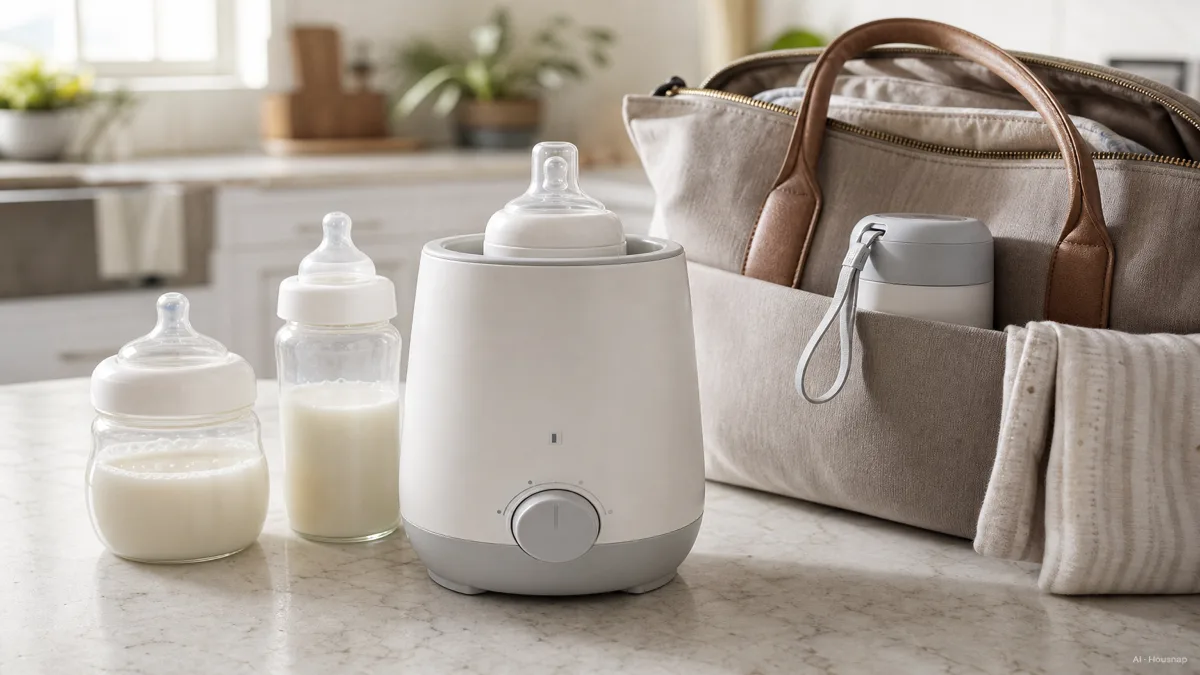
Bottle compatibility first. Households rarely stick to one bottle brand, a hospital sends you home with one, a gift registry brings a second, daycare might ask for a third, and wide-neck and narrow-neck bottles are genuinely different diameters. Baby Gear Lab's buying guide flags this as one of the biggest gaps between warmer models, a warmer built for one shape only turns into a drawer item the day a different bottle brand shows up, so a universal-fit basket or adjustable insert is worth more than it looks on the box.
Speed versus gentleness, from the type comparison above, is the second filter, and it should follow your actual feed mix rather than the fastest number on the shelf.
Cleaning matters more than most first-time buyers expect. Water-bath and steam models both use a small internal reservoir that can develop mineral scale from tap water over weeks of daily use, so a model with a wide-mouth reservoir and dishwasher-safe parts saves real time later. A 2026 lab comparison from Consumer Reports tests exactly this trio, warming speed, ease of use, and whether a model holds its promised temperature ceiling, and it flagged the Kiinde Kozii as one model that reliably stayed under 104°F in repeated tests.
Travel needs decide the outlet question. If daycare drop-off, grandma's house, or road trips are part of your routine, a cordless flask warmer earns its place even if it is not your everyday model at home. Reference prices below give a sense of the range rather than a ranking: Baby Brezza's Safe + Smart uses Bluetooth app control and reaches body temperature in about two minutes for roughly $80, Dr. Brown's Deluxe is a simple steam-based dial model around $35, Philips Avent's Fast warmer runs about $50 for a roughly three-minute warm, and the Tommee Tippee Travel Warmer is an outlet-free insulated flask around $25. None of these is the one right answer, they are anchors for what each price tier and warming style tends to buy.
Common First-Time-Parent Mistakes with Bottle Warming
A short list of the mistakes that show up over and over in parenting forums and pediatrician visits, most of them habit slips rather than knowledge gaps.
Microwaving out of habit, warmer and all. The appliance sits on the counter, but a fast morning still sends milk into the microwave anyway. Old habits are the actual risk, not ignorance.
Trusting the display over the wrist. A warmer that says done is reporting its own internal timer or sensor, not what is happening at your baby's mouth. The wrist test takes five seconds and catches the rare overshoot a display cannot.
Re-warming a bottle a second time. Once milk has been offered and gone back in the fridge, warming it again pushes it through the bacterial danger zone twice. If a feed gets interrupted, that bottle is done, however much is left in it.
Buying before checking bottle fit. A warmer bought on sale before the actual bottle brand is settled is how baskets end up mismatched with narrow-neck bottles rocking loose inside a wide-neck slot.
Warming past body temperature because it feels faster. A hotter bottle does not calm a crying baby any faster, it just raises the odds of a mouth burn and a longer cool-down wait once the wrist test catches it.
Past this list, the useful next step is comparing water-bath, steam, and portable models side by side against your actual bottle brand and how often breast milk versus formula runs through your kitchen, so the pick matches your mornings rather than a spec sheet.
Sources
- Best Bottle Warmers — Consumer Reports; lab testing on warming speed, ease of use, and the 104°F/40°C nutrient-safe ceiling, including the Kiinde Kozii result
- How to Choose a Bottle Warmer — Baby Gear Lab; water-bath, steam, and portable warmer types and bottle-compatibility buying criteria
- Safely warming up baby formula and breastmilk — Michigan State University Extension; the wrist test, the two-hour rule, and the bacterial danger zone
- Baby Bottle Warmers: Safe, Easy, & Convenient Feeding Tips — Nanit; AAP guidance against microwaving and general warmer safety
- Bottle Warmer vs Hot Water vs Microwave Explained for New Parents — Dad Fixes Everything; reference model prices and features across warmer types