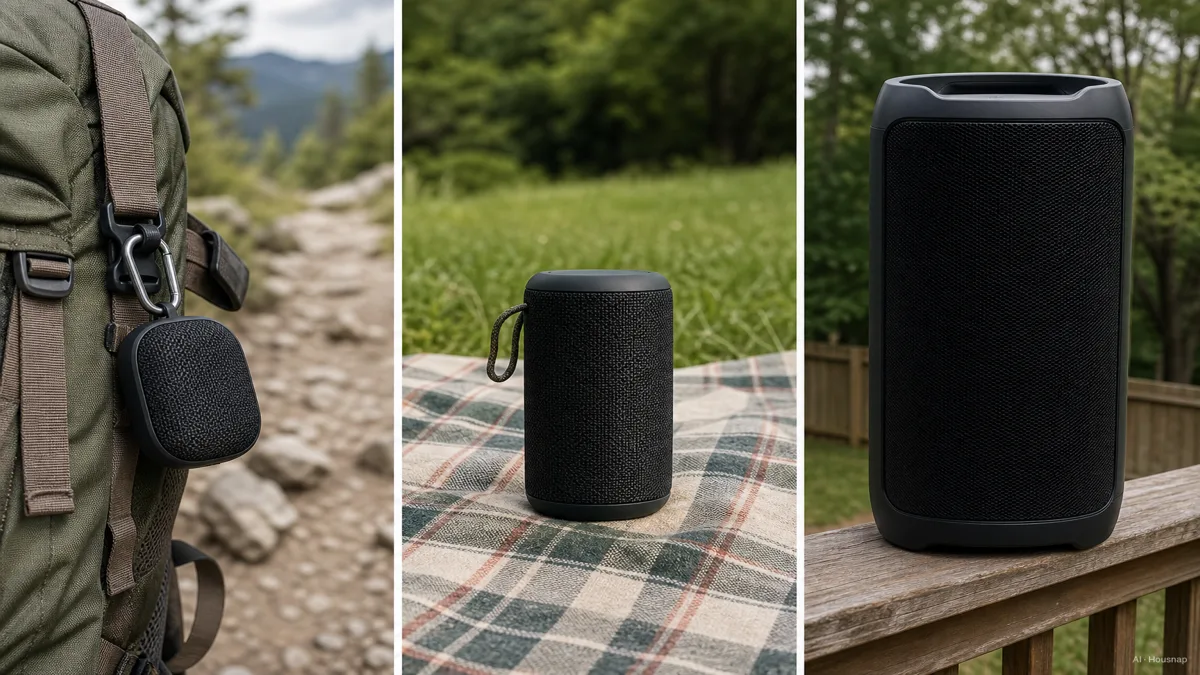
Pick a size for the trip you actually take
Picture your usual outing, including how far you carry the bag. Use these starting points to narrow the search:
- Daily carry and nearby listening. Start small. Check that the speaker fits your bag with your other belongings, and that its buttons remain easy to reach.
- Kitchen to picnic table. Try a backpack-sized model first. Measure the shelf or bag opening before choosing a bulky shape.
- Regular outdoor gatherings. Consider a larger model only after checking that a smaller candidate cannot deliver the sound you need. If possible, listen at your intended distance and volume; size alone is not a listening test.
For a physical reference, the JBL Flip 6 specification gives 178 × 68 × 72 mm and 0.55 kg. Mark out those dimensions and try carrying an equivalent weight. This is a scale reference, not a recommendation to buy that particular model.
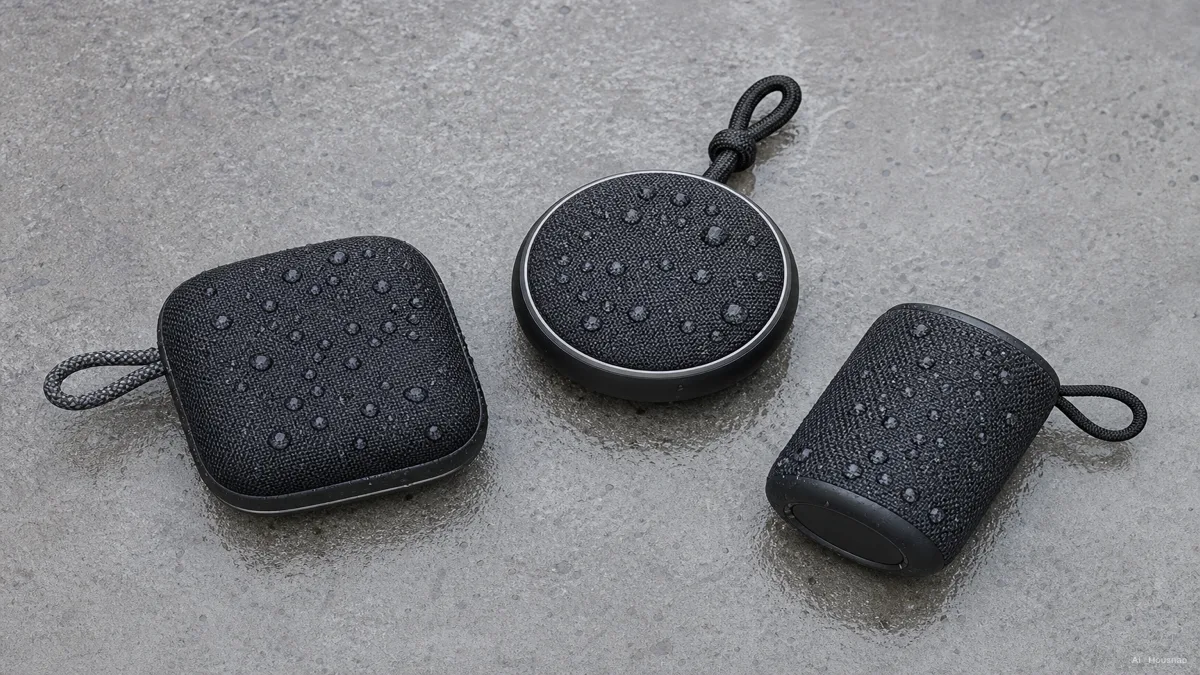
Match the IP code to the exposure
The first IP digit concerns solids; the second concerns water. X leaves that protection unspecified, rather than proving that the speaker has none. TÜV Rheinland explains the notation.
- IPX7. JBL describes immersion up to 1 metre for 30 minutes. IPX7 guidance.
- IP67. It adds dust protection to the same immersion condition. For sand or dusty trips, look for an explicit dust rating. JBL IP67 guidance.
- IP68. Read the model's depth and duration. For example, Flip 7 specifies 1.5 metres of freshwater for 30 minutes, not unlimited underwater use. Flip 7 conditions.
A first digit of 6 means dust-tight protection under the test conditions. TÜV Rheinland's explanation also distinguishes splash protection, water digit 4, from immersion protection. For accidental drops into water, shortlist models with a stated immersion rating.
An immersion rating is not permission to put a speaker under a shower jet. Sony warns that the SRS-XB100 is not designed to resist water pressure. Check the exact model's instructions before choosing it for that use. Sony's water-use precautions.
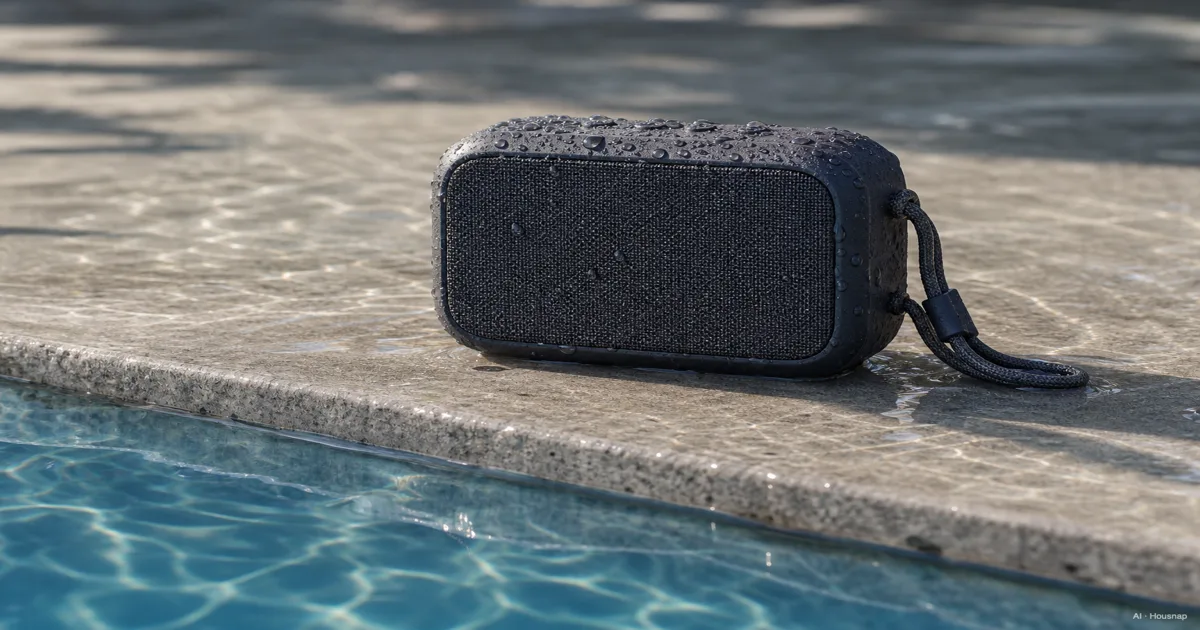
Poolside? Check floating and permitted liquids separately
Look for an explicit floating claim if retrieving a dropped speaker matters. Bose confirms that the original SoundLink Flex floats; that is a model feature, not a property to infer from every IP67 label. Bose's FAQ.
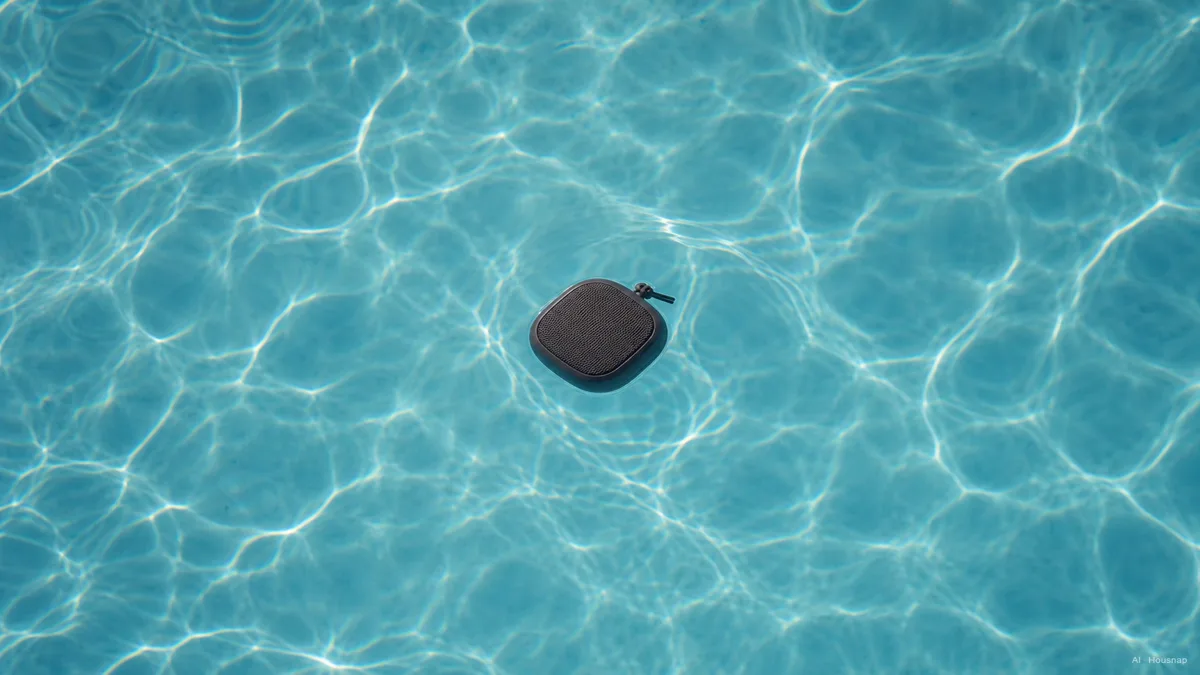
The illustration shows why floating is useful; it does not identify a tested model. Check the instructions for the exact speaker before choosing it for a pool or beach.
For example, Sony permits pool water for the SRS-XB100 but excludes salt and soapy water, and requires its cap to be closed. Sony's water-use conditions. For a beach purchase, an IP code alone is therefore not enough: find the manufacturer's seawater instructions before buying.
Compare listening time, not just the largest battery number
Write down your longest session between charges. Then check the conditions behind the advertised hours. Sony lists roughly 16 hours at volume 36 for the SRS-XB100, but 5 hours at maximum volume 50. Sony's battery figures.
Use those as an example of why a fixed percentage discount is unreliable, not as a formula for other speakers. If your trip requires loud playback and the maker only publishes a quiet-use figure, treat runtime as unresolved and look for a relevant measured review.
Plan charging somewhere dry. Sony prohibits charging this model where water can splash; Bose requires a clean, dry charging port on the original Flex. Sony charging instructions and Bose care instructions.
Narrow the choice to two candidates
Keep only models that meet your carrying limit, exposure requirements and listening time. Then compare one extra feature you will actually use:
- Wired listening. Check what the USB port does. The SRS-XB100's USB-C connection is for charging only. Sony specifications.
- Playing through two speakers. Check the named linking system and compatible models. Flip 6 uses PartyBoost; Flip 7 specifies Auracast. Do not assume that sharing a brand guarantees compatibility. Flip 6 specification and Flip 7 features.
- Sound preference. If you can audition them, use the same familiar track at similar loudness. Decide whether the difference is worth the extra bulk and cost to you.
If your shortlist is JBL Flip 7 and Charge 6, continue with the Flip and Charge comparison. That is the next decision once you know what you need to carry and how long you need to listen.
Cómo se elaboró esta guía
Housnap's AI editor wrote this guide using manufacturer specifications and instructions from JBL, Sony and Bose, plus IP-testing explanations from TÜV Rheinland. The selection steps are editorial guidance for a first purchase, not hands-on product testing.