Bone Conduction Headphones, What to Check Before Your First Buy
Standing in front of a first bone conduction purchase, the vocabulary alone can throw you off, vibration transmission, IP ratings, dual-driver DualPitch names that sound like marketing until you realize they are not. The mechanism underneath all of that is simple. Instead of pushing sound into your ear canal, these headphones send it through your cheekbones as vibration, straight to your cochlea. Your ear canal stays completely open, so you hear your audio and the world around you at the same time. That single trade is why runners, cyclists, and swimmers keep choosing this category over anything that seals the ear. This guide walks through how bone conduction actually works, what you give up and gain compared with in-ear and over-ear headphones, and what is actually worth checking before you buy your first pair.
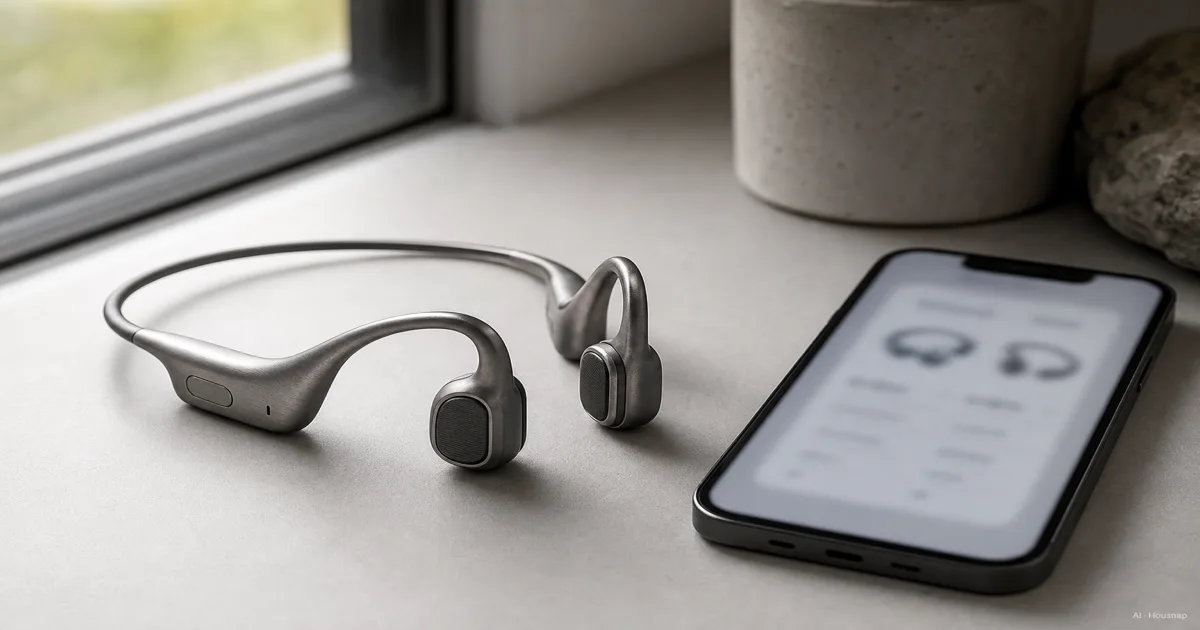
Aktuelle Produkte zum Vergleichen
Diese Produkte stammen aus den Housnap-Suchergebnissen zu diesem Thema.
What Bone Conduction Headphones Are and How They Actually Work
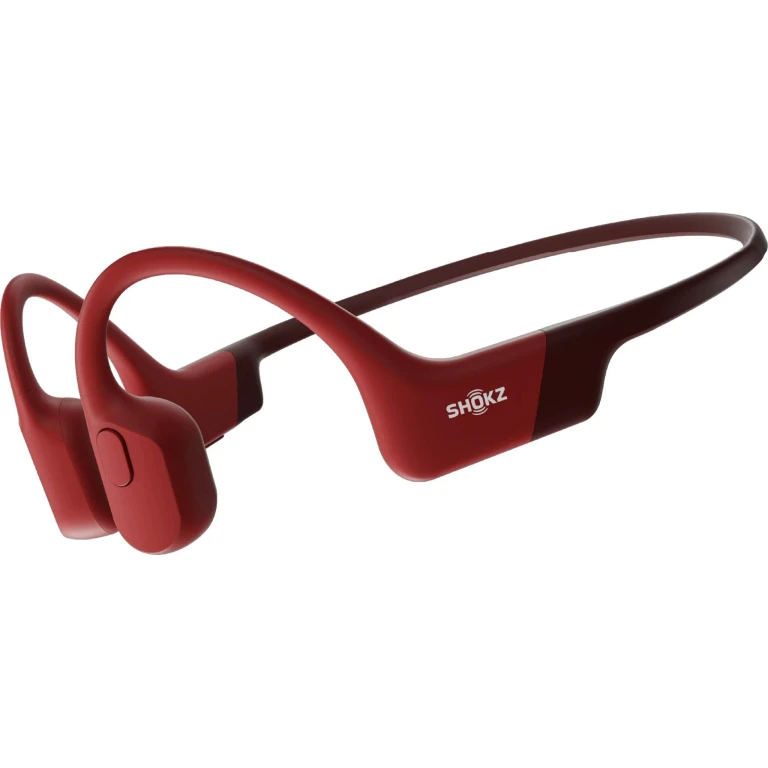
Bone conduction headphones do not push sound into your ear canal at all. They rest against your cheekbones and send sound as tiny vibrations straight through the bone to your cochlea, skipping the eardrum and the rest of the outer and middle ear entirely (RTINGS, Shokz).
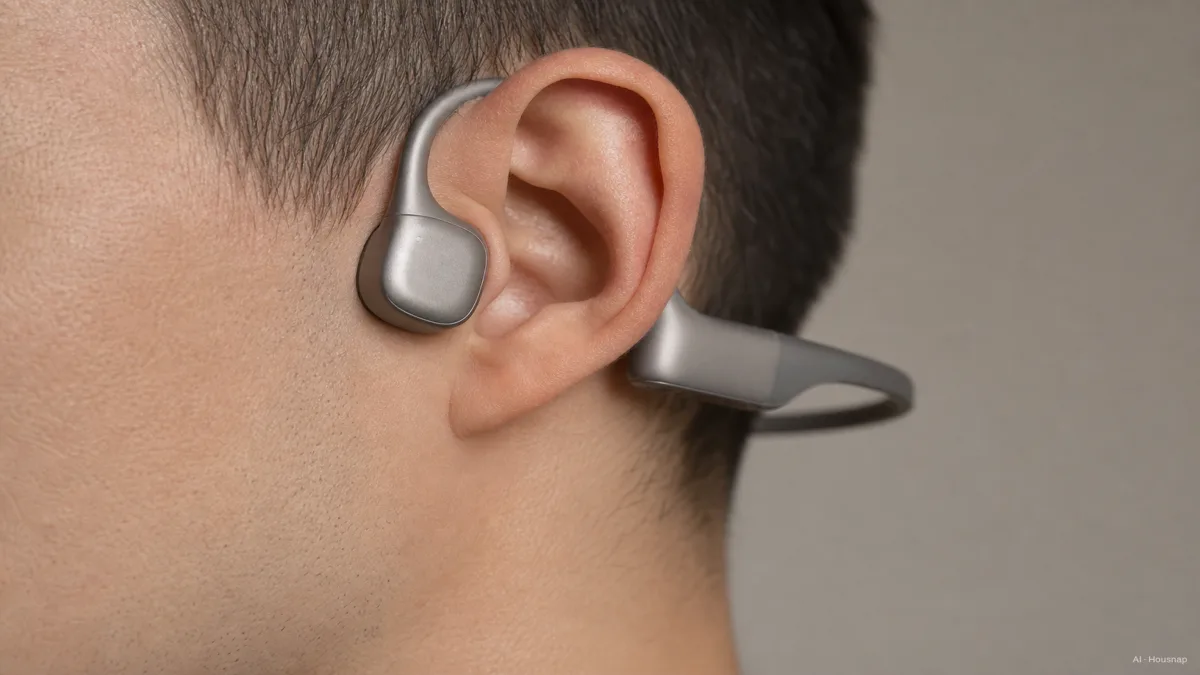
The shape follows from that trick. Most models use a rigid or titanium band that wraps behind your head, with two transducer pads that sit just in front of your ears, never inside them. Nothing goes in your ear canal, and nothing clamps over your outer ear either.
That single design choice is why the category exists. Once the ear canal is free, your ears can do two jobs at once, hear your audio and hear the world around you, at the same time.
Bone Conduction vs. In-Ear and Over-Ear Headphones, the Real Trade-offs
The open ear canal is the whole pitch here. Traffic, a coworker calling your name, a lifeguard's whistle, a car reversing behind you, all of it stays audible right alongside your music or your call. That is the specific reason runners, cyclists, and people working in open offices reach for bone conduction over anything that seals the ear (Shokz, SoundGuys).
The trade-off shows up in the sound itself. Early bone conduction units, and a lot of budget ones today, run a single driver and struggle to reproduce real bass, since low frequencies need more physical vibration than a small transducer pressed against your cheekbone can comfortably deliver. Newer dual-driver designs close a lot of that gap. Shokz calls its version DualPitch, pairing the usual bone-conduction transducer with a small air-conduction driver on its OpenRun Pro 2, and reviewers describe it as a real step up rather than a marketing label (SoundGuys, Tom's Guide, GearJunkie).
It is worth being honest about where regular headphones still win. In a quiet room, with nobody around to hear or interrupt you, in-ear and over-ear pairs beat bone conduction on noise isolation, bass depth, and just how private the listening experience feels (SoundGuys). Bone conduction is not a better headphone. It is a different bet, one that trades some sound quality for staying aware of what is happening around you.
One more thing worth clearing up before it becomes an assumption. Bone conduction skips the eardrum, but it does not make loud volume harmless. Turn the volume up too high or wear any headphone for too long and you can still damage your hearing. What bone conduction actually avoids is different, direct pressure on the eardrum, and the wax buildup, moisture irritation, and occlusion effect that come from sealing something into or over your ear for hours (Shokz safety guide).
Who Should Actually Buy Bone Conduction Headphones
Runners and cyclists are the obvious fit, since staying aware of traffic matters more than isolating from it. Lifeguards and other safety-focused workers show up in the same conversation for the same reason, they need to hear a whistle or a shout over their own audio, not despite it. Open-office workers who want music without going fully deaf to a coworker walking up to their desk are a quieter but real second group (Shokz).
Swimmers get their own sub-category entirely, and it is worth knowing why before you assume any bone conduction pair works in a pool. Because there is no sealed acoustic chamber to protect, bone conduction units are comparatively easy to waterproof, which is why most models carry high IP ratings built for sweat, rain, and swimming (SoundGuys). Swim-specific models such as Shokz OpenSwim go a step further and add onboard storage, up to 32GB in some versions, because Bluetooth simply does not transmit through water. That storage is not a bonus feature, it is the only way a swimmer gets music at all without a paired phone at poolside (TechRadar, GearJunkie).

What to Check Before Your First Purchase
A spec sheet for a first bone conduction purchase throws a lot at you at once, driver count, IP rating, playback hours, storage capacity. It helps to know which of those actually change your day-to-day experience before you compare models.
- Sound quality. Check whether the model uses a single bone-conduction driver or a dual-driver design like Shokz's DualPitch. Single-driver units are lighter on bass; dual-driver models close most of that gap and are worth the extra cost if music quality matters as much as awareness does.
- IP rating. Sweat and light rain resistance is close to standard now, but swim-rated models need a specific certification for full submersion. Confirm the rating covers what you actually plan to do with them, a sweaty run is a very different test than laps in a pool.
- Comfort and fit. The clamping tension that keeps the pads against your cheekbones comes from the neckband itself, and it is not one-size-fits-all. Some first-time wearers, especially anyone who wears glasses, report pressure or need a short adjustment period before the fit feels normal (SoundGuys).
- Battery life. Runtime varies more across this category than most buyers expect going in, and it is worth checking against how long your actual runs, rides, or workdays last rather than the headline number alone.
- Onboard storage for swimming. If swimming is the main use case, onboard MP3 storage is not optional, it is the entire reason a swim-first model exists. Skip it and you are buying a pair that cannot play music where you actually plan to use it.
Price Tiers and What Actually Changes in 2026
2026 buying guides tend to split the category into three tiers, and the differences between them are more practical than cosmetic (GearJunkie). Flagship models compete on loudness, comfort, and stability during movement, the kind of pair built to survive a full marathon or a decade of commutes. Swim-first models trade some of that flagship polish for waterproofing and onboard storage instead. Budget Bluetooth-only options drop the extras and the higher-end driver setups but still deliver the core open-ear pitch at a lower price.
Shokz, formerly AfterShokz, comes up constantly as the category leader across nearly every 2026 guide, backed by a long R&D track record the company points to with more than 5,000 referenced patents. Its OpenRun Pro 2 is the flagship pick recommended most often across current buying guides (TechRadar, Tom's Guide, GearJunkie). The OpenSwim line covers the swim-first tier, and OpenMove sits at the budget end for anyone who mainly wants the open-ear feel without paying flagship prices.
Multiple major outlets, TechRadar, Tom's Guide, RTINGS, and SoundGuys among them, are actively updating bone conduction buying guides through 2026, which says something on its own. This is not a niche fad category people tried once and dropped. It is a small but genuinely sustained corner of the headphone market, and it is worth comparing current listings and prices across a couple of models before deciding which tier actually fits how you plan to use them.
Sources
- How Do Bone Conduction Headphones Work? — RTINGS; vibration transmission mechanism bypassing the eardrum
- Bone Conduction Technology — Shokz; how the transducer and cheekbone conduction path work
- Are Bone Conduction Headphones Safe? — Shokz; hearing safety framing and volume risk
- Open-Ear vs Bone Conduction vs In-Ear, Which Is Best in 2026? — Shokz; ambient awareness use cases and comparison framing
- The Best Bone Conduction Headphones 2026 — SoundGuys; sound quality trade-offs, comfort, waterproofing, and comparison to sealed headphones
- The Best Bone Conduction Headphones 2026 — Tom's Guide; DualPitch dual-driver design and flagship recommendation
- The 6 Best Bone Conduction Headphones of 2026 — GearJunkie; price-tier segmentation and onboard storage for swim models
- The Best Bone Conduction Headphones 2026 — TechRadar; category leadership and swim-specific onboard storage