Check whether the cuff or the length is the problem
Put on the shirt and fasten the cuffs as you normally wear them. Let your arms hang naturally, then compare what happens with the cuffs undone. Does the fastened cuff slide over your hand, or does it stay where you want while fabric gathers above it? Describe those as separate observations.
Proper Cloth’s sleeve-fit guide illustrates why this matters: its unbuttoned sleeve reaches the middle of the back of the hand, while a suitably sized, buttoned cuff stops it sliding too far down. That is the maker’s fitting approach, not a universal instruction to shorten every sleeve to the wrist when unbuttoned.
If the cuff itself is loose, ask about its fit before settling on a length reduction. Fine Tailors lists cuff narrowing as a separate alteration. Shortening and narrowing answer different questions; the fitting should establish which one matters for your shirt.
Also tell the specialist whether the shirt is new or has already been washed. Proper Cloth warns that its sleeves can shrink during early washes. Ask the maker how to assess your particular shirt before alteration, following its care instructions; do not borrow another brand’s shrinkage allowance.
Compare the resting position with everyday movement
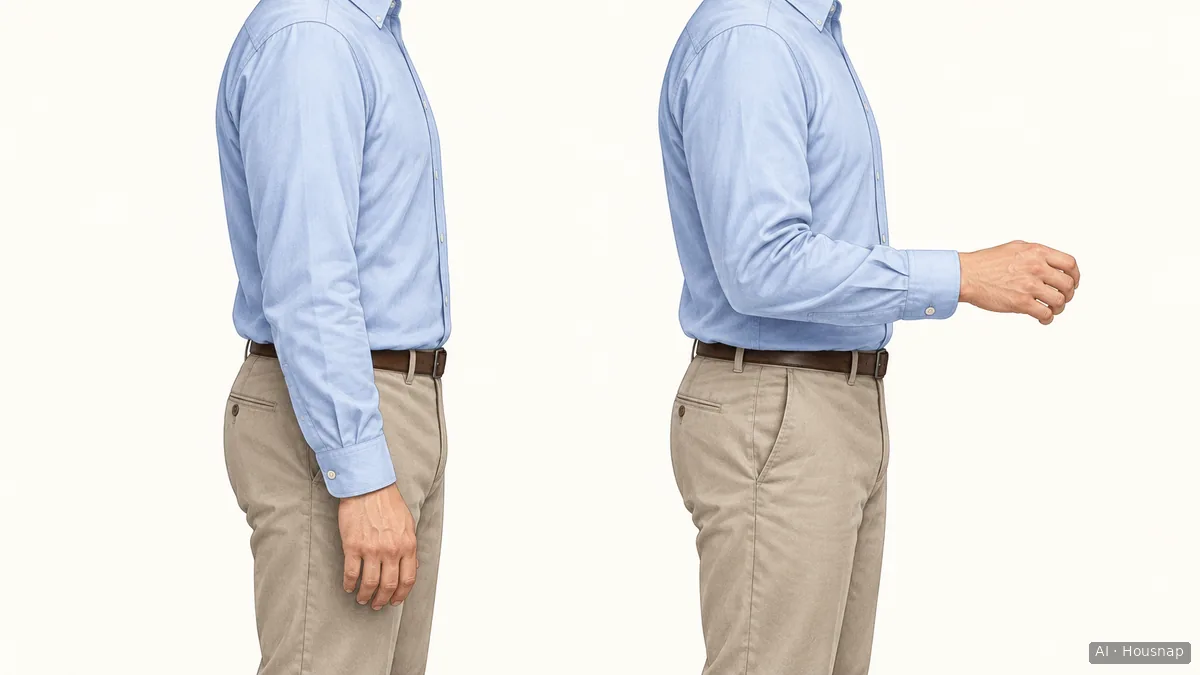
Keep the same cuff fastening for both checks. First relax your arms; then bend an elbow and reach forward as you would at a desk. If you usually wear a watch or jacket with this shirt, bring those to the fitting too so you can show the combination you want to wear.
Record what bothers you rather than assigning an automatic pass or fail:
- The cuff covers more of my hand than I want when I stand normally.
- The cuff stays in place, but the fabric above it feels excessive.
- The resting position looks fine, but reaching makes the sleeve pull uncomfortably.
Proper Cloth explains that some extra length allows the arm to bend and rise without pulling the cuff up the forearm. Do not aim to eliminate every fold while standing. The illustration shows two observation positions, not a prescribed finished length or a before-and-after alteration.
Write the brief before choosing a number
Take the actual shirt. Photos and notes can help explain a problem, but ask the specialist to establish the finished position on you before agreeing to remove fabric.
Use this short brief, filling in only what you have observed:
- Wearing setup: the cuff button I use, whether I wear a watch, and whether the shirt is worn with a jacket.
- Resting position: where the cuff ends now and where I would prefer it to sit.
- Movement: the reaching or bending action that causes trouble.
- Left and right: whether the two sides look or feel different.
- Wash history: whether the shirt has been washed and what its care label says.
If you want to record measurements, an existing flexible sewing measuring tape is enough. Note the unit and both endpoints; buying a tool is optional if the specialist will measure the shirt.
Proper Cloth measures from the centre back of the neck below the collar, over the shoulder, to the cuff end. Its guide notes that other makers may start at the shoulder instead. A number without those endpoints can mean something different to the person reading it. Keep “current measured length,” “preferred finished position” and “amount to remove” separate; let the fitting connect them.
Ask what the alteration will change
Look at the sleeve placket, the finished opening above the cuff, and its small button. Collar Replacement explains that shortening from the sleeve bottom can bring that button closer to the cuff and change the proportions. The specialist offers a method that moves the placket; that is an option to discuss, not a technique to demand for every shirt.
Ask: “For the reduction we have agreed on, what happens to the placket, button position and cuff shape?” Also ask what the quoted work includes and whether you can check the fit again. You are agreeing on a result, not prescribing a sewing procedure.
Fine Tailors notes that French cuffs, which fold back on themselves, need extra care around that double fold. It also flags significantly incorrect shoulders as a reason a shirt may not be worth altering. If the shoulder fit is also troubling you, ask for a whole-shirt assessment before authorising sleeve work.
Proceed when the desired position, movement comfort and construction trade-offs are clear. If they are not, pause the alteration. If the assessment leads you to replace the shirt and you also need to choose its fabric for work or formal occasions, continue with choosing a dress shirt in Oxford, poplin or twill.
Hoe deze gids is opgebouwd
AI wrote this guide for Housnap using Proper Cloth’s sleeve-fit guidance and published alteration explanations from Collar Replacement and Fine Tailors. The observation checklist and consultation brief are editorial suggestions; the article does not report a fitting trial or determine how an individual shirt should be altered.