Wet vs Dry Cat Food, How to Choose Your First Bowl
You bring a cat home and the first real decision waits in the pet aisle. Bags of dry kibble on one side, cans and pouches of wet food on the other. Both say complete and balanced. The bag is cheaper and easier. The cans cost more and smell like an actual meal. And every source you check tells you something slightly different. Here is the fact that should sit underneath the whole choice. Your cat barely drinks water, and that is not laziness. It is biology. Domestic cats descend from the African wildcat, a desert animal that got almost all its water from the prey it ate. That heritage left modern cats with a famously low thirst drive. A cat will let itself get mildly dehydrated rather than walk over to a bowl, because its body still expects the water to arrive inside the food. So wet versus dry is not really a taste question or even a price question. It starts as a hydration question, and once you see it that way, the rest of the decision gets a lot clearer.
Nu verkrijgbaar bij één winkel
Deze producten zijn momenteel elk bij één winkel verkrijgbaar. Prijsvergelijking opent zodra meer winkels zijn toegevoegd.
Why Cats Need Water From Their Food, Not Just a Bowl
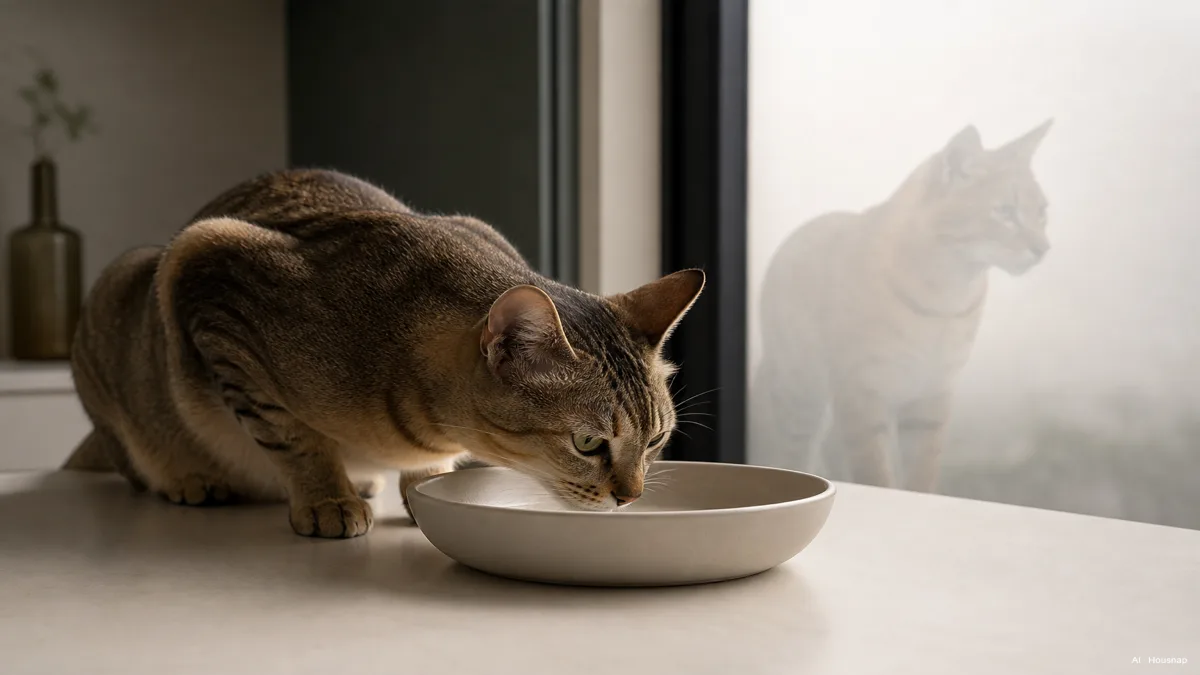
Start with the heritage, because it explains everything that follows. The domestic cat descends from the African wildcat, a desert-dwelling obligate carnivore that survived on the moisture inside its prey. Wild prey runs about 70 to 75 percent water, so a cat's body was tuned to drink very little and let dinner do the hydrating.
That tuning did not go away when cats moved indoors. A modern cat still has a low thirst drive, which means it will tolerate being mildly dehydrated, up to around 4 percent of body weight, before it bothers to seek out water. To cope, the cat's kidneys produce very concentrated urine, and that is where the trouble can start.
Concentrated urine over a long stretch is linked to a higher risk of urinary crystals, bladder stones, and urinary tract infections, which is exactly why so many feline vets care about water intake. The Cornell Feline Health Center's feeding guidance and Just Cats Clinic on water intake and urinary health both keep circling back to this same point: a cat fed only dry food often runs on a quiet water deficit.
Here is the honest takeaway before we even compare the two foods. For a cat, moisture is not a nice-to-have. It is the part of the diet most likely to cause real problems if it is missing for years. That is the lens to keep as you read the rest.
Wet Food vs. Dry Food: Nutrition at a Glance
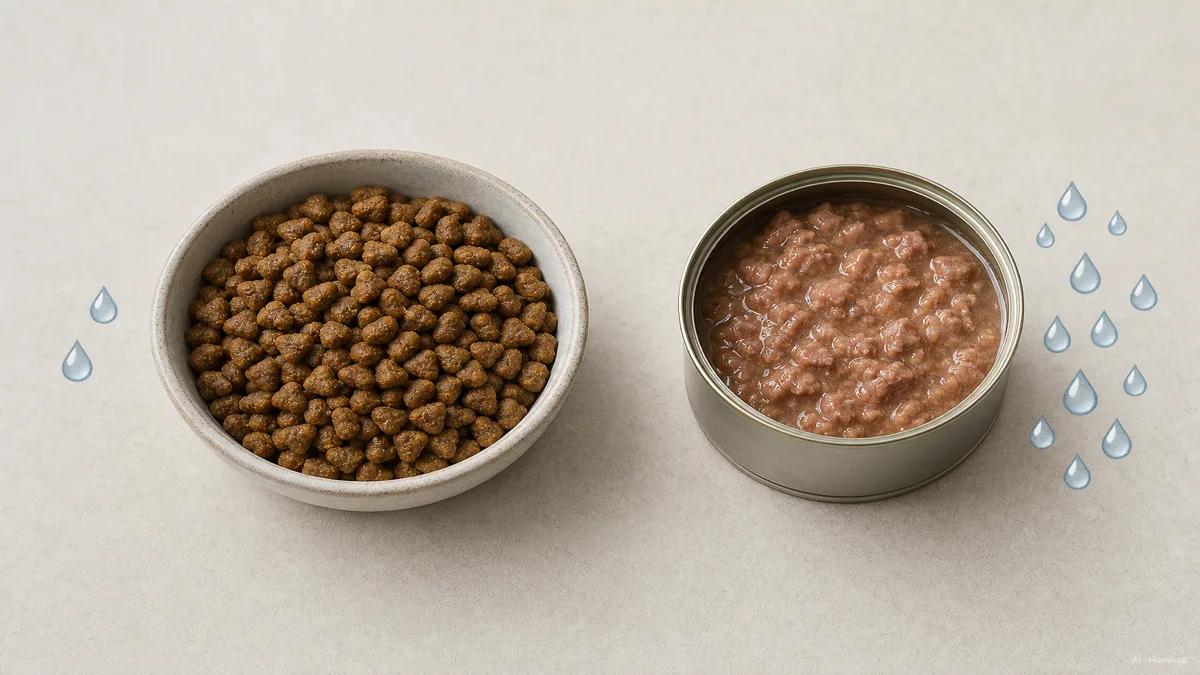
Now the numbers, kept simple. Dry kibble holds roughly 9 to 12 percent moisture. Canned wet food holds 70 to 80 percent. That is a six to eight times difference in water, and it drives almost everything else that separates the two.
Protein and carbohydrates split along the same line. Wet food tends to be higher in animal protein and lower in carbohydrate, closer to what an obligate carnivore is built to eat. Dry food has to include a starch to bind the kibble into shape and hold it through manufacturing, so it carries more carbohydrate by design, as Chewy's wet-versus-dry explainer lays out. That extra starch is not poison, but it is an unusual macronutrient mix for a cat.
The label trap is the same one that catches dog owners, and it is worth slowing down for. The protein percentage on the front of a can and the front of a bag cannot be compared directly, because of the water. To compare them honestly you convert to a dry matter basis, which just means removing the moisture from the math. A canned food showing a modest 10 percent crude protein can actually equal a dry food showing around 40 percent once the water is taken out. Without that conversion you will underrate every can and overrate every bag.
So at a glance: wet food is more water and usually more protein, dry food is more carbohydrate and far more calorie-dense. Neither is automatically the winner. The next two sections are where the trade-offs actually live.
The Case for Dry Food: Convenience, Cost, and Dental Habit
Dry food earns its place on practicality, and for a lot of households that matters more than any nutrition chart.
The first advantage is free-choice feeding. Kibble does not spoil sitting out, so you can leave a measured amount in the bowl and let a grazing cat eat across the day. For an owner who works long hours, that alone can decide it. Wet food cannot do this, because an opened can sitting out for hours turns unpleasant fast.
Cost and storage follow. Dry food is cheaper per calorie and keeps for weeks in a sealed container, while wet food costs more per meal and an opened can has to go in the fridge and get used within a day or two. For a multi-cat home, that gap adds up quickly.
There is also a modest dental angle, though it is worth being honest about its size. Some dental-formula dry kibbles are designed with a larger, fibrous bite that gives a little mechanical plaque reduction as the cat chews, a point the Cornell Feline Health Center and PetMD's wet-versus-dry comparison both note. But this only really applies to specific dental diets, not ordinary kibble, and it does not replace brushing or a vet cleaning. Treat it as a small bonus on the right product, not a reason to feed dry alone.
The Case for Wet Food: Hydration, Protein, and Palatability
Flip the lens and wet food stops being the expensive option and starts being the one that answers the cat-specific problems.
Hydration is the headline, and it loops straight back to the desert ancestor. A cat eating wet food takes in far more water through the meal itself, which directly offsets that low thirst drive. For any cat prone to urinary tract disease, bladder crystals, kidney issues, or obesity, vets consistently advise leaning more wet food into the diet, a pattern the Banfield Pet Hospital wet-versus-dry guide and Preventive Vet both describe. To be precise, the science does not prove dry food directly causes kidney failure, but the advice to add moisture for at-risk cats is steady and well established.
Protein and palatability come next. Wet food usually carries a higher protein-to-calorie ratio, and its stronger aroma and softer texture make it the food a picky eater, a senior cat with sore teeth, or a recovering cat will actually accept. International Cat Care's take on wet versus dry makes the same point. When appetite itself is the problem, the food the cat eats beats the food that looks better on paper.
There is even a weight-management angle that surprises people. Because wet food is far less calorie-dense, it is physically harder to overfeed, so a portion that fills the bowl carries fewer calories than the same volume of kibble. For a cat trending heavy, that lower density quietly works in your favor.
The Best First-Buy Strategy: Combination Feeding Explained
Here is the option a lot of first-time owners never realize is on the table. You do not have to pick one side.
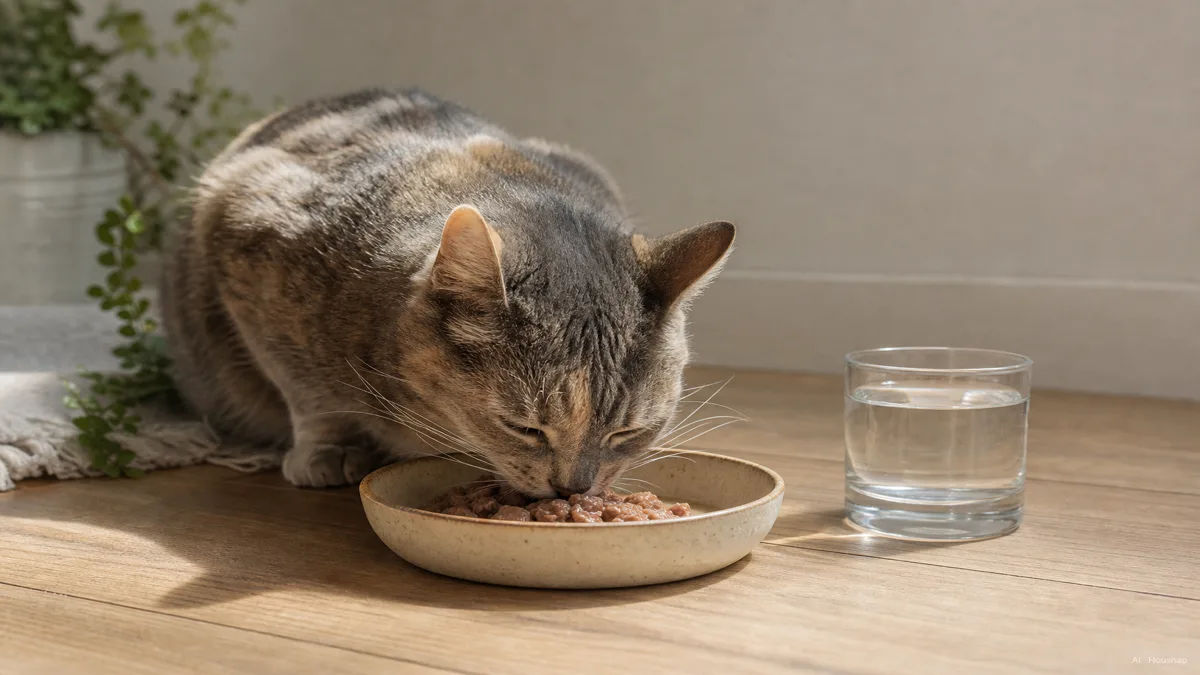
Combination feeding means giving both, and it is the approach most commonly recommended by vets heading into 2025. A typical pattern is one wet meal in the morning and a measured portion of dry kibble in the evening, described in roughly this shape by Banfield and other current sources. The logic is that it balances the four things you actually care about at once: hydration from the wet meal, palatability from the aroma, convenience and cost from the dry portion, and a macronutrient mix closer to what a cat is built for.
The one real rule is calories. Both foods should be complete and balanced on their own, and you adjust the portions so the combined day does not overfeed your cat. Vets generally do not object to mixing two complete and balanced foods, so the thing to watch is the total, not the mixing itself.
A practical note on switching, because a first buy often means introducing a new food. Cats are sensitive to abrupt diet changes, so move over seven to ten days, from about 25 percent new and 75 percent old, to a 50/50 split, to 75 percent new, then all new. Slow is the whole trick, and it spares you the vomiting and diarrhea that a sudden switch tends to cause.
How to Read a Cat Food Label, Dry Matter Basis and AAFCO
Before any bag or can goes in the cart, two lines on the packaging do most of the work, and they cut through the marketing fast.
First, the protein number, read on a dry matter basis. As covered earlier, you cannot compare a can's protein percent to a bag's at face value, because the can is mostly water. Convert both by removing moisture and a confusing pair of labels becomes an honest comparison, as Chewy explains. A useful target for an adult cat is at least 30 to 40 percent protein on a dry matter basis, with a named meat like chicken, salmon, or turkey as the first ingredient rather than a vague meal or a plant protein doing the work.
Second, the AAFCO statement and the life stage. Look for a sentence confirming the food is complete and balanced, and check that the life stage matches your cat. Kittens and senior cats have different calorie and protein needs, and the regulated kitten, adult, and senior labeling is the quickest way for a first-time owner to land on a food that is actually formulated for the cat in front of them.
Put those two checks together and the buying decision gets concrete. Decide your wet-dry balance from your cat and your routine, convert protein to a dry matter basis so you are comparing like with like, and confirm the AAFCO statement matches the life stage. From here the useful next move is to line up wet and dry options side by side and see how the same food is priced across stores. Available options include the names that come up most for cat food, dry choices like Hill's Science Diet, Royal Canin, and Purina Pro Plan, and wet choices like Royal Canin, Tiki Cat, Purina Pro Plan, and Blue Buffalo, so the comparison stays concrete rather than hypothetical.
Sources
- Feeding Your Cat — Cornell Feline Health Center; moisture difference between dry and wet food, free-choice feeding, and the dental-diet caveat
- Wet Cat Food vs. Dry Cat Food, or Both? — PetMD; pros and cons of each format and where dental-formula kibble does and does not help
- Is Wet or Dry Food Better for Cats? — Preventive Vet; hydration, urinary health, and which cats benefit most from added moisture
- Wet Food vs. Dry Food, Which Is Better for Your Cat? — Banfield Pet Hospital; combination feeding as the common 2025 recommendation and weight management with wet food
- Wet vs. Dry Cat Food: What's the Difference? — Chewy; protein and carbohydrate split, starch as a binder, and the dry matter basis conversion
- Should I Feed My Cat Wet or Dry Food? — International Cat Care; palatability, hydration, and balancing both formats
- Cat Nutrition, Water Intake, and Urinary Health — Just Cats Clinic; low thirst drive, concentrated urine, and urinary risk on dry-only diets