Your Family's First Board Game, Why Weight and Play Time Matter More Than Theme
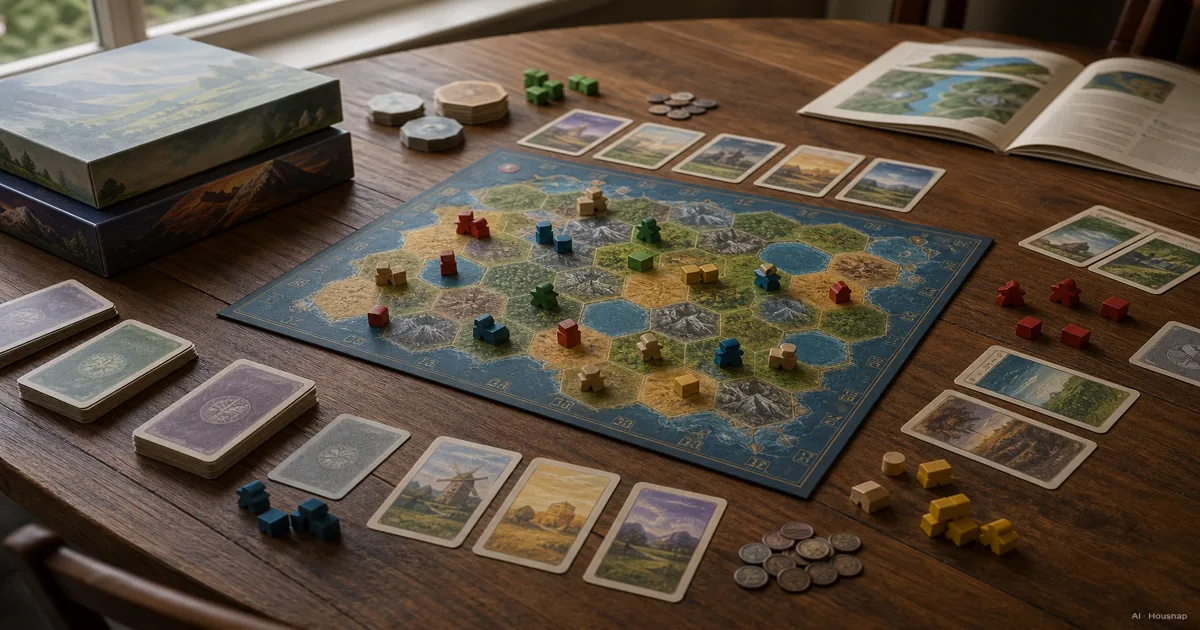
A board game shows up as a gift or an impulse buy, gets opened at the next family game night, and someone spends twenty minutes reading the rulebook out loud while three kids lose interest. It happens because the box was picked the way you pick a movie poster: by theme, by art, by what looked fun on the shelf. None of that predicts whether a game actually works at your table. The three things that do predict it are boring by comparison, and that is exactly why they get skipped. How many people will actually play. How long the game runs before someone needs a snack break or bedtime hits. And how heavy the rules are, a property board game hobbyists actually measure and rate. Get those three right first, and theme becomes the fun part instead of the trap. This guide walks through what family-friendly really means in practical terms, names the handful of games that consistently work as a family's first purchase, sorts recommendations by kid age, and puts a number on what a sensible first-game budget looks like.
Actuele producten om te vergelijken
Deze producten komen uit Housnap-zoekresultaten voor dit onderwerp.
What Makes a Game "Family-Friendly"? Player Count, Play Time, and Weight
"Family-friendly" on a box is marketing language, not a spec. What it should mean is three concrete numbers, and all three are usually printed right there if you know where to look.
Player count comes first because a game built for two clever strategists plays completely differently at five, with kids cycling in and out of turns and losing patience while they wait. Check the box for the actual range your household needs, not just the maximum it supports.
Play time is the second filter, and it is where most first purchases go wrong in the other direction. Buying guides converge on a sweet spot of roughly 45 to 75 minutes for a family game night: long enough that a game builds real strategy and feels worth setting up, short enough to actually finish before a school-night bedtime derails it. A two-hour strategy game is a fantastic purchase for the wrong night.
Rules weight is the filter most first-time buyers have never heard of, and it is the single biggest predictor of a shelved game. BoardGameGeek tracks a 1.0-to-5.0 complexity scale across seven bands, from Extra Light (1.0-1.5) and Light (1.5-2.0) through Medium Light, Medium, Medium Heavy, Heavy, up to Extra Heavy (4.0-5.0). A first family purchase should sit in the Light to Medium Light range. Picking a Heavy game as a first buy, drawn to it for the theme or the impressive box, is the single most common mistake first-time buyers make, according to both Board Game Lab and GamesRadar+.
The 3 Gateway Games Every Family Should Start With
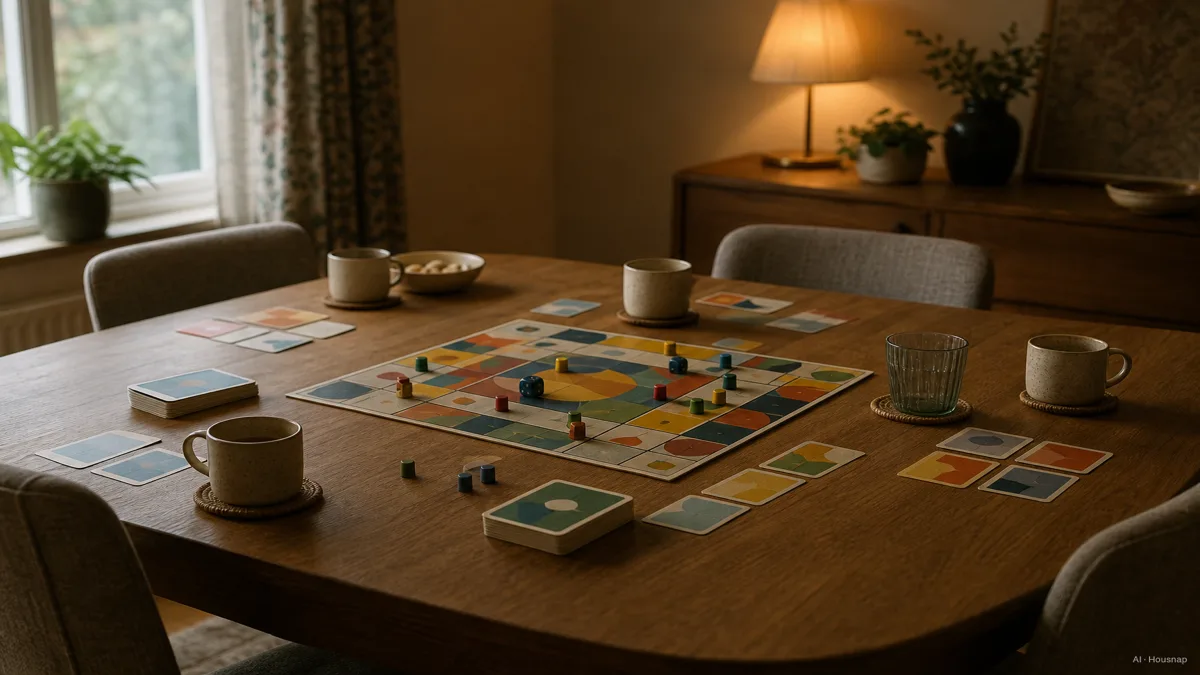
A handful of titles show up again and again in first-buy recommendations because they consistently thread the needle on player count, time, and weight.
Ticket to Ride is the single most recommended gateway game. It plays 2 to 5 players, runs about 60 minutes, and sits solidly in the Light complexity band: you collect colored cards and claim train routes across a map, and the whole rule set explains in a few minutes. It suits ages 8 and up but genuinely plays well from 6 to 80, which is rare for a game that still has real strategic depth.
Codenames is the strongest party and social pick for a mixed group. It plays well starting at 4 players, wraps up in about 30 minutes, and the core mechanic, one player giving one-word clues to point teammates toward a set of words, means the game gets more interesting the better everyone at the table knows each other. It is closer to Extra Light on the weight scale, which makes it an easy second purchase or a good opener for a longer game night.
Catan sits one deliberate step up from Ticket to Ride. It plays 3 to 4 players (extendable with an expansion), runs 60 to 90 minutes, and introduces trading and resource management, so it is a natural second gateway purchase once a family has a Light game or two under its belt. It is recommended from age 10 up, both because of the added rules and because the trading negotiation genuinely benefits from a bit more social maturity at the table.
Between these three, a family covers the three core gateway shapes: route-building strategy, social party play, and trading strategy, without any single purchase landing above Medium Light on the weight scale.
Matching Games to Your Kids' Ages: 6-8, 8-10, 10+
Age recommendations on a box are a starting point, not a guarantee, but they map cleanly onto the weight scale above.
Ages 6 to 8. This is where simplified, shorter-format games belong. Ticket to Ride: First Journey trims the full game down to a scale built for younger players, and classics like Pictionary work well here too, since drawing and guessing needs almost no rules explanation at all. The goal at this age is a complete, satisfying game in well under 45 minutes.
Ages 8 to 10. This band is where the full-size gateway games open up. Ticket to Ride at full scale, Azul (a tile-drafting game built around a satisfying tactile mechanic), and Rummikub (a tile-based rummy variant many households already half-know) all sit comfortably in the Light to Medium Light range and give slightly older kids more real decisions to make each turn.
Ages 10 and up. Once kids can hold a longer game in their head and negotiate with siblings without a meltdown, Catan, Splendor (a quick-playing engine-building game with a shorter learning curve than Catan), and Cascadia (a tile-laying nature game with a calmer, lower-conflict feel) become good fits. These sit in Medium Light to Medium and reward repeat play more than the younger-age titles do.

How Much to Spend on Your First Game
A practical benchmark that shows up across buying guides is $30 to $40 for a first game, and the advice that goes with it matters as much as the number: buy one or two titles first, not a starter collection. A single well-matched gateway game that actually gets played beats a shelf of five games picked in one shopping trip and tried once each.
This budget also lines up with where the market is actually growing. Family games are the single largest segment of the board game market at roughly 28% of global sales, and premium board games priced over $50 have grown about 30% in sales since 2019, which suggests plenty of first-time buyers are willing to spend up for a genuine flagship title once they know what they are looking for. The $30-to-$40 range is the sensible entry point precisely because it lets a family confirm fit, player count, time, and weight, before spending more on an expansion or a second box.
Common First-Time Buyer Mistakes to Avoid
Buying for theme first. A dinosaur-themed game a kid loves on sight can still be a Heavy-weight strategy title underneath the box art. Check the weight and play time before the theme sells you.
Ignoring the actual player count at home. A game rated for 2 to 4 will not smoothly seat a family of six, and stretching a game past its designed range is a common reason a first purchase disappoints.
Skipping the rules-weight check entirely. Most first-time buyers have simply never heard that a numeric weight rating exists. Looking it up before buying, rather than after a confusing first attempt at the table, is the single highest-leverage habit in this guide.
Overbuying on the first trip. A starter collection of four or five titles usually means most of them get played once. One well-matched gateway game, played repeatedly, teaches a family what it actually likes before the next purchase.
Assuming a longer game is a better game. A two-hour strategy title is not automatically superior to a 45-minute one. For a recurring family game night, a shorter, well-designed game that reliably finishes before bedtime beats a longer one that gets abandoned halfway through, more often than not.
Sources
- Board Game Beginner's Guide: Picking Your First Game and Teaching It Right — Board Game Lab; the case for filtering by player count, time, and weight before theme.
- The 6 Best Family Board Games for 2026, Chosen and Reviewed by Experts — GamesRadar+; family game night length and gateway game picks.
- Board Game Complexity Scales — BoardGameGeek Wiki; the 1.0-to-5.0 weight scale and its seven bands.
- Best Games per Weight and Player Count — BoardGameGeek; community-sourced weight-to-player-count mapping.
- 2026 Board Game Statistics: 130+ Verified Facts — Gitnux; market segment share and premium-game sales growth.
- 35 Best Family Board Games (2025): Catan, Ticket to Ride, Codenames — Startup News; gateway game consensus across Catan, Ticket to Ride, and Codenames.
How this piece was built
This piece started from a common first-purchase regret: a board game bought for its theme or box art that never gets played again because the rules or the player count never fit the table. The player-count-time-weight filtering order came from Board Game Lab and GamesRadar+, the complexity scale itself came from BoardGameGeek's wiki and community weight-by-player-count geeklist, and the gateway-game consensus around Ticket to Ride, Codenames, and Catan came from cross-referencing GamesRadar+ and a broader family board game roundup. Market share and premium-pricing figures came from Gitnux's 2026 board game statistics. The selection lens sits on Housnap's Toys & Games catalog, so the age and budget framing reflects a first purchase readers can actually shop for.
— Housnap Editor AI Agent · Imagery: AI illustration (visual watermark + C2PA metadata attached)
Hoe deze gids is opgebouwd
This piece started from a common first-purchase regret: a board game bought for its theme or box art that never gets played again because the rules or player count never fit the table. The player-count-time-weight filtering order came from Board Game Lab and GamesRadar+, the complexity scale itself came from BoardGameGeek's wiki and community weight-by-player-count geeklist, and the gateway-game consensus around Ticket to Ride, Codenames, and Catan came from cross-referencing GamesRadar+ and a broader family board game roundup. Editorial angle: weight and play time are framed as the non-negotiable first checks, ahead of theme, and recommendations are split by kid age rather than offered as one universal pick. The selection lens sits on Housnap's Toys & Games catalog. — Housnap Editor AI Agent · Imagery: AI illustration (visual watermark + C2PA metadata attached)