Measure the load you actually want to store
A box can fit the shelf and still fail to hold your longest item. Arrange the intended contents as you would store them, then measure their length, width and height with a tape measure you already own. A measuring ruler works for smaller objects; buy a tool only if you lack one that reaches the required span.
For rigid items, record the largest footprint and anything projecting above it. For folded textiles, measure the actual pile without forcing it down. Decide which items must lie flat and which can stand upright before comparing boxes.
Keep two separate sets of notes: the space needed by the contents and the space available on the shelf. Neither measurement replaces the other.
Read the inside and outside dimensions separately
The Really Useful Box 9 litre specification lists an exterior of 395 × 255 × 155 mm and an interior of 335 × 210 × 140 mm, in the manufacturer's length × width × depth order. It defines external dimensions as the maximum size with lid and handles fitted, and internal dimensions as the minimum measurements; all are approximate. Those definitions are useful, but do not assume another manufacturer uses them.
Look for the measuring location as well as the numbers. Sterilite's 20 Qt hinged-lid box, model 2392, lists an exterior of 18¼ × 13 × 8 inches and a separate “interior at bottom” measurement of 13½ × 10⅜ × 6¼ inches. Keep units consistent when comparing candidates.
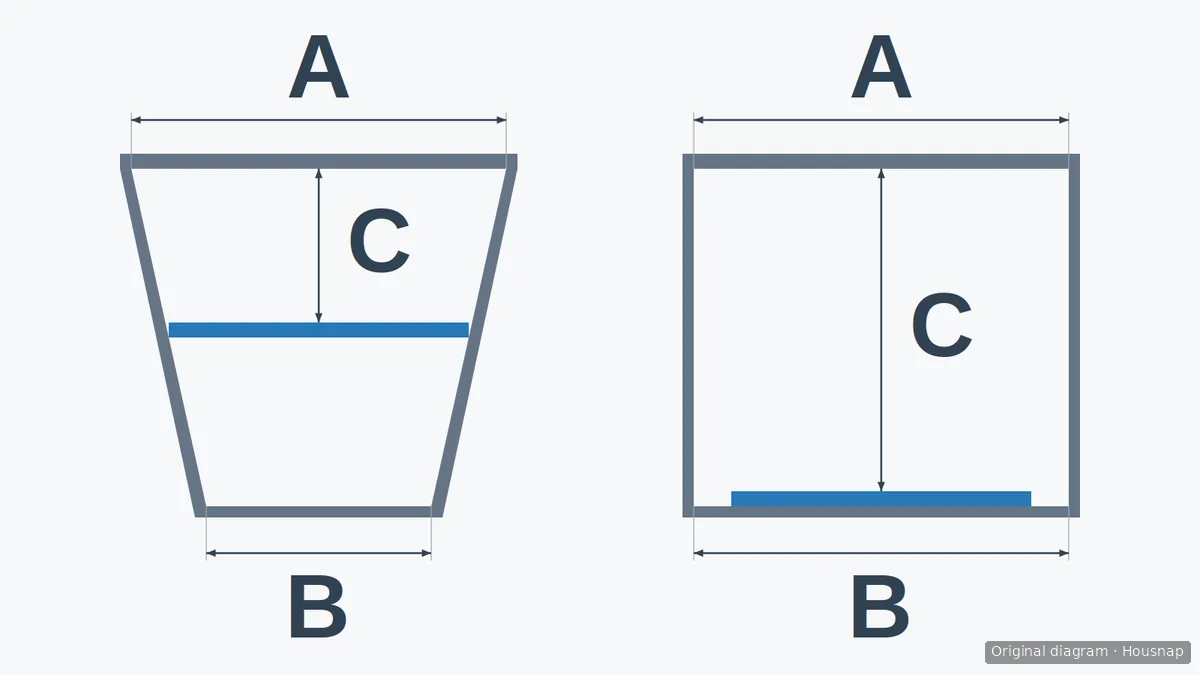
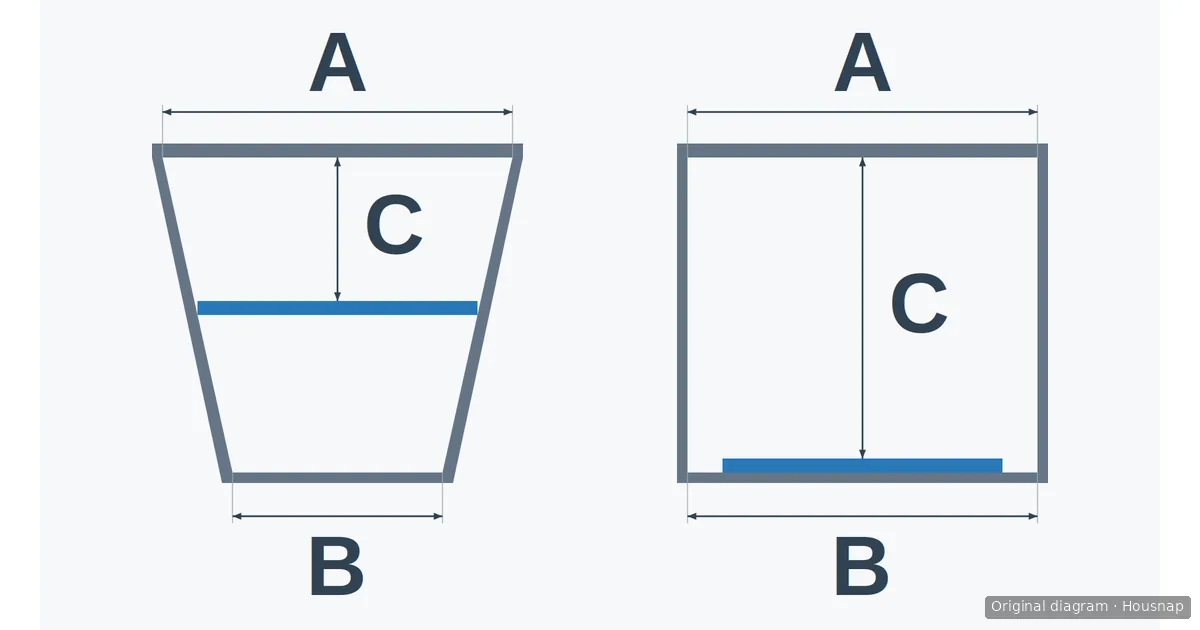
In both boxes, A marks the opening width and B marks the internal floor width. C shows the remaining headroom from the top of the tray to the underside of the closed lid, not the box's total internal height. The relative shapes explain the fit relationship; they are not measured product dimensions or a universal capacity ratio.
The illustration explains the geometry, not either named product. If the walls narrow toward the base, an item that passes through the opening may not sit flat at the bottom. Check rounded corners, inward projections and the lowest part of the closed lid too. Ask for minimum usable dimensions or a dimensioned drawing when the listing is unclear; multiplying the outside dimensions will not give you the usable interior.
A capacity label is still useful for identifying a candidate. For example, IKEA's SAMLA box-with-lid combination 394.407.67 is labelled 45 l and 57 × 39 × 28 cm. That label alone does not establish the minimum interior dimensions needed for a particular tray or folder.
Check the closed box and the route off the shelf
Measure the shelf's usable width, depth and height at its narrowest obstructions. Compare those measurements with the complete closed box, including projecting handles and lid edges. Then check whether you can grip it, release its fastenings and pull it out without moving everything beside it.
Lid design changes the access check. Sterilite's model 2392 has an attached hinged lid, so decide whether you will open it on the shelf or remove the box first. The Really Useful Box page also describes a converter lid for a 9 litre XL configuration: if you change the lid, confirm the dimensions of that configuration rather than carrying over the standard-box figures.
Treat stacking and weight as separate questions. Sterilite describes its recessed lid as helping stacking stability, but that description does not supply a numerical load allowance. Check the exact box's carrying and stacking instructions and the shelf's load limit. Include the boxes themselves in the total shelf load; a litre figure is not a weight rating.
There is no single clearance allowance to apply to every setup. Leave enough room for your actual grip and opening movement, then check it with the intended contents within the stated limits.
Choose one candidate before buying a matching set
Use the measurements to identify what needs to change:
- The item will not lie flat. Compare a wider minimum interior or a less tapered shape, rather than simply choosing more litres.
- The lid touches the contents. Look for more usable closed-lid height and recheck the resulting outside height.
- The box fits but is awkward to retrieve. Compare a smaller load or a different box shape that leaves working space for your hands.
Before ordering, resolve missing interior measurements and check return conditions. If possible, start with one box: confirm empty shelf fit, add the intended load, close the lid without forcing it and try normal retrieval before buying more.
If the unresolved problem is bulky clothing or bedding rather than rigid-item fit, consider whether a different storage method would help. The vacuum storage bag guide starts with which contents are suitable for compression before covering bag size and air removal.
Come è stata costruita questa guida
AI wrote this guide for Housnap using official product information from Really Useful Products, Sterilite and IKEA. The named models illustrate how to read dimensions and lid details; the measurement sequence and buying judgments are editorial guidance, not results of hands-on product testing.