Establish what this shirt allows
Read the fibre composition and care label before wetting the mark. Check the permitted washing method, temperature and bleach restrictions, then compare them with the detergent or stain remover instructions. A cotton label, white colour or non-iron finish alone does not establish permission for a particular treatment.
- Home washing is permitted. Continue only with a product that allows the intended fabric, colour and use. A detergent approved for washing is not automatically approved for direct application.
- The shirt contains wool. Woolmark recommends a mild, neutral detergent and advises against enzyme-containing bio detergents and both chlorine and oxygen bleach. That washing advice does not establish permission to apply concentrated wool wash directly to a mark.
- The shirt contains silk, has restricted-care details, or is dry-clean only. Obtain a suitable garment-specific method instead of borrowing the cotton-shirt routine below. For example, OxiClean Versatile Stain Remover excludes wool, wool blends, silk, silk blends and dry-clean-only fabrics. Its colour-safe claim does not override those exclusions.
If the label is missing or the maker’s finish instructions are unclear, ask the maker or a professional cleaner before experimenting. Describe the exact shirt and the product you intended to use.
Check the mark and the fabric underneath
Look at the inside collar fold and unfold the cuffs. Was the mark gradually appearing after wear, or did you spill something specific? Proper Cloth describes sweat and oils remaining in the collar band and advises against leaving dirty shirts waiting too long. That makes wear-related soil a useful starting possibility, not a diagnosis based on yellow or grey colour alone.
A known ink, makeup or other spill needs a method appropriate to that substance and the shirt. If you cannot identify it, keep that uncertainty rather than treating every mark as ordinary collar soil.
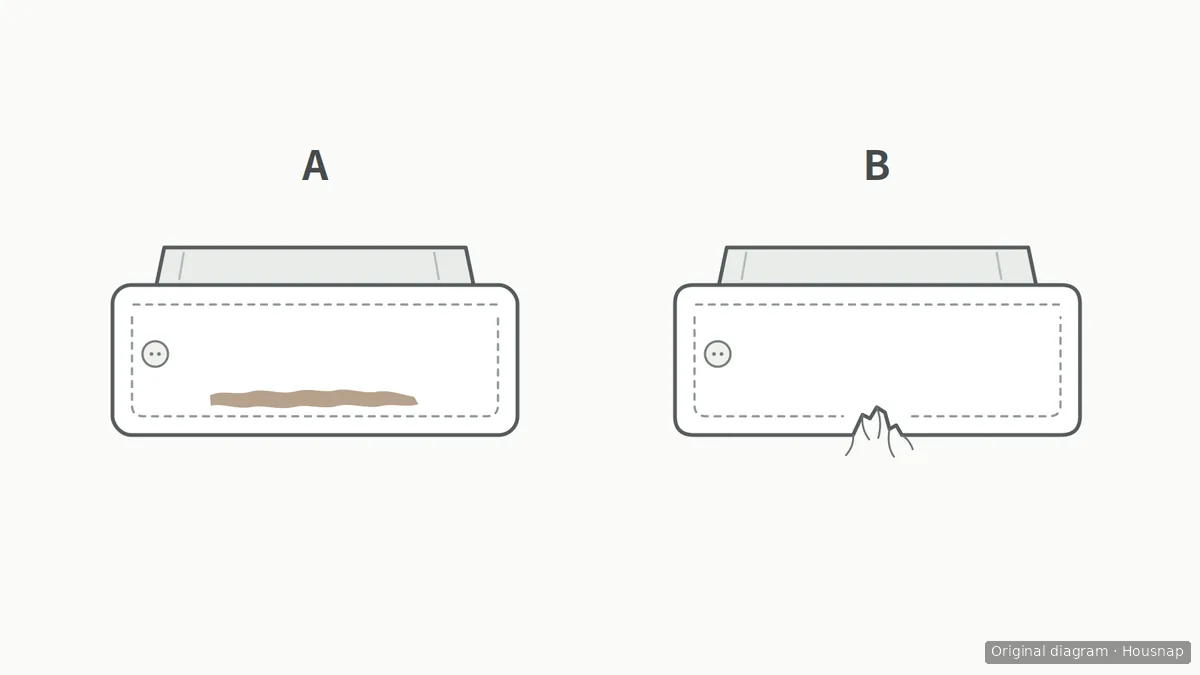
A shows a mark on an otherwise intact cuff. B shows loose threads and missing fabric: stop treating that area as a stain and ask about repair. The drawing helps distinguish visible wear from a surface mark; it cannot identify the substance or predict whether it will wash out.
Treat a small area before the normal wash
For a shirt and product that permit local pretreatment, use a suitable liquid laundry detergent you already have. Buy one only if you lack an appropriate product; a dedicated stain remover is not an automatic requirement.
- Check the application instructions. Confirm whether the product goes on neat or diluted, how long it may remain, and whether it must be rinsed before washing.
- Follow the product’s inconspicuous-area test. Complete the instructed test before treating the visible collar or cuff. A test does not override an excluded fabric. Stop if colour or surface appearance changes.
- Work locally and gently. Unfasten the cuff so you can reach the mark, and carefully work the permitted amount into that area. Avoid escalating pressure because the mark has not immediately disappeared.
- Use that product’s timing. Do not turn another cleaner’s instructions into a universal soaking time.
For a concrete example, Tide’s collar/cuff procedure starts with a cold-water rinse, names Tide Coldwater Clean Liquid for a five-minute pretreatment, and then loads the shirt without rinsing off that detergent. Those details belong to the named procedure; use your own product instructions and the shirt’s limits together.
Inspect before drying, then decide whether to repeat or stop
Wash using the garment’s permitted method and temperature and the detergent’s stated dose. Inspect the collar and cuffs before tumble drying or ironing. Tide advises repeating its treatment before drying if the stain remains; OxiClean also warns that heat can set remaining stains.
Repeat only if the shirt and product instructions allow it and the fabric still looks intact. If there is colour loss, fraying, a changed surface or uncertainty about the finish, stop and seek the maker’s or cleaner’s assessment. Do not respond by automatically increasing temperature, concentration or contact time.
When handing the shirt to a cleaner, point out the mark and explain what caused it, if known, and what you have already applied. Proper Cloth specifically advises identifying known stains rather than assuming the cleaner will spot them.
If the fabric is worn and you decide replacement is appropriate, use the Oxford, poplin and twill shirt guide to compare the next shirt’s fabric and care requirements. A remaining mark alone is not a reason to buy a new shirt.
Come è stata costruita questa guida
This guide was written by AI for Housnap, using garment-care guidance from Proper Cloth, wool-detergent guidance from Woolmark, and the named stain-treatment instructions from Tide and OxiClean. It focuses on deciding whether local pretreatment is permitted before washing; it does not report original stain-removal testing or guarantee a result.