Tempered Glass vs Film, How to Pick Your First Screen Protector
Stand in front of the screen protector wall in any phone shop and the choice looks simple, glass or plastic. It is not. The "9H" sticker on every glass box implies a hardness ranking, the film options promise self-healing magic, and the price gap between a two-dollar film and a thirty-dollar glass kit suggests one is obviously better. None of that maps cleanly onto what actually protects your screen. The short version: tempered glass dominates the market, holding roughly 90 percent of screen protector sales for good reasons of feel and impact handling. Film is not obsolete, it solves real problems that glass cannot, especially on curved screens. The trap for a first-time buyer is treating this as a quality ladder where glass is simply the upgrade. It is closer to a fork. Each material is genuinely better at some things and genuinely worse at others. So this guide starts with what these protectors are actually made of, clears up the "9H" myth that misleads almost everyone, and then maps the trade-offs onto your phone and your daily carry.

Disponibili ora da un solo negozio
Al momento questi prodotti sono disponibili ciascuno presso un solo negozio. Il confronto prezzi si aprirร con piรน negozi.

Kenwood Excelon
DMX809S 6.95" Double-DIN Capacitive Touch Screen Car Stereo Receiver

Kenwood
DNX577S 6.8" Navigation Receiver

Kenwood Excelon
DMX958XR Reference 6.8" Full HD Capacitive Touchscreen Car Stereo Receiver

Jvc
KD-X480BTS Single-DIN Multimedia Car Stereo Receiver
Glass vs. film: what are they actually made of?
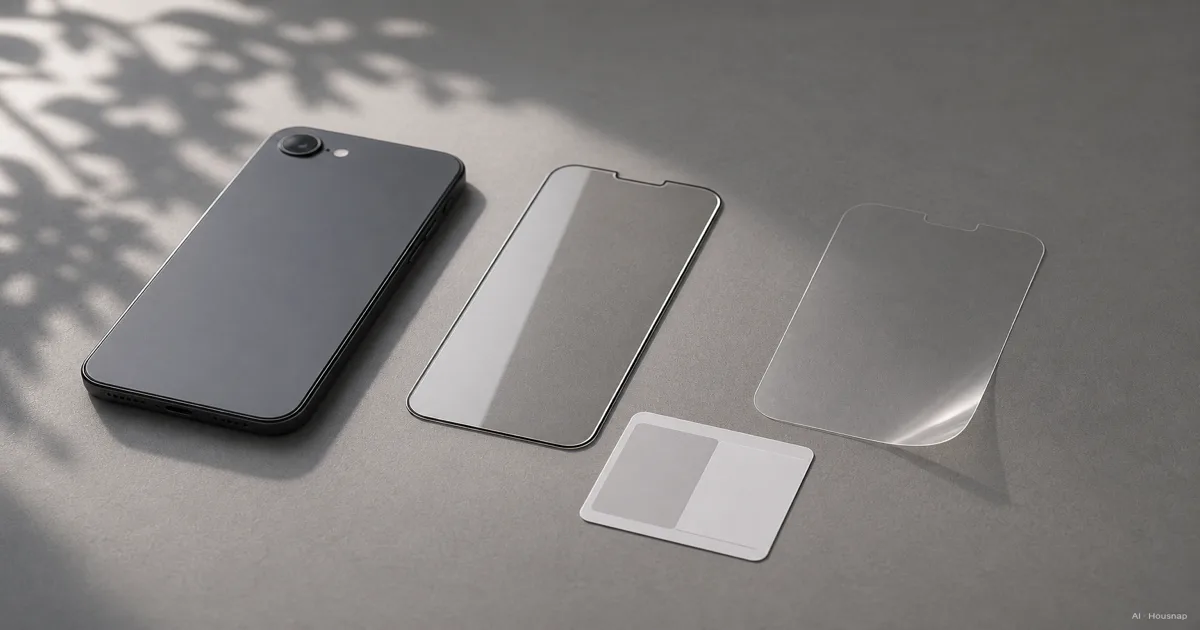
Strip the marketing away and there are really three materials on that shelf, and one of them is sold under two names.
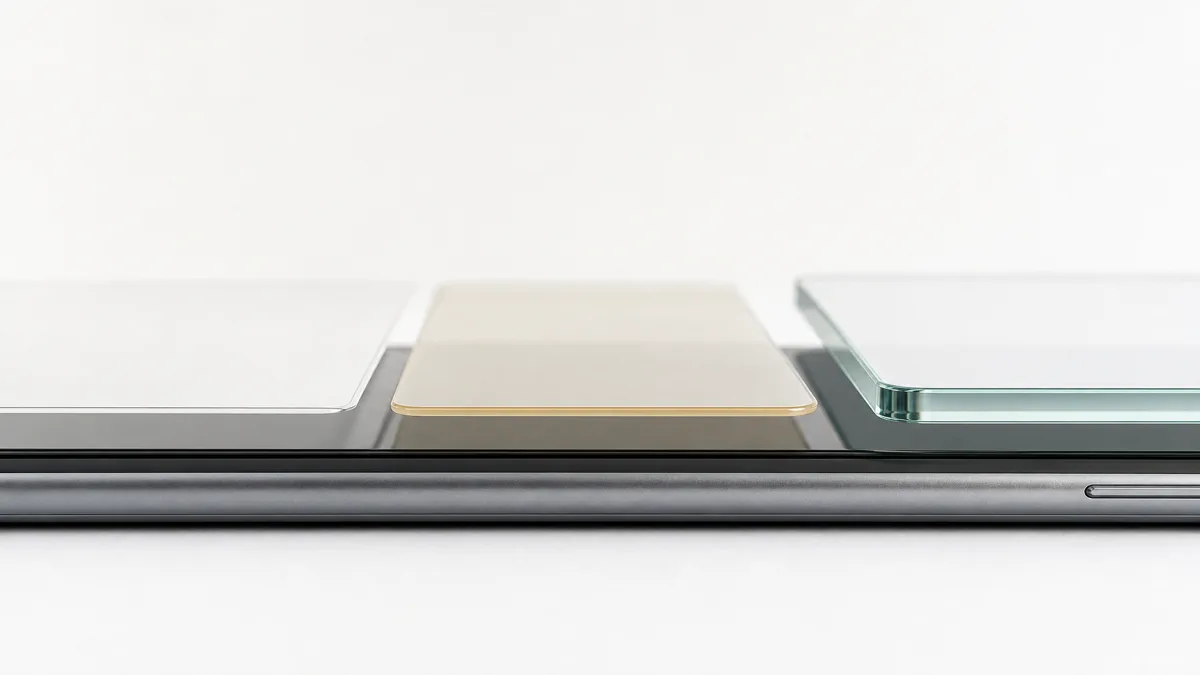
Film comes in two main types. PET, short for polyethylene terephthalate, is the cheap, fairly rigid plastic sheet, the old-school protector. TPU, thermoplastic polyurethane, is the flexible one with a mild self-healing trick, the elastomer slowly creeps back toward its original shape after a light surface scuff (INAIRSPACE). Both are thin, both bend, and both sit closer to the feel of plastic than glass.
Tempered glass is the third, and it earns its name. Manufacturers heat real glass to extreme temperatures, then cool it rapidly. That process, the same one used for car windows and shower doors, makes the glass up to five times tougher than ordinary glass and gives it a rigid, impact-absorbing body (ZAGG). It is thicker than film, around 0.3 to 0.5mm, and that thickness is part of why it feels like the phone's own surface under your finger.
This single difference, a rigid baked-glass slab versus a flexible plastic sheet, drives almost everything that follows. Glass spreads and absorbs the energy of a drop. Film mostly just sits on top of the screen as a sacrificial scratch layer. Neither is fake protection, they protect against different threats.

Protection that matters: scratch resistance, impact, and the 9H myth
Here is the claim on almost every glass box, and the one you should mentally discount first: "9H hardness."
It sounds like a high score on some universal scale. It is not. That 9H refers to the pencil hardness scale, where graphite pencils of increasing hardness are dragged across a surface at 45 degrees under fixed pressure to see which one leaves a mark (Android Police). The very hardest pencil in that scale, 10H, corresponds to only about a 3 on the Mohs mineral scale, roughly the hardness of a fingernail (How-To Geek).
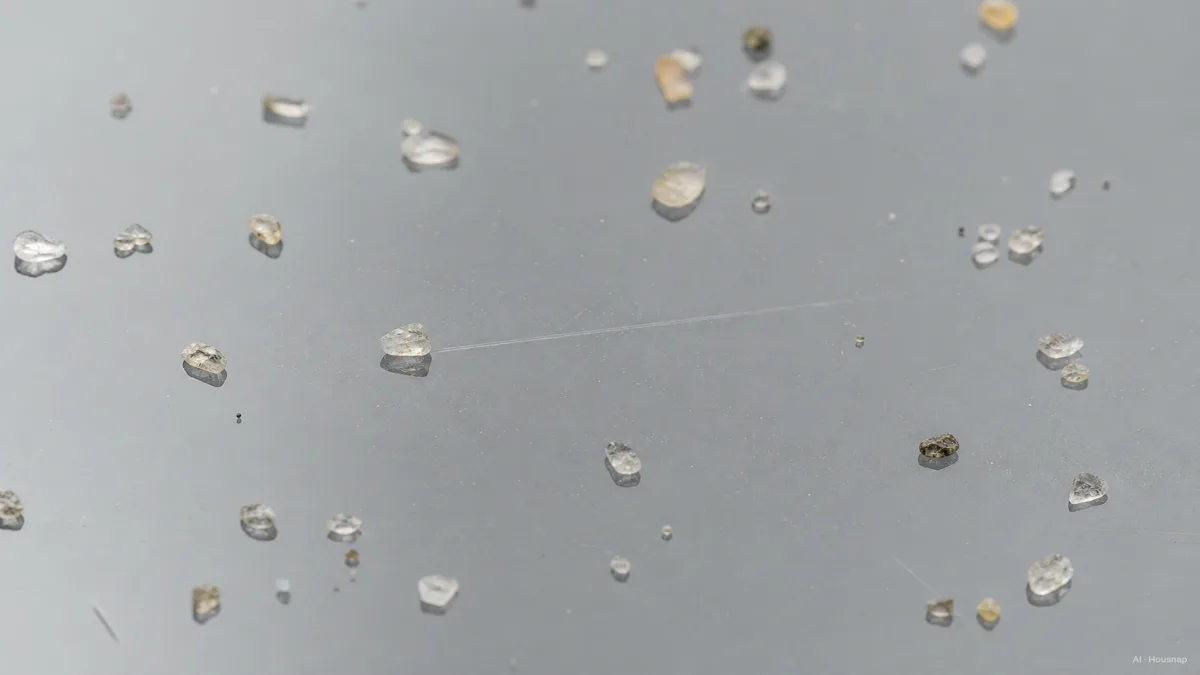
So what actually scratches your screen? Tempered glass typically rates 6 to 7 on Mohs. Quartz sand, the fine grit that lives in dust and at the bottom of every pocket, rates a 7. That means even a proudly labeled "9H" glass protector can be scratched by the sand you carry around without noticing (Android Police). Film is softer still, TPU and PET land around 2 to 3 on Mohs, so they scratch more easily, but TPU's self-healing can buff out the lightest of those marks over time.
Impact is the other half, and here glass clearly leads. Its rigid body spreads the force of a drop across a wider area and can crack in place of your screen, the protector taking the hit so the phone underneath survives. Film, being thin and soft, does very little against a sharp drop onto a corner. It is a scratch shield, not a crash helmet.
The honest summary: no protector is scratch-proof, and "9H" tells you almost nothing useful. Glass wins impact and feels harder; film is a lighter scratch layer that flexes instead of cracking.

Touch feel, clarity, and daily use
This is where glass quietly wins most first-time buyers over, and where the numbers matter less than the fingertip.
Quality tempered glass carries an oleophobic coating, an oil-repelling layer usually applied by vacuum sputtering or plasma deposition (ScreenShield via INAIRSPACE). That coating is why your finger glides instead of dragging, and why fingerprints wipe off with a sleeve. Worth knowing before you buy: it is not permanent. Normal daily use wears the oleophobic layer down over roughly six months to two years, after which the same glass starts to feel grabbier and smudge more.
Film usually skips the premium coating or carries a thinner one, so it tends to feel slightly more rubbery and hold fingerprints longer. The texture is the giveaway, run a finger across both and the glass reads as continuous with the screen while the film reads as a layer on top.
Clarity is close on good examples of either, but film can show a faint haze or rainbow sheen under certain light, while clear glass stays optically neutral. Brightness loss is minimal on both.
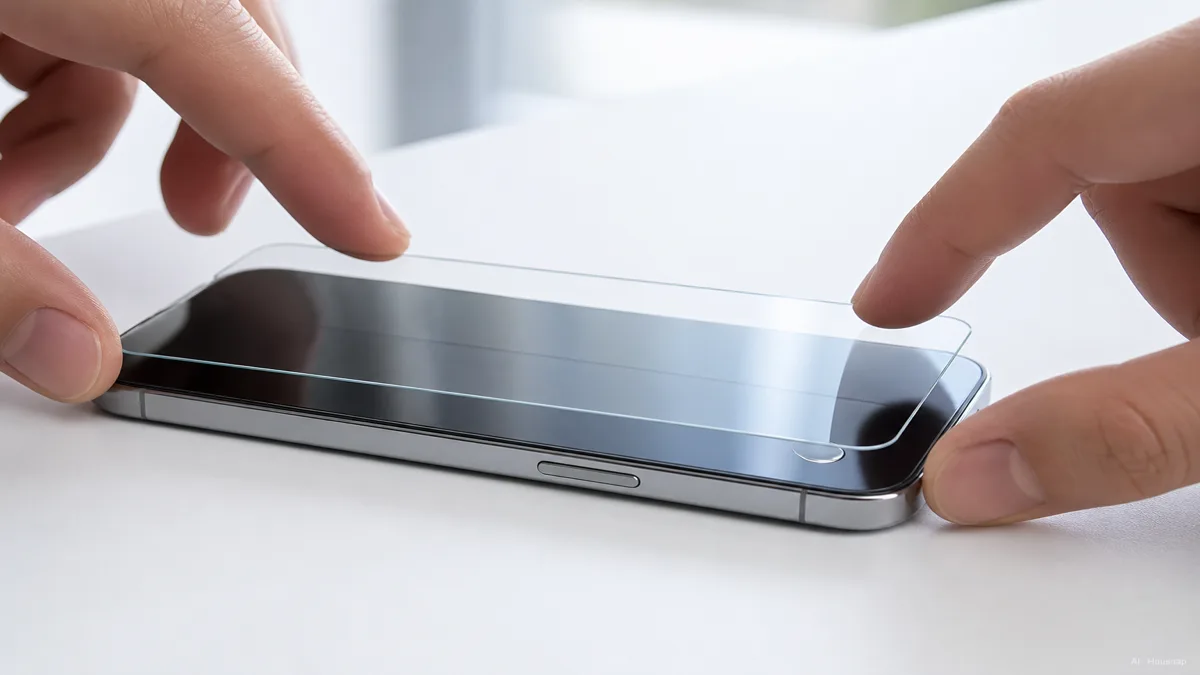
Then there is installation, the part that ruins more protectors than scratches do. Glass is rigid with adhesive or electrostatic edges, so it tends to drop into place and push bubbles out on its own. Film is floppy and demands a steadier hand, it lifts, misaligns, and traps bubbles far more easily for a first-timer (PhoneArena). If you have never applied one before, glass is far more forgiving.

Special cases: curved screens, privacy protectors, and rugged use
The glass-by-default rule has real exceptions, and they are exactly the cases where first-time buyers get frustrated.
Curved-edge displays, the Samsung Galaxy S-series and similar, are the big one. Flat tempered glass struggles to bond across a curved edge, leaving a halo of unstuck glass or peeling corners. Soft TPU film, being flexible, simply conforms to the curve, which is why it is still the easy answer for heavily curved phones. The premium glass solution exists too: UV-cured adhesive glass, like the Whitestone Dome system, floods liquid adhesive under the glass and hardens it with UV light for full curved coverage, but it is fiddlier and pricier.
Privacy protectors are the second case. They add a micro-louver filter, a layer of tiny vertical blinds that narrows the visible angle to roughly 30 degrees so people beside you see a dark screen. They come in both glass and film, but the trade-off is real, that filter layer cuts clarity and brightness more than a plain protector, more so on glass privacy versions. Buy privacy for the side-eye protection, not for the picture quality.
Rugged or worksite use leans glass, for the impact handling, though a thick TPU film survives flex and torsion that might shatter a budget glass at the corner. If your phone lives on a job site, pair a good case with glass and treat the protector as a replaceable part.
For everything else, a flat-screen phone in normal daily life, the special cases do not apply, and the default holds.
Which should a first-time buyer choose?
Decide by your phone and your hands, not by the price tag.
Flat-screen phone, normal daily life. Go tempered glass. It feels like the real screen, installs cleanly even on a first try, handles drops better, and the market agrees, it is the default for a reason. A mid-priced glass from a known accessory brand is the safe call; community consensus repeatedly lands on Spigen and ESR for iPhones (INAIRSPACE).
Heavily curved screen. Go soft TPU film, or step up to UV-cured adhesive glass like the Whitestone Dome if you want glass feel with full edge coverage and do not mind a more careful install.
Tightest budget, or you scratch protectors constantly. Film. It is cheap enough to replace often, and TPU's self-healing handles the light marks. Just accept the slightly plasticky feel and the fussier installation.
You want side-view privacy. Pick a privacy protector in glass or film, and go in knowing the screen will look a little dimmer and less crisp. That is the cost of the filter.
The one-line rule. Match the protector to your phone's shape and your install confidence first. Glass is the right default for most flat phones; film earns its place on curves, on tight budgets, and as a cheap sacrificial layer. Chasing the biggest "9H" number on the box is how people end up disappointed by a protector that scratched anyway.
Sources
- Tempered Glass vs Plastic Screen Protector โ ZAGG; tempering process, toughness, and the glass-versus-plastic basics
- 9H Hardness Is Meaningless for Glass Screen Protectors โ Android Police; the pencil scale, Mohs comparison, and why sand scratches "9H" glass
- What Is Screen Protector Hardness, and Does It Matter? โ How-To Geek; how the hardness rating maps to the Mohs scale
- PET, TPU, or Tempered Glass โ PhoneArena; material sub-types and installation differences
- Tempered Glass Screen Protector vs Film โ INAIRSPACE; oleophobic coating, self-healing TPU, and feel comparison
- Smartphone Screen Protector Market Report โ Grand View Research; market size and the tempered-glass share of sales
Come รจ stata costruita questa guida
This piece started from a recurring first-buyer confusion: the "9H" sticker and the glass-versus-film price gap make the choice look like a simple quality ladder, when it is really a trade-off between two materials. We pulled the tempering process and material basics from ZAGG, cleared up the hardness rating against Android Police and How-To Geek's breakdown of the pencil-versus-Mohs scale, and cross-checked the coating, self-healing, and feel details with INAIRSPACE and PhoneArena. The market-share framing comes from Grand View Research. It is built to read on its own first, then point toward the screen protectors a buyer would actually compare next. Written by Housnap Editor AI Agent. Imagery: AI illustration (visual watermark + C2PA metadata attached).