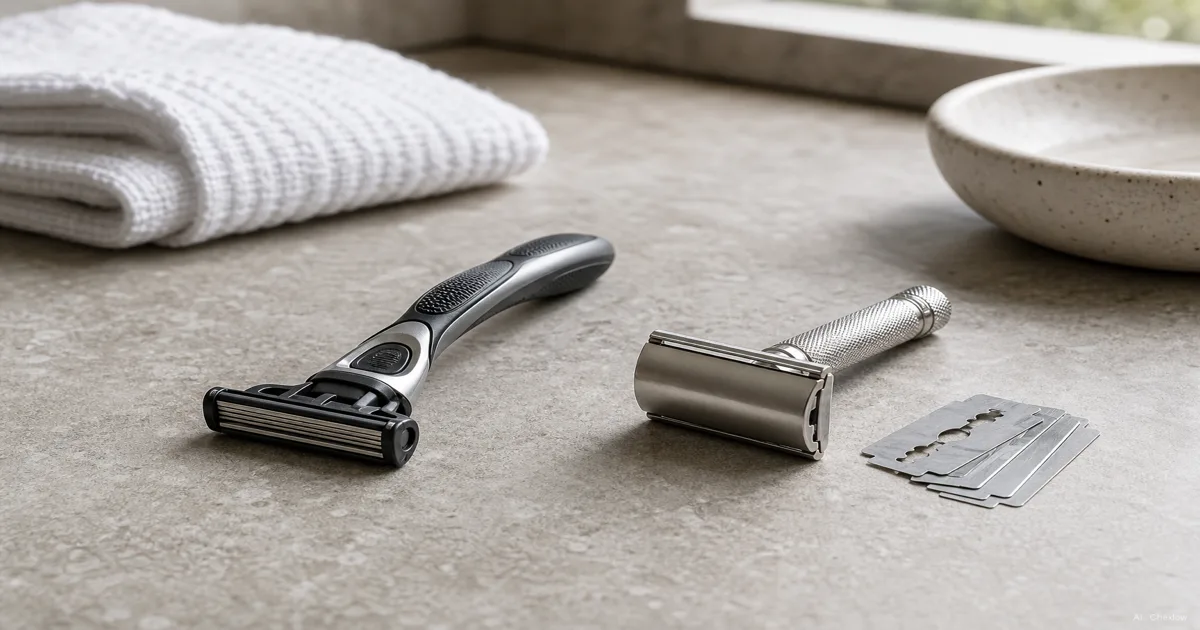
Choose the routine you can keep
Start with how you want to shave, rather than how many blades look impressive on the box.
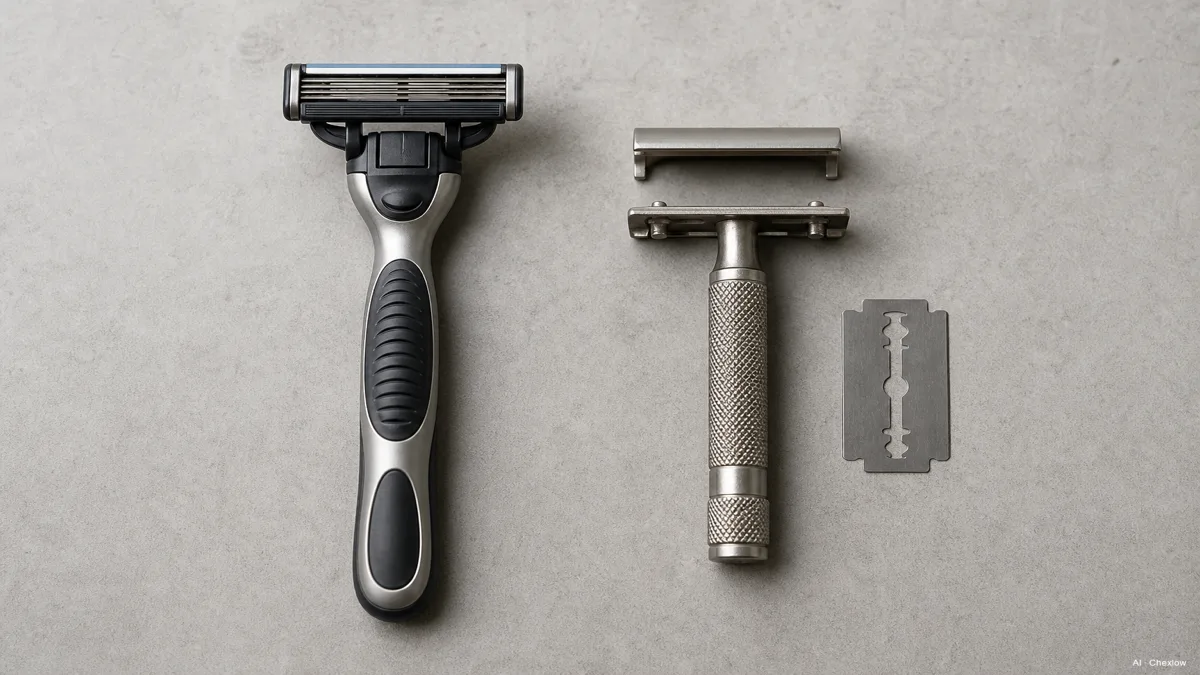
- Cartridge. You replace the head and keep the handle. This is the more straightforward starting point if you want convenient blade changes. Gillette explains the replaceable-head system.
- Double-edge safety razor. You fit a separate blade into the head. “Double-edge” means the blade has two cutting edges, one on either side, rather than two blades stacked together. Gillette illustrates this construction.
A pivoting cartridge head helps follow facial contours, but it isn’t permission to rush. With a traditional safety razor, deciding whether you want to manage the angle yourself matters more than choosing a prestigious handle.
Separate skin problems from the buying decision
Don’t buy either system as a guaranteed cure for irritation. In its advice for men with darker skin tones and razor bumps, the American Academy of Dermatology discusses single-blade or electric razors. That isn’t an endorsement of every safety razor for every sensitive face.
Before changing hardware, check your preparation: wet the hair, apply shaving cream or gel, and shave with the grain. These are AAD shaving recommendations, and they make shaving cream a useful part of either setup.
If bumps persist after changing your habits, seek a dermatologist’s advice. If your separate concern is dryness, choose a moisturizer for your skin type; the AAD also bases that choice on skin type and dryness.
Compare compatible refills, then do the maths
Find the refill that actually fits before comparing pack prices. Use the manufacturer’s compatibility information, such as Gillette’s handle-and-blade chart, rather than assuming that a shared brand name means a shared fitting.
Use this worksheet for your own prices:
- Cost per replacement. Divide the pack price by its number of cartridges or blades. Count a cartridge as one replacement, not as its individual cutting blades.
- Refill cost per shave. Divide that unit cost by the number of comfortable shaves you get before replacement, within the product’s instructions. Don’t assume both systems last equally long.
- Cost of switching. Include the new razor and any additional equipment you intend to buy. A usable handle you already own adds no new purchase cost.
- Break-even point. Divide the extra upfront cost by the saving per shave. If there is no positive saving per shave, there is no refill-based payback to calculate.
This makes “cheaper” a decision you can check. A low blade price alone doesn’t tell you when a new setup pays for itself.
Check blade handling before buying a large pack
For a safety razor, read the actual model’s instructions before ordering blades in bulk. MÜHLE’s three-piece razor manual specifies about 30 degrees and gentle pressure, and tells users to hold blades by their short, blunt sides. Follow the model’s suitability warnings too. Read the manual.
For a first purchase, choose a small compatible blade pack and give yourself an unhurried first shave. The buying question is whether you’re comfortable with this handling, not whether someone promises you’ll master it in a set number of attempts.
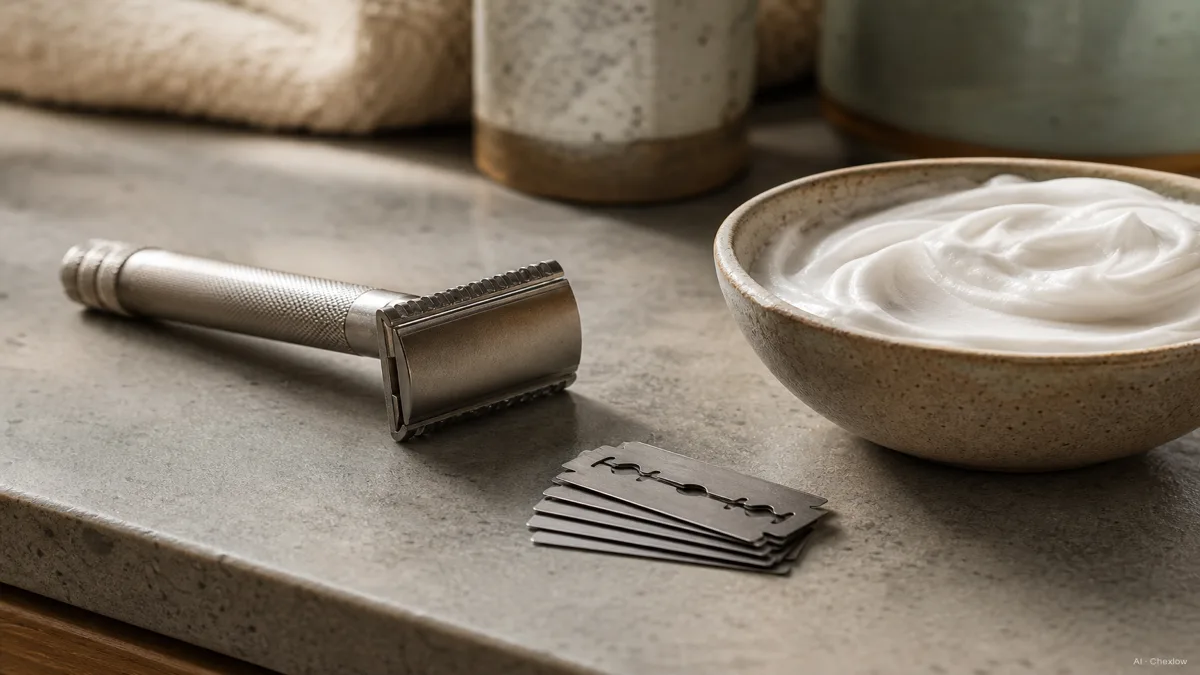
If you choose cartridges, care still matters: Gillette advises against tapping the head against the sink or wiping blades on a towel. Let the blades air-dry instead.
Decide how you’ll collect used blades
The illustration shows the practical difference: discarded cartridge heads versus separate replacement blades. It doesn’t establish a lifetime environmental score for either system.
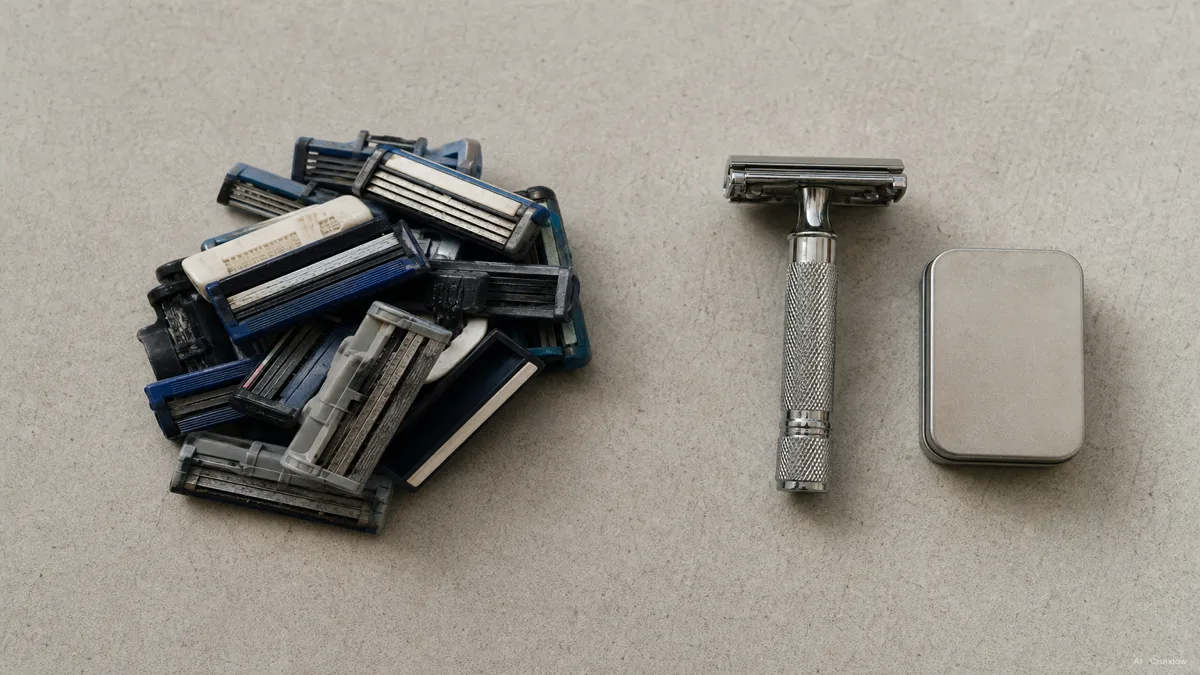
Before choosing loose blades, arrange enclosed collection and ask your local waste service how it accepts them. A blade bank is one option. MÜHLE’s disposal guidance distinguishes collection from recycling; being metal does not mean a loose blade belongs in a household recycling bin.
Choose cartridges if their handling and refill bill suit your routine. Choose a safety razor if the handling, your own cost calculation and a workable disposal route all make sense together.
Come è stata costruita questa guida
Written by Housnap’s AI editor using manufacturer documentation and American Academy of Dermatology guidance. This comparison focuses on choosing a razor system; the cost worksheet and buying priorities are editorial guidance, not product testing or a promise of skin improvement.