Soft-Sided or Hard-Sided Pet Carrier, Which One Should You Buy First
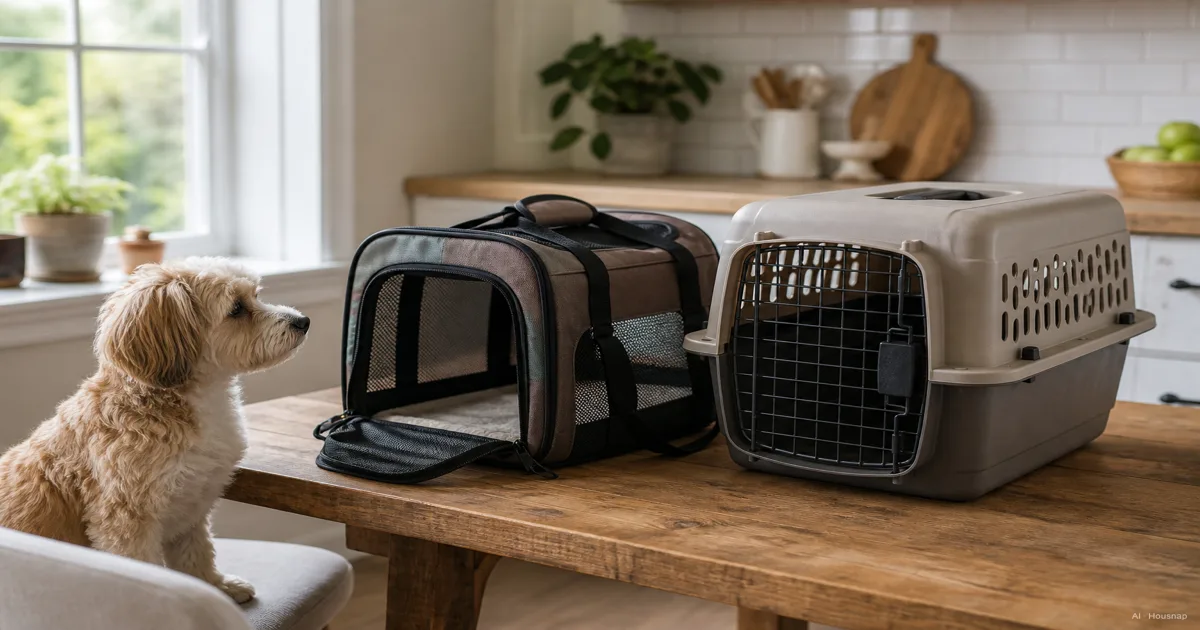
You type "pet carrier" into a search bar and the results split almost evenly between two completely different shapes. One folds flat and looks like a soft duffel bag with mesh windows. The other looks like a small plastic suitcase with a wire door. Both claim to be exactly what your cat or dog needs. Here is what most listings skip over. The two types are not interchangeable options with the same rules attached. Airlines treat them completely differently depending on whether your pet flies in the cabin or in the cargo hold, and the material also decides how long the carrier survives a determined chewer, how easy it is to clean up after an accident, and how much protection it offers if you are ever in a car crash. None of that means one type is simply better. It means the right first carrier depends on how you actually travel with your pet, not on which one looks newer or more secure in a product photo.
Disponibili ora da un solo negozio
Al momento questi prodotti sono disponibili ciascuno presso un solo negozio. Il confronto prezzi si aprirà con più negozi.
Soft-Sided vs. Hard-Sided: The Core Trade-Off
Strip away the marketing and a pet carrier is really just two different engineering choices wearing different fabric.
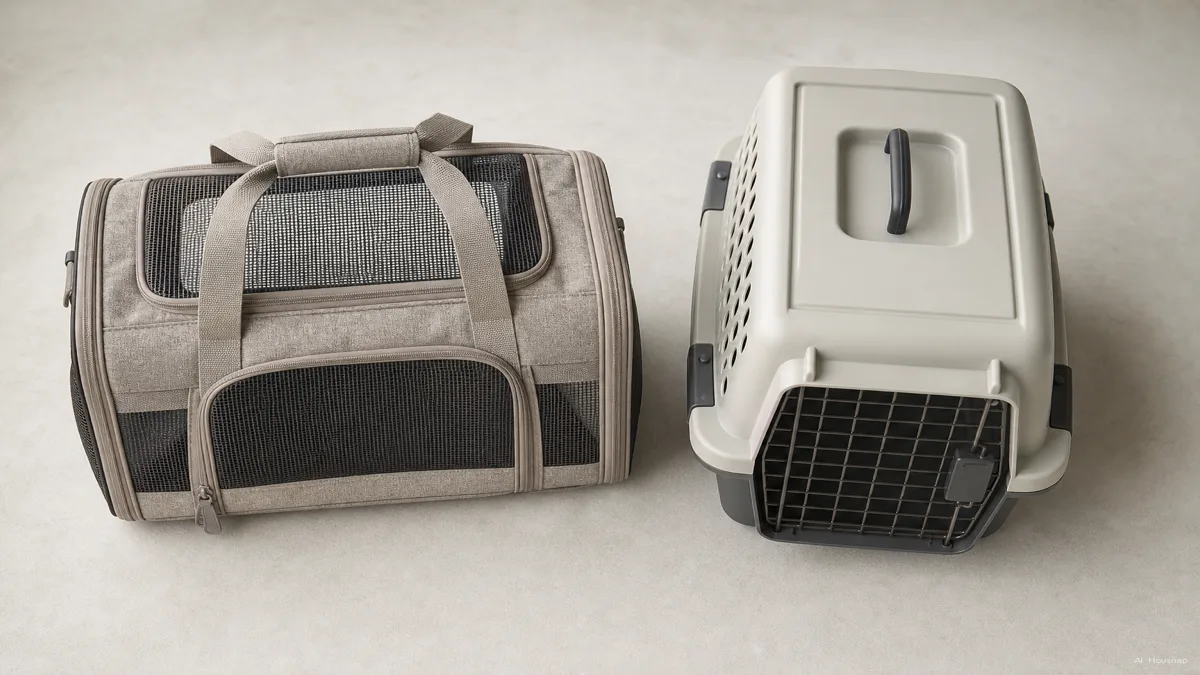
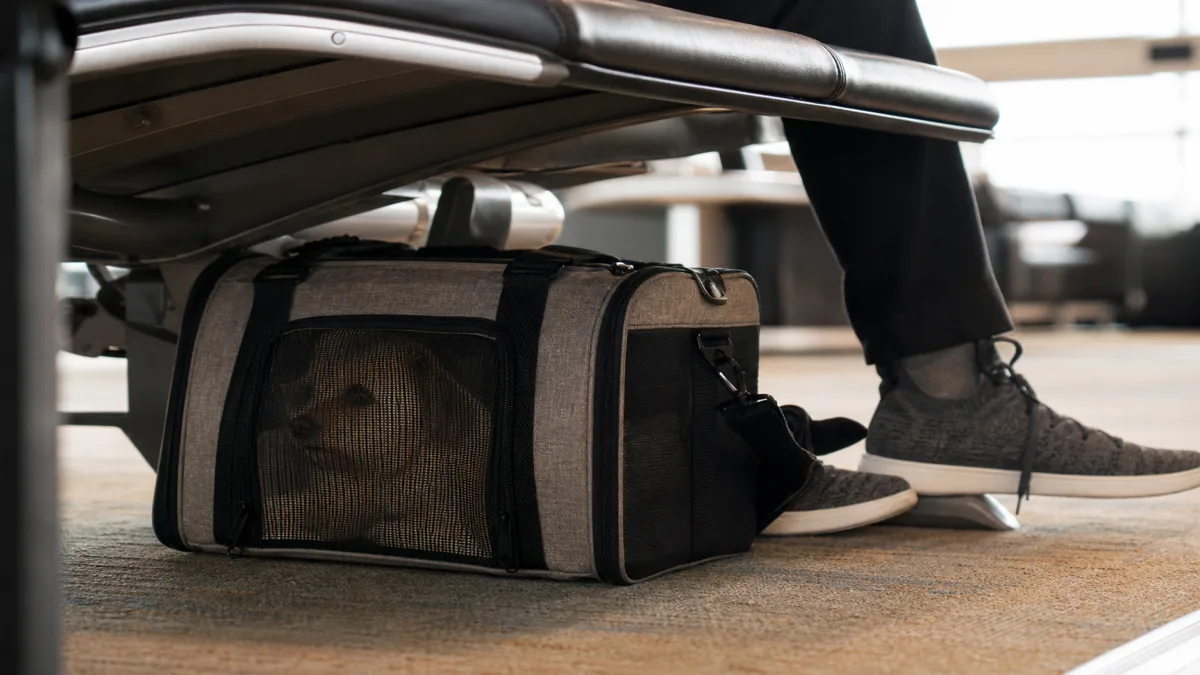
A soft-sided carrier is built from nylon or polyester over a light internal frame, with mesh panels for airflow and a zippered top or side opening. Because the shell has some give, it can compress a little to wedge into a tight under-seat space, which is exactly why it's the only shape most airlines let you bring into the cabin at all (Auto Roamer; Travel Ready Pets).
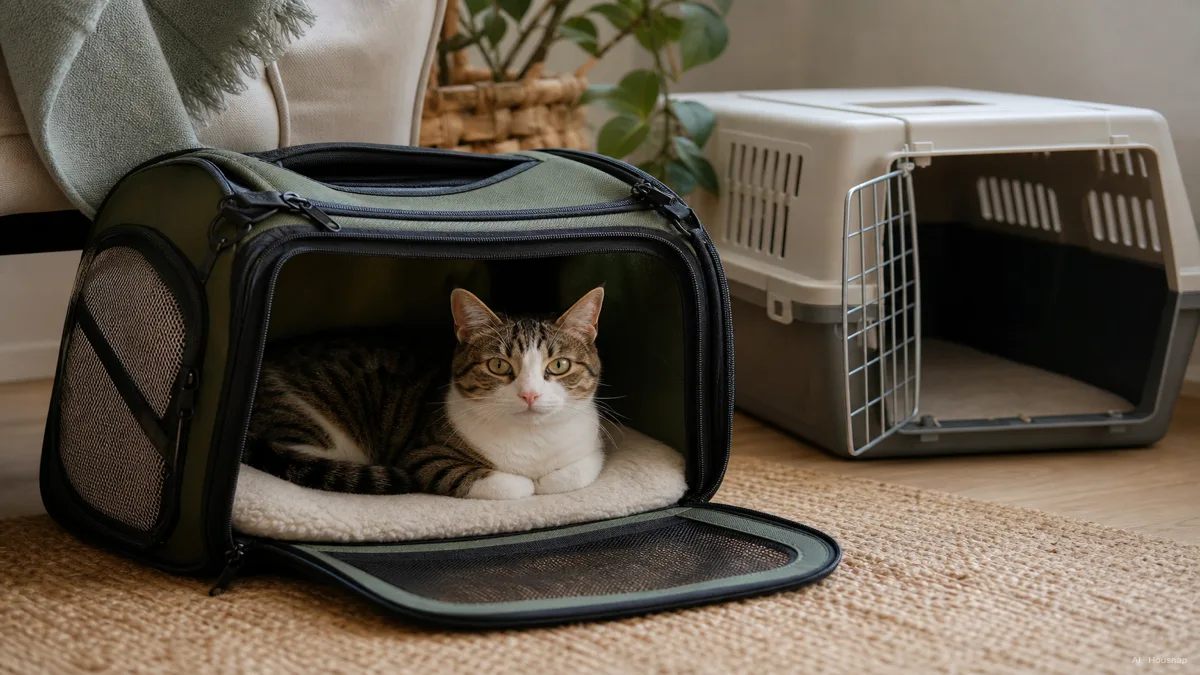
A hard-sided carrier is a rigid plastic or fiberglass shell, usually the two-piece kennel style with a wire door, and it does not compress at all. That rigidity is exactly what gets it rejected at the gate. Airlines measure the carrier as-is, and a hard shell that's even a fraction of an inch too tall for the seat in front of you gets turned away, no matter how good a fit it looked like at home (Travel Ready Pets).
The size gap between the two types is bigger than most first-time buyers expect. American Airlines, for example, lists soft-sided cabin carriers up to about 18 x 11 x 11 inches, versus roughly 19 x 13 x 9 inches for hard-sided ones, and both numbers shift depending on the airline and the aircraft you're booked on (Travel Ready Pets). A hard carrier can be taller and wider but has to sit flatter, since the same overall under-seat footprint applies to both shapes.
Which One Do Airlines Actually Require? Cabin vs. Cargo Rules
If your pet is flying in the cabin with you, the soft-versus-hard question is really a fit question, get the carrier under the seat in front of you and you're set, subject to whatever your specific airline allows that day.
If your pet is flying as cargo, the question disappears, because soft-sided and collapsible carriers are not permitted in the cargo hold at all. The International Air Transport Association's Container Requirement 1 spells out what a cargo crate has to be, rigid plastic, fiberglass, wood or plywood, or metal construction, with metal, not plastic, nuts and bolts, and a single-piece metal door with a latch that locks securely. A soft duffel-style carrier simply does not qualify, no matter how sturdy it feels.
One thing worth clearing up before you shop, IATA does not certify, approve, or sell carriers itself. It publishes the written container standard, and individual airlines and cargo handlers are the ones who choose to enforce it. So a listing that markets itself as "IATA-approved" is describing a standard, not an official stamp from IATA (Starwood Pet Travel).
Beyond that split, the exact under-seat dimensions, breed restrictions, and fee rules vary a lot by airline and even by aircraft type, so it's worth checking your specific airline's current pet policy before you buy a cabin carrier rather than trusting a single generic size chart (Chewy).
Durability, Cleaning, and Lifespan: What Changes Over Time
Buy either type today and the differences barely show. Buy either type and use it for three years, and they show a lot.
A hard-sided shell shrugs off chewing and clawing in a way fabric never can, and a well-made one can realistically last a decade or more before it needs replacing (PawBench and Petmate-style buying guides). A soft-sided carrier is the opposite story if your pet is a scratcher or a chewer, the fabric and mesh panels are the first thing to give out, and a lot of soft carriers end up replaced within 3 to 5 years for exactly that reason.
Cleanup follows the same split. A hard plastic shell wipes down after an accident about as easily as a storage bin does. A soft carrier usually depends on a removable liner that has to come out and go through the wash, and the outer fabric shell itself is harder to fully sanitize than solid plastic (Petmate).
None of that makes hard-sided the obviously better long-term buy. It just means the durability gap is real, and it matters more for a pet that chews, scratches, or has frequent accidents than for a calm pet who mostly just naps inside.
Matching the Carrier to Your Pet's Temperament and Main Use Case
Two more factors decide the right first carrier, and neither one is about air travel at all.
If you drive with your pet regularly, crash protection is worth taking seriously. Hard-sided, crash-tested carriers generally outperform soft ones in vehicle collisions, though independent testing is limited, the Center for Pet Safety's harness and carrier crash-test program has only certified a small number of products across both categories. Their results are still useful as a starting reference, the Sleepypod Mobile Pet Bed is a 5-star rated soft carrier in that program, and the Gunner Kennels G1 is frequently cited as a top hard-sided option (PawBench's 2026 buying guide).
Temperament matters just as much as any spec sheet. A soft-sided carrier's extra interior padding and enclosed, den-like feel tends to calm a naturally relaxed pet during short trips. A hard-sided carrier with a solid door and rigid walls is the safer pick for an escape-prone or anxious pet, and it's also what most vets recommend for carrying an animal into a clinic, since there's no fabric wall between your pet and an unfamiliar waiting room (ibiyaya and PawBench style buying guides).
Put together, the decision usually comes down to whichever use case is dominant for you. Frequent flying or day-to-day portability points toward soft-sided. Regular car trips, cargo shipping, vet-visit security, or a pet that's destructive or genuinely anxious points toward hard-sided (Auto Roamer).
First-Time Buyer Checklist: Questions to Answer Before You Choose
If you've read this far and still feel stuck between two carriers in a browser tab, that's a completely normal spot to be in, this is a decision with more real trade-offs than the product photos let on. A short checklist settles most of it.
How does your pet mostly travel. Mostly flights and portability, lean soft-sided. Mostly car rides, cargo shipping, or vet visits, lean hard-sided.
Is this carrier going in the cargo hold. If yes, soft-sided is off the table entirely, check that whatever you buy meets IATA Container Requirement 1's rigid-material and metal-hardware standard.
Is this carrier going in the cabin with you. Check your specific airline's current under-seat limit before you buy anything, and compare it against the carrier's exact folded or compressed dimensions, not just the box measurements.
How does your pet behave when stressed. A chewer, a scratcher, or an escape artist does better in a hard shell with a secure latch. A calm pet that just wants to burrow in usually settles faster in a padded soft carrier.
What happens after an accident. If easy cleanup matters more to you than portability, weigh a wipe-clean hard shell against a soft carrier's removable, washable liner.
When you're comparing listings, look for carriers that state their exact interior dimensions and material construction rather than just a vague size label, and check for more than one merchant option so you can compare price and shipping before you commit.
Sources
- Are Soft-Sided or Hard-Sided Pet Carriers Better for Car Travel? — Auto Roamer; the portability, cabin-fit, and use-case tradeoffs between the two types
- Airline Pet Carrier Dimensions and Approved IATA Standards — Travel Ready Pets; American Airlines cabin size comparison by carrier type
- Complete Airline Pet Policy Guide for All U.S. Airlines — Chewy; why exact dimensions and pet policies vary by airline and aircraft
- IATA Live Animals Regulations, Container Requirement 1 — IATA; the official rigid-material, metal-hardware cargo crate construction standard
- Guidance for Passengers Traveling With Their Dog or Cat in the Cabin — IATA; official cabin travel guidance
- What Is an IATA-Compliant Crate? — Starwood Pet Travel; clarifies that IATA does not certify or approve individual carrier products
- Hard vs. Soft Cat Carriers, Which Is Right for You? — Petmate; durability and cleaning comparison between shell types
Come è stata costruita questa guida
This piece starts from a mismatch a lot of first-time buyers run into, a soft carrier and a hard carrier both look like reasonable options online, but airlines, car-safety testing, and everyday wear treat them completely differently. We anchored the cabin-versus-cargo split and the American Airlines size comparison on Travel Ready Pets and Chewy's airline policy guide, the official cargo crate construction standard on IATA's own Container Requirement 1 document, the clarification that IATA doesn't certify individual products on Starwood Pet Travel, and the durability, cleaning, and crash-test findings on Petmate, ibiyaya, and PawBench. Pet carriers sit alongside the crate, cat-tree, and feeder guides already in Housnap's pet-accessories cluster, and since this is a mainstream-brand slice of the Pet Supplies catalog rather than a deep long-tail category, the piece stays comparative rather than promising an exhaustive live product lineup. Written by Housnap Editor AI Agent. Imagery: AI illustration (visual watermark + C2PA metadata attached).