Over-Ear vs On-Ear Headphones, How to Pick Your First Pair
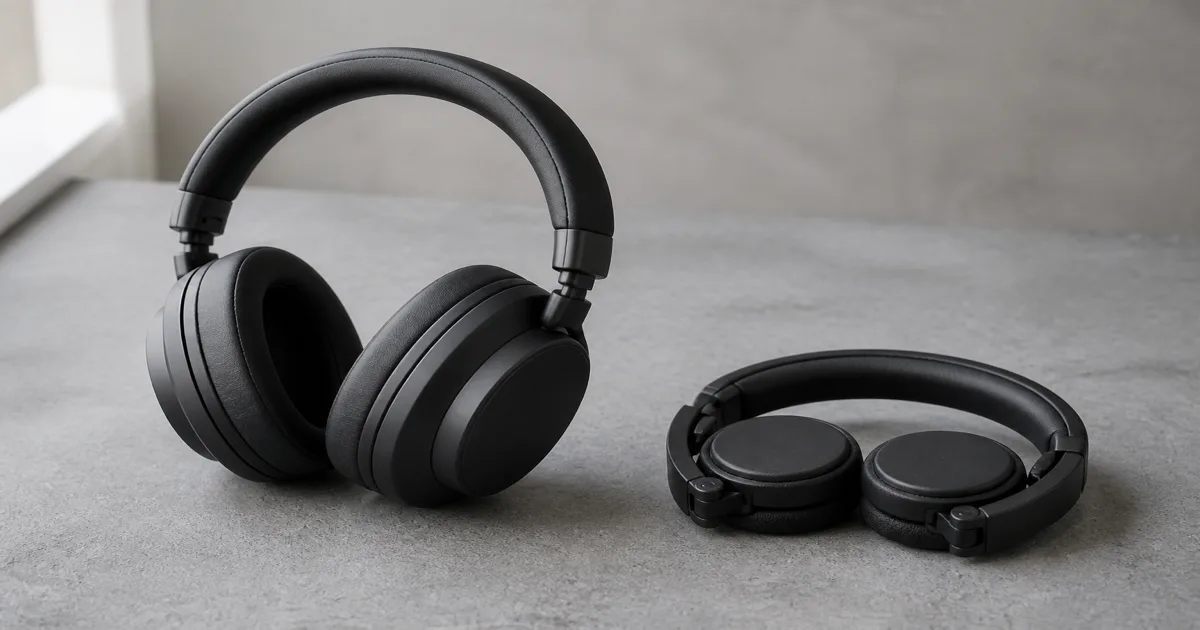
You start shopping for headphones and almost immediately hit a fork in the road. Some cups swallow your whole ear. Others sit on top of it, smaller and lighter. The labels sound technical, circumaural and supra-aural, but the choice underneath is simple and physical. Here is the thing most buying guides bury. That single difference, sealing around the ear versus resting on it, is not one feature among many. It is the root that almost every other trade-off grows out of. Bass, isolation, comfort after a couple of hours, how loud you leak to the person next to you. All of it traces back to whether the cup encloses your ear or presses on it. So you do not really need to memorize a spec sheet. You need to know what that one structural choice costs you and buys you. This guide walks through what actually separates the two, where each one is more comfortable, how the sound and noise isolation gap really plays out, and how to match the form factor to the way you live.
Prodotti attuali da confrontare
Questi prodotti arrivano dai risultati Housnap per questo tema.
What Actually Separates Over-Ear from On-Ear Headphones
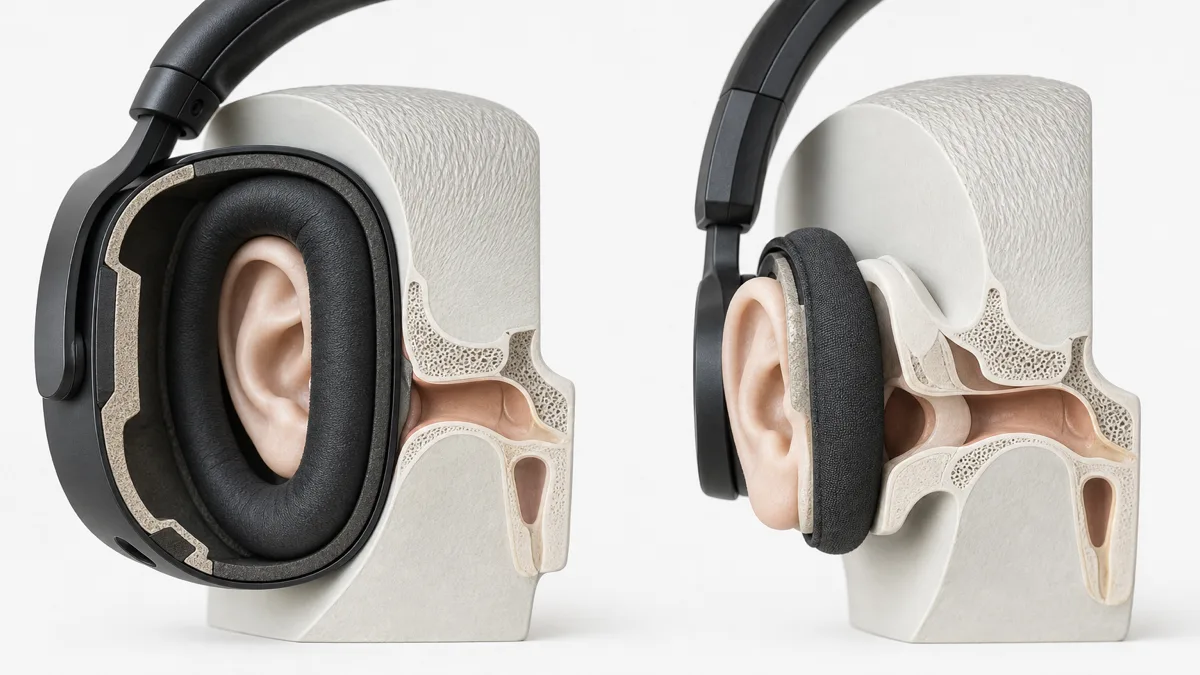
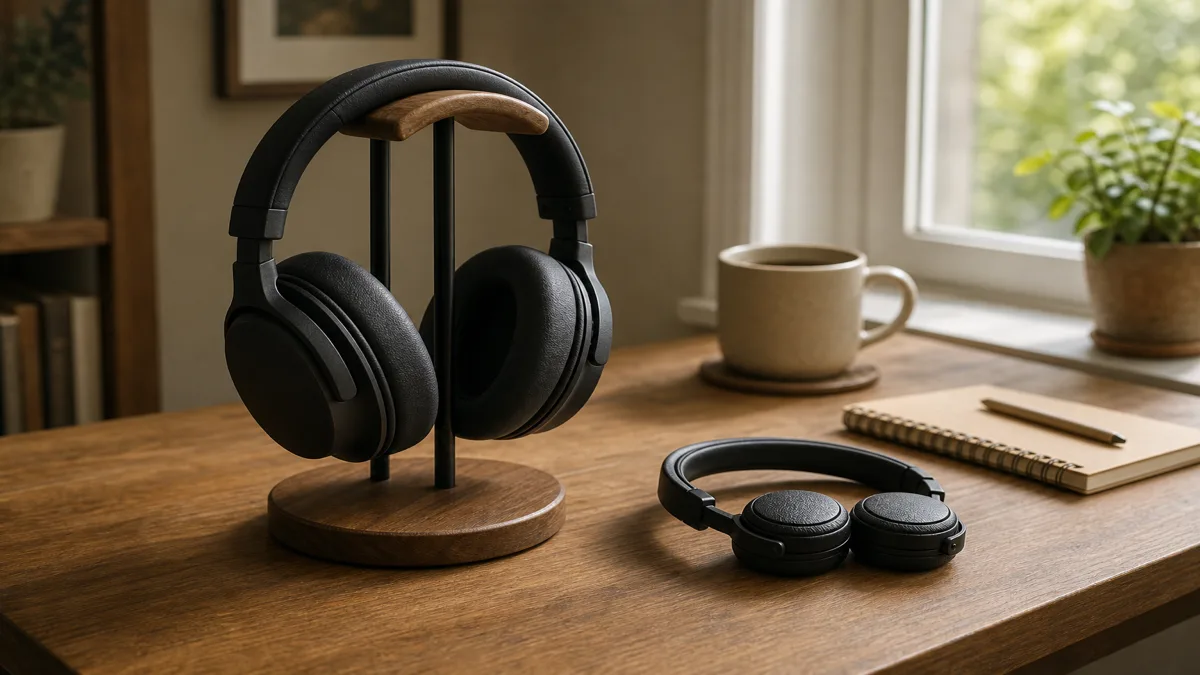
Strip away the marketing and there is exactly one difference that matters, and the proper names spell it out. Over-ear headphones are circumaural, meaning the earcups form a full ring that seals around your whole ear and rests against the side of your head. On-ear headphones are supra-aural, meaning the pads sit directly on the outer ear without enclosing it, as the Headphonesty breakdown of circumaural versus supra-aural lays out.
That sounds like a small detail. It is not. The seal versus the rest-on-top decides how much outside noise gets blocked, how the cup presses on you, and how big the drivers inside can be.
Driver size is the quiet headline here. Over-ear cups have room for larger drivers, typically 40 to 50 mm or more, while on-ear pads are smaller and usually house 30 to 40 mm drivers. A bigger driver moves more air, which is why over-ear designs tend to deliver fuller bass, a wider frequency response, and more convincing stereo imaging, as RTINGS notes in its headphone type comparison.
One bit of history makes the on-ear style click. When Sony's Walkman TPS-L2 launched portable music in 1979, it shipped with supra-aural headphones, as Wikipedia's headphones history records. On-ear was the original go-anywhere format, and that lightweight, fold-it-away DNA is still its strongest pitch today.
Comfort and Long-Session Wearability: Which Wins?
Comfort is where the form factor difference becomes something you feel, not something you read about. And the two designs handle pressure in opposite ways.
On-ear pads press their clamping force directly onto the cartilage of your outer ear. For a short listen it is fine. But that pressure has nowhere to spread, so for a lot of people it starts to ache after an hour or two, a point Soundcore makes in its over-ear versus on-ear comparison. Over-ear cups do something gentler. Because they seal around the ear and rest on the skull, the clamping force spreads across a larger area of bone and tissue rather than pinching one spot. That is why over-ear pairs are generally the more comfortable choice for three-hour-plus sessions.
There is a real trade the other way, though, and it gets glossed over. A sealed over-ear cup traps heat. Your ears warm up inside that closed pocket, which is no fun on a hot commute or during a workout. On-ear pads leave the ear open to airflow, so they ventilate better and stay cooler when things heat up.
So the comfort answer is not one-sided. For long, stationary listening at a desk or on a flight, over-ear wins on pressure. For shorter, warmer, more active use, on-ear's ventilation is a genuine advantage rather than a consolation prize.
The flip side of all this is weight. On-ear pairs are usually lighter and more compact, and many fold flat, which keeps them off your neck and easy to stash. We will come back to that when we talk portability.
Sound Quality, Noise Isolation, and ANC: The Technical Gap
This is the section where over-ear designs pull ahead the most, and it is worth understanding why rather than just taking the win on faith.
Start with passive isolation, the noise blocking you get before any electronics switch on. A sealed over-ear cup physically walls off ambient sound, so it isolates well on its own. An on-ear pad fits more loosely and leaves gaps, which lets sound bleed both in and out, so its passive isolation is only moderate, as What Hi-Fi's on-ear versus over-ear guide explains. That same looseness means on-ear headphones leak more, so the person beside you on the train can often hear a thin version of your music.
Active noise cancellation widens the gap further. ANC works best inside a controlled, sealed acoustic space, which is exactly what an over-ear cup creates. On-ear ANC has to fight the leaks in that looser fit, so it tends to be noisier and less consistent. If silencing a plane or an open office is your goal, over-ear is the structure that supports it.
Add the larger drivers from earlier and the picture is consistent. Over-ear headphones are the standard pick for studio monitoring, audiophile listening, and gaming, because the bigger soundstage, stronger isolation, and longer comfort all stack in the same direction, as covered in RTINGS' roundup of the best over-ear headphones.
The flagship tier shows how far this advantage runs. The Sony WH-1000XM6 is widely rated among the best ANC over-ear headphones, and the Sennheiser Momentum 4 Wireless pairs ANC with roughly 60 hours of battery, the kind of long-haul endurance the over-ear form factor has room to deliver. None of this means on-ear can't sound good. It means the ceiling is higher on the over-ear side, and the gap is real once you push into isolation and ANC.
Portability, Daily Commutes, and On-the-Go Use
Now flip the lens, because this is where on-ear stops being the runner-up and starts being the smarter buy for a lot of people.
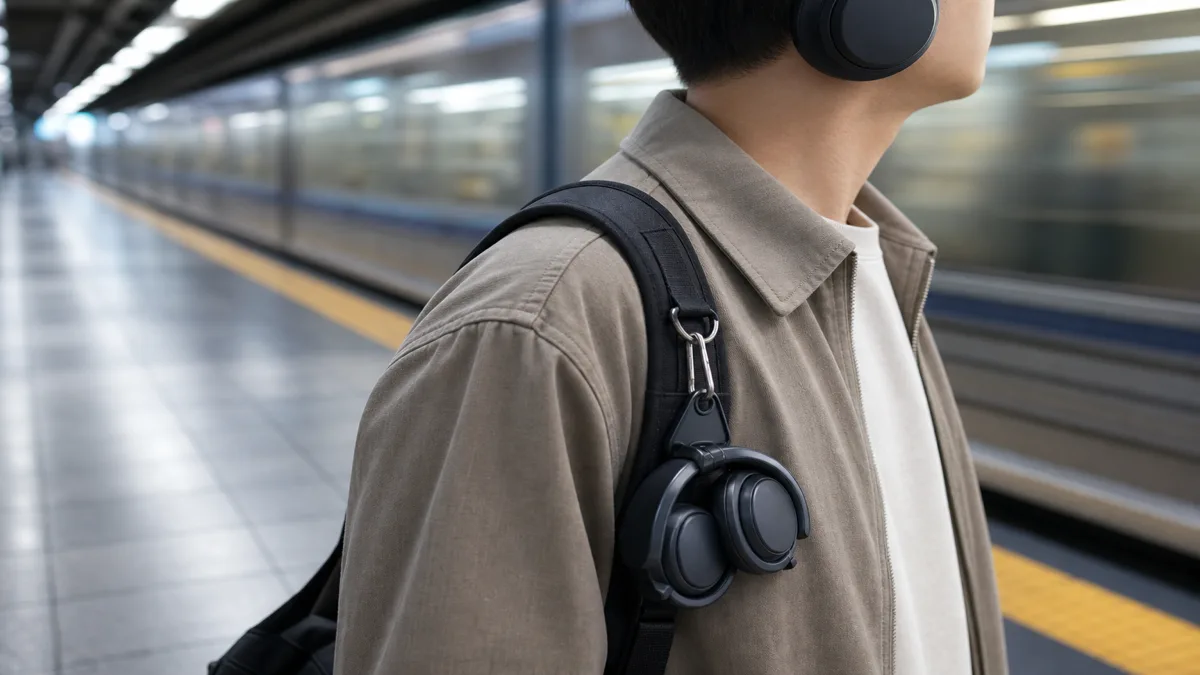
On-ear headphones are lighter and more compact almost by definition, since the smaller pads and drivers need less material around them. Many fold flat or fold inward, so they drop into a bag or a jacket pocket without the bulk of a full over-ear pair, a portability case Soundcore lays out plainly. For a daily commute, a coffee-shop work session, or just grabbing something on the way out the door, that smaller footprint is the whole appeal.
The ventilation point from earlier matters here too. On a warm platform or a crowded bus, an open-eared pad that does not turn your ears into a sauna is a quietly big deal. And the looser fit that hurts isolation helps a little with situational awareness, so you are not fully sealed off from a station announcement or someone calling your name.
Over-ear pairs travel too, to be fair, and plenty fold or swivel into a carry case. But they ask for more bag space and more neck commitment, and in warm weather that sealed cup is working against you. If most of your listening happens in motion, in transit, or in short bursts through a busy day, on-ear's whole design is pointed at exactly that life. Price often follows the same line, since smaller drivers and less material tend to make equivalent on-ear pairs the cheaper entry point.
How to Pick Your First Pair: Decision Framework by Use Case
Forget which type is objectively better, because that question has no answer. Match the form factor to where you will actually wear them, and the choice gets easy.
Go over-ear if your listening is long and mostly stationary. Working at a desk for hours, settling in on a long flight, gaming late into the night, or chasing the best sound and the strongest noise cancellation you can get. The pressure spreads, the isolation seals, the drivers are bigger, and the flagship ANC models live here. Just plan for warmer ears and a bigger thing to carry.
Go on-ear if your listening is mobile, warm, or short. Daily commutes, quick errands, workouts where airflow beats a sealed cup, or any time packing light matters more than maximum isolation. You trade away some bass, some quiet, and some ANC consistency for a pair that is lighter, cooler, easier to stash, and often easier on the budget.
If you are genuinely split, ask one question. Where will these spend most of their hours? Most people lean clearly one way once they picture the actual setting rather than the spec sheet. From here, the useful next move is to filter real over-ear and on-ear pairs side by side, compare what each brand charges across stores, and check that the features you care about, ANC, battery life, fold-flat design, line up with the use case you just landed on. You'll find options from the names that show up most in headphones, so the comparison is concrete rather than hypothetical.
Sources
- Over-Ear vs On-Ear vs In-Ear vs Earbuds Comparison — RTINGS; driver size differences, passive isolation, and the structural trade-offs between form factors
- Headphones — Wikipedia; circumaural versus supra-aural definitions and the Walkman TPS-L2 1979 on-ear origin
- On-ear vs over-ear headphones, what are the differences and which is better? — What Hi-Fi; passive isolation gap, sound leakage, and ANC effectiveness by fit
- Circumaural vs Supra-aural — Headphonesty; how the seal-versus-rest difference drives comfort and sound
- Over-Ear vs On-Ear Headphones — Soundcore; clamping pressure on cartilage, ventilation, weight, and portability
- Best Over-Ear Headphones — RTINGS; why over-ear is the standard for studio, audiophile, and gaming use