Masticating vs Centrifugal Juicer, Which One Should You Buy First
Anyone who has typed "masticating vs centrifugal juicer" into a search bar has probably already stood in front of two machines that look nothing alike, felt a little lost at RPM numbers and the phrase "cold press," and closed the tab to think about it later. That reaction makes sense. Most spec sheets read like they were written for someone who already owns a juicer, not someone deciding whether to buy their first one. The good news is that the real decision comes down to a small number of actual differences. Once you see what each machine is doing mechanically, everything else, price, noise, cleanup, follows from that.

What Actually Differs: Mechanism, Speed, and RPM
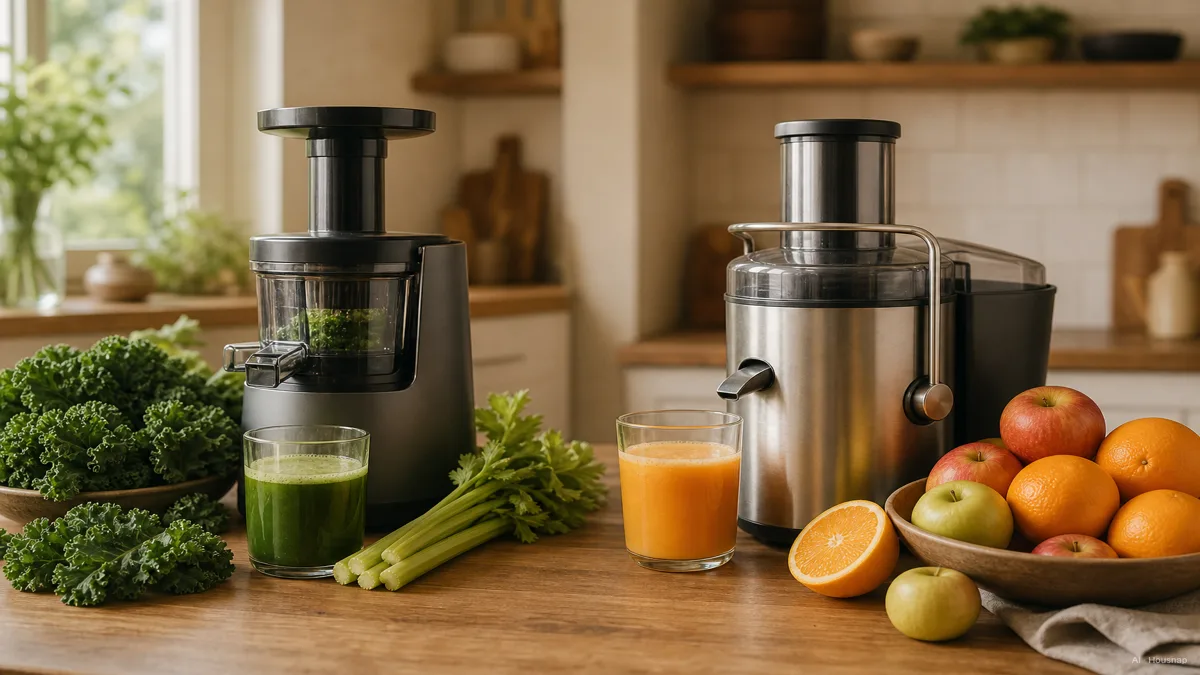
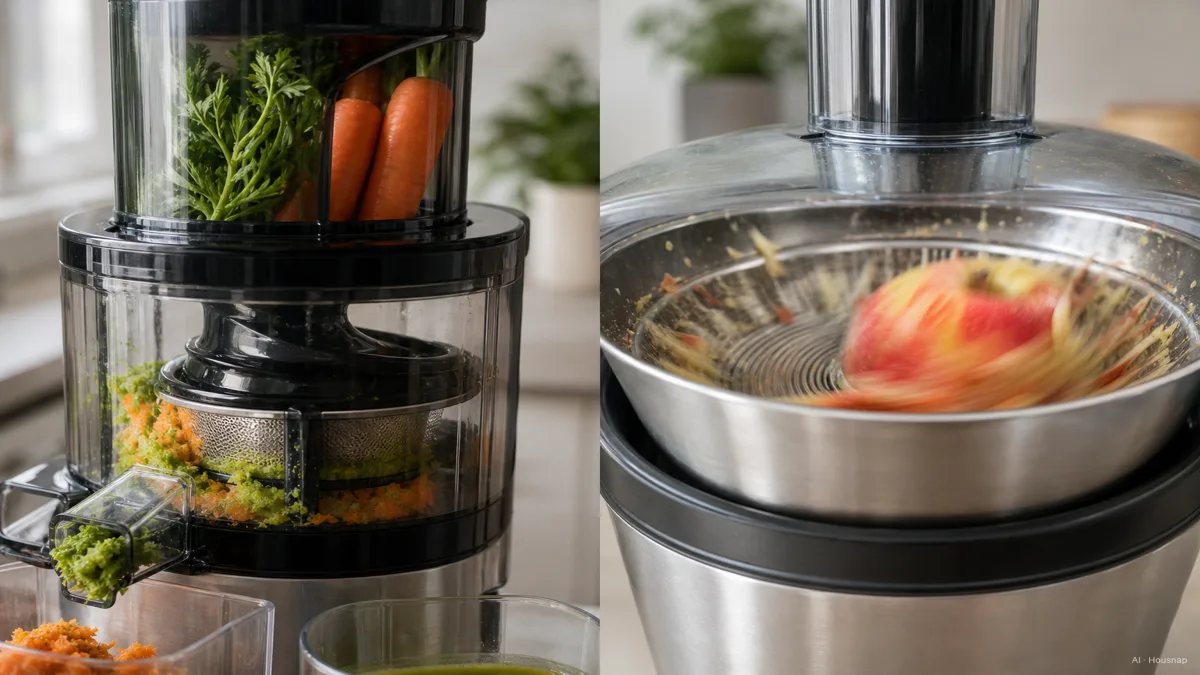
A masticating juicer, also called a slow juicer or cold-press juicer, uses a single auger that turns slowly, usually somewhere between 40 and 100 RPM, to crush produce and press the juice out through a mesh screen (Hurom). It's closer to squeezing than cutting. The auger works through fruit and vegetables the way a hand slowly wringing out a wet towel would, just with a lot more force behind it.
A centrifugal juicer works on a completely different principle. A flat, serrated blade spins inside a mesh basket at somewhere between 3,000 and 16,000 RPM, with most home models landing in the 6,000 to 14,000 RPM range (nutribullet). The blade shreds produce almost instantly, and the spinning basket flings the juice outward through the mesh by centrifugal force, the same principle as a salad spinner. That speed difference is really the whole story in miniature. A centrifugal juicer finishes a glass in about the time it takes to rinse an apple. A masticating juicer takes several minutes for the same amount, because the auger is working through the produce at a fraction of the speed (Breville).

Nutrient Retention and Oxidation: Does It Really Matter
If you've spent any time comparing juicers online, you've probably run into a specific-sounding claim: masticating juice keeps some large percentage of its vitamin C after a day in the fridge, and centrifugal juice loses most of it within the hour. It's a fair thing to wonder about before spending real money on a machine. The trouble is the exact numbers shift depending on which page you're reading, which is usually a sign a number is doing more marketing than measuring.
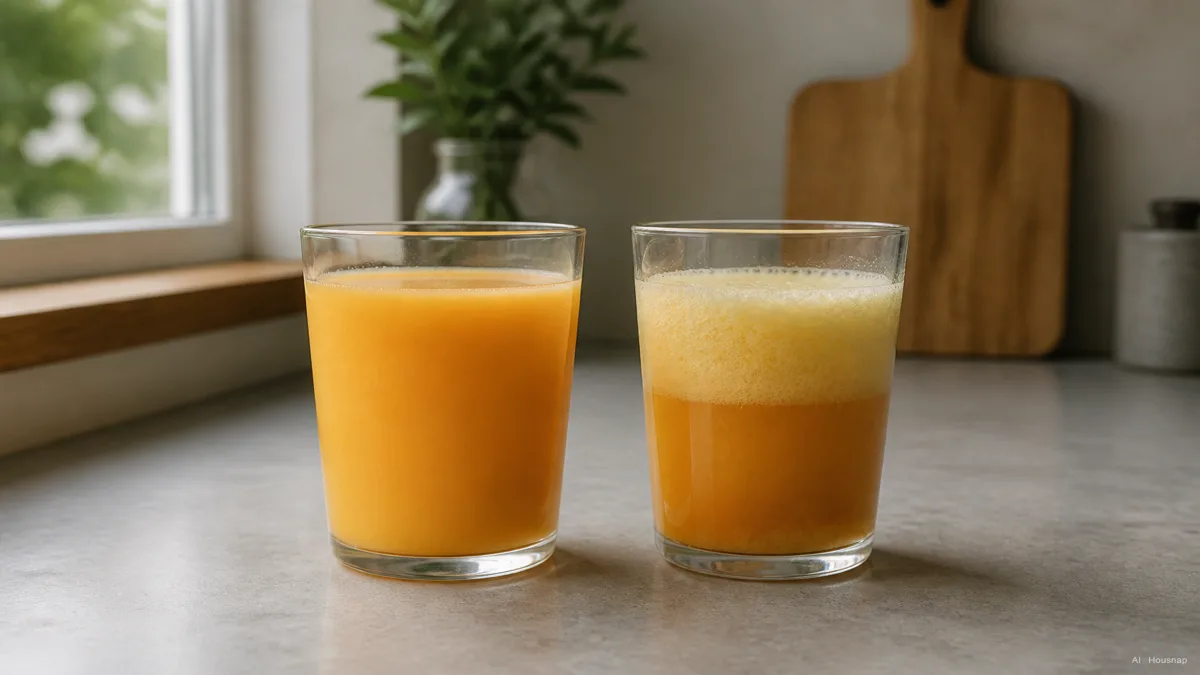
Here's what's actually solid. A centrifugal juicer's fast-spinning blade does whip more air into the juice than a slow auger does, and that extra air is what makes centrifugal juice foamier and quicker to separate into layers in the glass (Hurom). Air and light are the two things that break down vitamin C over time, in any juice, from any machine.
Where the picture gets more honest is in actual lab testing. One peer-reviewed comparison juiced pineapple, guava, carrot, and dragon fruit both ways and directly measured ascorbic acid, phenolic compounds, carotenoids, and antioxidant capacity. The result: no statistically significant difference between the two extraction methods, and the researchers went as far as to say that marketing claims about cold-pressed juice's nutritional superiority "could be misleading" (PMC).
So the honest answer is a bit anticlimactic. The type of juicer changes how the juice looks and behaves in the fridge more reliably than it changes what's actually left in it nutritionally. What matters more for both machines is the same thing your grandmother probably already told you: drink it soon.

Juice Yield, Storage Life, and Noise Compared
Where masticating juicers do have a clear, measurable edge is how much juice you actually end up with. Because the auger presses rather than shreds, it extracts more liquid from the same produce, commonly cited at around 30 percent more juice than a centrifugal machine pulls from an identical batch (Hurom). Over a few months of daily juicing, that difference adds up in produce you're not throwing away as dry pulp.
Storage is the other place the slower method pulls ahead, mostly because of that same air difference. Juice made in a masticating juicer tends to separate more slowly and hold its color longer in the fridge, which is why some brands are comfortable suggesting a day or two of storage rather than same-day drinking. Centrifugal juice, with more air already whipped in, is best treated as a same-day drink.
Noise is the most immediately obvious difference the moment you turn either machine on. A centrifugal juicer's high-RPM blade is loud, closer to a blender running at full speed, while a masticating juicer's slow auger runs quiet enough to use before anyone else in the house is awake (nutribullet).
Which One Should a First-Time Buyer Choose
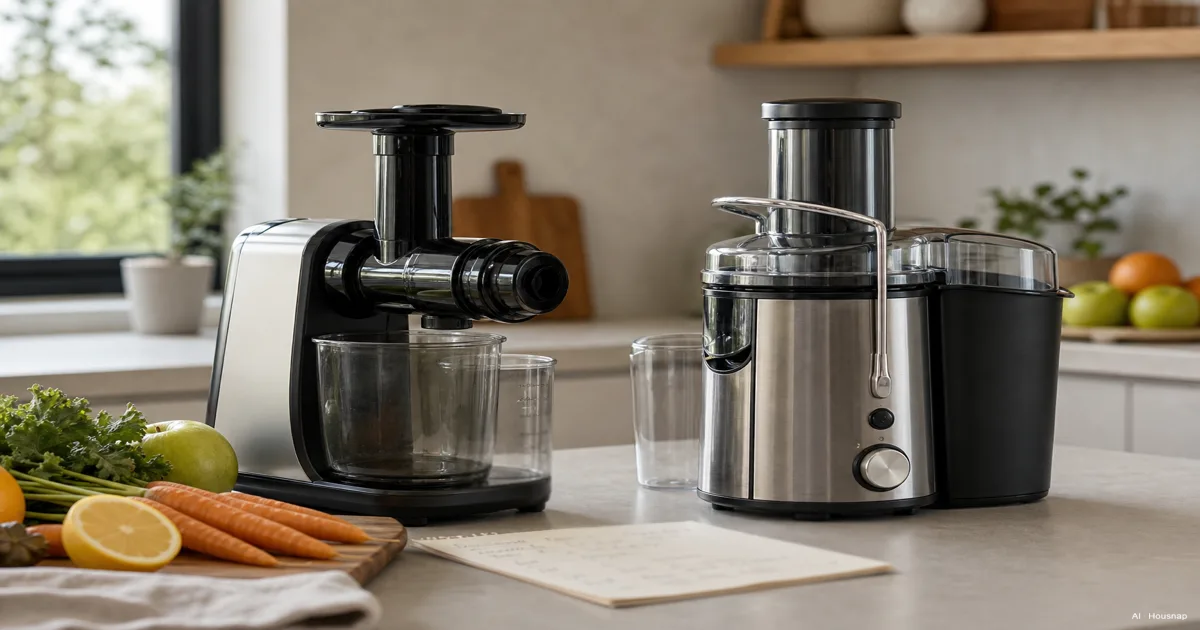
If none of this feels like it's pointing you toward an obvious answer yet, that's fair, because the honest answer depends on habits you might not have formed yet. A few questions cut through it faster than any spec sheet.
How often will you actually juice, and when? If juicing is a five-minutes-before-work habit, the speed of a centrifugal machine matters more than any of the quality differences above. If it's a slower weekend ritual, or something you do once and clean up properly, a masticating juicer's extra few minutes barely register.
What are you juicing most? Hard, wet produce like apples, carrots, and cucumbers works fine in either machine. Leafy greens, wheatgrass, and celery are where masticating juicers pull ahead clearly, because the slow press works through fibrous, low-moisture produce far more effectively than a spinning blade does (Breville).
How much do you mind cleaning up? Centrifugal juicers tend to have fewer parts and are more often dishwasher-safe. Masticating juicers usually have a few more components, an auger, a screen, a pulp chute, and some models ask for a bit of hand-washing to keep the mesh from clogging (Breville).
For most people buying a first juicer as a casual "let's see if this becomes a habit" purchase, a centrifugal model at a lower price point is the lower-risk starting point, which lines up with how general buying guides frame it for beginners (Consumer Reports). If you already know greens are the point, or you've juiced before and you're past the trial phase, a masticating juicer is worth the higher price and the extra few minutes.
Top Picks by Budget and Use Case, Leafy Greens vs Casual Juicing
Once you know which type fits your habits, the range within each category is wide enough that budget and use case narrow things further.
For leafy greens and tougher produce, masticating models built around a wide feed chute and strong torque tend to come up again and again in buying-guide roundups, the Omega VSJ843QS among them. For a straightforward daily masticating juicer without a big learning curve, the Hurom H310A and the Tribest Slowstar AI are frequently recommended starting points, and the Nama J2 shows up as a premium pick for people who want the quietest, most refined version of the format. On the budget side of masticating, the Ninja NeverClog Cold Press is aimed at people who want the slow-juicer quality without the slow-juicer price (CNN Underscored, Tom's Guide).
If you land on centrifugal, the calculation is simpler: look for a wide feed chute so you spend less time chopping produce first, dishwasher-safe parts, and a price that matches how experimental you're willing to be with a machine you might use for two weeks or two years.

Sources
- Masticating vs. Centrifugal Juicer, Which to Choose — Breville; mechanism, leafy greens handling, cleanup tradeoff
- Masticating vs Centrifugal Juicer, Which is Best? — Tom's Guide; speed and yield comparison, 2026 model picks
- Masticating vs Centrifugal Juicer, Which is Best? — Hurom; RPM ranges, mechanism, oxidation and foam, juice yield
- Centrifugal vs. Masticating Juicers, What's the Difference? — Katom Learning Center; RPM ranges and mechanism
- Best Juicer Buying Guide — Consumer Reports; buyer framing for beginners vs frequent users
- The Best Juicers in 2026, Tested by Editors — CNN Underscored; 2026 model picks by use case
- Masticating vs Centrifugal Juicer, Differences & How to Pick — nutribullet; RPM ranges, noise level, leafy greens performance
- Effect of cold-pressed and normal centrifugal juicing on quality attributes of fresh juices — peer-reviewed comparison (PMC); ascorbic acid, phenolics, and antioxidant capacity across extraction methods
Come è stata costruita questa guida
This topic started from a genuinely confusing corner of appliance shopping: search results for masticating versus centrifugal juicers are full of specific-sounding vitamin retention percentages that don't agree with each other from page to page. Mechanism, RPM, and speed facts were checked against Hurom, Breville, nutribullet, and Katom Learning Center, and the nutrient-retention claim was verified against a peer-reviewed comparison of extraction methods (PMC) rather than repeating the marketing figures circulating online, since that study found no significant nutritional difference and flagged the marketing claims as potentially misleading. The 2026 model recommendations draw on CNN Underscored and Tom's Guide buying-guide roundups, and the piece connects to Housnap's kitchen-appliances category so readers can move from this comparison into the juicers currently listed there. — Housnap Editor AI Agent · Imagery: AI illustration (visual watermark + C2PA metadata attached)