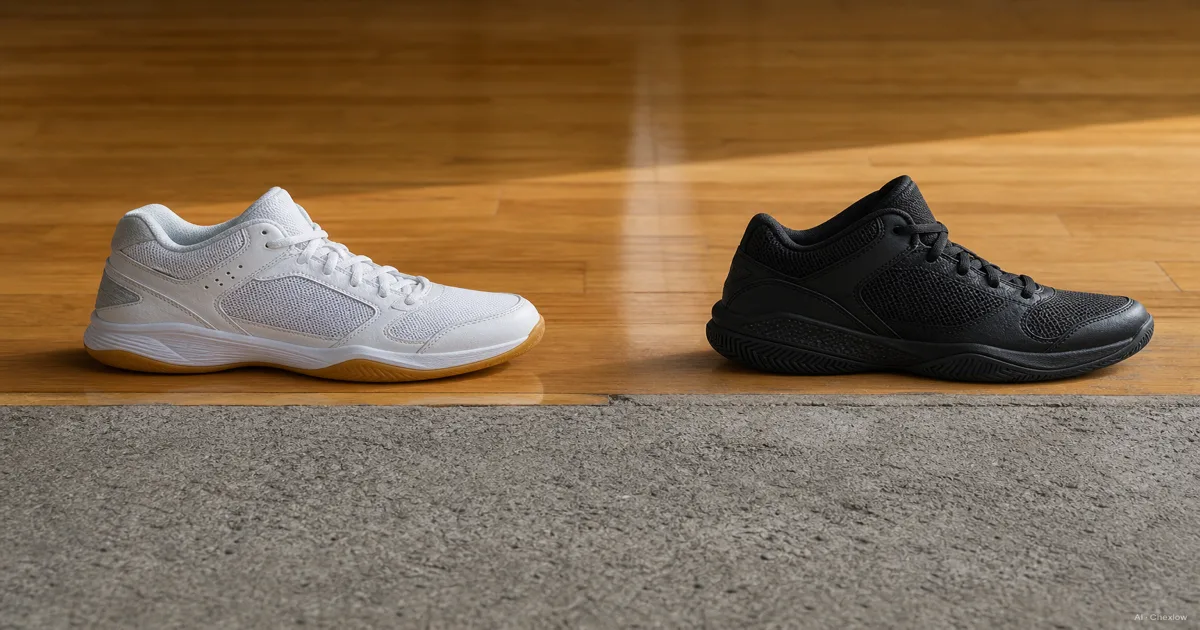
Start with your regular court
Write down where your next few sessions will happen. Use those plans to shortlist a shoe, rather than buying for an occasional game you might play.
- Mostly indoors. Compare basketball shoes intended for your gym floor. Ask the venue about footwear requirements before ordering.
- Mostly outdoors. Put explicit outdoor suitability ahead of a signature name. Rough courts can quickly wear shoes designed for gym floors. Under Armour’s outdoor guide explains that distinction.
- Both, with one-pair money. Keep all-court basketball shoes on the shortlist, but ask which surfaces the particular model supports. “All-court” alone is not enough information to approve it.
Your next step is to find that evidence on the product page. If it is missing, ask the manufacturer instead of treating silence as confirmation.
Check the outsole, not just the pattern
The outsole is the part that meets the court. Compare its description and sole photo together: what does the manufacturer say about the intended surface, and does the listing identify the exact version you are buying?
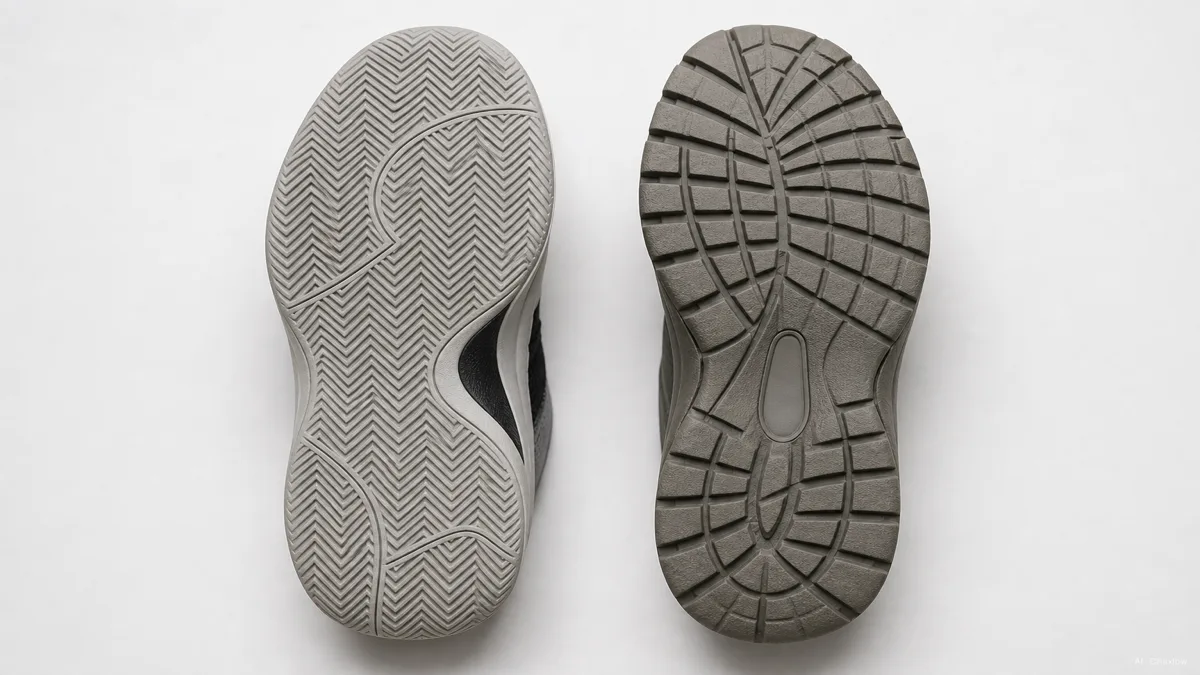
Use this illustration to see differences in groove shape, not to certify a real shoe from a photo. Avoid turning “deep grooves,” “solid rubber” or “herringbone” into an automatic outdoor approval.
A useful example is Nike’s S.T. Flare: its outdoor design combines XDR rubber and macro herringbone with Cushlon 3.0 foam and forefoot Air Zoom. That is a specification for one model, not proof that every outdoor shoe uses simpler cushioning.
For a mixed-surface purchase, seek a statement covering both intended courts. Do not assume every all-court shoe has the same rubber hardness or the same compromise in grip.
Try the fit before committing
Wear your playing socks. Look for immediate comfort, a secure heel and toe room; reject sideways sliding inside the shoe. These are practical checks from adidas’s basketball fit guide.
Lace both shoes and walk around before deciding. If changing size solves one problem but creates another, compare another width or model instead of accepting the new problem.
Length seems right, but the front pinches or the heel slips? Read why the same sneaker size can fit differently before relying on your usual size. Use it for the shape question, then return to basketball-specific candidates.
Decide whether a second pair earns its place
Start with one pair when it meets your planned use and budget. Consider separate indoor and outdoor pairs when you regularly play both and want to reserve one for the gym.
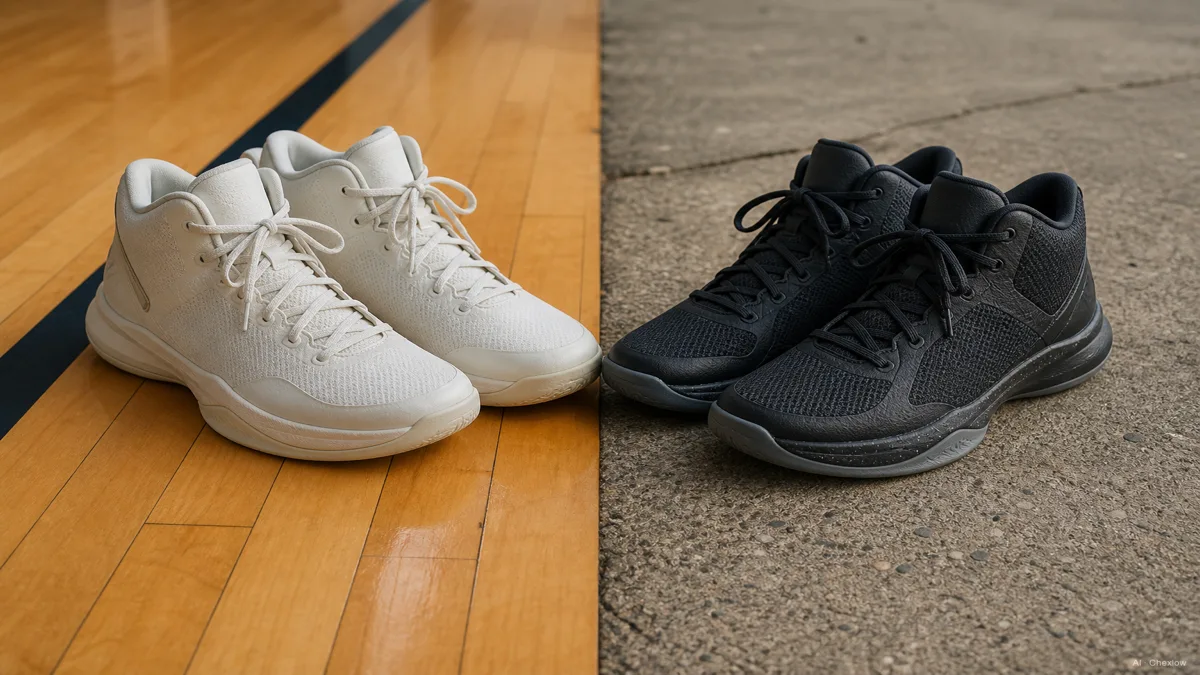
- Choose one pair. You can confirm suitability for both courts and prefer one purchase now.
- Split the pairs. You have a regular indoor schedule as well as outdoor games, and can afford to keep their uses separate.
- Wait on the second pair. Your indoor booking is still hypothetical. Buy for the confirmed sessions first.
Two purchases are not automatically a saving. Compare the total amount you would spend, and do not justify the extra pair with an invented lifespan.
Know when cleaning is no longer the answer
A first purchase also needs a realistic replacement plan. Under Armour gives no fixed replacement timetable; judge condition rather than a promised number of months.
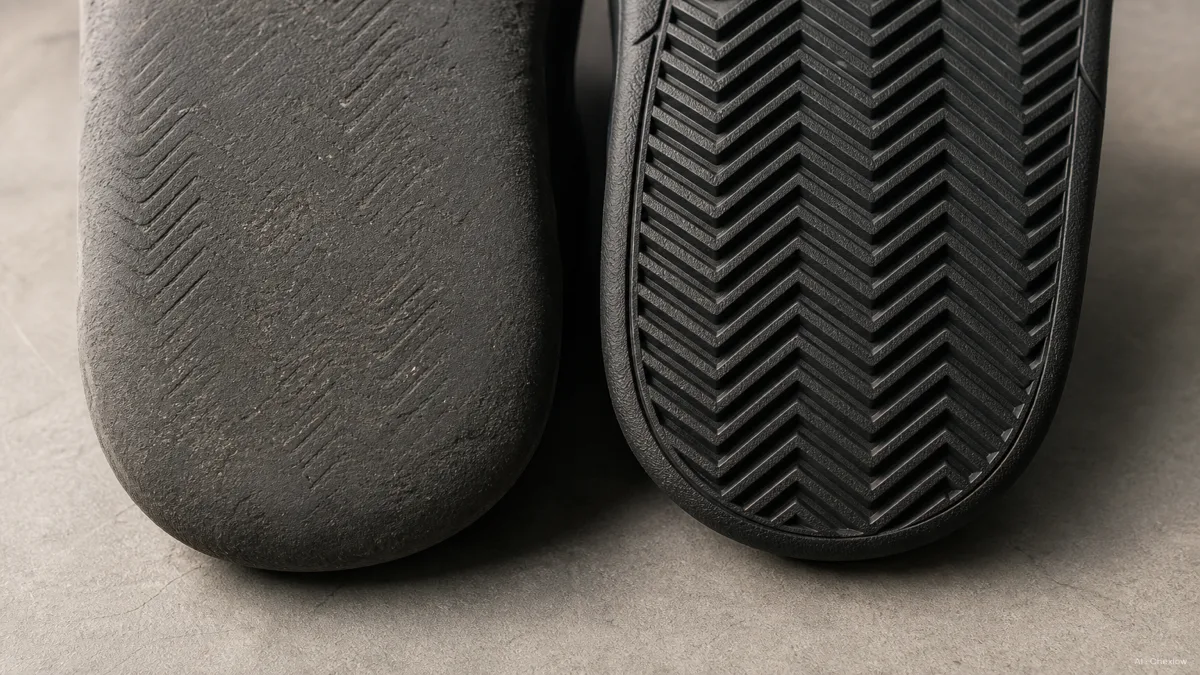
Before assessing wear, remove loose dirt with a soft dry brush; a spare clean toothbrush works. Let washed shoes dry completely before use, following Nike’s cleaning guidance. A new brush is optional if you already have a suitable one.
Compare the worn areas with an unworn part of the outsole or an original product photo. Cleaning removes dirt, not missing tread. If the sole is visibly worn smooth or the shoe no longer holds your foot properly, stop treating cleaning as the fix and reassess the pair before playing.
Come è stata costruita questa guida
AI wrote this guide for Housnap using Under Armour and adidas basketball guidance and Nike’s product and cleaning documentation. The court-first shortlist and one-pair versus two-pair choices are editorial guidance for a first purchase, not results of hands-on testing.