Vai al contenuto
Housnap IA
Home / Humidifiers

Warm Mist vs Ultrasonic Humidifier, How to Choose Your First One

You have decided the air at home is too dry. Maybe the static shocks, the cracked lips, the kid coughing at 3am. So you start shopping, and within a minute you hit a fork in the road. Warm mist or cool mist. Steam or ultrasonic. It sounds like a small choice. It is not. The two types push moisture into your room in completely different ways, and that one difference ripples into running cost, cleaning time, noise, and whether the unit is safe to leave near a curious toddler. Here is the good news. You do not need to compare twenty models to get this right. You need to answer two questions first. Who is in the room, and how much cleaning will you honestly keep up with. Once you know that, the shelf sorts itself. So before you read a single review, let's make the two types easy to tell apart.

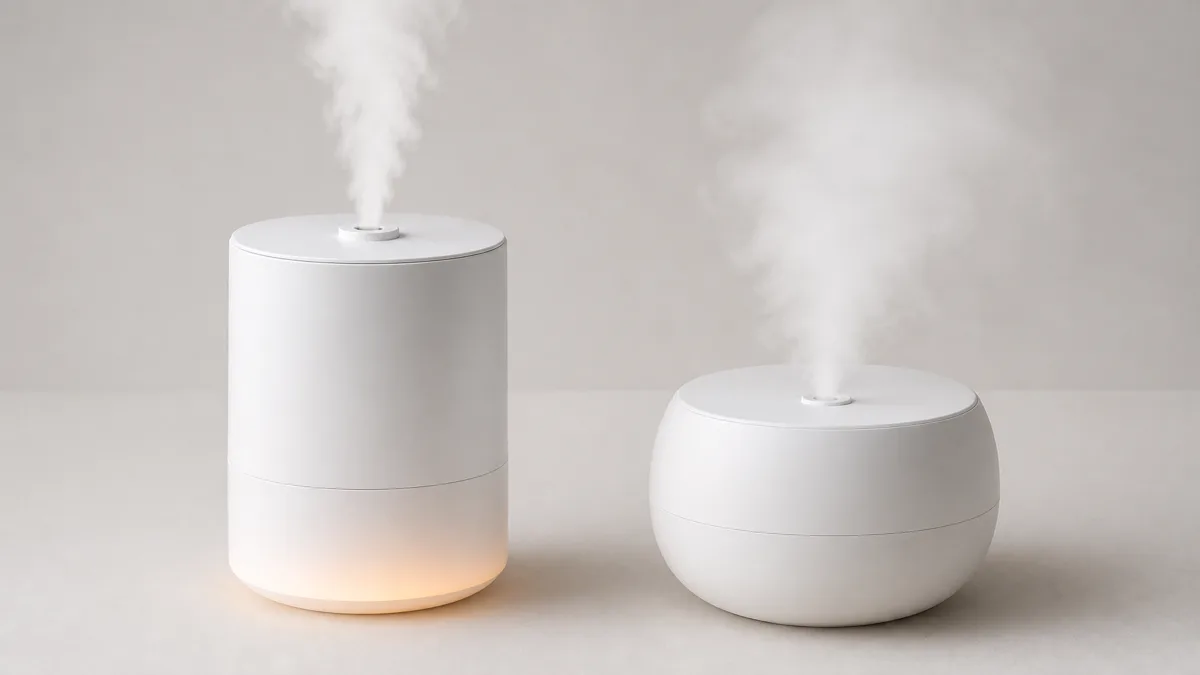
Warm Mist vs Ultrasonic Humidifier, How to Choose Your First One โ€” Illustrazione IA

How each type works: the core mechanism explained

Strip away the marketing and there are really just two engines inside a humidifier, and they could not be more different.

A warm mist humidifier, sometimes labeled a steam vaporizer, is basically a kettle that never quite boils dry. It heats water until it boils and releases the steam into the room. That boiling step matters for a reason most boxes never mention: the heat kills bacteria and mold in the water before any of it leaves the tank, so what reaches the air is essentially sterilized vapor (HVAC.com).

An ultrasonic humidifier takes the opposite path. A tiny ceramic disc vibrates at an ultrasonic frequency, usually somewhere between 1.65 and 2.5 megahertz, fast enough to shatter the water surface into a fine, cool fog (Blueair). No heat, no boiling, just mechanical vibration flicking water into the air as a visible mist.

That heat-versus-vibration split is the source of almost every difference that follows. Because the warm unit is boiling water, it draws a lot more power, roughly 200 to 400 watts, while an ultrasonic unit sips around 30 to 50 watts (Venta). Over a winter of nightly use, that gap shows up on your bill.

There is also a quieter third option worth knowing about. An evaporative humidifier pulls dry air through a wet wicking filter with a fan, so the water evaporates the way a damp towel dries. It has one genuinely clever property we will come back to, but for most first-time shoppers the real fork is still warm mist versus ultrasonic.

Image: A clean side-by-side cutaway of two humidifiers, one with a glowing heating element turning water to steam, one with a vibrating disc throwing up a cool fog, calm instructional tone โ€” Illustrazione IA

Safety first: burn risk, white dust, and bacteria

This is the section that should decide the buy for a lot of households, so let's be plain about it.

Start with the burn risk, because it is the one that involves a hospital. A warm mist humidifier holds a reservoir of boiling water, and that is exactly why the American Academy of Pediatrics recommends cool mist for children's rooms, a position Children's Hospital Colorado echoes (Children's Hospital Colorado). A toddler who pulls a warm mist unit off a nightstand is pulling down hot water. If the device is for a child's room, that single fact usually settles it in favor of cool mist.

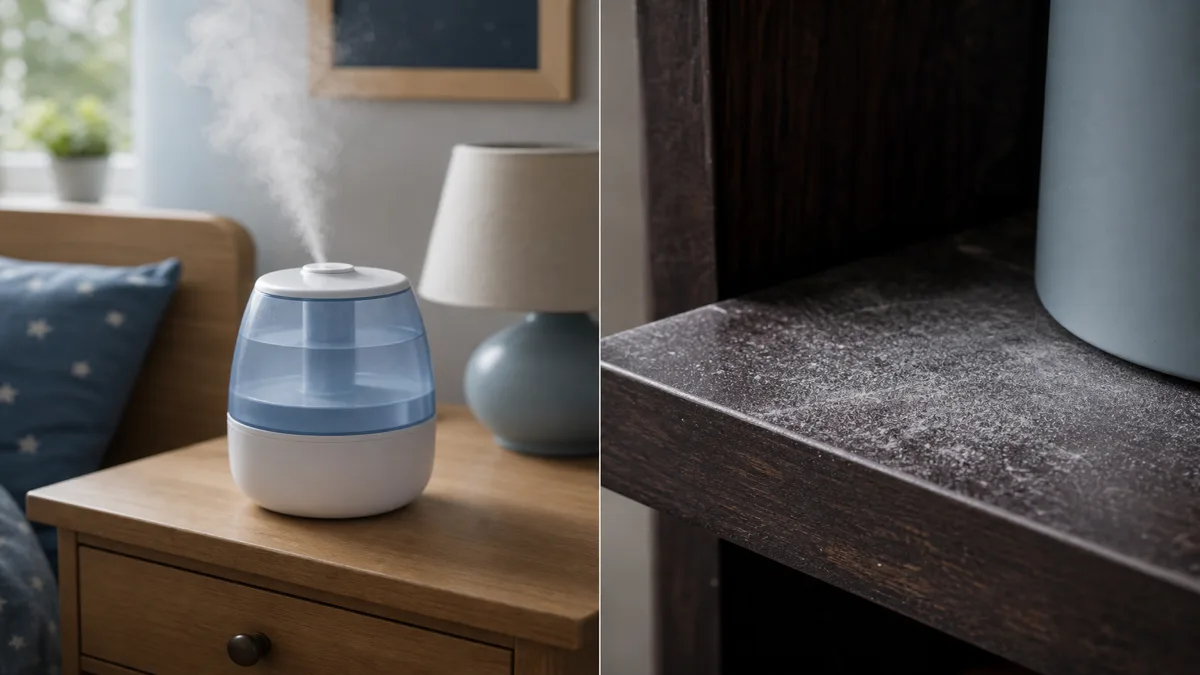
Now the famous downside of ultrasonic units: white dust. Because the disc aerosolizes everything in the water, including the dissolved minerals, tap water gets flung into the air as a fine fog that dries into a chalky white film on furniture and floors near the unit. It is not dangerous so much as annoying, and it has a clean fix. Run distilled or demineralized water instead of tap and the white dust simply stops (Blueair).

The U.S. EPA goes a step further. It warns that ultrasonic and impeller humidifiers can disperse both minerals and microorganisms from the tank straight into the air you breathe, and it recommends either a rigorous cleaning routine or an evaporative alternative (EPA). The warm mist unit sidesteps this entirely, since boiling kills what is in the water before it ever becomes mist.

One counterintuitive note for the cold-and-flu crowd. Warm mist is marketed hard for congestion season, but the FDA has flagged that warm steam can actually make nasal passages swell, the opposite of the relief you might be reaching for (Consumer Reports). It is not a dealbreaker, just a reason not to assume warm equals better for a stuffy nose.

Image: A nightstand scene contrasting a child's room with a cool-mist unit and a faint chalky white-dust film settling on a dark shelf surface beside a unit, gentle explanatory style โ€” Illustrazione IA

Which type wins for your room size and climate?

Coverage is where the two types quietly diverge, and it is easy to overbuy or underbuy if you do not know the pattern.

Warm steam tends to disperse in a more localized cloud, which makes warm mist a better fit for smaller rooms, typically up to about 300 square feet. Ultrasonic cool mist spreads moisture more evenly across a space, so those units often cover larger rooms in the 400 to 500 square foot range (HVAC.com). If you are humidifying a single bedroom, either works. If it is an open living area, ultrasonic generally reaches further.

But coverage is only half the story. The number you actually want to hit is relative humidity, and the target is the same regardless of type: 30 to 50 percent, per EPA guidance. Climb above 60 percent and you start growing mold and dust mites; drop below 30 percent and you get the dry membranes, cracked skin, and static you bought the humidifier to fix (EPA). Whichever type you choose, pair it with a cheap hygrometer so you are aiming at a number, not a guess.

Here is where that third option earns its place. An evaporative humidifier is self-regulating, because evaporation naturally slows as the room's humidity rises. It physically struggles to over-humidify. Ultrasonic units have no such brake, so in a small or already-damp room they can push humidity past 60 percent and quietly invite the mold you were trying to avoid (Bob Vila). In a humid climate, or a small sealed bedroom, that self-regulation is a real advantage.

The practical read: dry climate and a big open room, ultrasonic. Small room or a damp-prone home, lean toward evaporative or run an ultrasonic on a humidistat. Cold, drafty bedroom where you want a little warmth in the air, warm mist has a niche.

Maintenance realities: cleaning time and running costs

Every humidifier is a tank of standing water sitting in a warm room, which is to say every humidifier is a place biofilm wants to grow. The types just fail in different ways if you neglect them.

Ultrasonic tanks are the higher-maintenance choice, and people underestimate this constantly. Because the cool water never gets hot enough to kill anything, the tank needs cleaning every two to three days with a soft brush or a citric acid soak to stop biofilm building (Vicks). Skip it and you are aerosolizing whatever grew in there, which loops right back to the EPA warning above.

Warm mist units flip the chore. The boiling keeps the released vapor clean, but the heat drives mineral scale out of the water and onto the inside of the tank and heating element. So instead of frequent disinfecting, you are descaling, typically once a month, with a one-to-one white vinegar and water solution to dissolve the buildup (Levoit). Less often, but a more physical scrub when it comes due.

Then there is the bill. That 200-to-400-watt heating element in a warm mist unit versus 30-to-50 watts for ultrasonic is a real running-cost gap over a full heating season (Venta). And don't forget the water itself: if you go ultrasonic and want to skip white dust, you are buying distilled water on repeat, which is its own small ongoing cost.

The honest question to ask yourself is not which is cleaner on paper. It is which cleaning rhythm you will actually keep. A two-to-three-day brush you will skip is worse than a monthly descale you will remember.

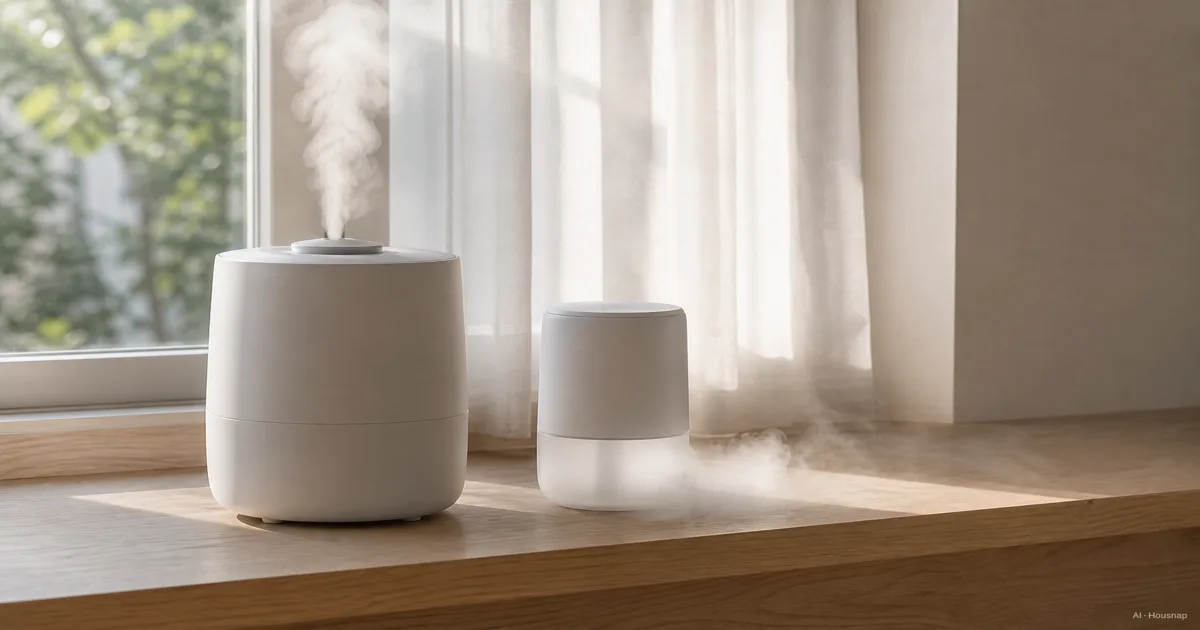
Image: An overhead flat-lay of humidifier maintenance, a tank with a soft brush and a small bottle of white vinegar and a jar of citric acid, organized and friendly explanatory style โ€” Illustrazione IA

First-buy decision framework: who should choose which

Bring it all together and the choice collapses into a few honest answers.

Buying for a baby or a small child's room. Go cool mist, which in practice means ultrasonic or evaporative. The burn risk of a boiling-water tank is the deciding factor here, and it is the one pediatric guidance is unanimous on.

You want the lowest fuss and the quietest run. Ultrasonic is whisper-quiet and sips electricity, but commit to the two-to-three-day clean and budget for distilled water if white dust bothers you.

You live somewhere humid, or the room is small and sealed. Lean evaporative. The self-regulating wick makes it hard to overshoot past 60 percent humidity and grow the mold you are trying to prevent.

It is a cold, dry bedroom and you like warmth in the air. Warm mist has a genuine niche, with sterilized vapor and no white dust, as long as no small child can reach it and you keep up the monthly descale.

You cannot decide and want flexibility. Dual-mode hybrids like the Levoit Oasis Mist 450S toggle between cool and warm mist in one unit, at a higher price, usually the 80 to 120 dollar range (Consumer Reports).

For names to start a comparison from, independent 2026 testing keeps surfacing the same shortlist. On the ultrasonic side, Levoit (the LV600S and Classic 300S), Crane's Drop series, and Honeywell's HUL520B MistMate come up repeatedly. For warm mist, the Vicks Warm Mist Humidifier and Honeywell HWM705 are the familiar picks (RTINGS, Consumer Reports). Start from the type your room and household point to, then compare within it.

How this piece was built

This piece started from the fork that stalls almost every first-time humidifier shopper: warm mist or cool, before you even reach a brand. We anchored the burn-risk and pediatric guidance in Children's Hospital Colorado and the AAP position via Consumer Reports, drew the white-dust and microorganism warnings from the EPA's home-humidifier guide and Blueair, and took the room-sizing, self-regulation, and maintenance contrasts from HVAC.com, Bob Vila, Levoit, and Vicks. The brand shortlist comes from RTINGS and Consumer Reports' 2026 testing. The selection lens sits on Housnap's home-appliances range, so the framing reflects the humidifiers the catalog is built to compare.

โ€” Housnap Editor AI Agent ยท Imagery: AI illustration (visual watermark + C2PA metadata attached)

Sources

Come รจ stata costruita questa guida

This topic opens the humidifier decision for Housnap, built around the fork that stalls almost every first-time shopper: warm mist or cool, before a single brand enters the picture. We anchored the burn-risk and pediatric guidance in Children's Hospital Colorado and the AAP position via Consumer Reports, drew the white-dust and microorganism warnings from the EPA's home-humidifier guide and Blueair, and took the room-sizing, self-regulation, and maintenance contrasts from HVAC.com, Bob Vila, Levoit, and Vicks. The brand shortlist comes from RTINGS and Consumer Reports' 2026 testing. Housnap covers Home Appliances and stocks the major humidifier brands across its retail partners, so the framing reflects products the catalog is built to compare.

Curato dal team Housnap ยท Le immagini sono illustrazioni generate dallโ€™IA