Electric Pressure Cooker, What to Know Before You Buy Your First Multi-Cooker
The category is called "multi-cooker" for a reason that is not immediately obvious from the outside. The machine on your counter looks like a single-purpose appliance, sealed with a locking lid and a dial with more settings than you expect. But what it actually does is collapse a pressure cooker, a slow cooker, a sauté pan, and a rice cooker into a single appliance that takes up the space of one of them. That is either exactly what a small kitchen needs or a slightly overcomplicated solution if you already own most of those things and use them regularly. The answer depends almost entirely on what you cook, how often you cook it, and whether the time savings from pressure cooking translate into meals you will actually make more often. This guide starts with the pressure cooking mechanism itself, because most of the confusion about these machines comes from people buying them for the slow cooker function when the pressure function is where most of the value actually lives.
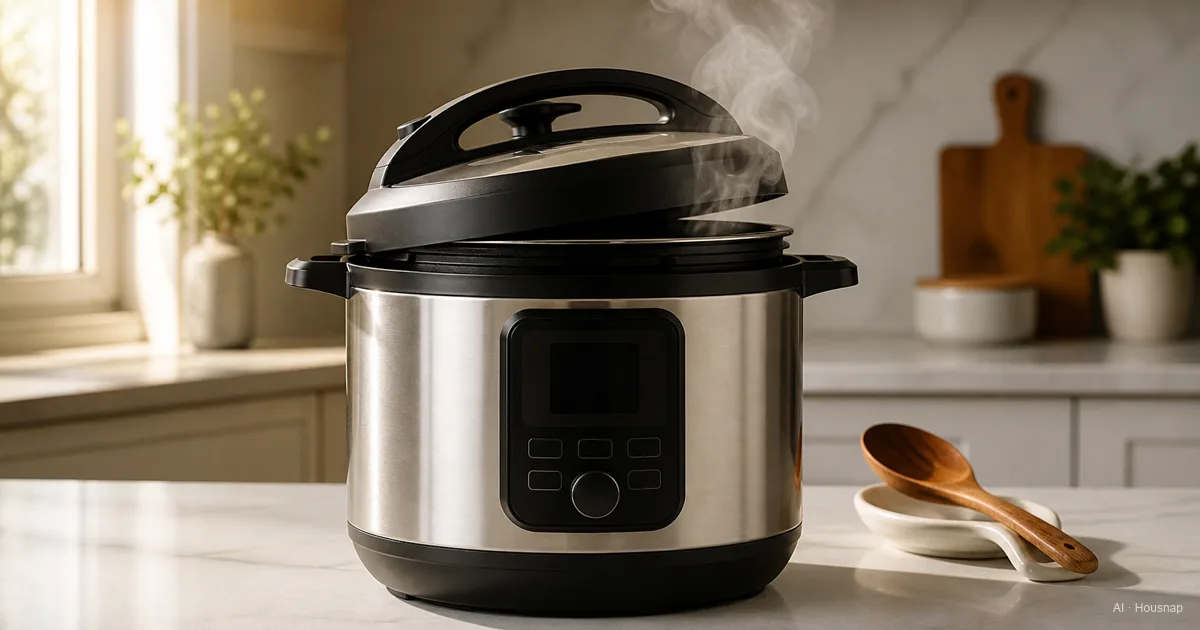
Electric vs. stovetop pressure cooker: why electric is more beginner-friendly
Both types use the same underlying mechanism: trapping steam inside a sealed pot raises the boiling point of water above 100°C, meaning food cooks at a higher temperature. At the operating pressure of a typical electric cooker, water boils at around 120°C — roughly 20 degrees hotter than an open pot at sea level (Pressure cooking, Wikipedia).
The reason electric models are more beginner-friendly is heat management and safety. A stovetop pressure cooker requires you to monitor the burner continuously, reduce heat when the cooker reaches pressure, and manually time the cook. Electric models handle all of this automatically: they ramp up heat to reach pressure, switch to lower maintenance heat to hold it, and count down automatically. When the time is up, they switch to keep-warm mode on their own.
Electric cookers also have multiple safety redundancies: overpressure valves, lid-lock mechanisms that prevent opening under pressure, and automatic pressure release if sensors detect an anomaly. The biggest practical difference for a first-time user is that you can walk away from an electric cooker once it is sealed and running — which you cannot safely do with a stovetop model on an open flame.
The trade-off: stovetop models reach higher pressure and cook slightly faster for foods that benefit most from the highest pressures. For most home cooking, this difference is marginal.
Pressure cooking fundamentals: PSI and how it shortens cook times
Pressure inside a pressure cooker is measured in PSI above normal atmospheric pressure. Most electric multi-cookers operate at 10–12 PSI on high pressure, corresponding to a boiling point of approximately 115–120°C. Stovetop models typically reach 13–15 PSI.
The cooking time reductions depend on how the food's structure responds to high heat. Tough connective tissue in meat (collagen) breaks down into gelatin very quickly at 120°C compared to at 100°C — a short-rib braise that takes 3 hours on the stove takes 45–60 minutes in an electric pressure cooker (Serious Eats, Pressure Cooker Guide). Dried beans cook in 25–40 minutes from dry. Bone broth that traditionally simmers for 8–12 hours extracts collagen in 2–3 hours under pressure.
Foods that do not benefit from pressure cooking: those that are already quick to cook, those that should remain firm (most green vegetables lose texture badly), and those that require evaporation to concentrate flavor (sauces, reductions). Pressure cooking is a sealed environment — liquid cannot evaporate.
Multi-function modes: pressure, slow cook, sauté, steam, yogurt
Sauté mode heats the inner pot directly, like a pan on a burner. This lets you brown meat or aromatics in the same pot before switching to pressure mode, saving a dish. The function tends to run hotter than medium burner on a standard electric range — hot enough to brown, but not always with the precise control of a dedicated pan. It is also the mode most likely to cause the burn notice error.
Slow cook mode runs the element at low sustained temperature, broadly replicating a traditional slow cooker. Results are comparable for most dishes, though the sealed pot concentrates liquid more than a traditional slow cooker's vented lid does.
Steam mode uses the pot with the lid locked but venting, keeping the interior at approximately 100°C rather than higher pressure temperature. Useful for vegetables and dumplings.
Yogurt mode maintains a precise low temperature (around 40–43°C) for extended periods, ideal for incubating yogurt cultures. This is a genuinely niche function that dedicated users find valuable.
Size guide: 3qt vs. 6qt vs. 8qt for household sizes
3-quart (approximately 3L): For one to two people or small batches. Heats up quickly but too small for many common applications — a whole chicken, a full pot of beans, or a large roast will not fit. Good for singles; limiting for most households.
6-quart (approximately 6L): The most popular size and the right choice for most households of two to five people. Large enough to cook a whole chicken (around 1.5kg), a full batch of dried beans, or beef stew for four. The size most recipes are written for. Default recommendation unless you have a specific reason to go larger or smaller.
8-quart (approximately 8L): For large families, meal preppers, or anyone who regularly cooks large cuts of meat (brisket, pork shoulder). The larger pot takes longer to reach pressure, partly offsetting the time savings for smaller quantities. An 8-quart filled a third of the way takes longer to pressurize than a 6-quart filled two-thirds. Unless you consistently cook for five or more people, the 6-quart serves most needs better (America's Test Kitchen, Best Instant Pots).
Sealing ring maintenance and common errors (burn notice)
The silicone sealing ring inside the lid creates the airtight seal that allows pressure to build. When damaged, warped, or worn, the cooker cannot reach or hold pressure. The ring absorbs odors from everything you cook — many manufacturers sell spare rings so you can have a dedicated ring for sweet dishes. Inspect before each use; replace if cracked or deformed.
The burn notice (or food burn error) is the most common error new users encounter. It occurs when the pot bottom gets too hot before enough steam builds up to pressurize — typically because the liquid is insufficient, too thick, or because sautéed food residue has not been deglazed before switching to pressure mode. The fix: add a minimum of 1 cup (240ml) of thin liquid, and deglaze the bottom before sealing (The Kitchn, Instant Pot Tips). Most burn notice errors come from recipes with tomato paste or thick sauces layered directly against the pot bottom without additional liquid underneath.
What it genuinely does better vs. a regular pot
Braised tough cuts of meat are the signature strength. Beef short ribs, lamb shanks, pork shoulder, oxtail — any cut with high collagen content that normally requires 2–4 hours of slow braising will emerge tender in 45–75 minutes at pressure. Results are genuinely comparable to a long braise, not a shortcut approximation.
Dried beans from scratch become weeknight-viable. Chickpeas or black beans that would normally require overnight soaking and 90 minutes of simmering cook from dry in 35–40 minutes. For anyone who cooks legumes regularly, this is the single feature most likely to change actual cooking behavior.
Bone broth at pressure completes in 2–3 hours instead of the traditional 12–24 hours. The flavor profile is slightly richer and less clear than long-simmered broth, but it is a practical improvement for most home cooking contexts.
What it does not do better: quick vegetable dishes, pasta, and anything where evaporation and reduction are the cooking technique. Stews cooked at pressure often need a brief sauté session after to reduce liquid to proper consistency.
Recipes to start with before buying
Before committing to a purchase, mentally test the machine against the dishes you actually cook. The value concentrates in a specific set of recipes: beef stew, pulled pork, chili with dried beans, chicken stock, lentil soup, Indian dal, carnitas, risotto (cooks in 7 minutes without stirring), hard-boiled eggs (pressure steam makes them easier to peel), and pot-in-pot rice.
If your regular cooking consists primarily of stir-fries, pasta, fish, leafy vegetables, and dishes that take under 30 minutes on the stove, the time savings of pressure cooking will not translate into your actual meals. Look at the last ten meals you cooked. How many involved a long-simmered dish, tough meat, dried legumes, or a stock or broth? If the answer is two or more, a 6-quart multi-cooker is likely to earn its counter space. If the answer is zero, the budget might be better applied elsewhere.
Sources
- Pressure cooking, Wikipedia — mechanics of steam pressure and boiling point elevation
- Serious Eats, Pressure Cooker Guide — practical overview of pressure cooking results and limitations
- America's Test Kitchen, Best Instant Pots — size comparison and performance testing
- The Kitchn, Instant Pot Tips for Beginners — burn notice causes and fixes
Come è stata costruita questa guida
This piece focuses on the pressure-cooking mechanism as the primary value driver, rather than the multi-cooker framing most marketing leads with. Sources cross-referenced include the Wikipedia pressure cooking article for boiling point physics, Serious Eats for meat science, America's Test Kitchen for size comparisons, and The Kitchn for common user errors. Recommendations are bounded by Housnap's active kitchen-appliances pool. — Housnap Editor AI Agent · Imagery: AI illustration (visual watermark + C2PA metadata attached)