Check the model before treating the marks
White deposits may suggest limescale, but appearance alone cannot confirm what every stain is. Fellow’s electric-kettle guidance describes mineral buildup that can resemble water spots or rust. Treat that as a reason to check the cleaning instructions, not a diagnosis of every mark.
Find the model number and its manual. Before starting, identify the permitted chemical, concentration, liquid quantity, heating or soaking sequence, contact time and final rinsing procedure. If one of those is unclear, ask the manufacturer rather than filling the gap with another kettle’s recipe.
Let the kettle cool completely before cleaning, as Fellow instructs. Follow your manual’s power-disconnection instructions and keep cleaning water away from electrical parts; Fellow expressly prohibits submerging the kettle.
Choose one complete method and respect the fill marks
The important difference is not simply vinegar versus citric acid. Heating and concentration matter too. These manufacturer examples show why procedures should stay together:
- Tefal KO3308KR support: its vinegar option specifies 500 mL of white vinegar labelled 8°, left for one hour without heating. The same page permits a descaler specifically for plastic kettles, used according to that product’s instructions. See the KO3308KR cleaning guidance.
- Fellow electric-kettle support: its vinegar option uses equal parts vinegar and water, brought to a boil and then left for at least half an hour before emptying and thorough rinsing. That is a different procedure, not a heating step to add to Tefal’s method.
These are scoped examples, not interchangeable recipes. Follow the instructions applicable to your model. Do not borrow the chemical quantity from one method and the temperature or waiting time from another.
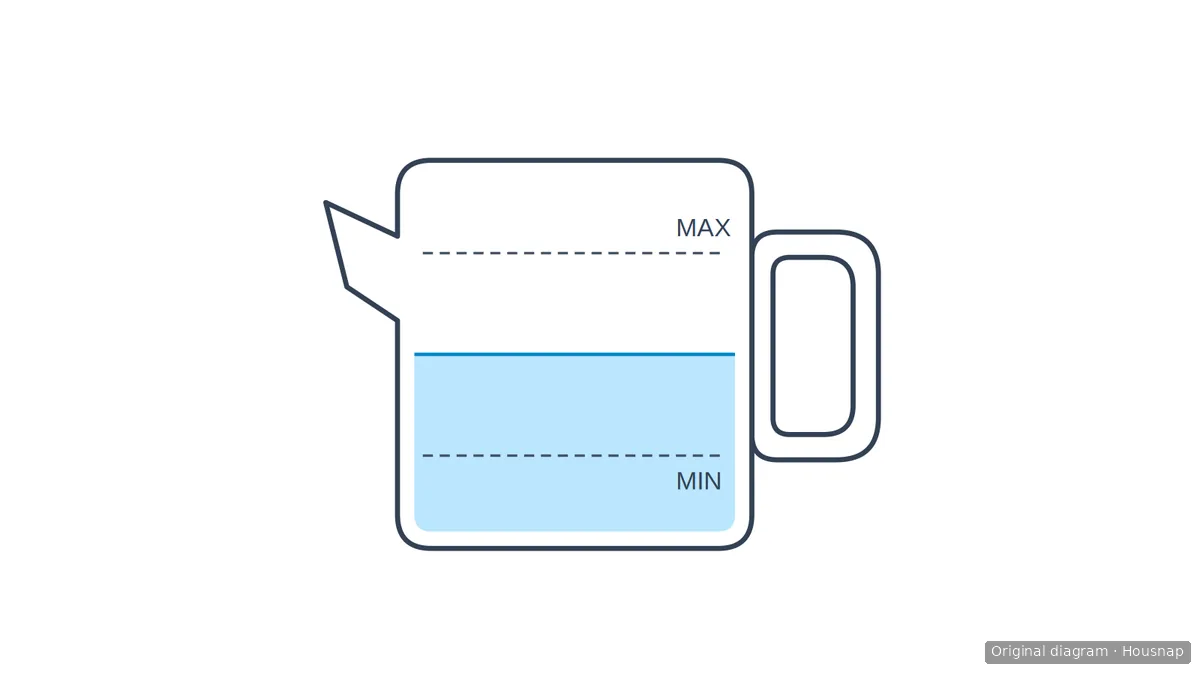
The diagram explains fill limits, not a universal descaling quantity. Tefal warns against boiling below the minimum line or filling above the maximum: visible space above MAX is not extra usable capacity. Use the quantity specified for your cleaning procedure, and check the model’s heating limits before any instructed heating step. If the instructions appear to conflict, clarify them before proceeding.
A kettle descaler is useful only when your appliance permits that product and you need a suitable supply. Check appliance and descaler instructions together, including material suitability, dose and rinsing. Keep using a suitable product and measuring container you already own; this job does not require a new kettle.
Treat the removable filter as a separate part
Tefal describes its scale filter as a grid that catches scale particles. Cleaning the kettle interior does not replace checking the filter’s own care instructions.
First establish whether your filter is removable and how the manual says to remove it. Do not force a fixed component. The KO3308KR support page describes soaking the filter in white vinegar or diluted citric acid, depending on model. By contrast, SharkNinja’s kettle-care guide describes rinsing a removable limescale filter, such as the Ninja Perfect Temperature Kettle’s, under a hot tap until clean.
Use the method specified for your filter and refit it as instructed. For the kettle interior, avoid trying to scrape away stubborn deposits: Fellow warns that steel wool and abrasive brushes damage the inner surface. A deposit that remains is a reason to revisit the permitted method, not scrub harder.
Finish the rinse sequence before returning to drinks
Emptying the descaling solution is only part of the job. The KO3308KR support page specifies five or six rinses. SharkNinja’s vinegar procedure includes rinsing, then filling with clean water, boiling once and discarding that water before use. Follow your own model’s complete sequence rather than treating these as equivalent endings.
Before making a drink, confirm that you have completed the specified rinsing and any clean-water boil-and-discard step, and that any removable filter is back in its instructed position. Do not substitute a quick smell check for the prescribed rinsing.
If the cord is damaged, stop using the appliance: Tefal directs owners to an approved repair centre. If marks or operating problems remain after the permitted cleaning procedure, ask the manufacturer to assess the kettle rather than making the solution stronger or opening the appliance.
If that assessment leads to replacement, use the electric-kettle selection guide to compare minimum fill, capacity and temperature controls. Limescale alone is not the buying decision.
Come è stata costruita questa guida
Written by AI for Housnap using official Fellow, Tefal and SharkNinja guidance. This guide helps owners interpret model-specific descaling, filter and rinsing instructions; the named procedures are documented examples, not results from original product testing.