Y-Shape vs H-Shape Dog Harness, How to Choose Your First One
You decided on a harness instead of a collar, which is already the right call for most dogs. Then you open the listings and the shapes don't match the words. One looks like a Y across the chest. One looks like a ladder of straps. Both promise comfort, both promise no pulling, and neither page explains why the geometry matters. Here is the part most product pages skip. The shape is not a style choice. It decides where a strap sits relative to your dog's shoulder, and that one placement changes whether the front legs can swing freely or get blocked on every stride. A dog's shoulder blade sits on the side of the body, not the back. A strap that crosses right in front of that joint can clip the leg's forward swing. A strap that splits around it leaves the stride alone. That difference is the whole Y-versus-H question in one sentence. So you don't need to memorize harness anatomy. You need to read your dog's build, take two measurements, and match the shape to the body in front of you.
Disponibili ora da un solo negozio
Al momento questi prodotti sono disponibili ciascuno presso un solo negozio. Il confronto prezzi si aprirà con più negozi.
What Is the Difference Between a Y-Harness and an H-Harness?
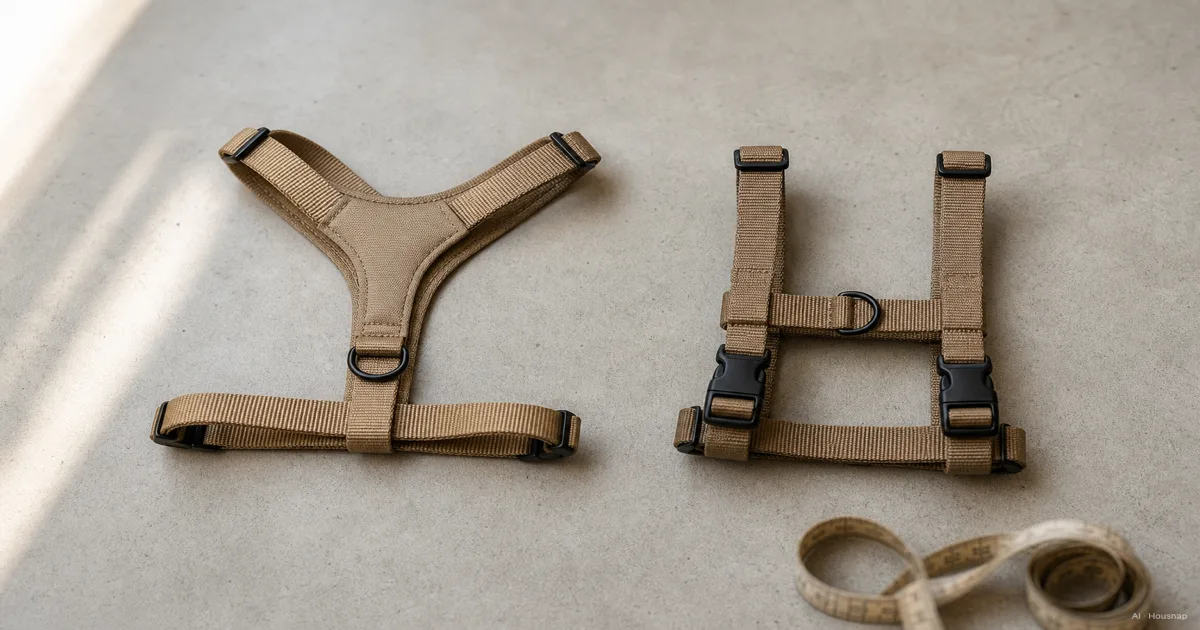
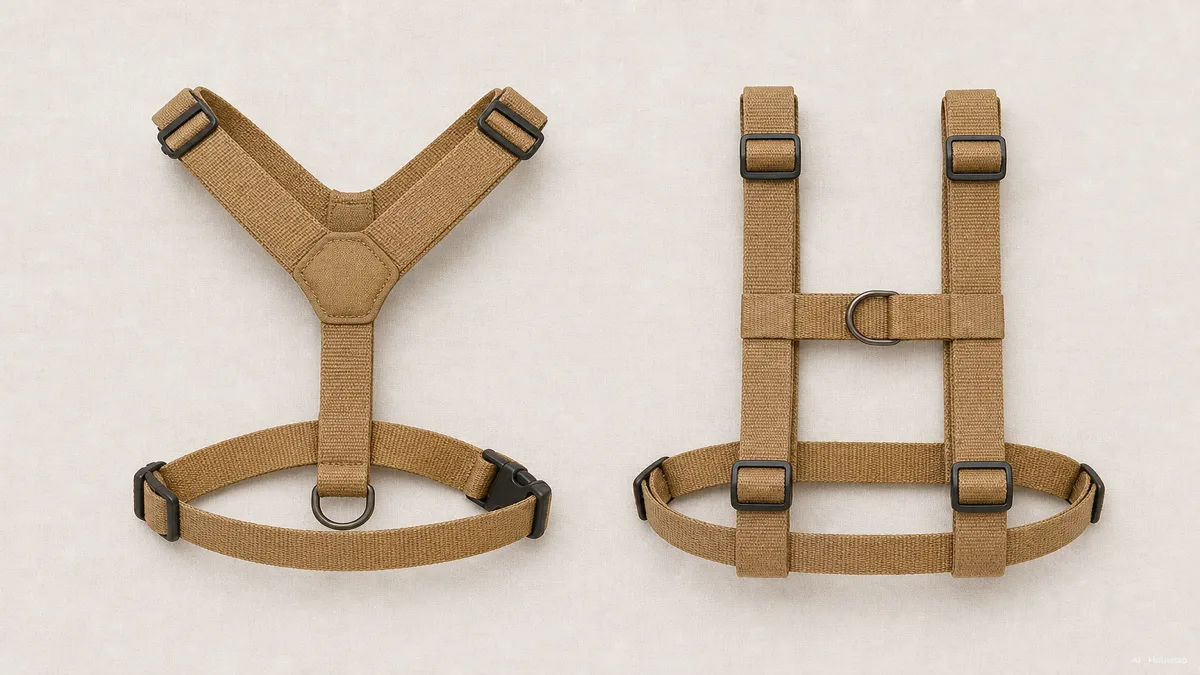
Look at the two shapes from the front and the difference is obvious. A Y-harness has a single chest piece that splits around the sternum, forming a Y down the front of the dog. An H-harness, named for its side-view silhouette, runs one strap around the neck and one around the girth, joined by a back strap and a chest strap, so the side profile reads like a ladder or an H.
The strap that matters is the one across the front. As TopDog Harnesses lays out in its Y-versus-H comparison, the Y design routes the chest strap so it sits clear of the shoulder joint, while many H-harnesses place a horizontal strap right across the front of the chest, depending on how the fit lands.
Here is the anatomy that makes this more than a styling note. A dog's scapula, the shoulder blade, sits on the side of the body, not on the back. The front leg swings forward by rotating from that joint. A strap that crosses directly in front of the shoulder can restrict that forward swing on every stride. A strap that splits around it, the way a Y is designed to, leaves the shoulder free.
So the headline difference is not how the harness looks on a shelf. It is whether the design crosses the shoulder or clears it, and that decides how your dog moves while wearing it.
Which Shape Is Better for Your Dog's Body Type and Activity Level?
Flip the question from which is better to better for which dog, and the answer gets concrete.
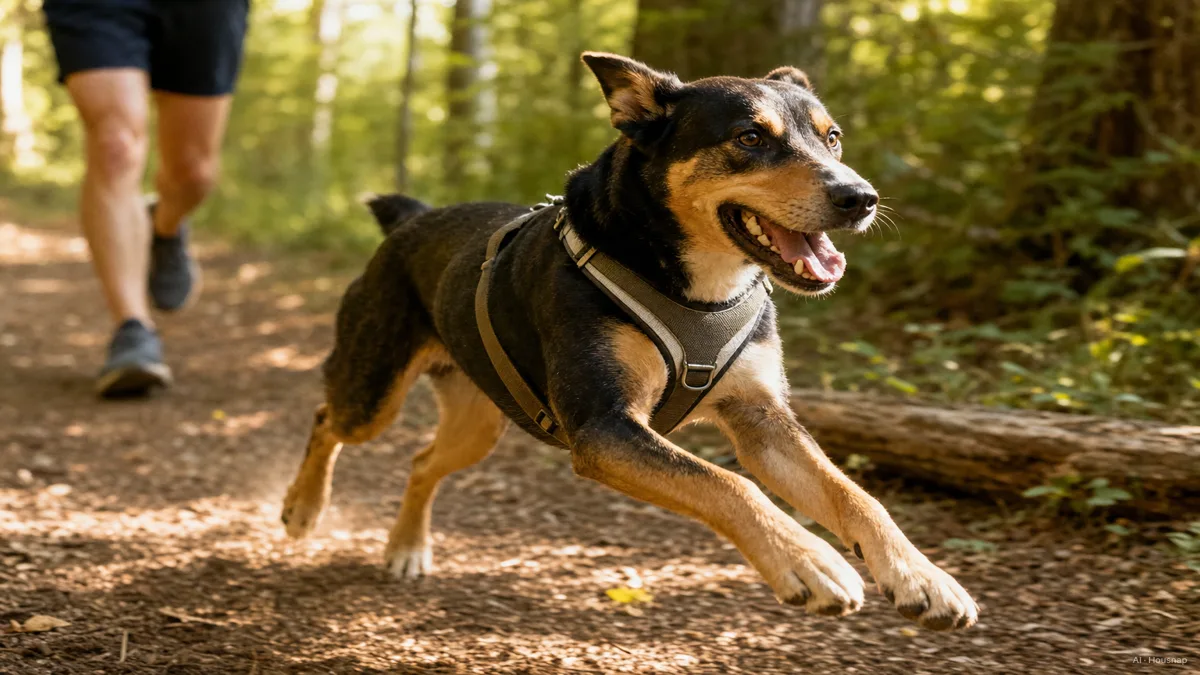
Y-harnesses are the usual pick for active, sporty, and larger dogs. Because the design keeps the chest strap off the shoulder joint, it does not interfere with the full range of the scapula, which is exactly what a dog needs for running, hiking, and long stretches of exercise. If your dog pulls hard on a trail or covers real distance, the freedom of movement is the whole point.
H-harnesses earn their place with narrow-chested and small breeds. Greyhounds, whippets, Italian greyhounds, and Chihuahuas have body shapes that a single chest piece can slip off, and the two-loop wrap of an H-harness holds more securely, resisting the back-out escape that scares every owner of a slim dog. The snug, encircling fit is the feature, not a compromise.
There is also a leash-attachment layer worth knowing before you decide. Front-clip attachments, a D-ring on the chest, redirect a pulling dog sideways and help with training. Back-clip attachments suit calm walkers and small dogs where chest pressure is not ideal. Many dual-clip harnesses use a Y-front and give you both, which is why a dual-clip Y is often the safe default for a first-time buyer who is not sure of the shape yet.
One reason a harness beats a collar sits underneath all of this. A harness spreads leash pressure across the chest and shoulders instead of concentrating it on the windpipe. A 2021 study on PubMed Central found neck collars produce significantly higher contact pressure than harnesses, a concern tied to tracheal collapse risk in small and flat-faced breeds. A 2025 study on PubMed Central found collars raise intraocular pressure and respiration rate in brachycephalic dogs, while harnesses do not, which is why harnesses are the standard veterinary recommendation for Pugs, French Bulldogs, and Bulldogs.
How to Measure Your Dog for the Right Harness Fit
Shape decides the type. Measurement decides whether it actually fits, and this is where most first harnesses go wrong.
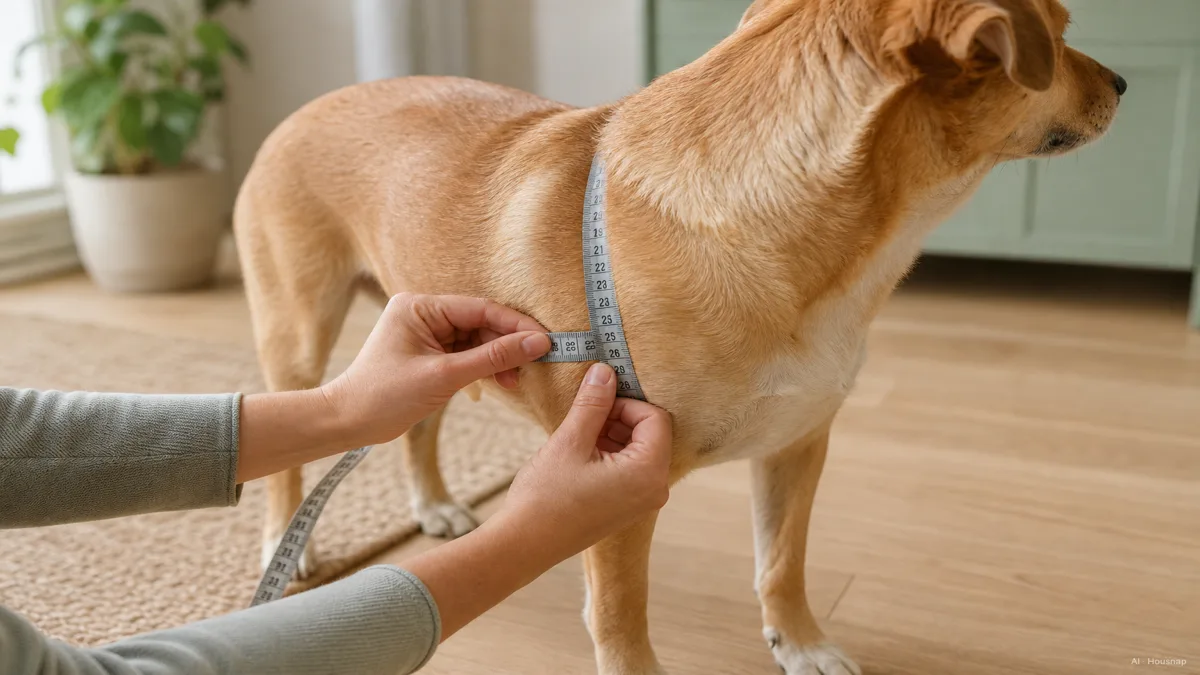
Two numbers do most of the work. The first is neck girth, measured just below where a collar would sit. The second is chest girth, measured around the widest point of the rib cage, just behind the front legs. As Ruffwear's measuring guide explains, you take these with the dog standing on all fours, since a sitting or lying dog gives a misleading number. Use a soft tape measure, and if you only have a string, mark it and lay it against a ruler.
Then the fit check that applies to both shapes: the two-finger rule. You should be able to slide two fingers flat under every strap, at the neck and at the girth. Too tight and the harness restricts breathing and rubs; too loose and the dog can back out of it on the first spook. Rover's harness measuring guide walks through the same two-finger standard.
A practical note for Y-harnesses specifically. Because the Y depends on the chest piece sitting low and clear of the shoulders, fit is less forgiving than it looks. Dog Gear Review's piece on Y-harness fit points out that a Y riding too high lands the strap back onto the shoulder, which quietly undoes the one advantage you bought it for. If your dog sits between sizes, the chest piece position, not just the number, is what to check.
Materials and Features to Look for as a First-Time Buyer
Once the shape and size are settled, the material is what you and your dog actually live with day to day.
Nylon webbing is the common baseline. It is lightweight, affordable, and easy to wipe clean, which makes it a sensible first harness for most dogs. Padded neoprene or mesh adds comfort for longer walks and softens the pressure points, and breathable mesh panels are worth seeking out for warmer climates where a dog overheats easily. Leather is durable and looks the part, but it runs heavy and warm, so it is less common as an everyday first choice. Quick-dry neoprene is the pick if your dog swims or you walk in the rain.
Beyond the fabric, a few features earn their keep. Look for adjustment points at both the neck and the girth, since two adjustment zones let you dial the two-finger fit on each loop independently. Reflective stitching matters for early-morning and evening walks. A sturdy handle on the back is genuinely useful for lifting a dog into a car or steadying it near traffic. And for a puller, the front-clip D-ring covered earlier is the feature that does the most work.
The honest summary is that a first harness does not need every feature. It needs the right shape for the body, a secure two-finger fit, a material that matches your weather and your dog's coat, and adjustment at both loops so the fit survives the inevitable size drift as a young dog grows.
Top Picks: Y-Harnesses and H-Harnesses Worth Considering
Brand names help once you know which shape you are shopping for, so here is the lay of the land rather than a ranking.
On the Y-harness side, Ruffwear is the reference name for active and outdoor dogs, with the Front Range and the Web Master often cited for hikes and bigger dogs. Kurgo, Perfect Fit, Truelove, and Rabbitgoo round out the Y-front field across a range of prices, and several of those are the dual-clip designs that suit a first-time buyer hedging between training and casual walks.
On the H-harness and multi-style side, Julius-K9 and its IDC Powerharness are the widely recognized name, with EzyDog and PetSafe also covering the secure-wrap and small-dog territory where an H shape tends to win.
None of this is a verdict on a single best harness, because the best one is the shape that clears or holds your specific dog's shoulders, in a size that passes the two-finger check. The useful next move is to put Y and H options side by side, see what the leading brands charge across stores for the size you measured, and confirm the shape you landed on matches the dog you are actually walking. You'll find options from the names that show up most in dog harnesses, so the comparison stays concrete rather than hypothetical.
Sources
- Choosing Between Y-Shaped and H-Shaped Harnesses — TopDog Harnesses; the strap geometry of each shape and where it sits relative to the shoulder
- Dog Pulling on the Leash: Neck Collar vs. Chest Harness — PubMed Central, 2021; neck collars produce significantly higher contact pressure than harnesses, tied to tracheal collapse risk
- Effect of a Collar and Harness on Intraocular Pressure and Respiration Rate — PubMed Central, 2025; collars raise intraocular pressure and respiration in brachycephalic dogs, harnesses do not
- How to Measure for Your Dog's Gear — Ruffwear; neck and chest girth measured with the dog standing on all fours
- How to Measure a Dog for a Harness — Rover; the two-finger fit rule at neck and girth
- Does Your Dog's Y-Harness Actually Fit? — Dog Gear Review; why a Y riding too high lands the strap back on the shoulder