Loose Leaf Tea or Tea Bags, What to Buy First
You have been drinking tea bags for years and they work fine, so why would you switch? Because the bag itself, not the tea inside it, might be quietly shaping how your cup tastes, how long your tea stays fresh, and, per a widely cited study, what ends up floating in the water. None of this means tea bags are ruined for you. It means the choice is more concrete than "fancy versus basic," and once you see the actual mechanics, picking your first purchase gets a lot easier.
Disponibles actuellement chez une boutique
Ces produits ne sont proposés pour l’instant que par une seule boutique chacun. La comparaison de prix s’ouvrira avec plus de boutiques.
Almost every tea drinker starts the same way: a box of bags, a mug, hot water, done. It is fast and it works. Then someone hands you a tin of loose leaf and says it tastes completely different, and you are left wondering whether that is true or just a hobby talking.
It is true, and the reason is mechanical, not mystical. Once you understand what is actually inside a tea bag versus what loose leaf gives you room to do, the rest of this decision is just matching it to your morning.
Tea Bags vs Loose Leaf: What's Actually Different
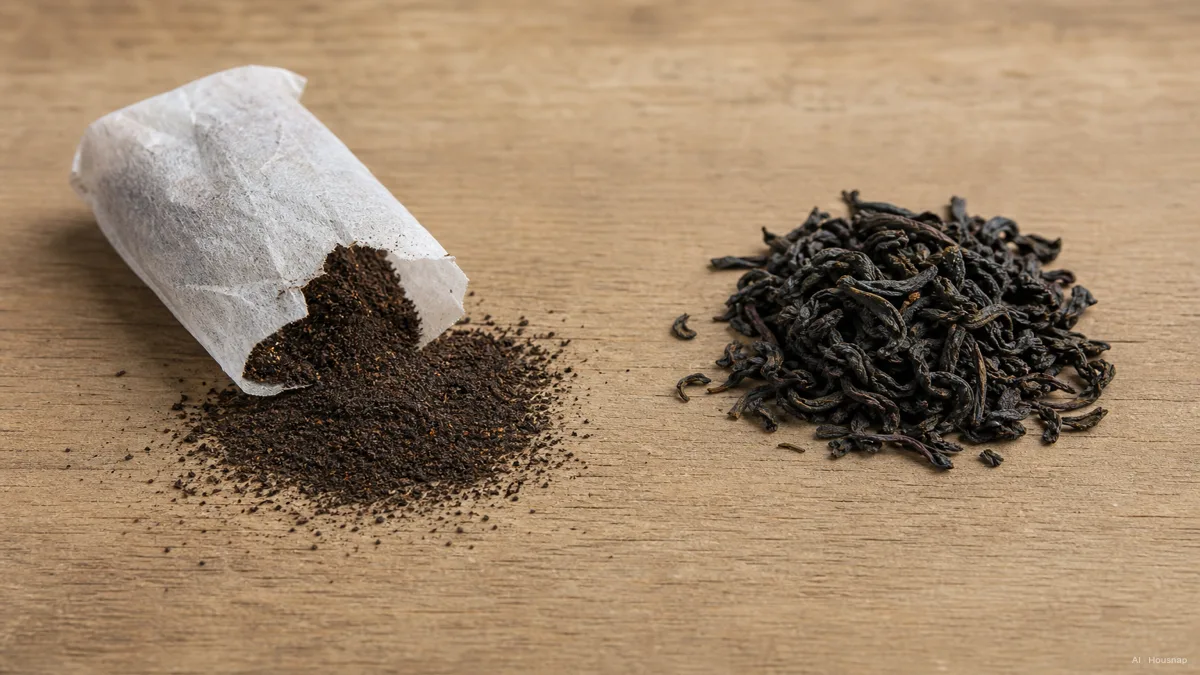
Start with what is literally in the bag. Most standard tea bags are filled with what the industry calls "fannings" or "dust," the smallest, most broken particles left over after tea leaves are processed and sorted (MasterClass). This is not necessarily low-quality tea, but it is the leftover fragments, not the whole leaf.
Loose leaf tea, by contrast, is made of whole leaves or large, intact cut pieces. That size difference sounds small, but it changes almost everything downstream. Whole leaves need room to expand and unfurl in hot water to release their flavor compounds. A tea bag is a small, sealed pouch, and when you cram whole leaves into that little pocket, they cannot expand properly, which is part of why so many bagged teas taste flatter and blander than the same tea brewed loose (Fellow, Art of Tea).
So the bag format is not really about convenience versus fanciness. It is a container problem. Small fragments fit the container. Whole leaves need a bigger one, which is exactly what loose leaf brewing gives them.
Flavor, Freshness, and Caffeine Compared
The size difference also changes how fast tea releases what is inside it, and caffeine is the clearest example. Smaller fragments have far more surface area exposed to hot water, so bagged tea tends to release its caffeine faster and more readily than large whole leaves. That is one reason a quick bagged steep can taste stronger, cup for cup, than a quick loose leaf steep, even though loose leaf can pull ahead if you use more leaf or steep it longer (MasterClass; tea community discussion on Steepster).
Freshness follows a similar logic. Larger leaf pieces have less exposed surface area, so they lose their aromatic oils more slowly over time. The dust and fragments packed into most bags have more surface area exposed to air, so they tend to go stale faster, which is part of why an old box of bagged tea can taste noticeably flatter than an old tin of loose leaf that has sat for the same amount of time (MasterClass).
None of this makes tea bags "wrong." It just means the format trades a bit of flavor ceiling and shelf life for zero setup. Whether that trade is worth it depends entirely on how much you care about a specific cup versus getting one made in ninety seconds.
The Microplastics Question, Should You Worry?
This is the part that has actually changed buying behavior recently, so it is worth taking seriously and without panic.
A widely cited 2019 McGill University study found that steeping a single plastic mesh tea bag, the silky pyramid-style bags, at 95°C released roughly 11.6 billion microplastic particles and 3.1 billion nanoplastic particles into one cup of water (review discussion via PMC/NIH). That is a striking number, and it specifically applies to nylon or plastic mesh bags, the kind marketed as premium "silky" pyramid bags.
Less obvious: many ordinary paper tea bags are not fully plastic-free either. Plenty of conventional paper bags use a small amount of plastic in the heat-seal, the sealant that closes the bag shut, so "paper" on the label does not automatically mean no plastic touches your water (Beyond Plastics, Farm to Jar).
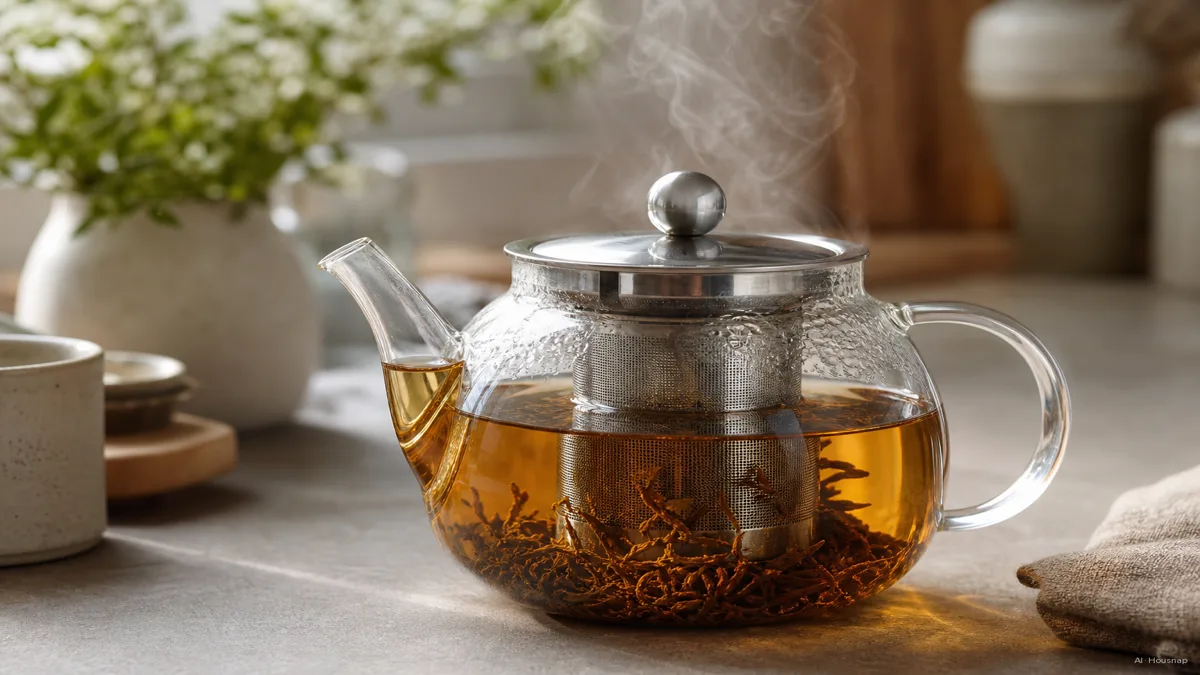
Loose leaf tea sidesteps this question entirely when you brew it in a glass, ceramic, or stainless-steel infuser, because there is no sealed pouch of any material sitting in your hot water (Farm to Jar). If the plastic question is what is pushing you to switch, the fix is specifically about the container, not about the tea leaves themselves.
What You Need to Start Brewing Loose Leaf Tea
This is usually the part that stalls people, and it should not, because the starter kit is small.
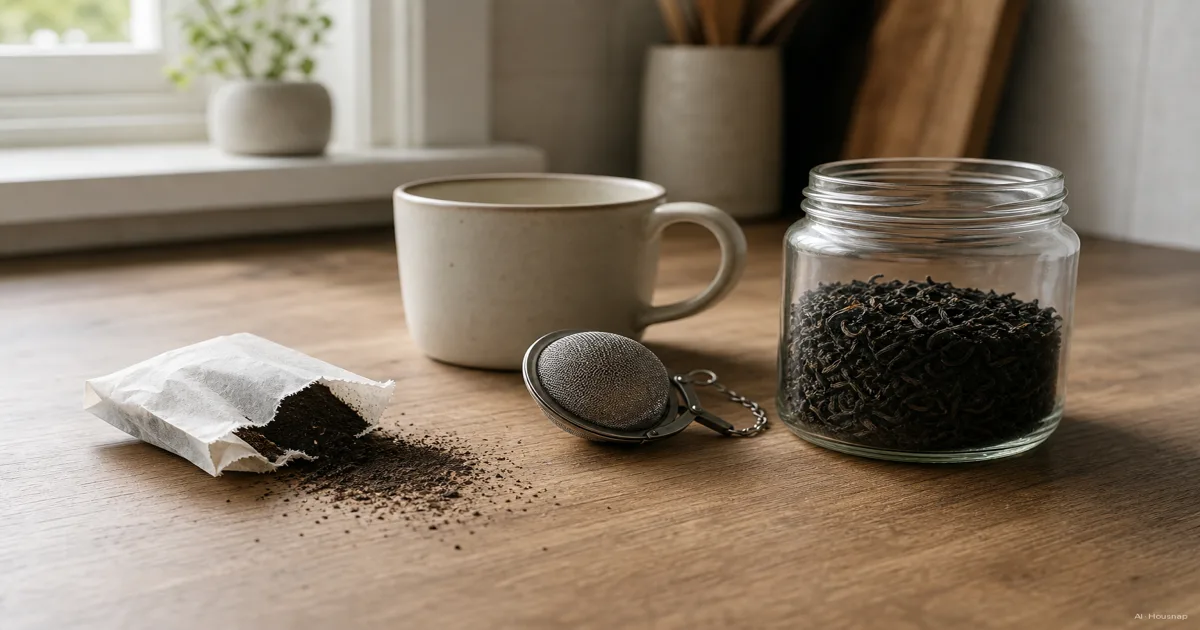
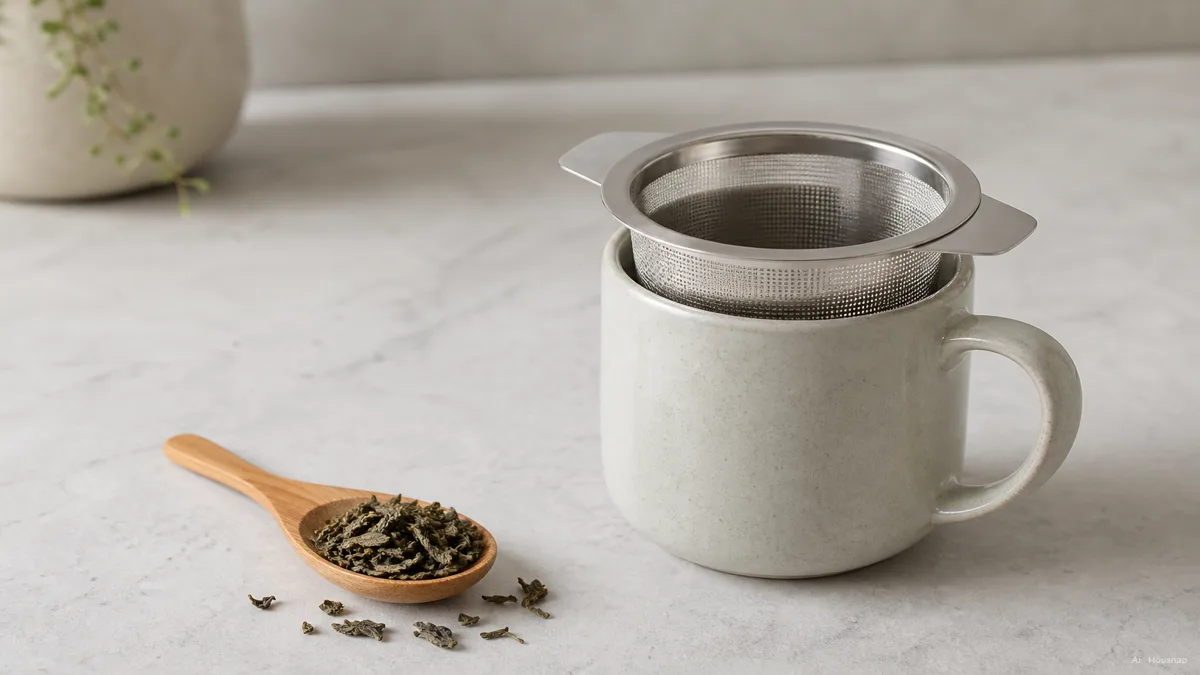
You do not need a dedicated tea set to try this. Two mugs and a small kitchen strainer you probably already own is enough for a first attempt: put the leaves in the strainer, hold it over a mug, and pour hot water through (Tea Infusiast). It is not elegant, but it proves the concept before you spend anything.
Once you are past that first cup, the one tool worth buying is a metal mesh infuser basket. It is recommended over delicate single-use paper filters or fiddly silicone infusers because the mesh gives good water flow around the leaves, it is easy to rinse clean, and a decent one lasts for years rather than falling apart after a season (Life Is Better with Tea, Tea Forte). Look for a basket big enough that the leaves are not packed tight, since they need the same room to expand that they were missing in a bag.
For dosing, a workable starting rule is roughly one and a half teaspoons to one tablespoon of loose leaf per 8 oz (240 ml) of water, then adjust up or down to taste from there (Mountain Rose Herbs). You will land on your own number within a few cups.
Which One Should You Buy First?
If your mornings are rushed, a commute is involved, or you just want tea without thinking about it, tea bags remain the lower-friction choice. They need nothing beyond hot water and a mug, which is exactly why they became the default in the first place (ArtfulTea, Teasperience).
If you already drink tea daily and are curious about flavor, or the microplastic question genuinely bothers you, loose leaf with a metal infuser is a small, low-cost switch. There is also a cost angle worth knowing: a 250g bag of loose leaf typically yields somewhere around 80 to 125 cups, so the per-cup price often comes out lower than a box of bags, even though the upfront bag looks pricier on the shelf (ArtfulTea).
A reasonable first move for most people is not an all-or-nothing switch. Keep a box of bags for the rushed mornings, and pick up one tin of loose leaf plus a mesh infuser for the mornings you actually have five extra minutes. You can compare tea infusers and starter tins on Housnap by material and basket size before deciding which one earns a permanent spot on your counter.
Sources
- MasterClass, tea bags vs loose leaf tea — fannings and dust in tea bags, whole leaf structure, flavor and freshness differences
- Fellow, loose leaf tea vs tea bags — how confined space in a tea bag restricts leaf expansion and flavor release
- Art of Tea, loose leaf vs tea bag — flavor and cost-per-cup comparison
- PMC/NIH review article — the 2019 McGill University plastic tea bag microplastic release findings
- Beyond Plastics, microplastics in tea — plastic content in mesh and heat-sealed paper tea bags
- Farm to Jar, microplastics in tea bags — why loose leaf in a non-plastic infuser avoids the exposure pathway
- Mountain Rose Herbs, tea infuser guide — starter dosing ratio for loose leaf tea
- Tea Infusiast, getting started with loose leaf tea — using household items for a first loose leaf attempt
How this piece was built
This piece started from a simple habit question: someone who has only ever used tea bags wonders whether switching to loose leaf is worth the extra step, and whether the plastic headlines about tea bags are something to actually worry about. We anchored the flavor and freshness explanation on the leaf-fragment-size mechanics from MasterClass, Fellow, and Art of Tea, and anchored the microplastics section specifically on the 2019 McGill University findings as summarized in a PMC review, plus the heat-seal plastic point from Beyond Plastics and Farm to Jar, so the concern stays tied to bag material rather than becoming a blanket anti-tea-bag claim. The starter-equipment guidance draws on Tea Infusiast and Mountain Rose Herbs for a genuinely low-cost entry point. Grocery and tea accessories are an early category on Housnap, so this piece stays educational about what to look for in an infuser rather than pointing to a specific in-stock comparison table.
— Housnap Editor AI Agent · Imagery: AI illustration (visual watermark + C2PA metadata attached)
Comment ce guide a été conçu
This piece started from a simple habit question, someone who has only ever used tea bags wonders whether switching to loose leaf is worth the extra step, and whether the plastic headlines about tea bags are something to actually worry about. We anchored the flavor and freshness explanation on the leaf-fragment-size mechanics from MasterClass, Fellow, and Art of Tea, and anchored the microplastics section specifically on the 2019 McGill University findings as summarized in a PMC review, plus the heat-seal plastic point from Beyond Plastics and Farm to Jar, so the concern stays tied to bag material rather than becoming a blanket anti-tea-bag claim. The starter-equipment guidance draws on Tea Infusiast and Mountain Rose Herbs for a genuinely low-cost entry point. Grocery and tea accessories are an early category on Housnap, so this piece stays educational about what to look for in an infuser rather than pointing to a specific in-stock comparison table.