Your First Car Vacuum, Corded vs Cordless and What the Suction Numbers Mean
You search car vacuum and the results split into two very different products. One has a cord dangling out of your cigarette lighter socket. The other looks like a dustbuster you could carry into the back seat. Both promise to solve the same problem, crumbs in the seams, sand in the floor mats, a dusting of pet hair on the back seat, and the spec sheets do not make the choice obvious. Here is the shortcut. Almost every car vacuum decision comes down to power source first, then suction and runtime, then whether the attachments actually reach where your car gets dirty. Corded units plug into the 12V outlet and draw continuous power, so their suction does not fade as you clean. Cordless units run on a battery, trading some suction and a time limit for the freedom to reach the trunk, the far door, or a second car. Neither is objectively better. A corded unit is the stronger choice if you mostly do quick, thorough passes with the car parked at home. A cordless one is the better fit if you want to grab it and go, or if you are cleaning more than one vehicle. This guide walks through that first fork, then the suction and wattage numbers that actually matter, the attachments worth having (especially if you have pets), and a short checklist for your first purchase.
Disponibles actuellement chez une boutique
Ces produits ne sont proposés pour l’instant que par une seule boutique chacun. La comparaison de prix s’ouvrira avec plus de boutiques.

What Is a Car Vacuum and Do You Actually Need One?
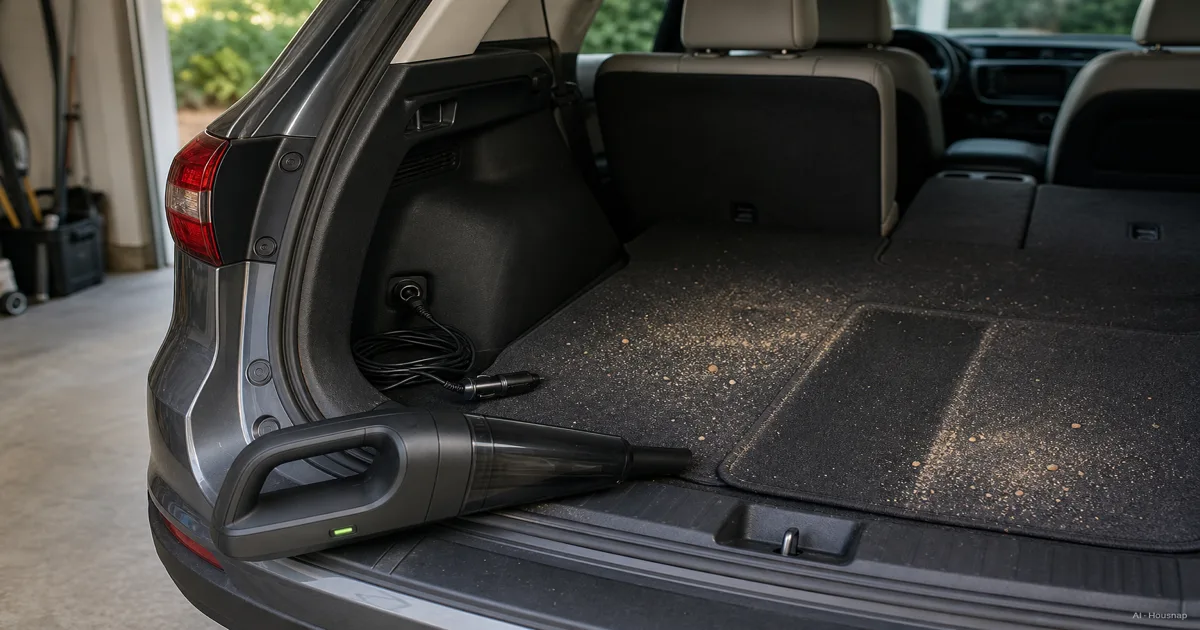
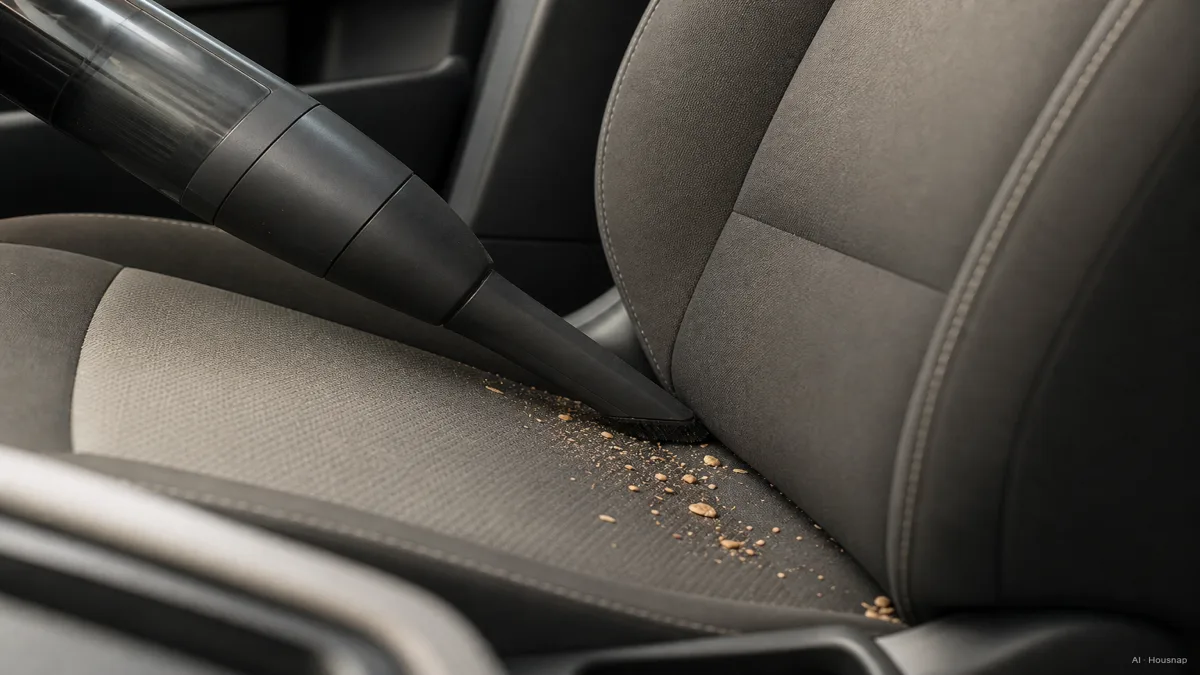
A car vacuum is any vacuum built to be used inside a car, small enough to reach between seats and under a dash, and powered either by the car itself or by its own battery. It is not a replacement for a household vacuum, it is a tool for the specific mess a car makes: crumbs wedged in seat seams, sand and gravel tracked into floor mats, and pet hair that clings to upholstery in a way a broom cannot touch.
If you only vacuum your car once or twice a year at a full-service wash, you probably do not need one. If you eat in the car, commute with a dog, drive on unpaved roads, or just want to keep a clean interior without a trip to a detailing shop, a dedicated car vacuum earns its space in the trunk.
Corded vs Cordless: Which Type Fits Your Driving Life
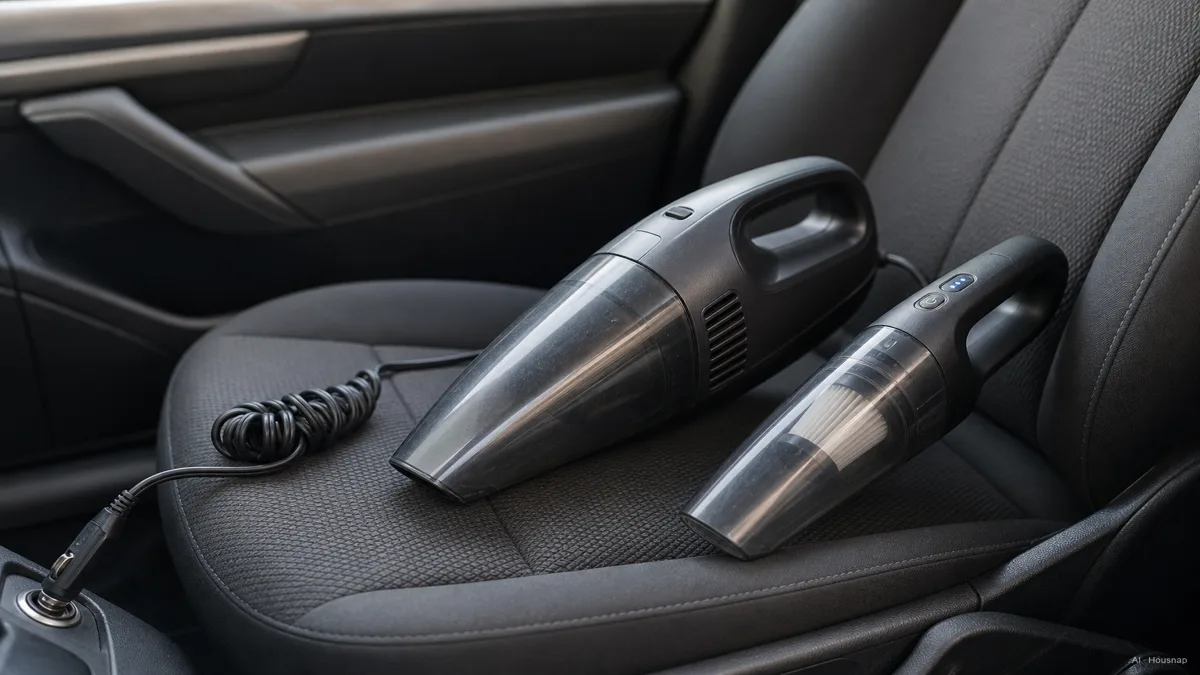
This is the decision that shapes everything else. A corded car vacuum plugs into the 12V outlet, the same one that used to charge your phone before USB ports took over, and it draws continuous power the whole time it runs. Because the power never dips, the suction does not fade partway through a cleaning session, a point both Fanttik's car vacuum strength guide and Dreame's cordless-vs-corded comparison make clearly.
A cordless handheld runs on an internal battery, so you are not tethered to the outlet. That means you can vacuum the trunk, the far side of a two-car garage, or a second car without repositioning a cord. The tradeoff is a battery that eventually runs down, typically somewhere between 15 and 40 minutes depending on the model and the suction mode you use. That is comfortably enough for a full sedan interior in one charge. For a three-row SUV, you may be watching the battery indicator by the time you reach the back row.
The honest way to decide: if your car lives in one spot and you want the strongest, most consistent clean, corded wins. If you value walking away from an outlet, cleaning more than one vehicle, or just not dealing with a cord in a cramped back seat, cordless is worth the suction tradeoff.
Suction Power, Wattage, and Battery Runtime Explained
Suction is usually listed in pascals (Pa), and it is the number that tells you how much a vacuum can actually lift, not just how loud its motor sounds. Corded 12V units typically land in the 2000 to 3000 Pa range, while cordless handhelds average closer to 1500 to 2500 Pa, according to the same Fanttik and Dreame comparisons. That gap is not a flaw in cordless design, it is the direct cost of running off a battery instead of a constant power draw.
Wattage tells a related but different story, it is a proxy for motor size rather than suction itself. Handheld vacuums built for car cleaning commonly sit in the 100 to 200 watt range. Larger corded units built more like a compact shop vac can reach up to around 1200 watts, per Dreame's breakdown, which is part of why those units often out-clean a handheld on stubborn, packed-in debris.
Battery runtime matters as much as peak suction for cordless units, because suction that fades to nothing halfway through the back seat is not suction you can use. Look for a stated runtime in minutes, not just a battery capacity number, and treat a 15-minute unit as fine for a quick tidy-up and a 30-to-40-minute unit as the one to reach for before a road trip.
Must-Have Attachments and Filters (Pet Hair, HEPA, Crevice Tools)
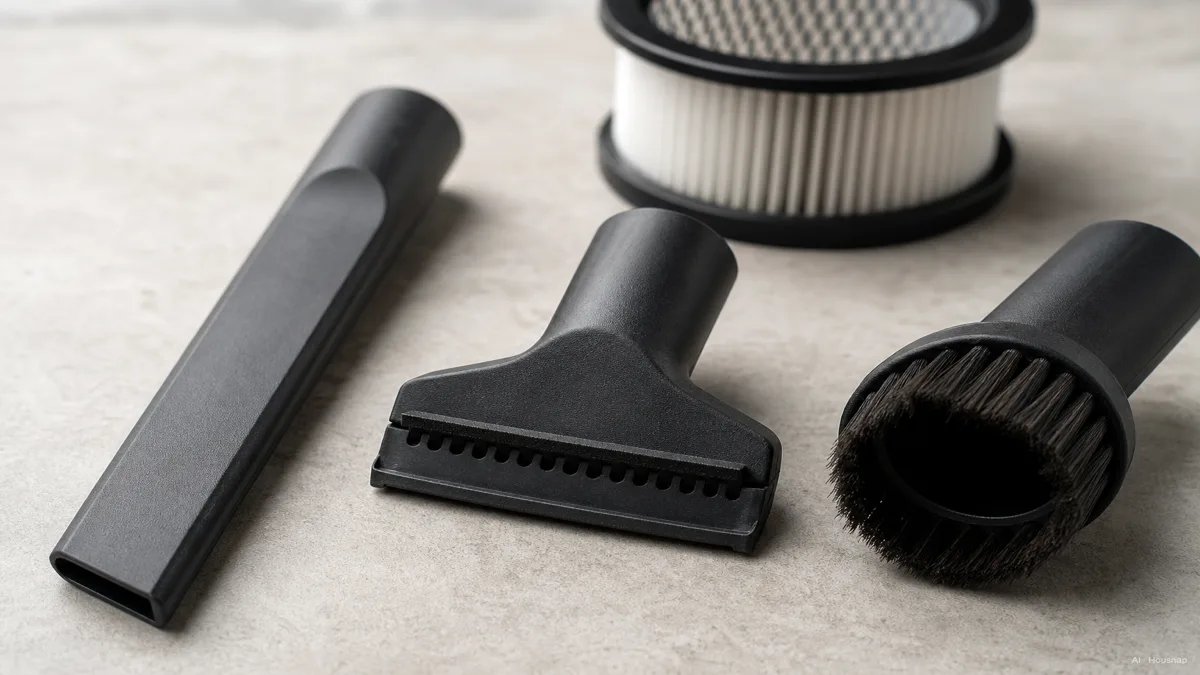
Raw suction gets the headline, but attachments decide whether that suction actually reaches the mess. A crevice tool is the one attachment you will use constantly, it is the narrow nozzle that gets into seat seams, between the console and the seat, and around cupholders where crumbs collect. ModernCastle's roundup of tested car vacuums treats attachment variety as a bigger differentiator than the suction number alone, precisely because most car mess lives in tight spaces, not open floor.
If you have a dog or cat that rides along, prioritize a dedicated rubber or motorized pet-hair tool over a standard brush roll. Standard bristles tend to tangle with fur instead of lifting it, while a rubber nub or motorized brush actually pulls hair free from upholstery weave, a distinction ModernCastle and Home Depot's pet-hair vacuum category both call out.
A washable HEPA or multi-stage filter is worth seeking out too, both for capturing fine dust and pollen and for keeping your ongoing costs down, since a rinse-and-reuse filter beats buying replacement filters every few months. CNN Underscored's 2026 hands-on test named the Shark Stratos Cordless the top overall performer, crediting a combination of strong suction and a specialized floorhead design that lifted 100 percent of embedded sand from medium-pile carpet in their testing, and separately called out the Black+Decker Dustbuster Max Flex BDH2020FL as the best equipped for car interiors specifically, thanks to an extendable hose, a curved handle for reaching under seats, and a three-piece attachment set (flip brush, rubber pet tool, crevice tool).
If budget is the priority, Consumer Reports rates the Black+Decker DustBuster CHV1410L as a strong inexpensive pick, picking up nearly all debris in their bare-floor and carpet lab tests. On the corded side, units like the Shop-Vac DC 12V Handheld Car Vacuum Cleaner add a double filtration system with a HEPA filter, a 16-foot cord, an extension hose, a crevice tool, and a brush nozzle, a fuller kit aimed at buyers who want one unit to handle everything.
How to Choose Your First Car Vacuum: A Quick Buying Checklist
Before you buy, run through these five checks.
Power source. Corded 12V for the strongest, most consistent suction while parked at home. Cordless handheld for portability and multi-car flexibility.
Suction and runtime together. A high Pa number on a cordless unit means little if the battery dies at minute twelve. Check both numbers, not just one.
Attachments for your actual mess. A crevice tool is close to mandatory. Add a motorized or rubber pet-hair tool if you have pets, and a longer hose or extension if you plan to reach a trunk or third-row seat.
Filter type. A washable HEPA or multi-stage filter saves you money over time and handles fine dust better than a basic foam filter.
Maintenance habit. Suction fades fastest when a filter clogs, so plan to check it every few uses, rinse or gently brush it clean when dusty, and let it fully dry before reinstalling, guidance echoed in the Steisone 2026 car vacuum buying guide. Clean out any wet spills from the canister right away too, since damp debris left sitting is the most common cause of a car vacuum starting to smell.
Price ranges widely, from well under 50 dollars for a basic handheld to a few hundred for a premium cordless model with a motorized brush and a larger battery. Match the spec sheet to what your car actually needs, and skip paying for capability you will not use.
Sources
- Car Vacuum Strength Guide — Fanttik; corded vs cordless suction ranges in Pa and why corded holds steady
- Cordless vs Corded Vacuums: Which Is Right For You? — Dreame; wattage ranges for handheld vs larger corded units, battery runtime tradeoffs
- The Best Car Vacuum in 2026, Tried and Tested — CNN Underscored; Shark Stratos Cordless deep-clean test results and Black+Decker Dustbuster Max Flex attachment set
- 5 Best Handheld Vacuums of 2026 — Consumer Reports; Black+Decker DustBuster CHV1410L budget pick lab test results
- 7 Best Car Vacuum Cleaners — ModernCastle; pet-hair attachment guidance and attachment variety as a key differentiator
- Shop-Vac DC 12V Handheld Car Vacuum Cleaner — Shop-Vac; corded kit with HEPA double filtration, cord length, and included attachments
- Best Car Vacuum Cleaners for Detailing Your Vehicle — AutoZone; buying guide covering price range and filter maintenance habits