MagSafe vs Cable Power Bank for Your First Buy, Which One Fits Your Phone
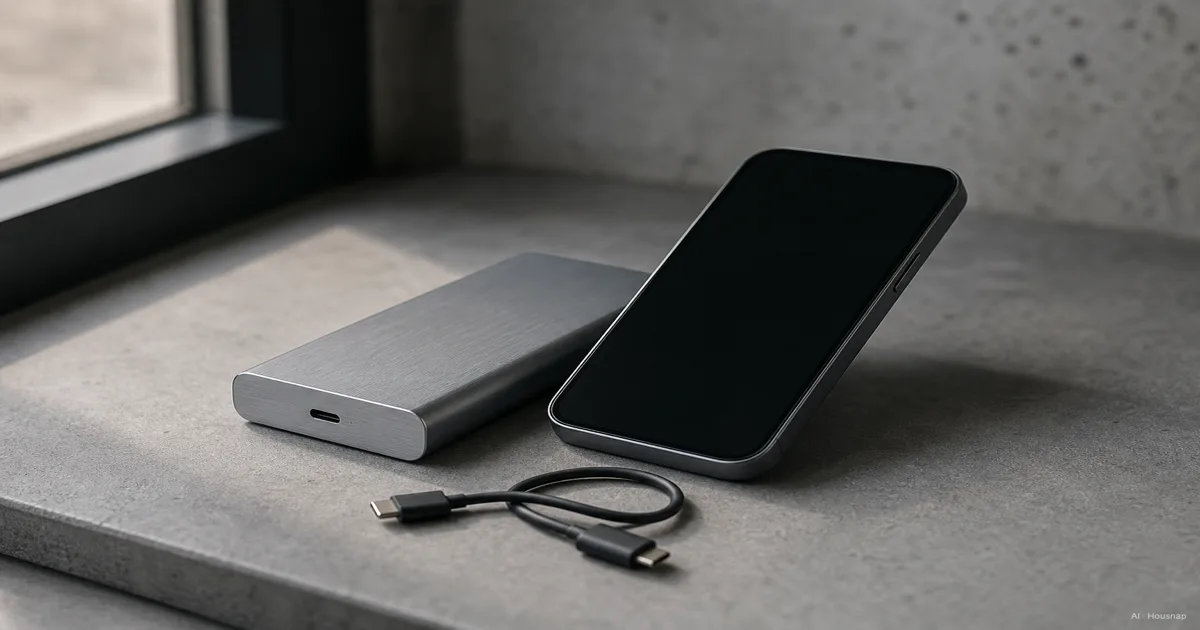
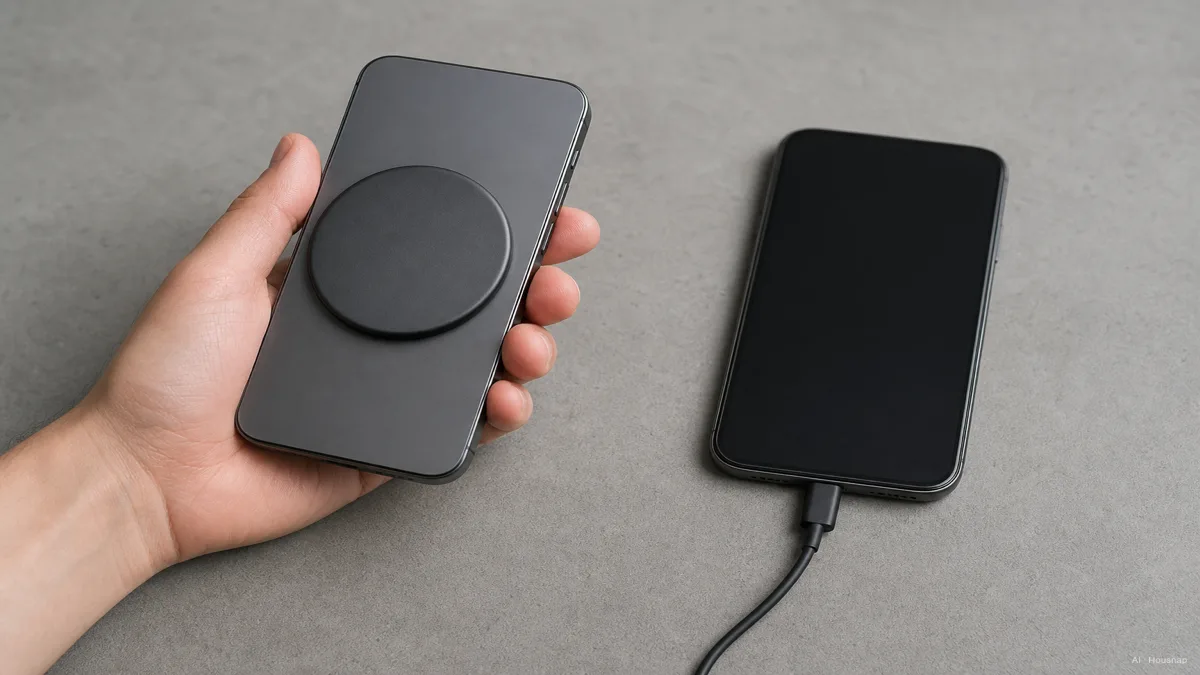
You want a power bank, and the moment you start looking, the choice splits in two. One kind clicks magnetically onto the back of your phone and charges it with no cable at all. The other is the familiar brick you plug a cable into. They look like different products, but they are answering the same question two different ways. The cable bank is the older, blunter tool. More speed, more capacity per dollar, less fuss. The MagSafe bank trades some of that raw performance for a different kind of freedom, picking up your phone and using it while it charges, with nothing dangling. Here is the part that catches first-time buyers off guard. Wireless charging quietly loses a chunk of its energy to heat, so a 5,000mAh MagSafe pack does not put 5,000mAh into your phone. Knowing where that charge goes is half of choosing well. This guide walks through what MagSafe actually is, why certification changes the speed, how wired and wireless really compare, how to size a bank for your day, and the short checklist that settles the decision.
Productos actuales para comparar
Estos productos vienen de los resultados de Housnap para este tema.
You decide you need a power bank, and within a few minutes of looking you hit a fork. One type magnetizes onto the back of your phone and charges it with no cable. The other is a brick with a port you plug into. They feel like rival products. They are really two answers to the same need.
Before the brands and the prices, it helps to be clear on what each one is built to do, and where the wireless kind quietly gives something up.
What MagSafe Actually Means, and Why Certification Matters
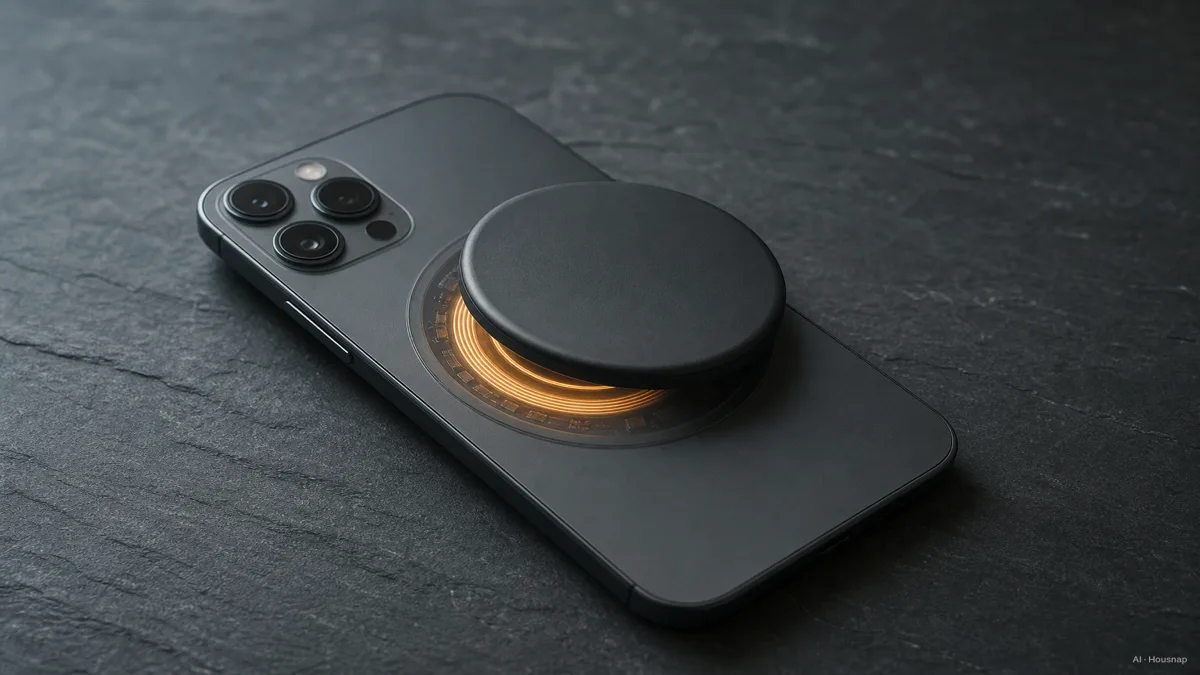
MagSafe is Apple's magnetic charging system. A ring of magnets inside the phone and the charger pull the two together so the charging coils line up perfectly, which is the whole trick to wireless charging working well. It snaps on, it stays put, and it charges through the glass back, no port needed. It works on iPhone 12 and later, the models built with the magnet array inside.
Here is the detail that decides how fast it charges, and most first buyers miss it. Not every magnetic pack charges at full speed. The fast lane is gated behind certification.
A pack labeled MFM, short for Made for MagSafe, contains an Apple-approved module that does a quick digital handshake with the phone. Pass the handshake and the phone unlocks the full 15W. Skip it, and the phone treats the pack as a generic magnetic Qi charger and caps it at 7.5W, roughly half the speed (Silicon Power explains the handshake). So two magnetic banks that look identical on a shelf can charge at very different rates, and the label is where you tell them apart.
Then there is Qi2, the open standard Apple co-developed with the Wireless Power Consortium. A Qi2-certified bank delivers the same 15W magnetic charging, but it is not iPhone-only. It also works on Android phones that support Qi2, which makes it the more flexible choice if your household is not all Apple (EcoFlow breaks down Qi2 versus MagSafe). The newest revision, Qi2.2, pushes wireless up to 25W, and recent iPhones in the 16 and 17 families support it, which closes a lot of the old speed gap with a cable.
The short version: the magnet just holds the bank in place. The label, MFM or Qi2 or Qi2.2, is what tells you the speed.
Speed vs Convenience, How Wired and Wireless Really Compare
This is where the honest trade-off lives, and it comes down to physics more than brand.
Wired charging is simply more efficient. A cable moves power straight into the phone with very little waste. Wireless has to send energy across a small air gap between two coils, and that transfer leaks. Magnetic wireless charging runs at roughly 60 to 80 percent efficiency, which means a 5,000mAh MagSafe pack effectively delivers only about 3,000 to 4,000mAh of usable charge to the phone. The rest becomes heat.
Speed splits the same way. Modern iPhones over a cable reach 18 to 40W, with the iPhone 17 supporting up to 40W, far beyond what wireless does. In head-to-head testing, a wired setup hits 50 percent charge about ten minutes faster than a 25W MagSafe setup. If your goal is the fastest possible top-up, the cable wins, and it is not particularly close.
That heat is not just lost energy, it is also wear. Wireless charging runs warmer, and sustained heat is what ages a lithium-ion battery fastest over months and years. Wired charging stays cooler and is gentler on the battery's long-term health. It is a quiet point, but a real one if you keep phones a long time.
So the cable wins on speed, efficiency, capacity per dollar, and battery longevity. What does MagSafe win? Convenience, and it is not a small thing. You pick the phone up and keep using it while it charges, no cable to unplug, no port to fumble for in the dark. For a lot of people that single benefit outweighs the numbers, because the bank they actually reach for beats the faster one they leave at home.
Choosing by Capacity, 5,000mAh vs 10,000mAh for Your Day
Capacity is where the label on the box lies to you a little, and it lies more for wireless.
Start with the honest baseline. No power bank delivers its rated number. After the voltage conversion every bank has to do, a 10,000mAh bank delivers roughly 7,000 to 8,000mAh of actual charge to a device. That is true even over a cable. Layer wireless transfer loss on top of that, and a magnetic bank gives back less again.
Most MagSafe packs come in two sizes, and the gap between them is really a gap in how you live.
A 5,000mAh slim pack is the daily-carry option. It is thin and light enough to leave stuck to the phone or sit flat in a pocket, and it buys you most of one extra charge. That is plenty to get from a low afternoon battery to the end of the night. It is the pack you actually carry because you barely notice it.
A 10,000mAh pack is the travel and long-day option. It is the widely agreed sweet spot, enough to fully recharge a phone once and have a real reserve left over, without turning into a brick in your bag. If you fly, hike, or spend long days away from an outlet, this is the size that earns its weight.
The rule of thumb: pick 5,000mAh if the bank lives on your phone every day and you want it invisible, and 10,000mAh if it lives in your bag for the days that run long. And remember the wireless tax, if you charge magnetically, size up a little, because a 10,000mAh MagSafe pack feels closer to a 7,000mAh wired one in real delivered charge.
Which Type Fits Your Lifestyle
Strip away the specs and the choice gets simple, because it is really about how your phone moves through a day.
Reach for a wired bank if you want the most speed and the most capacity for the least money, if you charge your phone in your bag or on a desk and do not need to hold it, or if you carry an Android phone or a mix of devices that a single USB-C cable can all feed. It is the practical default, and for many people it quietly stays the better buy.
Reach for a MagSafe or Qi2 bank if you want to use your phone while it charges, walking, scrolling, navigating, with nothing tethering your hand. If you have an iPhone 12 or later and you value snapping a pack on and forgetting it over squeezing out the last few minutes of speed, this is the one you will actually use. The convenience is the product.
There is also a sensible middle path. Many magnetic banks include a USB-C port too, so you get the snap-on wireless convenience most of the time and a fast wired option when you are in a hurry. If you are torn, that hybrid is the safe first buy.
One honest note for Android owners. MagSafe proper is an Apple system, so on Android the equivalent is a Qi2-certified magnetic bank, and you will want to confirm your specific phone supports Qi2 magnetic alignment before counting on the magnets to hold.
What to Check Before You Buy, Certification, Case Fit, Safety
Before you commit, run these. They sort the decision faster than any spec sheet.
- Check the certification label, not just the magnet. MFM means full 15W on iPhone. Qi2 means 15W and works on Android too. Qi2.2 means up to 25W on the newest phones. An uncertified magnetic pack may quietly cap you at 7.5W, so the label is the speed.
- Match the size to your day. Pick 5,000mAh for an invisible daily carry that lives on the phone, or 10,000mAh for travel and long days. If you charge wirelessly, size up to cover the efficiency loss.
- Test your case before you trust the magnets. A thick case over about 3mm, or a metal plate inside a case, can break the magnetic alignment so the pack slips or charges slowly. Standard slim cases are generally fine, but check yours.
- Confirm phone compatibility. MagSafe needs iPhone 12 or later. For Android, you need a Qi2-certified bank and a phone that supports Qi2. Older phones fall back to slow generic wireless or none at all.
- Look for a brand with real certification, not a clone. Anker's MagGo line was first to market with Qi2 certification, Belkin's BoostCharge Pro is MFi-certified with tight Apple integration, Mophie's Powerstation Plus posts strong recharge times in independent testing, and Baseus's PicoGo AM52 brings Qi2.2 25W for multiple devices. Certified packs charge correctly and fail safely.
Answer those five honestly and the MagSafe-versus-cable question stops feeling like a guess. You are not choosing the better gadget in the abstract, you are choosing the one your real day will actually keep charged.
Sources
- What is MagSafe? The complete guide to MagSafe power banks — Silicon Power; how MagSafe magnets align the coils and how MFM certification unlocks full 15W versus a 7.5W generic Qi cap
- MagSafe power bank vs Qi2 and Qi2.2, how to choose — EcoFlow; the difference between MFM, Qi2, and Qi2.2, including 25W Qi2.2 and cross-platform Android support
- MagSafe vs wireless vs wired, which is actually fastest in 2026 — The Next Gadgets; wired 18 to 40W versus wireless speed, and the roughly ten-minute gap to 50 percent
- MagSafe power bank vs wired charger — Caseteroid; wireless 60 to 80 percent efficiency, heat and battery wear, and case thickness limits
- Best MagSafe power banks for iPhone in 2026, Anker vs Belkin vs Ugreen — GizmoChina; certified brand lineup and the 10,000mAh sweet spot
- Best MagSafe portable battery packs and power banks for iPhone — Macworld; capacity sizing and real-world usable charge from magnetic packs
Cómo se elaboró esta guía
This guide started from a question almost every iPhone owner eventually hits when buying a first power bank, whether to get the magnetic kind that snaps on the back or the familiar wired brick, and how much the difference really matters day to day. We anchored the technical claims in specialist sources: how MagSafe magnets align the coils and how MFM certification unlocks full speed from Silicon Power, the MFM versus Qi2 versus Qi2.2 distinctions from EcoFlow, the wired-versus-wireless speed comparison from The Next Gadgets, the wireless efficiency loss, heat, and case-thickness limits from Caseteroid, and the certified brand lineup and capacity sweet spot from GizmoChina and Macworld. The lens sits on the power-bank range Housnap carries, so the brand examples are packs a first buyer can actually compare here rather than aspirational picks.