Latex vs Memory Foam, How to Pick Your First Mattress
You start shopping for a first real mattress and almost immediately hit two words that get used like they mean the same thing. Memory foam. Latex. They are both foam, both sold in a box, both promising better sleep. So it is easy to assume the choice is mostly about price. Here is the thing most listings skip. These two materials respond to your body in opposite ways, and that difference is physical, not marketing. Memory foam reacts to heat. It softens where you are warm and slowly sinks until it cups your shape. Latex reacts to pressure. It springs back the instant you shift, so it never holds the dent. That single split, slow heat-activated sinking versus instant pressure-driven rebound, is the root almost every other trade-off grows out of. How hot you sleep. Whether a restless partner wakes you. How the bed feels at your shoulders and hips. How many years before it sags. This guide walks through what actually separates the two, how each one handles temperature and motion and pressure, why latex itself splits into Dunlop and Talalay, and how to match the material to the way you sleep and what you can spend.
Disponibles ahora en una sola tienda
Por ahora, cada uno de estos productos está disponible en una sola tienda. La comparación de precios se abrirá con más tiendas.
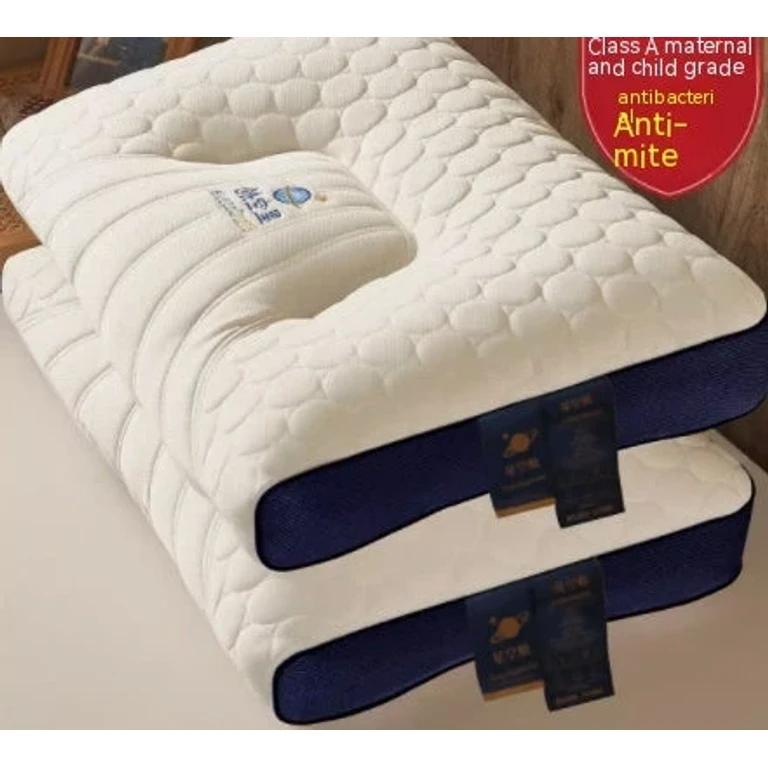
Dreamtech
Cloud Natural Latex Cervical Pillow - 98% Latex, Antibacterial & Anti-Mite, 3 Loft Heights
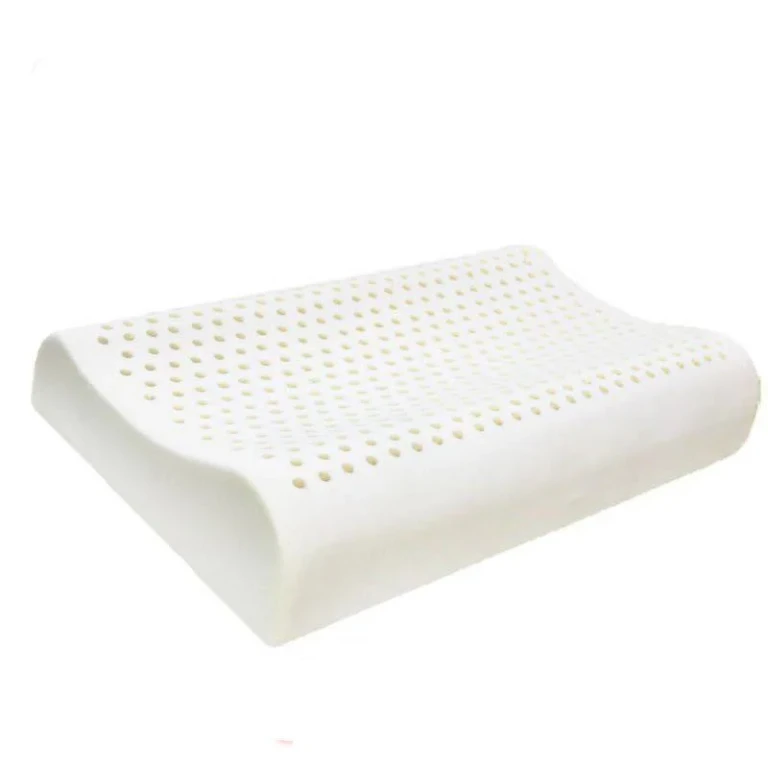
Dreamtech
Natural Latex Neck Pillow
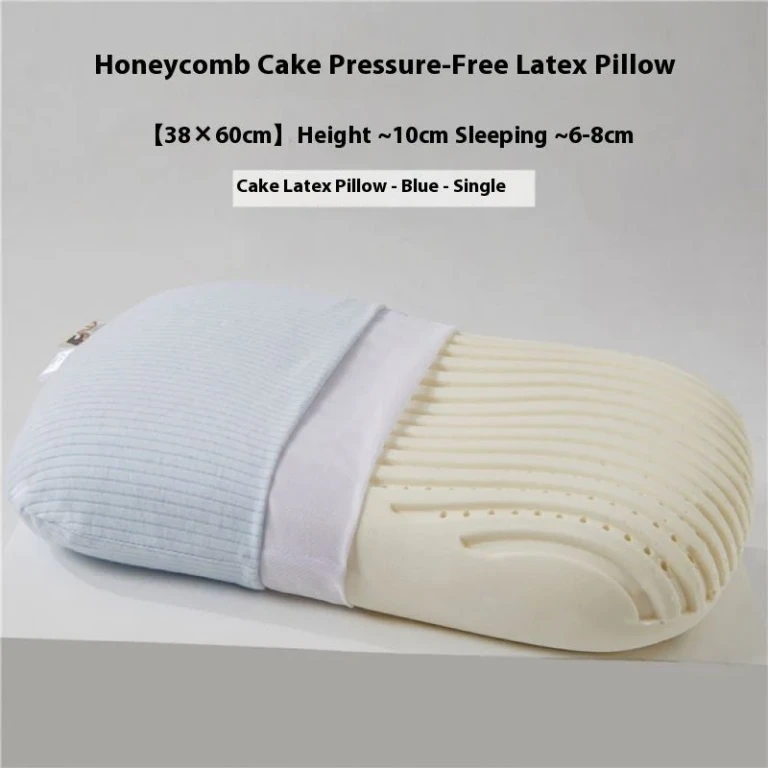
Dreamtech
Cake Natural Latex Pillow - Pressure-Free Rebound Neck Support in 3 Colors
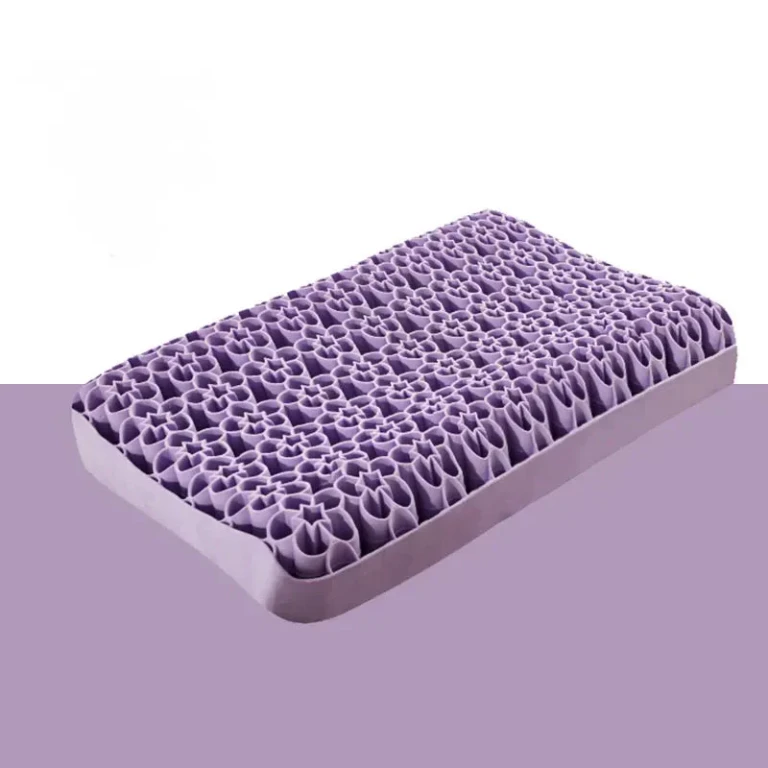
Dreamtech
Black Latex Silicone Gel Pillow
What Makes Latex and Memory Foam Different: Materials and How They Feel
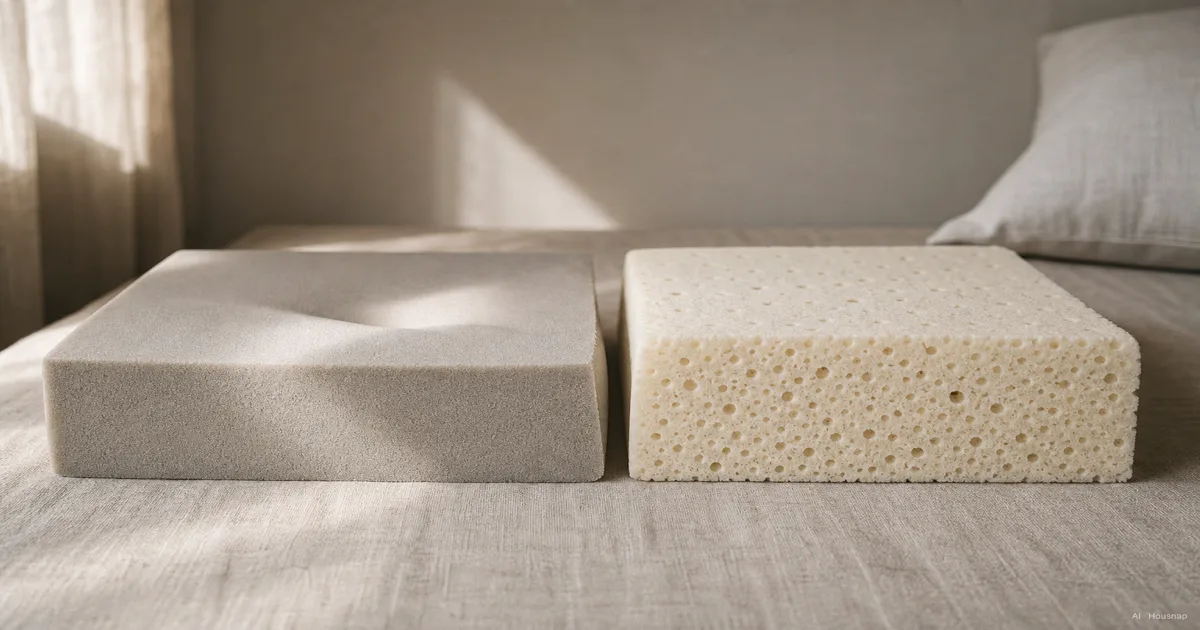
Strip away the marketing and there is exactly one difference that matters, and it comes down to what each foam reacts to.
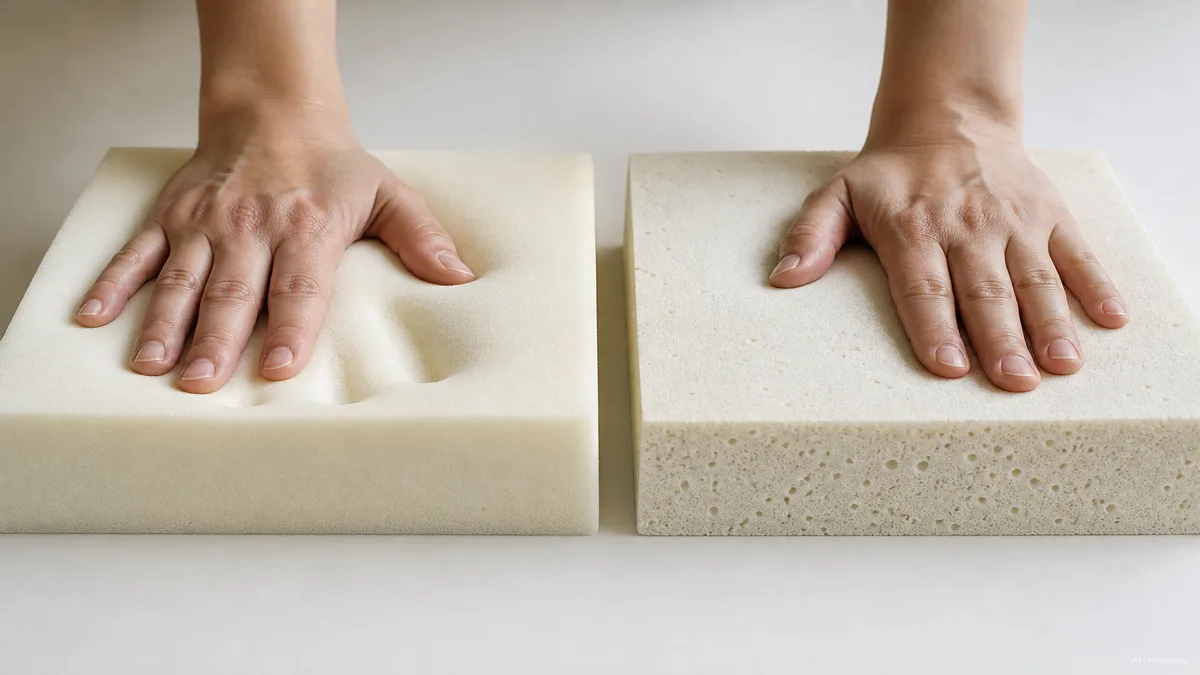
Memory foam is viscoelastic polyurethane, a heat-sensitive polymer first developed by NASA. It softens under your body warmth and slowly contours to your shape, which is why people describe the feel as sinking, hugging, or being cradled, as the Sleep Foundation's comparison of memory foam and latex lays out. Press your hand into it and the impression lingers for a second before it fills back in.
Natural latex is a completely different starting point. It is harvested from the sap of Hevea brasiliensis rubber trees and processed into foam, and instead of reacting to heat, it reacts to pressure. Push into it and it springs back immediately. That is why latex feels bouncy and responsive while memory foam feels slow and cradling, a contrast NapLab draws out in its latex versus memory foam guide.
So the everyday difference is something you can feel in one second of pressing. Memory foam holds the shape you leave. Latex refuses to. One cups you in place; the other lifts you and follows your movement.
That single split is the root of everything below. Temperature, motion, pressure relief, and lifespan all trace back to whether the foam slowly molds to heat or instantly answers pressure.
How Each Material Performs: Temperature, Motion, and Pressure Relief
This is where the feel difference turns into things you notice every single night.
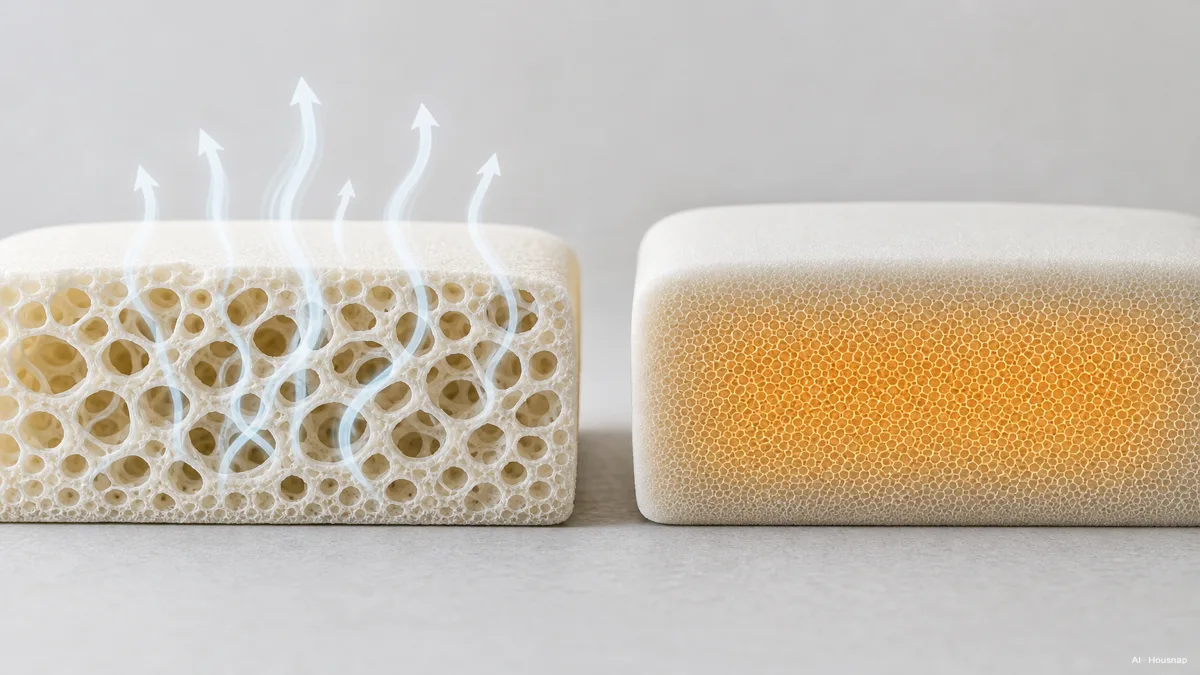
Start with temperature, because it is the most common regret. Natural latex has an open-cell structure that lets air move through it, so heat dissipates rather than building up, and it tends to sleep cooler, as Sleep Advisor's memory foam versus latex breakdown explains. Traditional memory foam does the opposite. That close, heat-activated contouring traps body warmth against you, which is the classic memory foam complaint. Gel-infused and phase-change memory foams partly answer this, but they are working against the material's nature rather than with it.
Motion is the trade-off that runs the other way. Memory foam is the champion of motion isolation. Its cell structure absorbs and localizes movement, so when a restless partner rolls over, you feel much less of it, a point the Sleep Foundation makes directly. Latex's elasticity does the reverse: that same springiness transmits more movement across the surface, so a shared bed with a light sleeper is where memory foam quietly wins.
Pressure relief depends on how you sleep, and we will go deeper on that later. The short version: memory foam's deep, slow give is excellent at relieving pressure where your body digs in hardest, while latex offers firmer, more buoyant support that holds you on top rather than letting you sink.
One more practical difference happens on day one. New memory foam can release a chemical smell, called off-gassing, for roughly three to seven days after you unbox it, as Sleeping Organic notes in its latex off-gassing explainer. Natural latex does not off-gas in the same way. If you are sensitive to smells or setting up in a small bedroom, that first week matters.
Dunlop vs Talalay: Not All Latex Is the Same
Here is the part that trips up first-time latex shoppers. Latex is not one thing. There are two manufacturing methods, and they produce noticeably different feels.
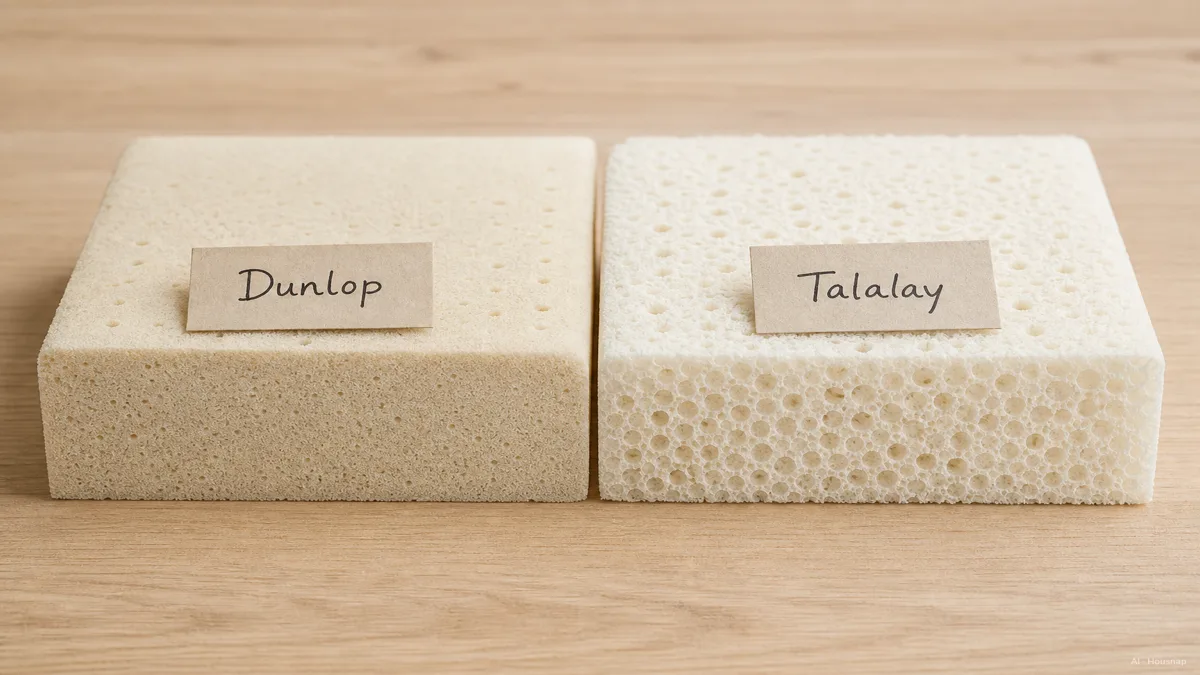
Dunlop is the original process, dating to 1929. The liquid latex is whipped, poured into a mold, and steam-baked in one go. During baking, natural sediment settles toward the bottom, so a Dunlop layer ends up slightly firmer and denser underneath, as Amerisleep's Dunlop versus Talalay guide describes. It is denser, heavier, and more durable, which makes it the usual choice for a supportive core.
Talalay adds two extra steps. After the latex is poured, the mold is vacuum-sealed to distribute it evenly, then flash-frozen before baking. The result is a more uniform, open, and consistent cell structure that feels lighter and softer. That makes Talalay the common pick for comfort layers near the surface, the part your body touches first.
You do not have to memorize the chemistry. The useful takeaway is simpler. Dunlop leans firmer and is built for support; Talalay leans softer and is built for comfort. Many quality latex mattresses use both, a Dunlop core under a Talalay top, so reading the layers tells you more than the word latex alone.
Which Mattress Suits Your Sleep Style and Body Type
Forget which material is objectively better, because that question has no answer. Match the foam to how you actually sleep, and the choice gets easy.
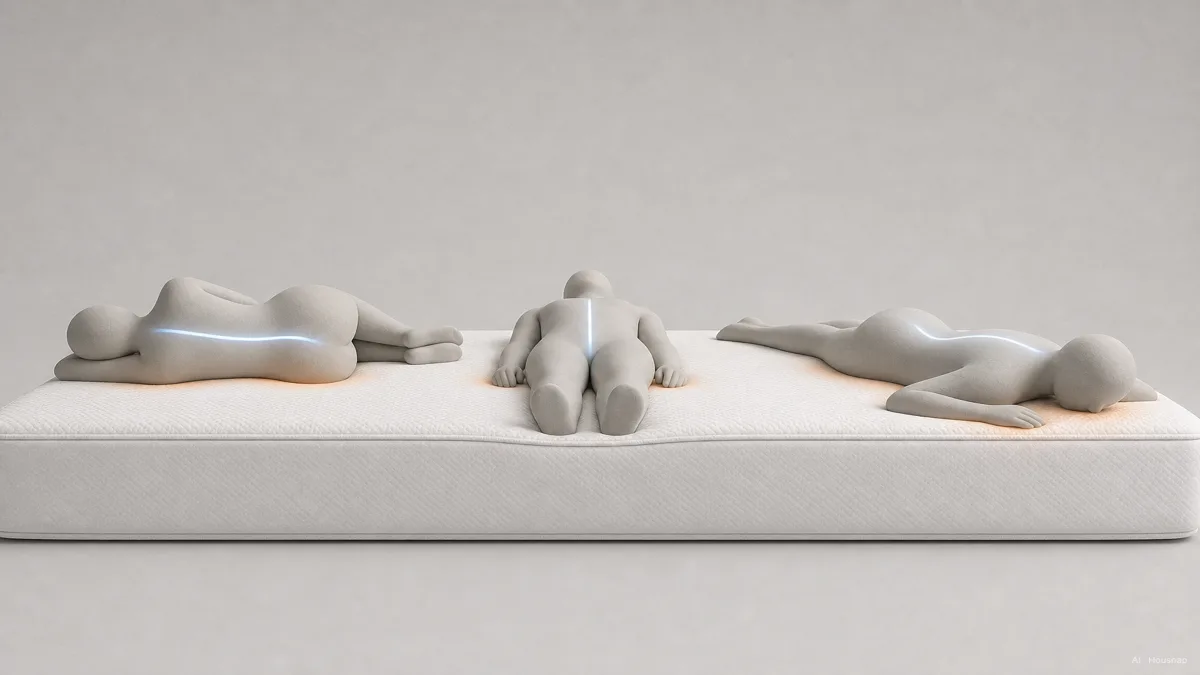
Side sleepers usually do best on memory foam. Lying on your side puts sharp pressure on your shoulders and hips, and memory foam's deep, slow contouring is exactly what relieves it, letting those joints settle in rather than press against a firm surface, a match Consumer Reports' mattress buying guide lines up with side sleeping. If you wake up with a sore shoulder, this is your signal.
Back and stomach sleepers usually lean toward latex. These positions need the spine held neutral without the midsection sinking too far, and latex's firmer, buoyant support does that while keeping you on top of the bed, as NapLab covers in its sleep-position guidance. Stomach sleepers in particular tend to feel stuck and overheated in deep memory foam.
Body type tilts it too. Heavier sleepers often prefer the durable, supportive push of latex, which resists bottoming out, while lighter sleepers may not sink enough into firm latex to feel cradled and lean back toward foam.
Two practical flags before you decide. If you run hot or share the bed with someone who does, latex's airflow is a real advantage. If you share with a restless partner and wake easily, memory foam's motion isolation matters more than almost anything else. And one health note: latex allergy affects an estimated one to six percent of people, higher among healthcare workers, so anyone with a known latex sensitivity should avoid natural latex and look at memory foam or a certified synthetic instead.
Price, Lifespan, and What to Check Before You Buy
Now the part that decides a lot of first purchases: what each one costs and how long it lasts.
The price gap is real and worth knowing upfront. Quality natural latex mattresses typically start around 1,500 to 2,000 dollars or more, while memory foam offers solid options from roughly 500 to 1,200 dollars, with synthetic or blended latex sitting in between, a range Sleep Advisor maps out. Latex costs more because the natural material and the molding process are more expensive.
But lifespan flips part of that math. Latex mattresses typically last twelve to fifteen years, and natural latex can go beyond fifteen, because its natural elasticity resists the body impressions that ruin a bed over time. Memory foam averages seven to ten years before it starts to sag. So a pricier latex bed can cost less per year of use, while memory foam is the lower upfront commitment.
Two certifications are worth checking on the label. CertiPUR-US signals a memory foam made without certain harmful chemicals and with low VOC emissions, which directly affects that first-week off-gassing. GOLS, the Global Organic Latex Standard, applies to organic latex made from at least ninety-five percent organic raw material. These are not marketing badges; they are the real shorthand for what is actually inside.
If you cannot fully commit to either feel, there is a middle path worth a look. Hybrid mattresses pair a pocketed-coil support core with a comfort layer of either latex or memory foam, adding edge support and airflow on top of the foam feel you choose, an option Golden Dreams describes for buyers who want some of both worlds.
So the buying move is concrete. Decide your feel from how you sleep, set your budget against the per-year math, and then filter real latex and memory foam options side by side, compare what each brand charges across stores, and check the certifications and layer construction line up with the comfort and lifespan you just settled on. You'll find options from the names that show up most in mattresses, so the comparison is concrete rather than hypothetical.
Sources
- What Is the Difference Between Memory Foam and Latex? — Sleep Foundation; memory foam heat reaction and contouring, latex pressure response, and memory foam's motion-isolation advantage
- Latex vs Memory Foam — NapLab; bouncy pressure-driven latex versus slow heat-activated memory foam, and sleep-position guidance
- Memory Foam vs Latex — Sleep Advisor; temperature regulation, price ranges, and lifespan by material
- Mattress Buying Guide — Consumer Reports; matching mattress feel to sleep position and body type
- Dunlop vs Talalay Latex Mattresses — Amerisleep; the 1929 Dunlop process versus the vacuum-and-flash-freeze Talalay process and where each layer fits
- Does a Latex Mattress Off-Gas? — Sleeping Organic; memory foam off-gassing window and natural latex by comparison