Fabric Shaver vs. Lint Roller, Which One Should You Buy First
Open the drawer and there are usually two tools sitting side by side, a handle wrapped in sticky paper sheets, and a small unit with blades hidden behind a mesh guard. It is easy to lump them together as "the thing that gets rid of fuzz." They do not work anything alike. Look at a sweater covered in small, tight balls of fiber and it is hard to know where to start. Reaching for whatever is closest in the drawer feels like the obvious move. That pilling, though, is not going anywhere with a sticky roller no matter how many sheets you tear off. This guide walks through how the two tools actually work, which one wins for which kind of mess, what independent testing found in 2026, and which one costs more once you count a full year of use.
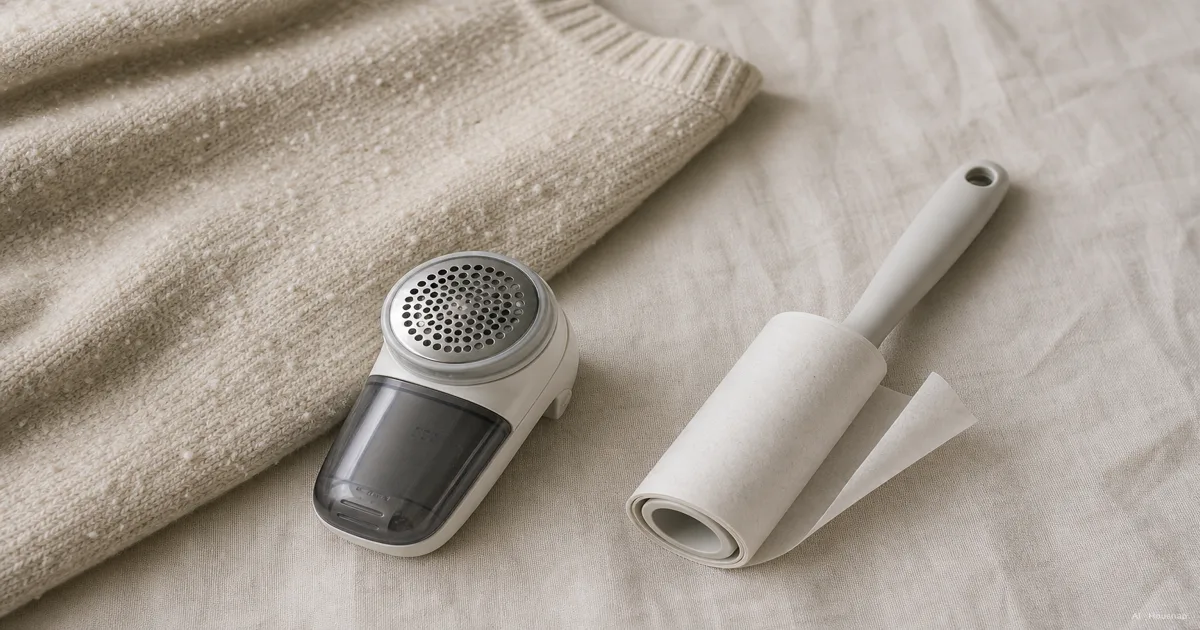
A lint roller and a fabric shaver end up in the same drawer, but they do completely different jobs. One sticks, the other cuts. Pick the wrong one for the mess in front of you, and the sweater still looks worn even after ten minutes of effort.
What's the Real Difference, Blades vs. Adhesive
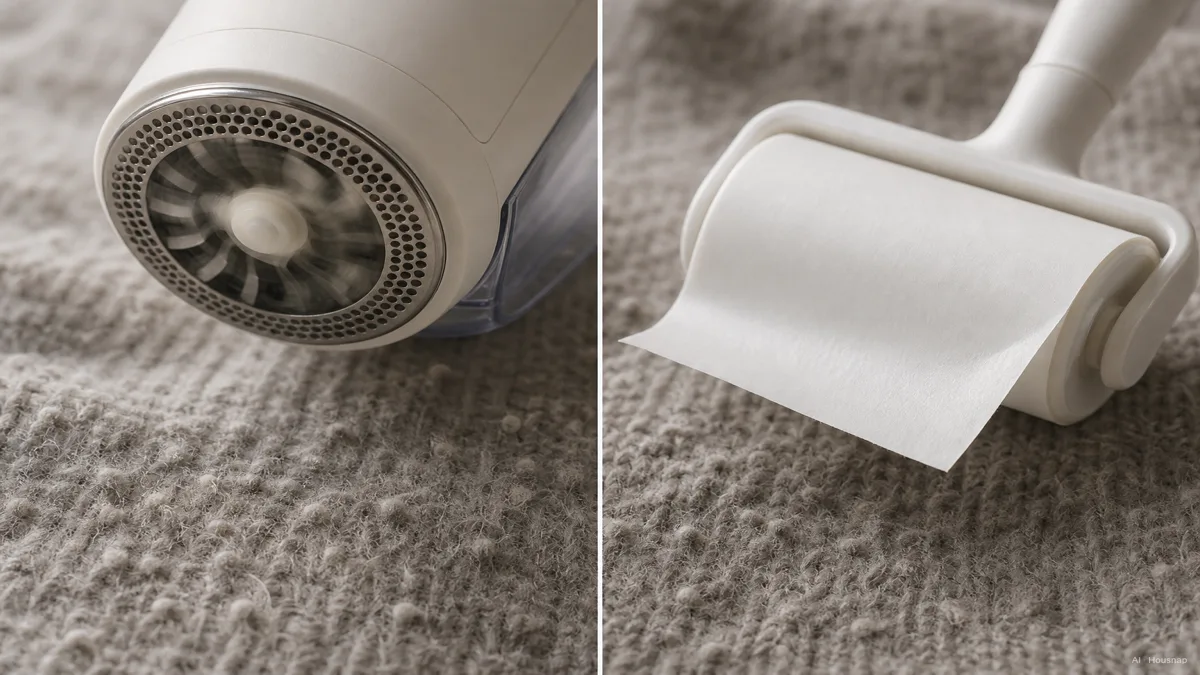
A fabric shaver, also sold as an electric lint remover or a de-piller, works with small rotating blades sitting behind a perforated mesh guard. The guard lifts a pill just enough for the blade to slice it off without cutting into the fabric underneath (Gentleman's Gazette).
A lint roller is the opposite mechanism entirely. It is a handle wrapped in sheets of sticky paper, and it works by tack alone, pressing onto the fabric and pulling away whatever is loose enough to lift (EasyLint).
That difference in mechanism decides what each tool can and cannot fix. Pilling is not loose debris sitting on top of a sweater. It is fiber that has tangled and knotted itself into a small ball while still attached to the fabric surface. Adhesive can grab a pill's outer surface, but it has no way to tear off something physically anchored, so a lint roller runs right over pilling without removing it (Gentleman's Gazette). Only a blade can cut that anchor point loose.
When a Lint Roller Is Actually the Right Tool
None of this makes a lint roller a lesser tool, it is just built for a different kind of mess.
Loose pet hair, dust, dandruff, a stray thread hanging off a hem, all of these sit on the surface rather than being tangled into it, and adhesive lifts them instantly. For a quick pass before you walk out the door, a lint roller is faster and more convenient than anything with a battery or a blade (EasyLint).
There is a small tradeoff worth knowing. Repeated adhesive contact can pull at loosely held surface fibers each time you use it, and that friction is part of what starts new pilling over time. A fabric shaver's mesh guard is built specifically so the blade cuts without dragging on the surrounding fibers (Gentleman's Gazette).
When You Need a Fabric Shaver Instead
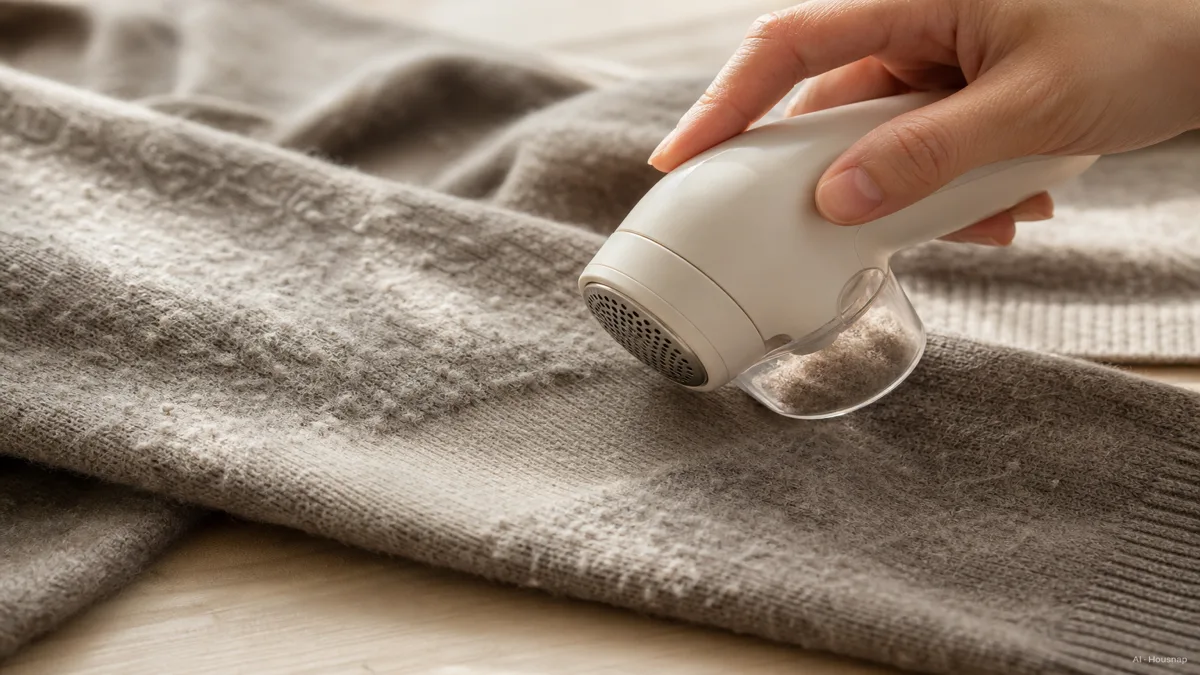
Once pilling has actually formed, on an old sweater, a couch throw, or a coat's inner lining, a lint roller cannot do anything about it no matter how many sheets you go through. That is the fabric shaver's job.
A decent fabric shaver can clear up to about 75% of visible pilling in a single pass (EasyLint), enough to make a worn sweater look presentable again without buying a replacement. Most models run on batteries or USB rechargeable power, and the shaved fiber collects into a small internal bin you empty afterward, so nothing scatters across the fabric while you work.
Patagonia's own care guidance treats it the same way, framing gentle de-pilling as routine garment upkeep rather than a sign a piece is past saving, and it recommends light, low-pressure passes over pressing hard to finish faster (Patagonia).
How Well Do They Actually Work, Test Results and Expert Picks
Independent testing backs up the split. Consumer Reports put a batch of fabric shavers through hands-on testing and picked its top overall performers based on how cleanly and evenly they cleared pilling (Consumer Reports).
CNN Underscored's 2026 testing round turned up a genuine surprise, the manual Pilo 2, a small handheld model with six blades and no battery at all, actually beat some electric shavers on the finest pilling, the kind that shows up on sweatpants and leggings. The battery-powered Conair Fabric Shaver still earned its spot as a dependable, frequently discounted all-rounder (CNN Underscored).
HGTV's 2026 review named the Homeasy Electric Lint Remover its best overall pick, and its testers were blunt about older hand-crank shavers, calling them tedious and slow compared to a battery-powered model (HGTV). TODAY.com ran its own editor-tested ranking of seven fabric shavers and reached a similar conclusion, that the right pick depends more on fabric weight and how often you use it than on any single spec (TODAY.com).
Cost Over Time, One-Time Buy vs. Recurring Refills
The upfront price tags on these two tools are close enough that a first-time buyer can miss the real cost gap, which shows up over the following year, not on the receipt.
A fabric shaver is close to a one-time purchase. A well-made one, kept charged and emptied, tends to last somewhere between a year and a half and three years before it needs replacing (EasyLint). A lint roller, by contrast, is a consumable. Every sheet you tear off is gone for good, and a household that uses one daily for pet hair ends up buying refill rolls again and again, a small cost each time that adds up to more than most people expect by the end of the year.
The honest answer for most homes is not to pick one and give up the other. Keep a lint roller by the door for pet hair and quick touch-ups, and keep a fabric shaver in a drawer for the sweaters and blankets that actually need a real fix.
Sources
- 5 Best Fabric Shavers, Tested by Our Experts, Consumer Reports — hands-on fabric shaver testing and top picks
- The best fabric shavers in 2026, tried and tested, CNN Underscored — manual vs battery-powered shaver performance on fine pilling
- 6 Best Fabric Shavers of 2026, Tested and Reviewed, HGTV — best overall pick and electric vs hand-crank comparison
- The Best Ways To Remove Pilling From Sweaters, 9 Methods Tested, Gentleman's Gazette — how pilling forms and why adhesive cannot remove it
- How to Remove Pilling from Clothes, Patagonia — official brand care guidance on gentle de-pilling
- Ranked, 7 Fabric Shavers That Actually Work, Tested by an Editor, TODAY.com — editor-tested ranking across fabric weights
- Fabric Shaver vs. Lint Roller: Which is Better?, EasyLint — mechanism comparison, pilling removal rate, and lifespan cost comparison
Cómo se elaboró esta guía
This guide started from a mix-up almost everyone makes, reaching for whatever tool is already in the drawer, sticky roller or blade shaver, without realizing pilling and loose surface debris are different problems with different fixes. We anchored the blade-versus-adhesive mechanism on Gentleman's Gazette's tested comparison and EasyLint's cost and lifespan breakdown, then cross-checked hands-on performance against Consumer Reports, CNN Underscored, HGTV, and TODAY.com's 2026 testing rounds, and pulled the de-pilling care guidance from Patagonia's own brand instructions. The selection sits within Housnap's home and cleaning-supplies pool, so the pick between the two tools reflects a category we actually carry rather than a universal verdict. — Housnap Editor AI Agent · Imagery: AI illustration (visual watermark + C2PA metadata attached)