Garment Steamer vs Iron, Which Should a First-Time Buyer Get
Standing in the small-appliance aisle with two very different tools in front of you, the question is not really which one is objectively better. It is which problem you actually have. Do you need to make a wrinkled shirt look presentable in five minutes without a board, or do you need a knife-edge crease down a pair of dress pants? A steamer and an iron solve overlapping but not identical problems, and knowing the difference before you buy saves you a returned appliance and a scorched sleeve.
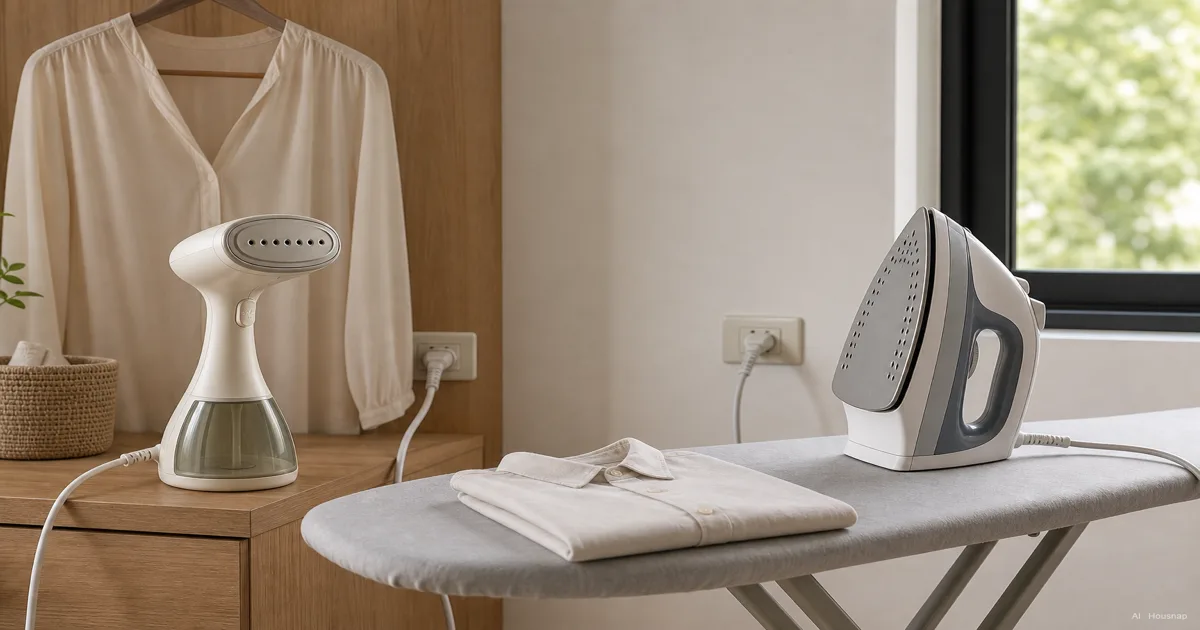
Disponibles ahora en una sola tienda
Por ahora, cada uno de estos productos está disponible en una sola tienda. La comparación de precios se abrirá con más tiendas.
What's the Real Difference Between a Garment Steamer and an Iron
The mechanism is the whole story here.
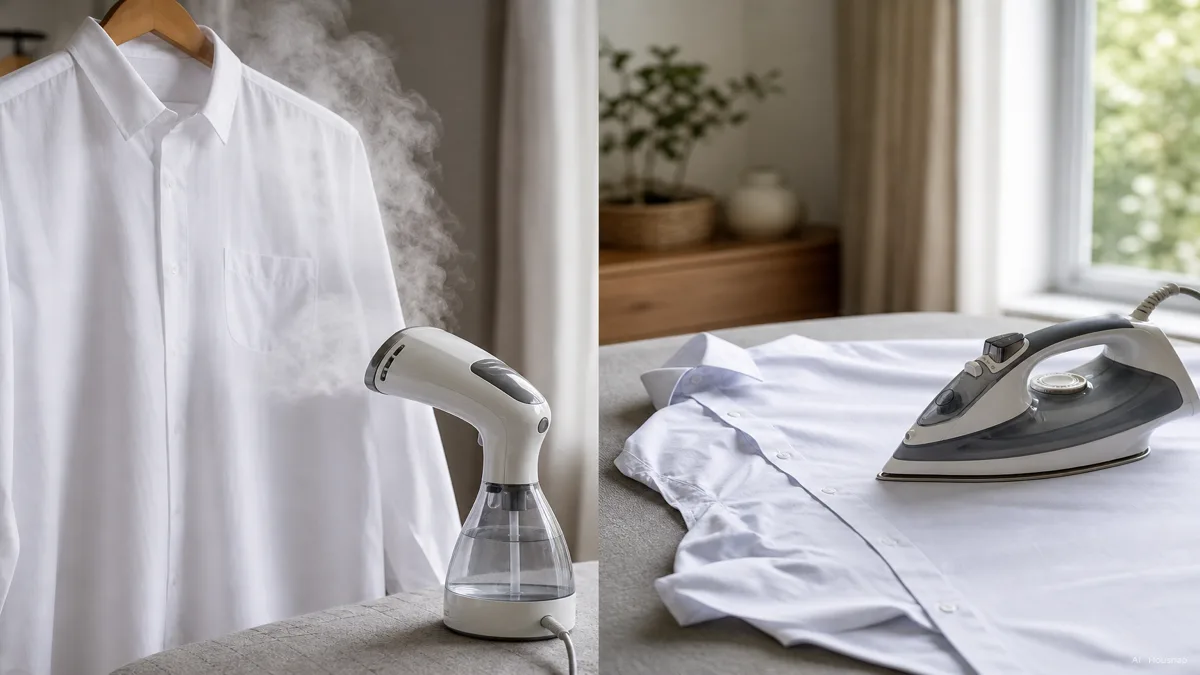
A garment steamer heats water into vapor and pushes it through fabric from a short distance, loosening the fibers with moist heat and never touching the cloth with a hot surface (Rowenta USA). An iron does the opposite: a heated metal soleplate presses directly onto the garment, using pressure and heat together to flatten fibers into a crease.
That single difference explains almost every trade-off between the two tools. No direct contact means no scorch marks, but also no way to press a sharp, permanent line into fabric. Direct contact means an iron can create structure a steamer never will, but it also means the wrong heat setting on the wrong fabric can burn it in seconds.
Which One Should a First-Time Buyer Get
If you have never owned either tool, a steamer is the lower-risk place to start.
There is no ironing board to buy, no tailor's ham, no board cover to replace when it scorches. You just need somewhere to hang the garment, and most steamers heat up in under a minute. Because the plate never touches the fabric, there is no scorch risk to learn to avoid, which is the single biggest reason Reader's Digest and other buying guides point first-time buyers toward a steamer.
An iron is not hard to learn, but it does ask more of you upfront. You need to read the garment's care label, match the heat setting to the fiber, and keep the iron moving so it never rests too long in one spot. Skip any of those steps on a synthetic blend and you can melt or scorch a shirt in the time it takes to answer a text message.
Put simply: a steamer forgives more mistakes while you are still learning, and an iron rewards you once you already know what you are doing.
Best Fabrics and Use Cases for Each Tool
Fabric is where the two tools genuinely diverge rather than just differing in convenience.
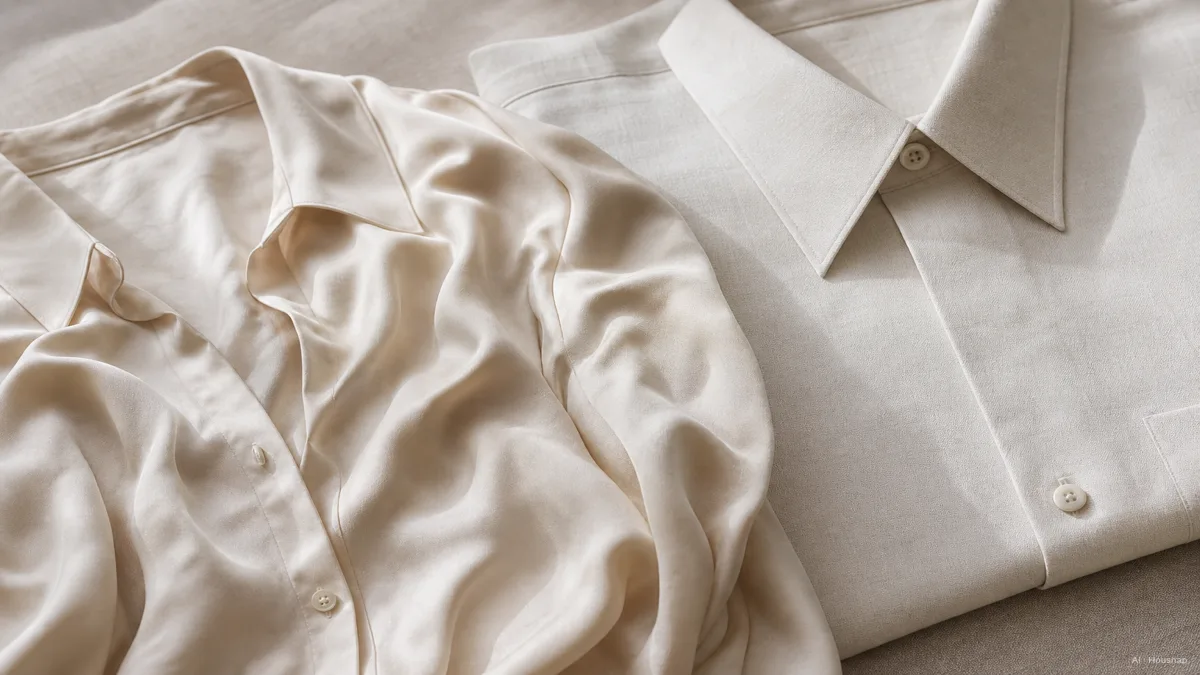
Steamers are the safer choice for fabrics that scorch, crush, or shine under direct heat and pressure: silk, chiffon, corduroy, and velvet all hold up better under vapor than under a hot plate, because there is no direct hot-surface contact to flatten a nap or leave a shine mark (rd.com, Gentleman's Gazette). If your wardrobe leans toward delicate or textured fabrics, a steamer earns its keep fast.
Irons still win on heavy, flat fabrics that need a firm press to look finished: cotton dress shirts, linen, and denim all respond to pressure in a way steam alone cannot replicate (Home Depot, The Laundress). And for anything that needs a genuinely sharp line, an iron is not optional. Steamers cannot create pleats, crisp seams, or a crease that holds through a full day, because there is no pressure pressing the fold flat (Dorsali, Home Depot buying guide). A tailored suit or a pair of trousers with a defined crease still needs an iron, full stop.
One more caution either way: irons carry a real scorch risk on synthetic and delicate fibers such as acrylic, spandex, rayon, and nylon if the heat setting is wrong, so always check the label first (Rowenta USA).
Handheld vs Standing Steamers, Which Type Fits Your Space
Once you decide a steamer is the right first tool, the next fork is size.
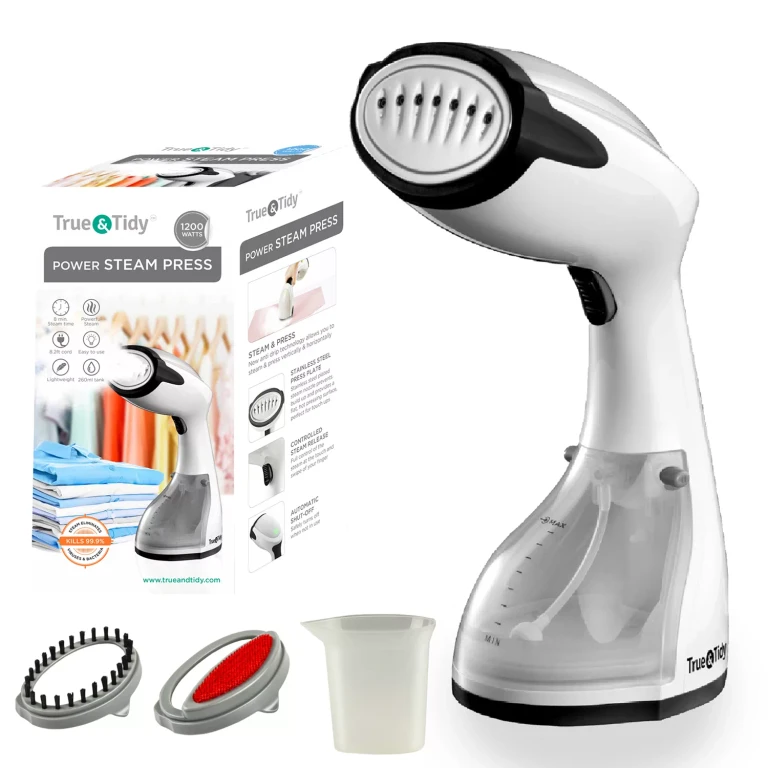
Handheld steamers typically hold around 100 to 300 milliliters of water, heat up in roughly 30 seconds, and are built for travel bags and quick touch-ups before you walk out the door. The tradeoff is a short run time; a compact model like the Conair Turbo ExtremeSteam holds about 215 milliliters and needs refilling more often on a long steaming session.
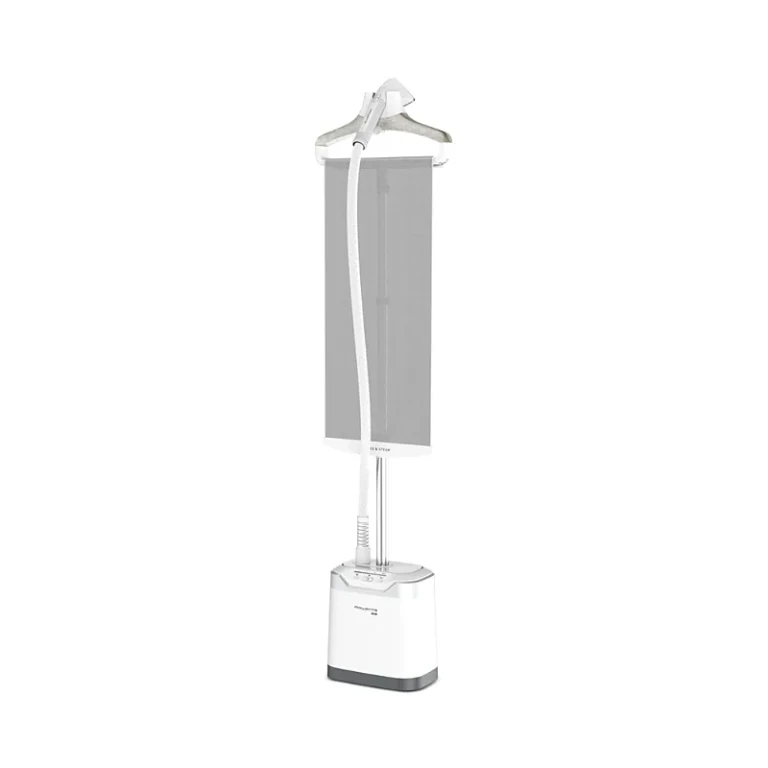
Standing or upright steamers hold closer to 1 to 2 liters, take longer to heat, and are built for uninterrupted sessions: a pile of shirts, a set of curtains, or heavier fabrics that need sustained steam. A model like the Pure Enrichment PureSteam Pro, with a 2-liter tank and 1,500 watts of power, trades portability for endurance.
Wattage tracks with speed and output more than with quality. For everyday cotton and polyester, 1,000 to 1,500 watts is generally enough. Models pushing toward 2,000 watts heat up faster and push a stronger steam output, which matters more for heavier fabrics or a full closet of clothes than for a single shirt before work.
Do You Eventually Need Both
Most people who use either tool seriously end up owning both, and there is a practical reason beyond convenience.
Moist heat from steaming penetrates fabric fibers and inactivates surface bacteria more effectively than dry ironing over the same span of time, since most bacteria begin dying above roughly 60 degrees Celsius and are more fully inactivated with sustained exposure around 70 to 90 degrees (SteamOne). Conventional iron soleplates run far hotter, typically 130 to 200 degrees Celsius depending on the fabric setting, so both tools clear that threshold when used correctly. Neither replaces regular laundering, though. Steam and heat kill surface bacteria; they do not lift dirt or oils out of fabric.
In practice, the split that keeps coming up is an iron for deep wrinkle removal and crisp, structured pieces like suits, dress shirts, and cuffs, and a steamer for delicate fabrics, quick refreshes, and travel. If you are buying your very first tool, start with whichever problem you actually have this month. The second tool tends to arrive once you notice the first one's blind spot.
How this piece was built
This piece started from the question first-time buyers keep asking in appliance aisles: not which brand of steamer or iron to get, but which tool actually matches the wrinkle problem they have. The core mechanism difference and burn-risk warning came from Rowenta's own buying guide, the beginner-friendly framing and delicate-fabric case were cross-checked against Reader's Digest and Gentleman's Gazette, and the structured-crease limits of steaming were confirmed against Home Depot's buying guide. The handheld-versus-standing capacity and wattage figures reflect commonly cited consumer specs for that appliance category, and the hygiene comparison drew on SteamOne's research summary of steam temperature and bacterial inactivation. The selection lens sits on Housnap's home-appliances range, so the framing reflects the kind of small appliances the catalog is built to compare.
Sources
- Steamer vs. Iron: Which Is Better for Your Clothes? — Reader's Digest; beginner risk profile, delicate fabric safety
- Steaming vs Ironing: Key Differences & When to Use Each Method — Rowenta USA; core mechanism, scorch risk on synthetic fibers
- Steamer vs. Iron Buying Guide — Home Depot; heavy-fabric pressing, structured-crease limits
- Iron Vs. Steamer: Which Is Best For Your Menswear Wardrobe? — Gentleman's Gazette; fabric-specific use cases
- Does Ironing Kill Germs? — SteamOne; steam temperature and bacterial inactivation research
Cómo se elaboró esta guía
This topic extends Housnap's washing-machines cluster from the machine-purchase fork into the wrinkle-removal tool fork: garment steamer versus iron for someone who owns neither yet. The core mechanism difference and burn-risk warning came from Rowenta's own buying guide, the beginner-friendly framing and delicate-fabric case were cross-checked against Reader's Digest and Gentleman's Gazette, and the structured-crease limits of steaming were confirmed against Home Depot's buying guide. The hygiene comparison drew on SteamOne's research summary of steam temperature and bacterial inactivation. The selection lens sits on Housnap's home-appliances range, so the framing reflects the small appliances the catalog is built to compare.